
California Primrose (Camissonia californica)
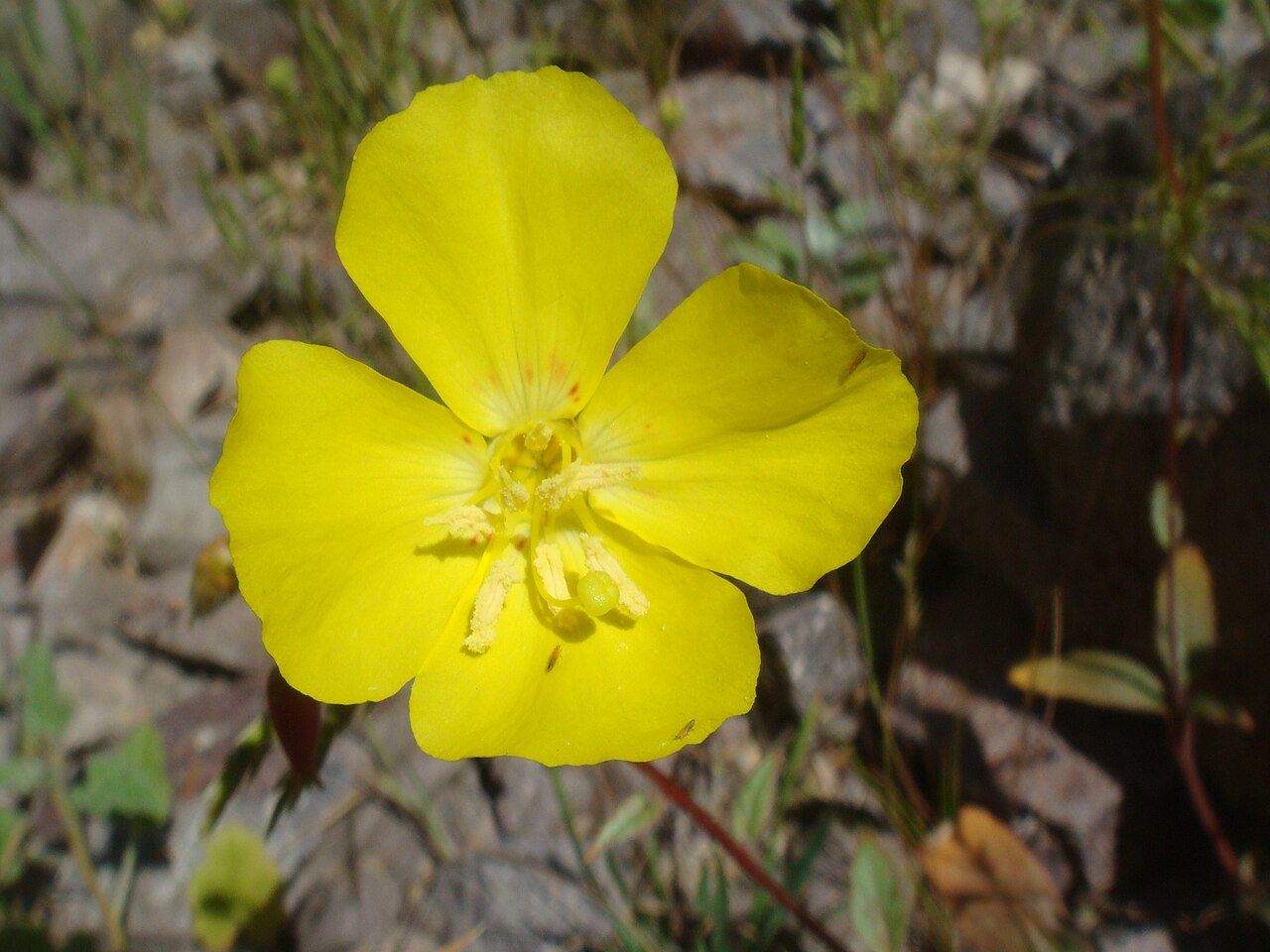
Camissonia californica, known as California Primrose (USDA: California suncup), and also called mustard evening primrose, is a tall, airy annual wildflower of the evening primrose family (Onagraceae). Many current floras, including the Jepson eFlora, place it in its own small genus as Eulobus californicus. It is native to southern and central California, western Arizona, southern Nevada and northwestern Mexico.
In late winter and spring it forms a low rosette of long, toothed leaves, then sends up a slender, waxy, branching stem that can reach 5 feet or more. Bright yellow, four-petaled flowers about an inch across open in the morning on long stalks along the upper stem, followed by very long, narrow seed pods. From a distance, its tall, nearly leafless stems and yellow flowers look more like a wild mustard than a primrose, which is where the name mustard evening primrose comes from.
It grows in coastal sage scrub, chaparral, desert washes and rocky slopes, and it is well known as a fire follower that can be abundant in the first springs after a burn. It is a showy, easy annual for wildflower seed mixes in dry gardens of the Southwest. It should not be confused with the white-flowered California Evening Primrose (Oenothera californica), a different plant despite the similar name.
Identification
California primrose is easiest to recognize in bloom: a tall, wiry, almost leafless stem carrying scattered yellow cup-shaped flowers and long, thin pods, rising from a rosette of toothed leaves at ground level.
Growth Form
An annual herb. It starts as a basal rosette during the cool, wet season, then bolts a single erect stem, often branched above, usually 1 to 5 feet tall and occasionally taller in good years. The stems are smooth and often have a pale, waxy (glaucous) bloom, which helps the plant stand out against darker shrubs.
Leaves
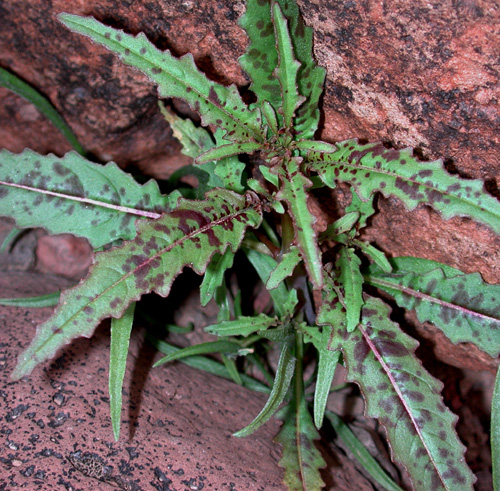
The largest leaves are in the basal rosette: long, narrow, deeply toothed to shallowly lobed, often 2 to 6 inches long, and frequently flecked or blotched with red or purple. The leaves on the flowering stem are few, small and very narrow, almost thread-like, so the plant looks sparse and open when in flower. The rosette often withers by the time the plant blooms.
Flowers
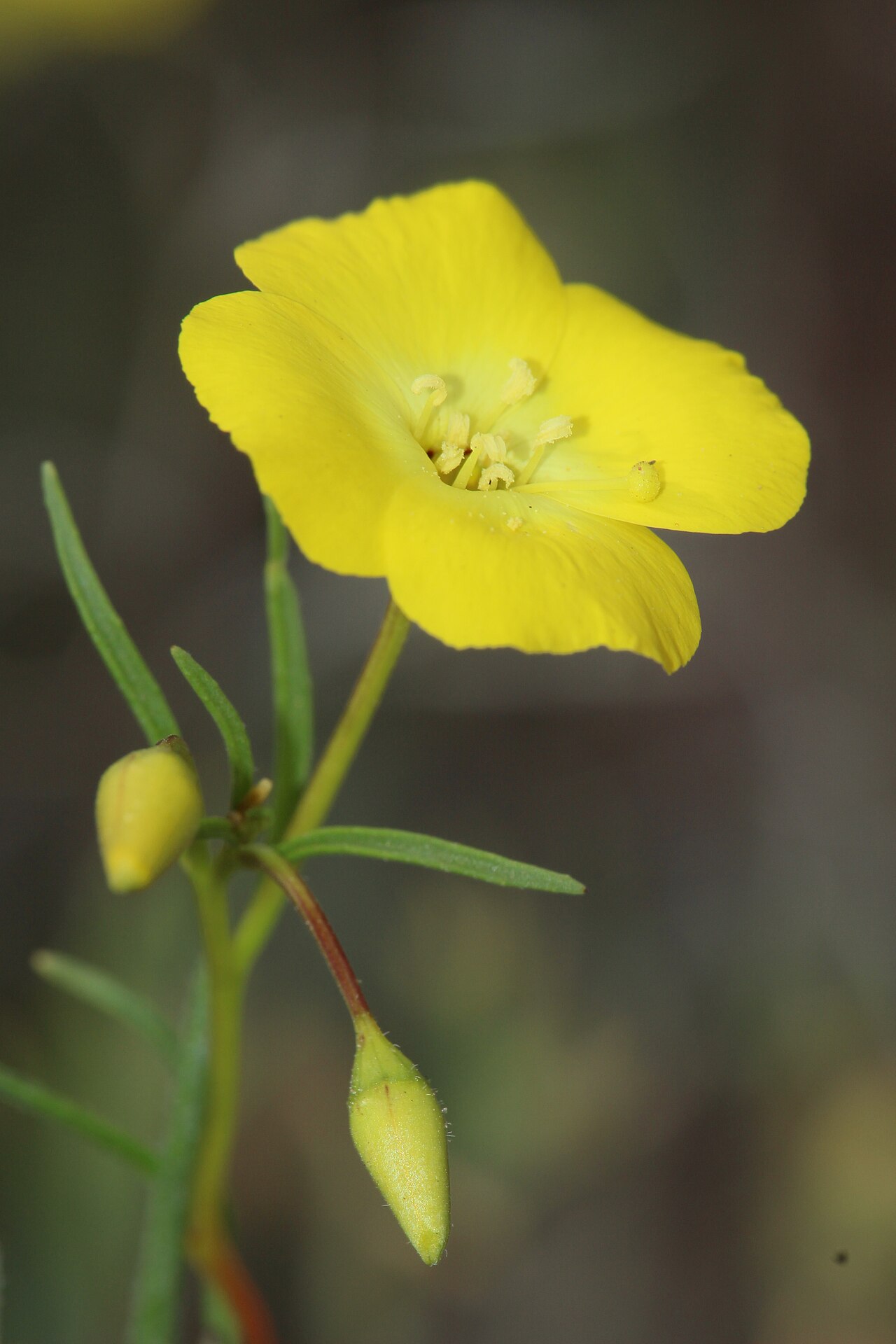
Flowers open mainly from March to June (as early as January in warm desert sites). Each has four broad, bright yellow petals, sometimes with small red dots near the base, forming a shallow cup about 3/4 to 1 1/4 inches across, with eight stamens and a stigma with a rounded tip. The four greenish sepals fold back against the stalk. Buds nod before opening. Unlike many true evening primroses, the flowers open in the morning and are pollinated by day-flying insects.
Fruit
The fruit is a very slender, cylindrical capsule about 1 1/2 to 4 inches long, held spreading or bent downward on its stalk. It splits open when dry to release many small seeds. The long pods are a helpful field mark once the flowers have fallen.
Look-alikes
Wild mustards (Brassica, Hirschfeldia) have similar tall stems and yellow flowers, but their flowers have four petals arranged in a cross with six stamens, and the plants are usually leafier. California Evening Primrose (Oenothera californica) has large white flowers that open in the evening and turn pink as they age. Beach Evening Primrose (Camissoniopsis cheiranthifolia) is a low, sprawling plant of coastal dunes with smaller yellow flowers.
Safety
California primrose is not known to be toxic to people or pets. As with any wild plant, do not eat it unless you are certain of its identity and safety.
Quick Facts
| Scientific Name | Camissonia californica (also Eulobus californicus) |
| Family | Onagraceae (evening primrose family) |
| Plant Type | Annual wildflower |
| Mature Height | 1–5 ft (occasionally taller) |
| Mature Spread | 6–18 in |
| Growth Rate | Fast |
| Sun Exposure | Full sun |
| Water Needs | Low; winter rain only, dry in summer |
| Soil Type | Sandy, gravelly or rocky, well-drained soil |
| Soil pH | About 6.0–8.0 |
| Bloom Time | March–June (from January in warm desert sites) |
| Flower Color | Bright yellow, sometimes with red dots at the petal bases |
| Fall Color | None; annual, dies after setting seed |
| Fruit | Very long, slender capsule with many small seeds |
| Deer Resistant | Moderately |
| USDA Hardiness Zones | Annual; grows wild in zones 8–10 |
Native Range
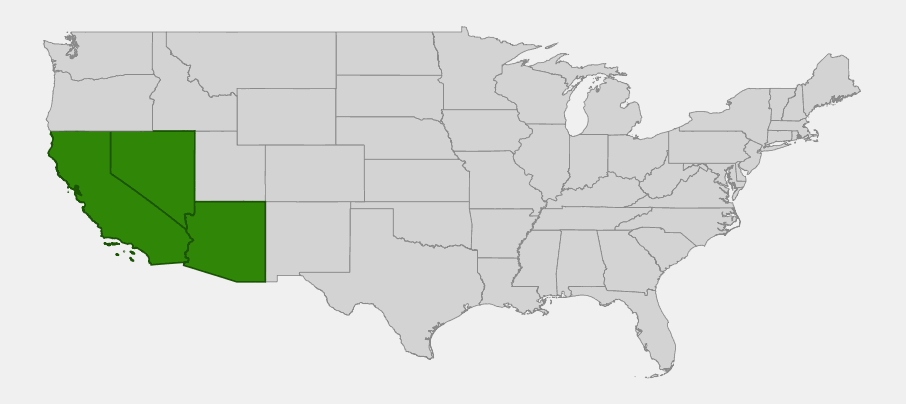
California primrose is a plant of the southwestern United States and northwestern Mexico. USDA PLANTS lists it as native in California, Arizona and Nevada. In California it is most common in the southern half of the state, from the Coast Ranges and Transverse and Peninsular Ranges to the western Mojave and Colorado Deserts, and it also occurs on some of the Channel Islands. It extends east into western and central Arizona, including the Phoenix area, and into the southern tip of Nevada, and south into Baja California.
It is an opportunist of open ground. It is common on dry, rocky or gravelly slopes, in desert washes, along roadsides and in disturbed areas, and in openings in coastal sage scrub, chaparral and desert scrub. After wildfire it can appear in large numbers in burned chaparral and sage scrub, flowering among the resprouting shrubs for a few seasons before the canopy closes.
It grows mainly at low to middle elevations, from near the coast to desert foothills and lower mountain slopes. Its abundance varies greatly from year to year with winter rainfall, as is typical of desert and chaparral annuals.
📋 Regional plant lists featuring California Primrose: Arizona & New Mexico · California & Nevada
Growing & Care Guide
California primrose is a cool-season annual that is grown from seed. It is occasionally offered by native seed suppliers in California and the Southwest, and it is easy in a sunny, dry spot that gets winter rain.
Light
Grow it in full sun. In shade it becomes weak and floppy and flowers poorly.
Soil & Water
It needs fast-draining sandy, gravelly or rocky soil. Rich, heavy or constantly moist soil is not suitable. Like other winter annuals of the Southwest, it germinates with fall and winter rains, grows through the cool season and finishes by early summer. In a dry winter, a few deep waterings will help it establish; once it is flowering, it needs little or no extra water. No fertilizer is needed.
Planting Tips
Sow seed directly in fall or early winter where the plants are to grow, scattering it on bare, loosened soil and pressing it in lightly or covering it with a very thin layer of sand. Do not bury it deeply. Its tall, open stems look best scattered through a wildflower meadow or among low shrubs such as California sagebrush and brittlebush, together with poppies, chia and other spring annuals.
Pruning & Maintenance
No pruning is needed. Leave the plants standing after flowering so the long pods can ripen and release seed; it will reseed in suitable, open sites. Remove the dry stems in summer if you want a tidier look, or once the seed has been shed.
Propagation
Propagate it only from seed. Collect ripe pods as they begin to dry and split in late spring, store the seed dry, and sow it in fall. Seedlings do not transplant well, so direct sowing is best.
Landscape Uses
- Wildflower meadows: tall yellow accents among spring annuals
- Post-fire and slope restoration: a natural fire follower in chaparral and sage scrub
- Desert and dry gardens: winter-rain annual that needs no summer water
- Pollinator gardens: spring nectar and pollen for native bees
- Naturalistic plantings: reseeds in open, sunny, well-drained ground
Wildlife & Ecological Value
Like many plants of the evening primrose family, California primrose supports native bees and other insects during the spring wildflower season.
For Pollinators
Its yellow, morning-opening flowers are visited by native solitary bees, including bees that specialize in collecting pollen from evening primrose relatives, as well as other bees, flies and beetles. The plant often blooms in large numbers after fires, providing a burst of pollen and nectar in burned areas.
For Birds
Seed-eating birds forage on the small seeds that fall from the split pods, and insect-eating birds hunt among the open stems.
For Mammals
Small mammals such as rodents eat fallen seeds. The plant is occasionally browsed by deer and rabbits but is not a major food plant.
Ecosystem Role
As a fire follower, it is part of the short-lived wave of annuals that cover bare soil after chaparral and sage scrub burn, helping to stabilize slopes and feed insects until the shrubs recover. Its seeds can persist in the soil until disturbance and rain create open ground again.
Cultural & Historical Uses
The genus name Camissonia honors Adelbert von Chamisso, a German poet and naturalist who sailed to California with a Russian expedition in 1816 and collected plants there. Many former Camissonia species have since been divided into several smaller genera, which is why California primrose is now often listed as Eulobus californicus.
Common names for this plant vary widely. “California suncup” refers to its cup-shaped flowers that open in the sun, while “mustard evening primrose” refers to its tall, mustard-like habit. The page name used here, California primrose, should not be confused with California evening primrose (Oenothera californica), a white-flowered, evening-blooming plant of the same family.
Botanists visiting burned chaparral in southern California often note California primrose among the first tall wildflowers to appear, its slender yellow-flowered stems rising above the blackened ground and the low regrowth of shrubs.
Frequently Asked Questions
Is California primrose the same as California evening primrose?
No. California primrose (Camissonia or Eulobus californicus) has yellow flowers that open in the morning on tall, slender stems. California evening primrose (Oenothera californica) is a low perennial with large white flowers that open in the evening.
Why is it called mustard evening primrose?
Its tall, sparse, branching stems with small yellow flowers and long, thin seed pods resemble wild mustards growing along roadsides. Up close, the flower parts and seed pods show it belongs to the evening primrose family.
Is it an annual or a perennial?
It is an annual. It germinates with winter rain, blooms in spring and dies after setting seed by early summer, returning from seed in later years.
Why does it appear after fires?
It is a fire follower: its seeds germinate well in open, sunny ground with little competition, such as the first springs after chaparral or sage scrub burns. As the shrubs regrow, it becomes less common again.
Can I grow it in my garden?
Yes, in sunny, dry gardens with well-drained soil in its native region. Sow seed in fall, give it winter rain or a few waterings, and let it reseed. It does not do well in rich, wet soil or summer-wet climates.

Looking for a nursery that carries California Primrose?
Browse our native plant nursery directory: Arizona · California · Nevada