
Slender Phlox (Microsteris gracilis)
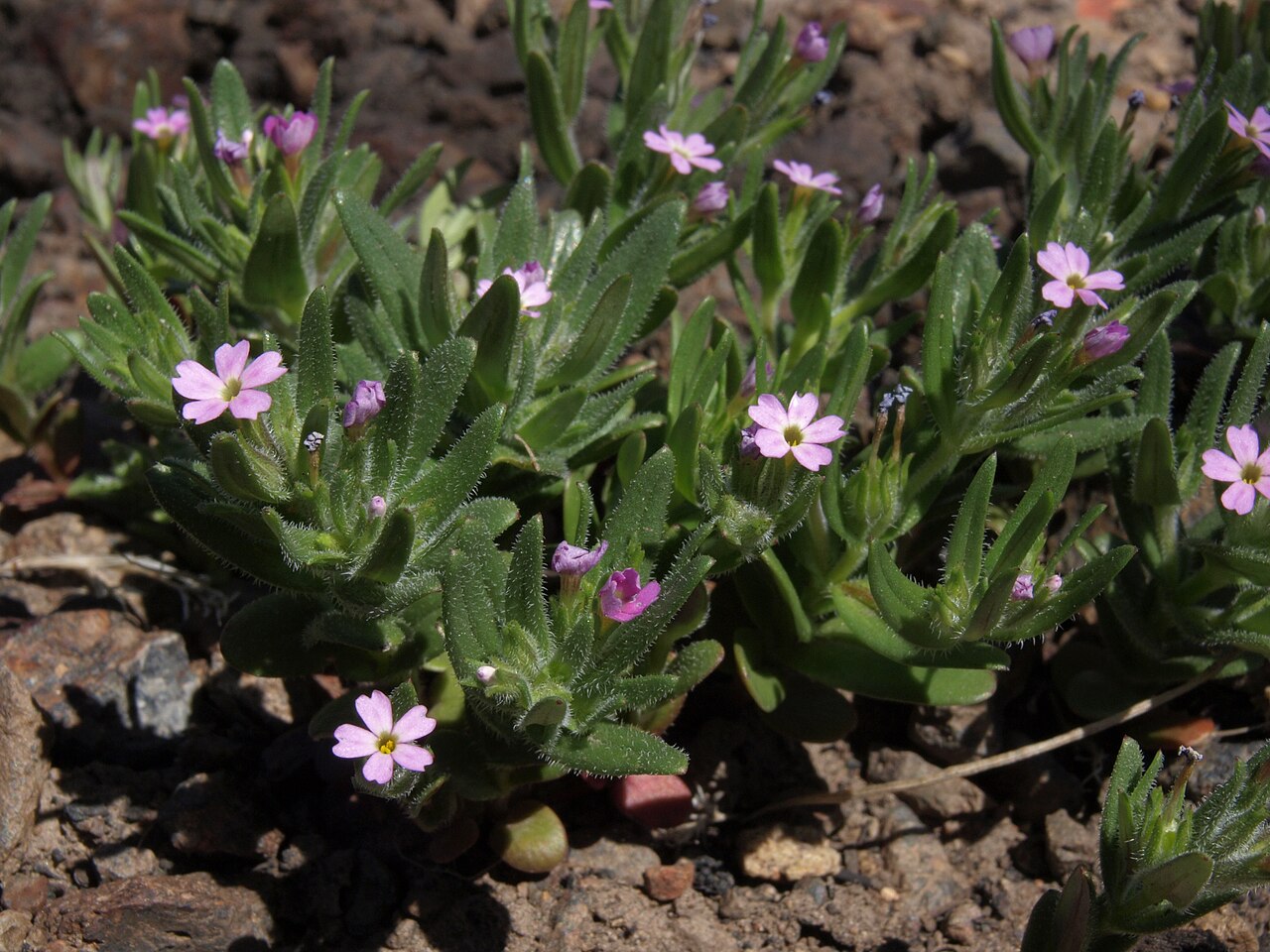
Microsteris gracilis, known as Slender Phlox (also annual phlox and pink microsteris), is a tiny annual wildflower of the phlox family (Polemoniaceae). Some botanists place it in the genus Phlox as Phlox gracilis. It is one of the most widespread spring annuals of western North America, found from British Columbia and Alberta south through the Pacific states, the Great Basin and the Rocky Mountains to Arizona and New Mexico, and east to the western Dakotas and Nebraska.
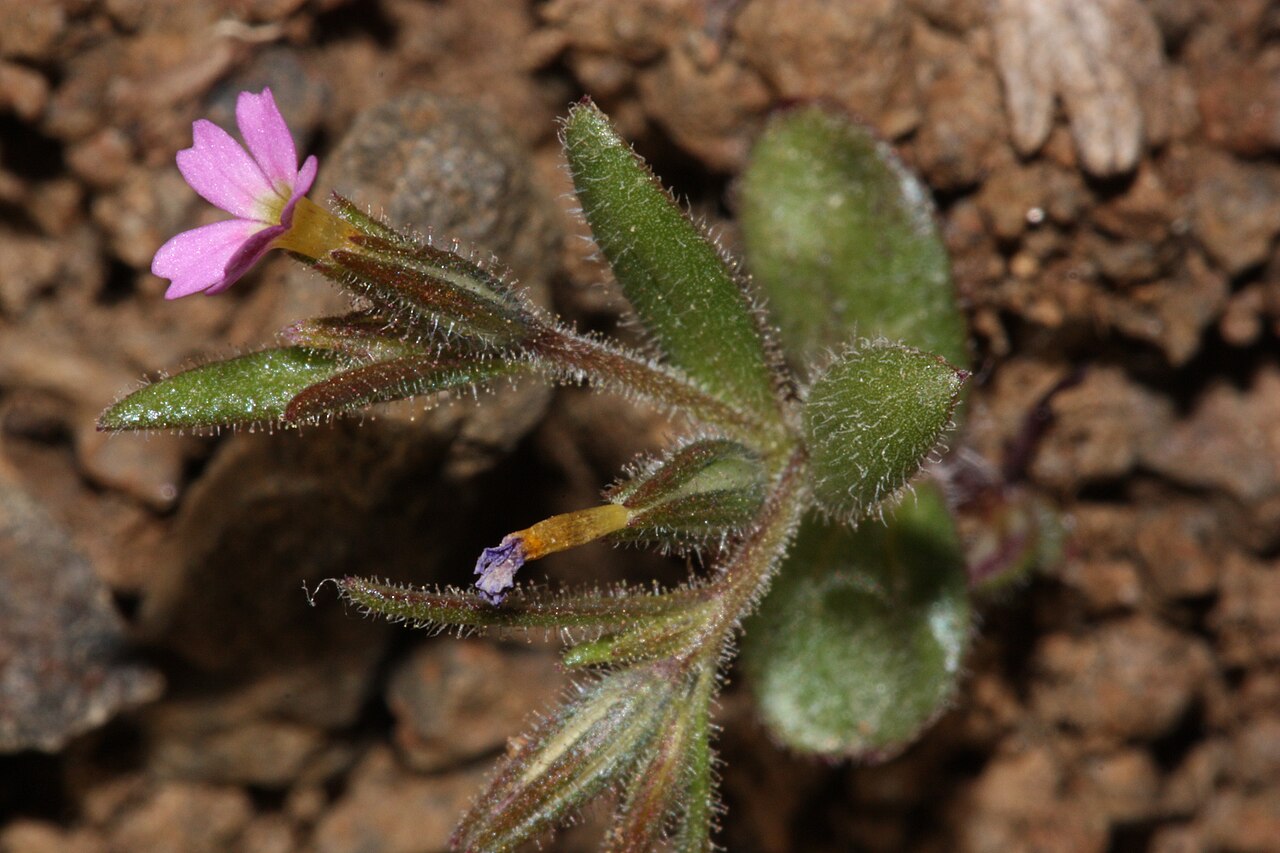
Plants are usually only 1 to 8 inches tall, with narrow, glandular-hairy leaves and small, star-shaped flowers about 1/4 inch across. The flowers are pink, lavender or white with a yellow tube, and each of the five petals is notched at the tip. The genus name Microsteris means “tiny star,” and gracilis means slender.
Slender phlox comes up in late winter or spring in sagebrush steppe, grasslands, open woods, rocky slopes and moist meadows, flowers for a few weeks, sets seed and dies as the soil dries. It is rarely planted on purpose, but it is a charming, self-sowing native annual for naturalistic and rock gardens, and it feeds small bees and flies early in the year. It also grows in South America, from Peru to southern Chile and Argentina.
Identification
Slender phlox is small and easy to overlook. Look for a tiny annual with narrow, sticky-hairy leaves and small pink or white flowers with notched petals and a yellow tube, often growing in large numbers on open ground in spring.
Growth Habit
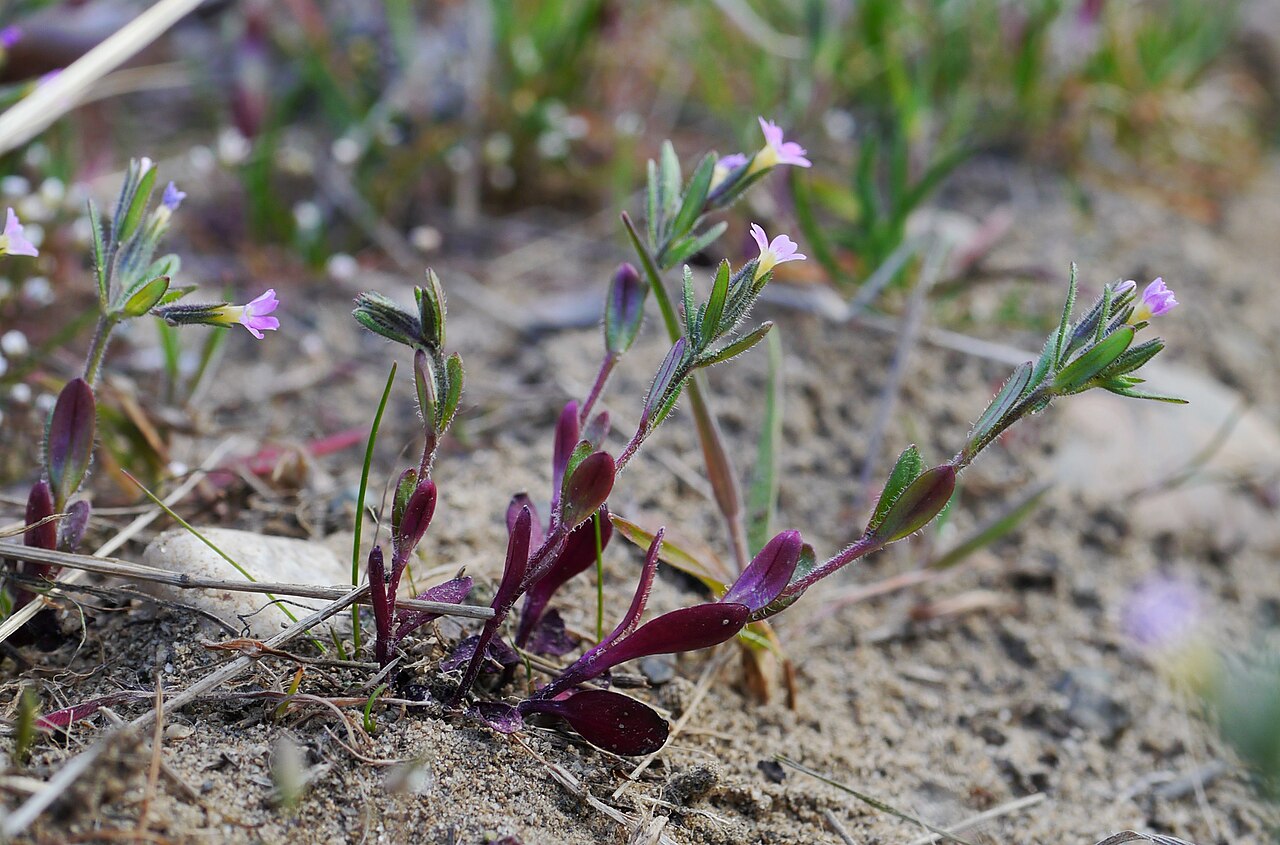
It is a small annual, either a single, very slender upright stem or a branched, spreading or almost tufted plant, usually 1 to 8 inches tall. Size varies greatly with moisture: in dry years plants may bloom when barely an inch tall. Stems are often reddish and covered in short, glandular hairs.
Leaves
The lower leaves are opposite, the upper ones alternate. They are narrow, lance-shaped to oblong, about 1/4 to 2 inches long, with smooth edges, and are usually glandular-hairy and slightly sticky. They often turn reddish or purplish as the plant ages or dries out.
Flowers
The flowers are borne singly or in pairs at the ends of stems and in the upper leaf axils. Each has a narrow corolla tube about 1/4 to 1/2 inch long, yellowish inside, that opens into five small, spreading lobes, white to pink or lavender, each notched at the tip. The tube is held in a tubular calyx with five narrow, pointed, glandular-hairy lobes. Flowering runs from about March at low elevations to July in the mountains.
Fruit & Seeds
The fruit is a small, three-chambered capsule that usually holds one seed per chamber.
Varieties
Two varieties are commonly recognized. Var. gracilis is the taller, more slender lowland form. Var. humilior is a smaller, more compact form of higher elevations and drier sites, especially in the Great Basin and Rocky Mountains.
Look-alikes
Narrowleaf collomia (Collomia linearis) has flowers in dense, leafy clusters at the stem tips and petals that are not notched. Perennial phloxes such as Longleaf Phlox and Spiny Phlox have much larger flowers and woody bases. Small-flowered blue-eyed Mary grows in the same places in spring but has two-lipped blue and white flowers.
Quick Facts
| Scientific Name | Microsteris gracilis (syn. Phlox gracilis) |
| Family | Polemoniaceae (phlox family) |
| Plant Type | Spring annual wildflower |
| Mature Height | 1–8 in |
| Mature Spread | 1–6 in |
| Growth Rate | Fast |
| Sun Exposure | Full sun to partial shade |
| Water Needs | Low to moderate; moist in spring, dry in summer |
| Soil Type | Sandy, gravelly, rocky or loamy soil |
| Soil pH | About 6.0–8.0 |
| Bloom Time | March–July, depending on elevation |
| Flower Color | Pink, lavender or white with a yellow tube |
| Fall Color | None; dies by early summer |
| Fruit | Small three-chambered capsule |
| Deer Resistant | Too small to be of interest to deer |
| USDA Hardiness Zones | 3–9 (grows as a spring annual) |
Native Range
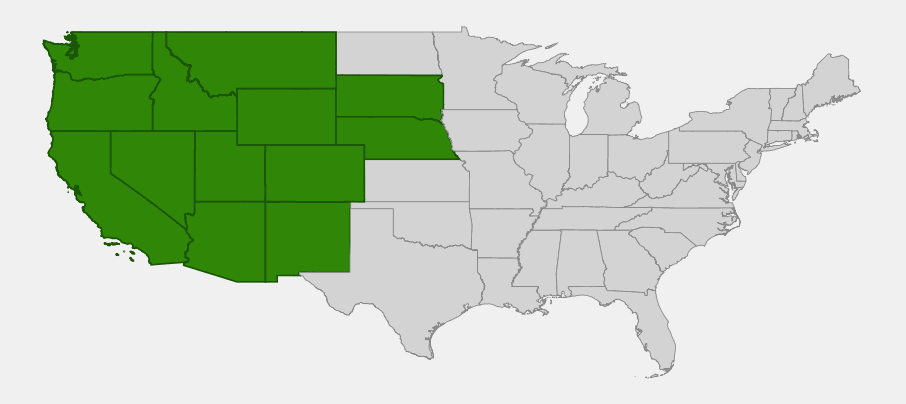
Slender phlox is native to western North America and to western South America. USDA PLANTS lists it as native in the lower 48 states and Canada. It records the species from 14 states, but the Illinois record is outside its natural range; the species reaches its eastern native limit in the western Dakotas and Nebraska. This page therefore treats it as native in 13 western states: Arizona, California, Colorado, Idaho, Montana, Nebraska, Nevada, New Mexico, Oregon, South Dakota, Utah, Washington and Wyoming. USDA also lists it as introduced in Alaska.
In Canada it is native in British Columbia and Alberta, and it has been recorded in Yukon, where it is considered introduced. Within the United States it is common on both sides of the Cascades in Washington and Oregon, throughout California, across the Great Basin and the Rocky Mountains, and south into the mountains of Arizona and New Mexico. It is scattered in the western parts of South Dakota and Nebraska, including the Black Hills region.
It grows in open, sunny or lightly shaded places that are moist in spring: sagebrush steppe, bunchgrass grasslands, oak and pine woodland, forest openings, rocky ridges and slopes, gravel bars, meadow edges and disturbed ground, from near sea level to subalpine elevations.
📋 Regional plant lists featuring Slender Phlox: Idaho, Eastern Oregon & Eastern Washington · Montana & Wyoming · Nebraska, Kansas & Eastern Colorado · Utah & Western Colorado · Arizona & New Mexico · North Dakota, South Dakota & Western Minnesota · Western Oregon & Western Washington · California & Nevada
Growing & Care Guide
Slender phlox is not sold as a garden plant, but seed is occasionally available from native seed suppliers in the West, and it often appears on its own in native gardens and meadows. It is best for informal plantings where a small spring annual can come and go and reseed itself.
Light
Full sun to partial shade. It grows well in open sites and under the light shade of oaks, pines or shrubs that let spring sunlight through.
Soil & Water
It prefers sandy, gravelly or rocky soil that is moist in spring and dries out in summer. Rainfall is usually enough. Avoid rich, heavily watered beds, where larger plants will crowd it out.
Planting Tips
Scatter seed on bare soil in fall so that it gets winter moisture and cold. It works well in rock gardens, gravel gardens, between paving stones, on dry slopes and in wildflower meadows with other small spring annuals and bunchgrasses.
Pruning & Maintenance
No pruning is needed. Leave plants in place until they have dropped their seeds in early summer. Keep the area open: dense mulch, turf and non-native annual grasses prevent it from reseeding.
Propagation
Grow it from seed. In nature, seeds germinate in fall or early spring after a cold, moist period. Sow outdoors in fall, or give seed several weeks of cold, moist stratification before spring sowing. Once established, it reseeds itself.
Landscape Uses
- Rock and gravel gardens: tiny spring flowers among stones
- Wildflower meadows: a self-sowing native annual in open spaces
- Sagebrush and dryland gardens: early color between shrubs and bunchgrasses
- Pollinator plantings: early nectar for small native bees and flies
- Habitat restoration: part of native annual wildflower seed mixes
Wildlife & Ecological Value
Slender phlox is a small but common member of the spring wildflower community across much of the West.
For Pollinators
The small flowers are visited by small native bees, bee flies and other flies, and small butterflies.
For Birds
Sparrows, finches and other seed-eating birds may eat the tiny seeds.
For Mammals
Small rodents eat seeds of spring annuals, and the plants may be grazed lightly by rabbits and other herbivores.
Ecosystem Role
As one of many spring annuals, slender phlox helps cover open soil between shrubs and bunchgrasses, a role that is often taken over by invasive cheatgrass in degraded sagebrush steppe. Its presence in both North and South America, separated by the tropics, is a well-known example of an amphitropical plant distribution.
Cultural & Historical Uses
William Jackson Hooker first described the plant as Gilia gracilis, from specimens collected in northwestern North America. It was later moved to Collomia, then placed in its own genus, Microsteris, by Edward Lee Greene. Some recent botanists include it in Phlox, so it may be listed as either Microsteris gracilis or Phlox gracilis.
The plant’s range in both the western Americas, from British Columbia to Mexico and from Peru to southern Chile and Argentina, has made it a subject of interest for botanists who study how plants crossed the tropics, possibly carried long distances by migrating birds.
For hikers and naturalists in the West, slender phlox is one of the small “belly flowers” of spring, best seen by getting down on hands and knees. Large numbers can carpet open ground for a few weeks after snowmelt or spring rains.
Frequently Asked Questions
Is slender phlox a true phlox?
It is in the phlox family, and some botanists include it in the genus Phlox as Phlox gracilis. Others keep it in its own genus, Microsteris.
Is slender phlox an annual?
Yes. It sprouts in fall or spring, flowers for a few weeks, sets seed and dies by early summer.
Where does it grow?
Across most of the western United States and southwestern Canada, from sea level to the mountains, in sagebrush, grasslands and open woods. It also grows in western South America.
Can I grow it in my garden?
Yes, from seed sown on bare, well-drained soil in fall. It works best in rock gardens and meadows where it can reseed.
Why are the leaves sticky?
The leaves and calyx are covered with small glandular hairs that make them slightly sticky, which may help protect the plant from small insects and drying out.

Looking for a nursery that carries Slender Phlox?
Browse our native plant nursery directory: Arizona · California · Colorado · Idaho · Montana · Nebraska, Nevada & New Mexico · Oregon · South Dakota & Utah · Washington · Wyoming