
Whitebrush (Aloysia gratissima)
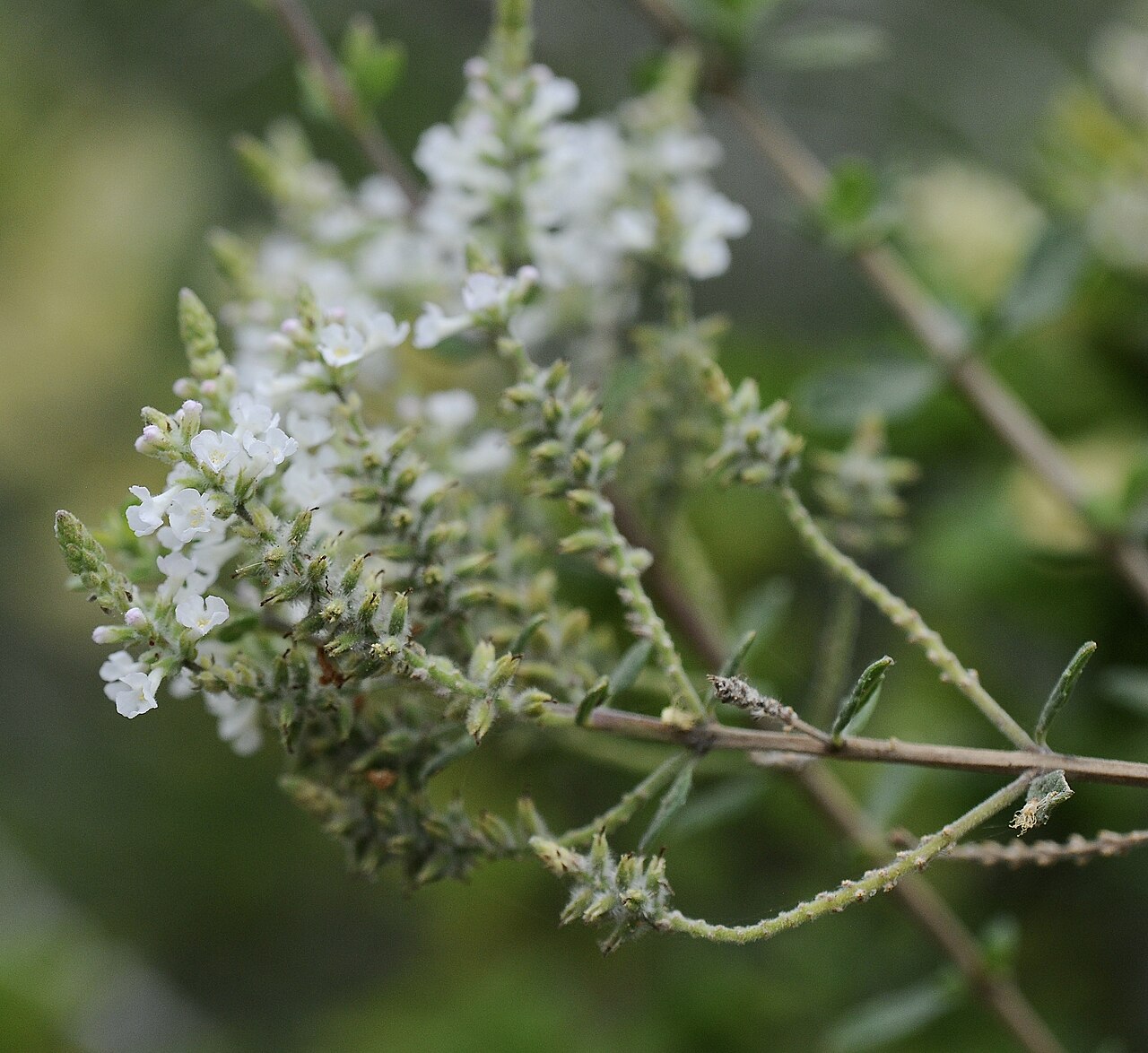
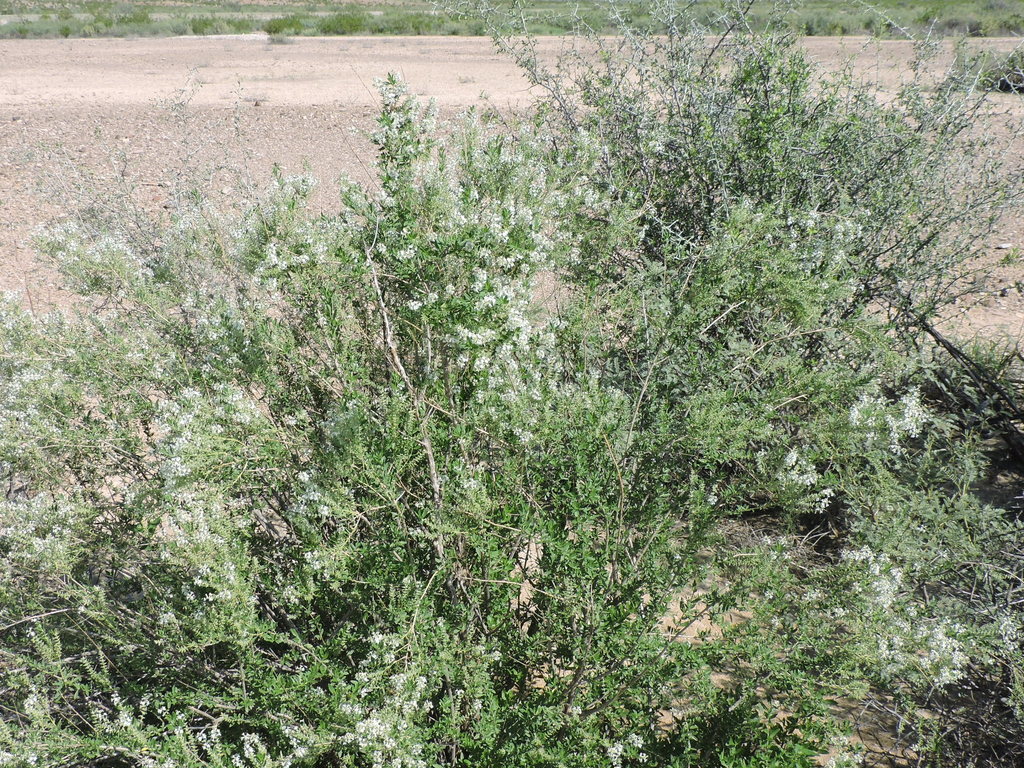
Aloysia gratissima, known as Whitebrush, beebrush or common bee-brush, is a fragrant, many-stemmed shrub in the verbena family (Verbenaceae). It usually grows 3 to 8 feet tall (occasionally to 10 feet), with slender, squarish, gray-barked stems and small, aromatic leaves. After warm-season rains it bursts into bloom with countless slender spikes of tiny white flowers that smell strongly of vanilla.
Whitebrush is native from South and West Texas into southern New Mexico and Arizona, and south through Mexico; it also grows in South America from Bolivia and southern Brazil to Argentina, Uruguay and Chile. In Texas it is common on the Edwards Plateau, the South Texas brush country, the Rio Grande Valley and the Trans-Pecos, on rocky slopes, limestone bluffs, canyons, desert grasslands and the edges of brushy draws.
It is famous as a honey plant. Whitebrush honey is light and mild, and beekeepers in South Texas have long valued it. In gardens, whitebrush is a tough, drought-tolerant, deer-resistant shrub for screens and wildlife plantings, though it can sucker into thickets on rangeland.
Identification
Look for an airy, gray-stemmed shrub with small, clustered, aromatic leaves and, after rain, clouds of slender white flower spikes with a sweet vanilla scent.
Growth Habit
Whitebrush is a deciduous to semi-evergreen shrub with many slender, upright, often arching stems from the base. The young stems are four-angled (square), and the bark is light gray. Some short side branches end in stiff, sharp tips. It spreads by root sprouts and can form dense thickets, especially on disturbed rangeland.
Leaves
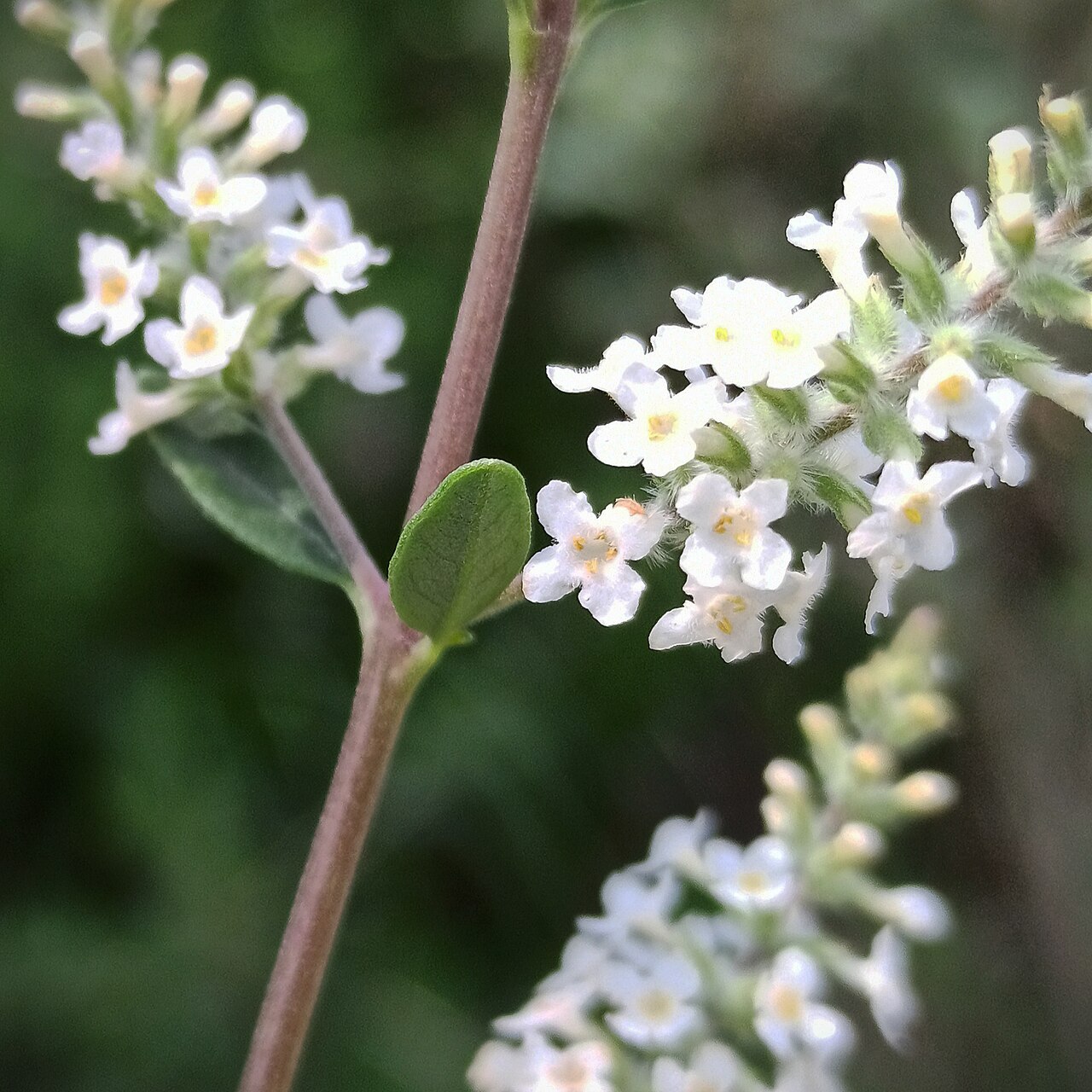
The leaves are opposite or clustered in small bundles along the stems, narrowly oval to lance-shaped, up to about 1 inch long and 5/16 inch wide but often much smaller, with smooth or few-toothed edges. They are aromatic when crushed and may drop during long droughts.
Flowers
The flowers are tiny (about 1/8 inch), white, tubular and slightly two-lipped, often with a yellowish throat, crowded on slender spikes up to about 3 inches long that rise from the leaf axils and stand above the foliage. They have a strong vanilla-like fragrance. Whitebrush blooms in flushes from March to November, usually a few days after a good rain.
Fruit
The fruit is small and dry, splitting into two tiny nutlets. It ripens quickly after each flowering flush.
Look-alikes
Wright's beebrush (Aloysia wrightii) of West Texas, New Mexico and Arizona has small, round, toothed leaves and is less fragrant. Sweetstem or Rio Grande beebrush (Aloysia macrostachya) of South Texas has lavender to pink flowers in thicker spikes. Lemon verbena (Aloysia citrodora), a South American relative, has larger, lemon-scented leaves in whorls.
Quick Facts
| Scientific Name | Aloysia gratissima |
| Family | Verbenaceae (verbena family) |
| Plant Type | Deciduous to semi-evergreen shrub |
| Mature Height | 3–8 ft (occasionally to 10 ft) |
| Mature Spread | 3–6 ft; can sucker into thickets |
| Growth Rate | Moderate to fast |
| Sun Exposure | Full sun to part shade |
| Water Needs | Low to medium; drought tolerant |
| Soil Type | Rocky, sandy, loam, clay, caliche or limestone soils |
| Soil pH | Neutral to alkaline (about 7.0–8.5) |
| Bloom Time | March–November, in flushes after rain |
| Flower Color | White |
| Fall Color | None; may drop leaves in drought or cold |
| Fruit | Tiny dry fruits splitting into two nutlets |
| Deer Resistant | Yes; rarely browsed heavily |
| USDA Hardiness Zones | 7–11 |
Native Range
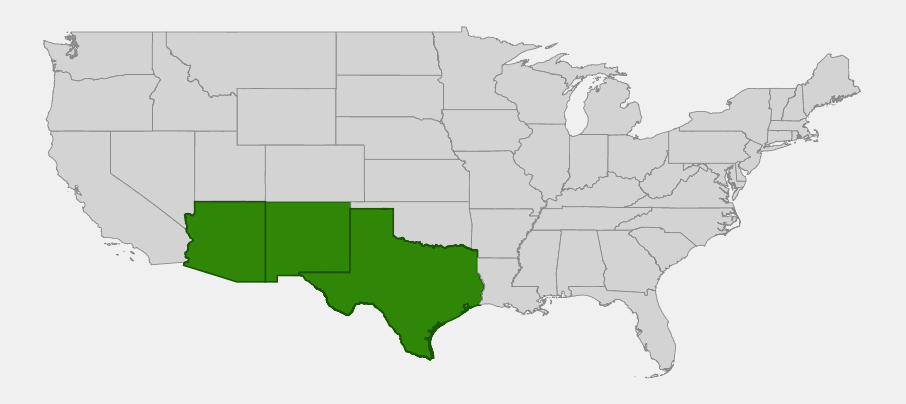
USDA PLANTS lists whitebrush as native in three states: Texas, New Mexico and Arizona. Its range continues south through much of Mexico, and it also grows in South America, in Bolivia, Paraguay, southern Brazil, Uruguay, northern Argentina and central Chile.
In Texas it is common on the Edwards Plateau and in the Hill Country, the South Texas Plains and Rio Grande Valley, and the Trans-Pecos, including Big Bend, and it extends north into the western Cross Timbers. In New Mexico it is limited to the southern part of the state, and Arizona records are few and scattered in the southern part of the state.
It grows on rocky outcrops, limestone bluffs and canyon slopes, in desert grasslands and thornscrub, along dry washes and in open woods, often on limestone, caliche or gravelly soils.
📋 Regional plant lists featuring Whitebrush: Arizona & New Mexico · South & West Texas
Growing & Care Guide
Whitebrush is an easy shrub for hot, dry gardens in Texas and the Southwest. It needs little care once established and rewards every good rain with a flush of fragrant flowers.
Light
Full sun gives the densest growth and most flowers. It tolerates part shade, where it becomes more open and airy.
Soil & Water
It grows in almost any well-drained soil, including rocky limestone, caliche, sand and clay. Water regularly during the first summer. After that it is very drought tolerant; an occasional deep watering in summer encourages extra blooming flushes.
Planting Tips
Plant in fall or early spring. Use it in an informal hedge, screen or wildlife thicket, or near a patio or window where its vanilla fragrance can be enjoyed. Give it room, because older plants can sucker and widen.
Pruning & Maintenance
Prune in late winter to shape it or to remove old, leggy stems; it resprouts well. Remove unwanted root suckers to keep it in bounds. Light trimming after a bloom flush can encourage more flowers.
Propagation
The most reliable method is softwood tip cuttings taken in late spring or summer. It can also be grown from fresh seed, and rooted suckers can be dug and moved while small.
Landscape Uses
- Pollinator and bee gardens: an outstanding nectar plant for honeybees, native bees and butterflies
- Fragrance gardens: vanilla-scented flowers after every rain
- Informal hedges and screens: many-stemmed, airy shrub
- Xeric landscapes: thrives in rocky, alkaline soils with little water
- Wildlife thickets: cover and nesting sites for birds
Wildlife & Ecological Value
Whitebrush is one of the most important nectar plants of the South Texas brush country and the Hill Country.
For Pollinators
Honeybees, native bees, wasps, flies and many butterflies, including hairstreaks, blues and skippers, crowd the flowers after rain. Beekeepers prize it as a source of light, mild whitebrush honey.
For Birds
Its dense, twiggy growth provides cover and nesting sites for songbirds, and birds eat the tiny fruits and the many insects that visit the flowers.
For Mammals
Deer generally avoid it, though they may browse it lightly when other food is scarce.
Ecosystem Role
Whitebrush is a common member of brushy rangeland and thornscrub. It can increase and form thickets where grasslands are overgrazed, which ranchers sometimes treat as a brush problem, but in balanced plant communities it adds diversity and food for insects.
Cultural & Historical Uses
The genus Aloysia honors Maria Luisa of Parma, wife of King Charles IV of Spain. The species name gratissima means “most pleasing,” a reference to its delightful fragrance.
In Mexico and South America it is known by names such as vara dulce (“sweet stick”) and cedrón del monte. Its leaves have been used in traditional herbal teas for digestive and nervous complaints, and researchers have studied its aromatic oils. It should not be used as a home remedy without professional advice.
In South Texas, whitebrush honey is a regional specialty. Because the shrub blooms after rains, beekeepers and ranchers have long watched it as a sign that a nectar flow is on the way.
Frequently Asked Questions
Why is it called whitebrush?
For its masses of white flower spikes, which can make whole hillsides of brush look white after a rain. It is also called beebrush because of its importance to bees.
When does whitebrush bloom?
It blooms in flushes from March to November, usually a few days after a good rain.
Is whitebrush deer resistant?
Yes. Deer usually leave it alone, which makes it useful in Hill Country gardens.
Does whitebrush spread?
Yes. It can sucker from the roots and form thickets, especially on disturbed or overgrazed land. In gardens, remove unwanted suckers to keep it in bounds.
How is whitebrush honey?
Whitebrush honey is light in color with a mild flavor, and it is a valued specialty of South Texas beekeepers.

Looking for a nursery that carries Whitebrush?
Browse our native plant nursery directory: Arizona · New Mexico · Texas