
Snake Apple (Ibervillea lindheimeri)
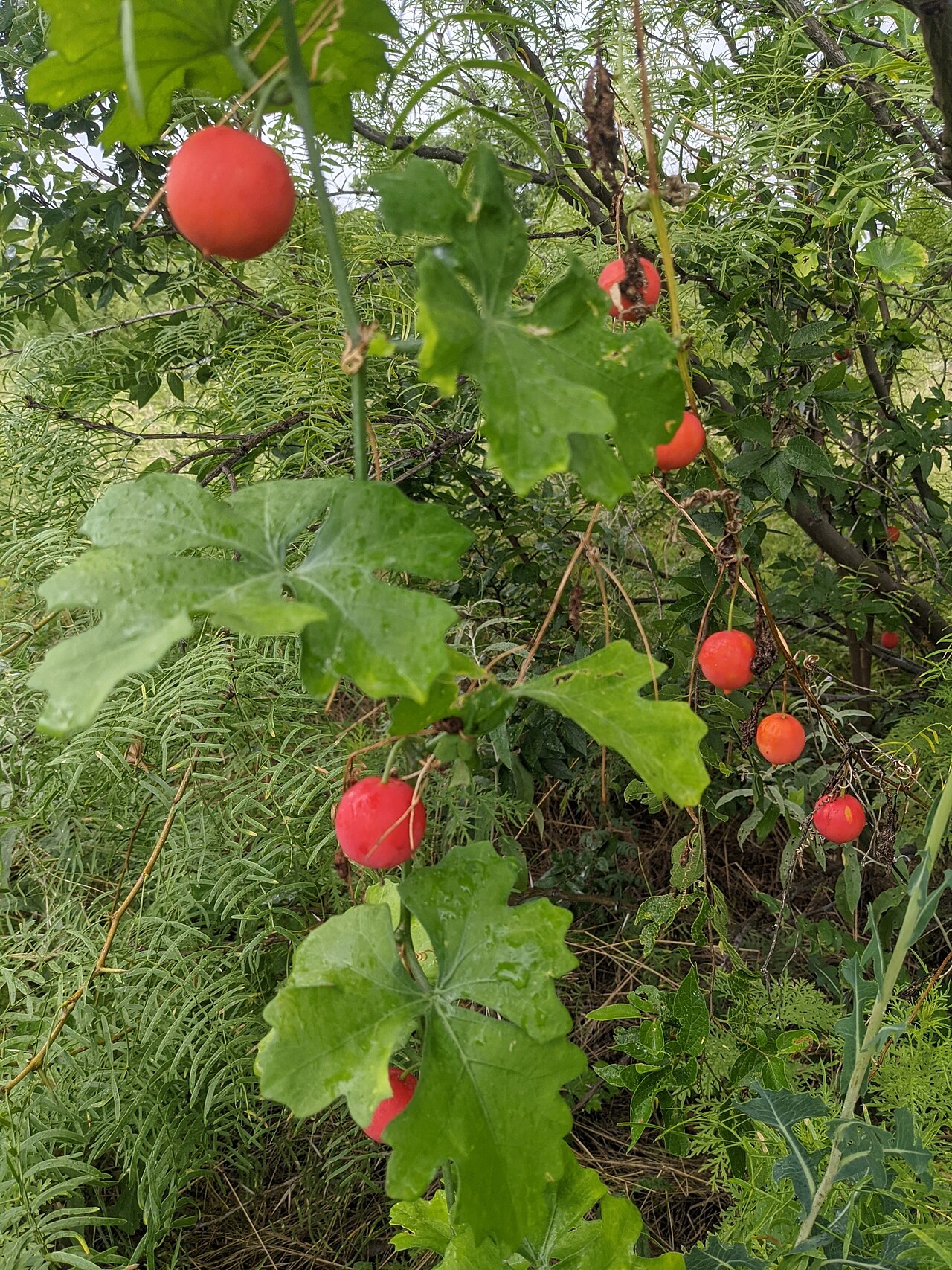
Ibervillea lindheimeri, known as Snake Apple, balsam gourd or Lindheimer’s globeberry, is a climbing perennial vine in the gourd family (Cucurbitaceae). It grows from a large, swollen, tuberous root that can live for many years, and each spring it sends up slender stems that climb 6 to 10 feet through shrubs and fences by coiling tendrils. The leaves are deeply cut into three to five lobes, the small flowers are pale yellow, and the round fruits ripen to a glossy, bright red that stands out against the brush in late summer and fall.
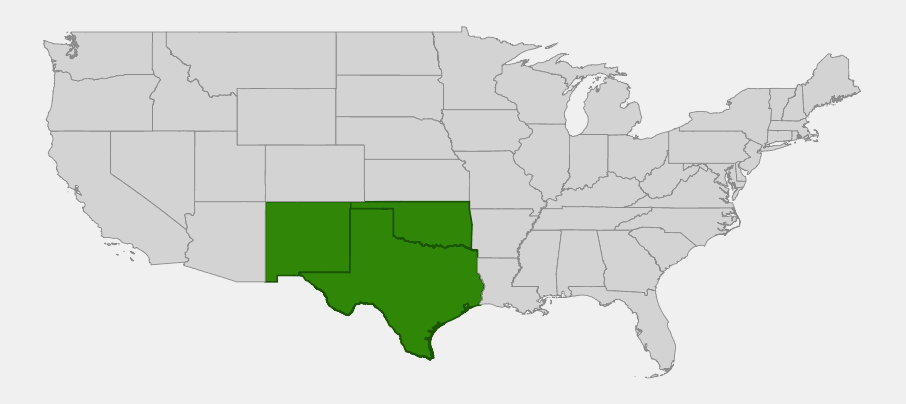
Snake apple is a plant of central and south Texas, reaching southwestern Oklahoma and southeastern New Mexico, and extending south into northeastern Mexico. It grows in thickets, open woodlands, brushy pastures, fence rows and rocky limestone hills, on sand, loam and clay. Like other members of its genus, it is dioecious, with male and female flowers on separate plants, so only female plants bear the red fruits.
Safety note: treat the fruits, seeds and root of snake apple as poisonous. Like many wild gourds, it contains bitter, irritating compounds (cucurbitacins), and the fruits are not edible even though they look like small tomatoes. Keep children and pets away from the fruit, and wear gloves if you handle the root.
Identification
Look for a thin, tendril-climbing vine with deeply lobed leaves draped over brush or a fence, small pale yellow star-like flowers, and round fruits that change from striped green to bright red.
Growth Habit
Snake apple is a herbaceous perennial vine. The stems die back in winter or drought and regrow from a large, rounded to turnip-shaped tuberous root (a caudex) that sits at or just below the soil surface and can grow several inches across over the years. The stems are slender, smooth and green, branching and climbing by simple coiled tendrils. A single plant can cover a small shrub or a few feet of fence.
Leaves
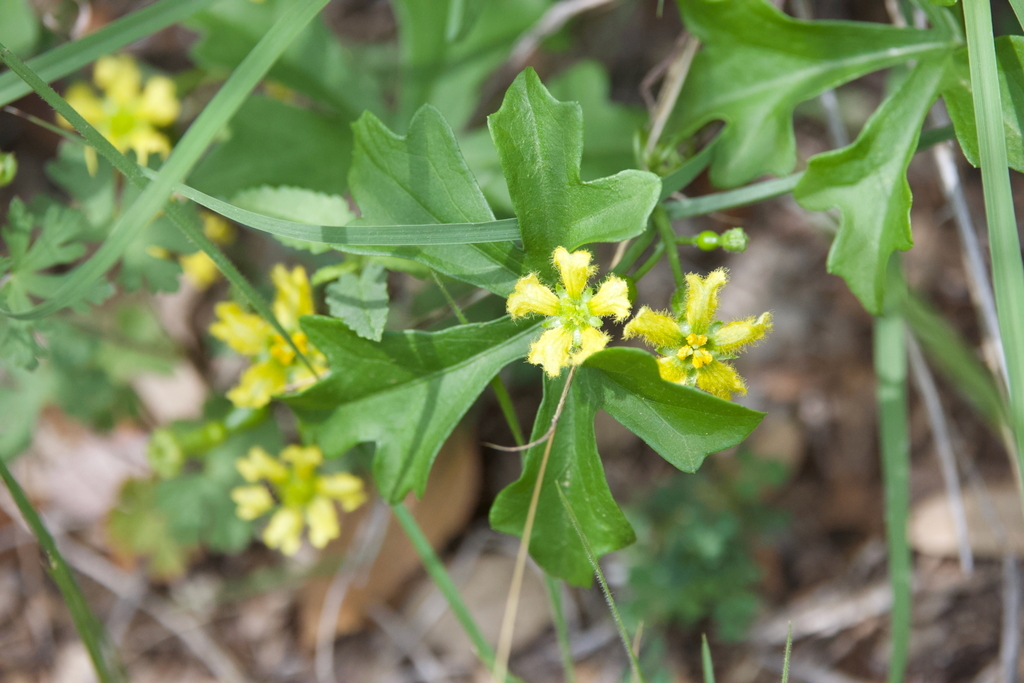
The leaves are alternate, 1 1/2 to about 3 1/4 inches long, and deeply divided into three to five lobes. The lobes are often narrow and toothed or lobed again, giving the leaf a ragged, almost maple-like or bird-foot outline, but leaf shape varies a lot: some plants have broader, shallowly lobed leaves. The surface is slightly rough to the touch.
Flowers
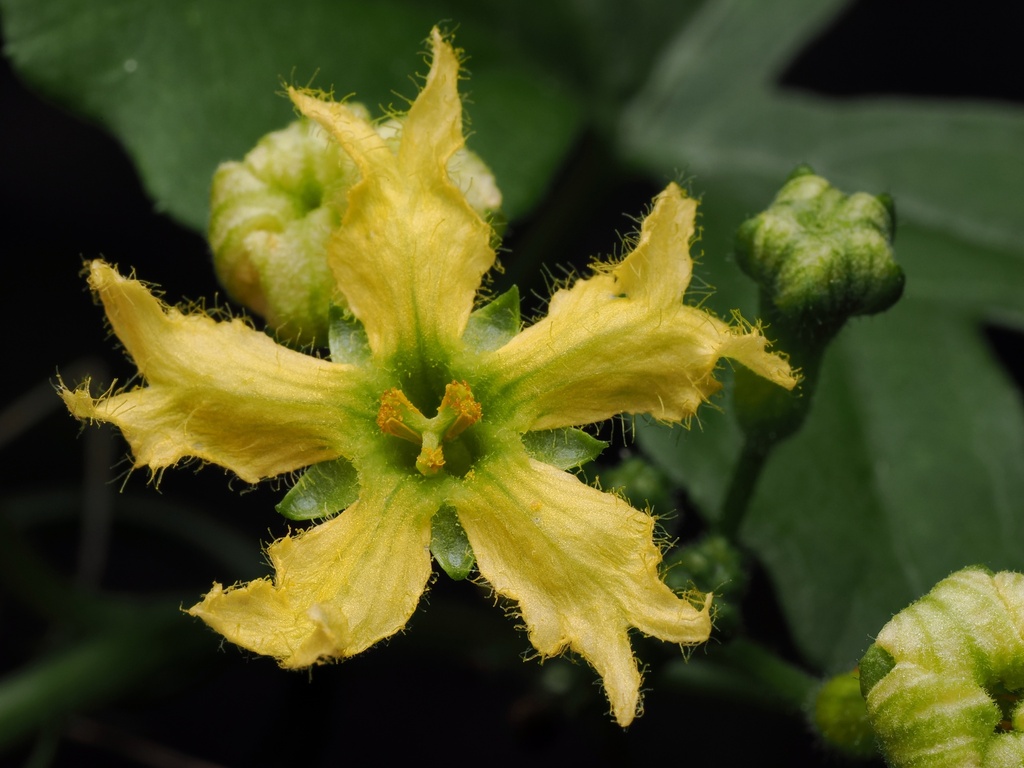
The flowers are pale to creamy yellow, tubular at the base and flaring into five narrow, spreading lobes about 1/2 inch across, with fine hairs and crinkled edges. Male flowers are borne in small clusters, while female flowers are usually single and sit on top of a small, rounded ovary. They bloom from April through September, especially after rains.
Fruit
The fruit is a round berry about 1 to 2 inches across. Young fruits are green with pale stripes or mottling; ripe fruits turn smooth, glossy bright red to red-orange, and contain many flattened seeds. They hang from short stalks along the stems and are easy to spot in late summer and fall.
Look-alikes
Buffalo gourd (Cucurbita foetidissima) is a much coarser, ground-sprawling vine with large, gray-green, triangular leaves, large yellow flowers and yellow-green, baseball-sized gourds. Melonette (Melothria pendula) is a very slender vine with small, shallowly lobed leaves and tiny fruits that ripen black. Passionflowers such as purple passionflower also climb by tendrils and have lobed leaves, but their flowers are large and fringed and the fruits are egg-shaped and green or yellow. Related species of Ibervillea occur in far south and west Texas and are told apart by leaf and fruit details.
Quick Facts
| Scientific Name | Ibervillea lindheimeri |
| Family | Cucurbitaceae (gourd family) |
| Plant Type | Perennial tendril-climbing vine from a tuberous root |
| Mature Height | 6–10 ft (climbing) |
| Mature Spread | 3–6 ft |
| Growth Rate | Fast (stems); slow (root) |
| Sun Exposure | Full sun to part shade |
| Water Needs | Low; drought tolerant |
| Soil Type | Sand, loam, clay or rocky limestone soils; well drained |
| Soil pH | Neutral to alkaline (about 6.5–8.5) |
| Bloom Time | April–September |
| Flower Color | Pale yellow |
| Fall Color | None; stems die back |
| Fruit | Round red berry, 1–2 in; not edible |
| Deer Resistant | Somewhat; rarely browsed |
| USDA Hardiness Zones | 7–10 |
Native Range
Snake apple is native to the southern Great Plains and the borderlands of Texas and northern Mexico. USDA PLANTS lists it as native in Texas, Oklahoma and New Mexico. In Texas it is most common on the Edwards Plateau, in the Hill Country and the South Texas Plains, and also grows in the Cross Timbers, the Blackland Prairie and on the coastal plain near the Gulf. It reaches southwestern Oklahoma and southeastern New Mexico at the northern and western edges of its range, and extends south into the northeastern states of Mexico.
Its habitats are brushy and open: thickets and mesquite brush, oak and juniper woodland edges, rocky limestone slopes, creek banks, pastures and roadside fence rows. It is often noticed climbing through fences, hedges and shrubs in towns such as Austin and San Antonio, where the tuberous root survives clearing and mowing and regrows each year.
Snake apple is well adapted to hot summers and erratic rainfall. The stems grow quickly after spring and summer rains, flower and fruit, then die back during long droughts or after frost, while the root waits underground. It is not part of the East Texas Pineywoods flora and is not known from Arkansas or Louisiana.
📋 Regional plant lists featuring Snake Apple: South & West Texas
Growing & Care Guide
Snake apple is an easy, low-water vine for Texas gardens, valued for its lacy leaves and its bright red fruits. It is occasionally offered by native plant nurseries in Texas, and its swollen root also makes it popular with growers of caudiciform succulents, who often raise it in containers. Grow it where children and pets will not be tempted by the fruit.
Light
Full sun to part shade. In the wild it often climbs from a shaded base into the sun on top of a shrub. Plants in deep shade grow thinly and fruit poorly.
Soil & Water
Any well-drained soil, including rocky limestone, sandy loam and clay that does not stay waterlogged. Water during establishment, then rely mostly on rainfall. The tuberous root rots in soggy soil, especially in winter; in containers, use a gritty cactus or succulent mix and let it dry between waterings, keeping it nearly dry while dormant.
Planting Tips
Plant in spring next to a fence, trellis, open shrub or small tree that the stems can climb. Set the top of the root at or slightly above the soil surface. Because plants are male or female, you need a female plant (and a male nearby) for fruit; seed-grown plants will include both.
Pruning & Maintenance
Little care is needed. Remove the dead stems after they die back in winter or a summer drought. The vine is not aggressive and does not smother its supports, but it can be cut back at any time without harming the root.
Propagation
Grow from seed taken from ripe red fruits (wear gloves). Clean the seed and sow it in spring in a well-drained mix kept warm; germination can be slow and uneven. Seedlings form a small tuber in their first year. Do not dig wild roots: they are slow to replace and often break.
Landscape Uses
- Fences and trellises: light, airy cover with bright red fruit in late summer and fall
- Wildlife and habitat gardens: a native vine for brushy hedgerows in central and south Texas
- Xeriscapes: thrives on rainfall once established
- Containers: grown for its swollen, sculptural root by succulent collectors
- Naturalistic plantings: scrambling through native shrubs as it does in the wild
Wildlife & Ecological Value
Snake apple is a small but distinctive part of the brush communities of central and south Texas, where it climbs through shrubs, hackberries and mesquite.
For Pollinators
The pale yellow flowers are visited by small native bees and other insects, which carry pollen from male to female plants. Flowering continues off and on from spring through late summer, providing a small but steady resource.
For Birds
The bright red fruits are conspicuous, and some birds and other animals feed on them and may disperse the seeds. Vines growing through shrubs and fences also add cover for small birds.
For Mammals
The bitter foliage is seldom browsed, and the tuberous root is protected by its bitter, irritating chemistry. Treat the plant as toxic to pets and livestock.
Ecosystem Role
As a long-lived perennial with a deep storage root, snake apple persists through drought, fire and grazing and regrows quickly after rain. It is one of several native wild gourds in Texas that add diversity to thickets and hedgerows.
Cultural & Historical Uses
The genus Ibervillea was named by the botanist Edward Lee Greene in honor of Pierre Le Moyne d’Iberville, the French explorer who founded the colony of Louisiana. The species name honors Ferdinand Lindheimer, the German-born naturalist who collected plants around New Braunfels, Texas, in the 1840s and 1850s and is often called the father of Texas botany.
The names “snake apple” and “balsam gourd” are old local names in Texas. The fruit’s resemblance to a small tomato or cherry has led to occasional poisonings and stomach upsets, and it should never be eaten. Some wild gourd roots have been used in folk medicine in Mexico, but they are bitter and potentially toxic and should not be used as home remedies.
Among succulent and bonsai enthusiasts, snake apple is grown as a “caudiciform” plant for its swollen, partly exposed root, which can be raised above the soil in a pot to show it off, much like its relative Ibervillea sonorae from the Sonoran Desert.
Frequently Asked Questions
Are snake apple fruits edible?
No. Treat the fruits, seeds and root as poisonous. They contain bitter, irritating compounds typical of wild gourds and can cause vomiting and diarrhea.
Why does my snake apple vine never fruit?
The species has male and female flowers on separate plants. Only female plants make fruit, and they need a male plant nearby for pollination.
Does snake apple come back every year?
Yes. The stems die back in winter or long droughts, but the plant regrows each year from its large tuberous root.
Is snake apple invasive?
No. It is a native vine that climbs lightly through shrubs and fences and does not smother its supports or spread aggressively.
Where does snake apple grow?
It is native to central and south Texas, southwestern Oklahoma and southeastern New Mexico, and extends into northeastern Mexico.

Looking for a nursery that carries Snake Apple?
Browse our native plant nursery directory: New Mexico & Oklahoma · Texas