
Bristly Sarsaparilla (Aralia hispida)
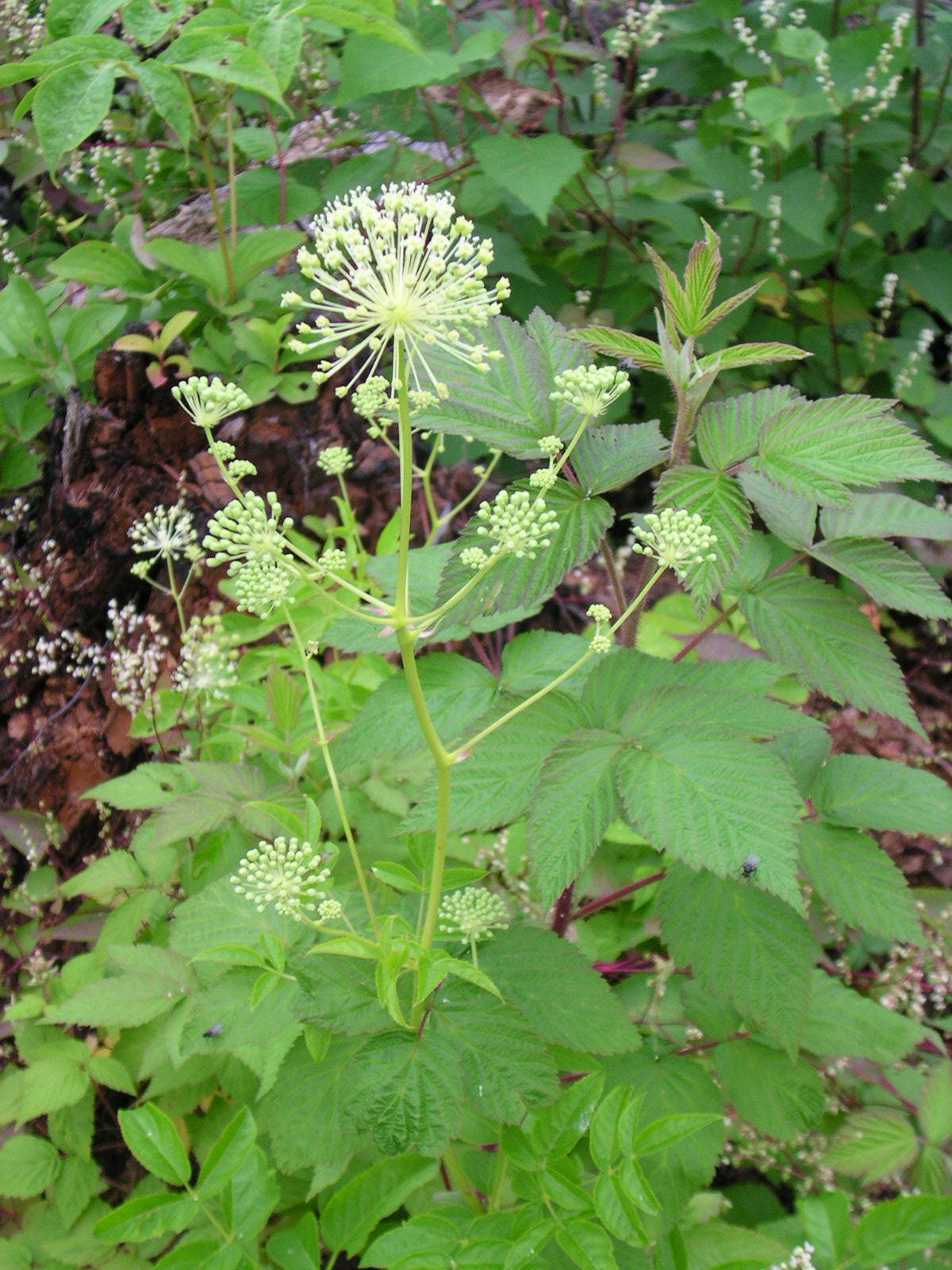
Aralia hispida, known as Bristly Sarsaparilla or dwarf elder, is a native perennial of the ginseng family (Araliaceae) found across eastern Canada, the Great Lakes region and the Northeast. It grows 1 to 3 feet tall, with large, twice-compound leaves, round clusters of small greenish-white flowers in early summer and blue-black berries in late summer. Its name comes from the stiff, sharp bristles that cover the lower stem.
Unlike its woodland relative wild sarsaparilla, bristly sarsaparilla is a plant of sun and poor soil. It thrives on dry, sandy and rocky ground: rock outcrops, ledges, sand plains, clearings, burns and logged areas. It often springs up in large numbers after fire or disturbance, then fades as the forest canopy closes. The lower part of its stem is woody and persists through winter, so botanically it is a small subshrub.
The berries attract birds but are not edible for people, and the bristly stems can irritate bare skin. Do not eat the berries, and wear gloves when handling the plant. In gardens it is an unusual, low-maintenance choice for dry, sunny, sandy or rocky sites in the North.
Identification
Bristly sarsaparilla is easiest to recognize by its stem: stout, often reddish and densely covered with stiff bristles near the base, topped by a few long-stalked, globe-shaped flower clusters.
Stems
The stems are 1 to 3 feet tall. The lower 2 to 8 inches are woody and persist through winter; the rest dies back each fall and resprouts in spring. The lower stem is densely covered with stiff, sharp bristles, while the upper stem is smooth and slender and often reddish. Plants spread slowly by underground rhizomes.
Leaves
There are only a few leaves, mostly on the lower half of the stem. Each is twice compound, with oval to lance-shaped leaflets up to about 3 inches long that are pointed at the tip and sharply toothed. The upper surface is somewhat shiny; the lower surface has fine hairs along the veins.
Flowers
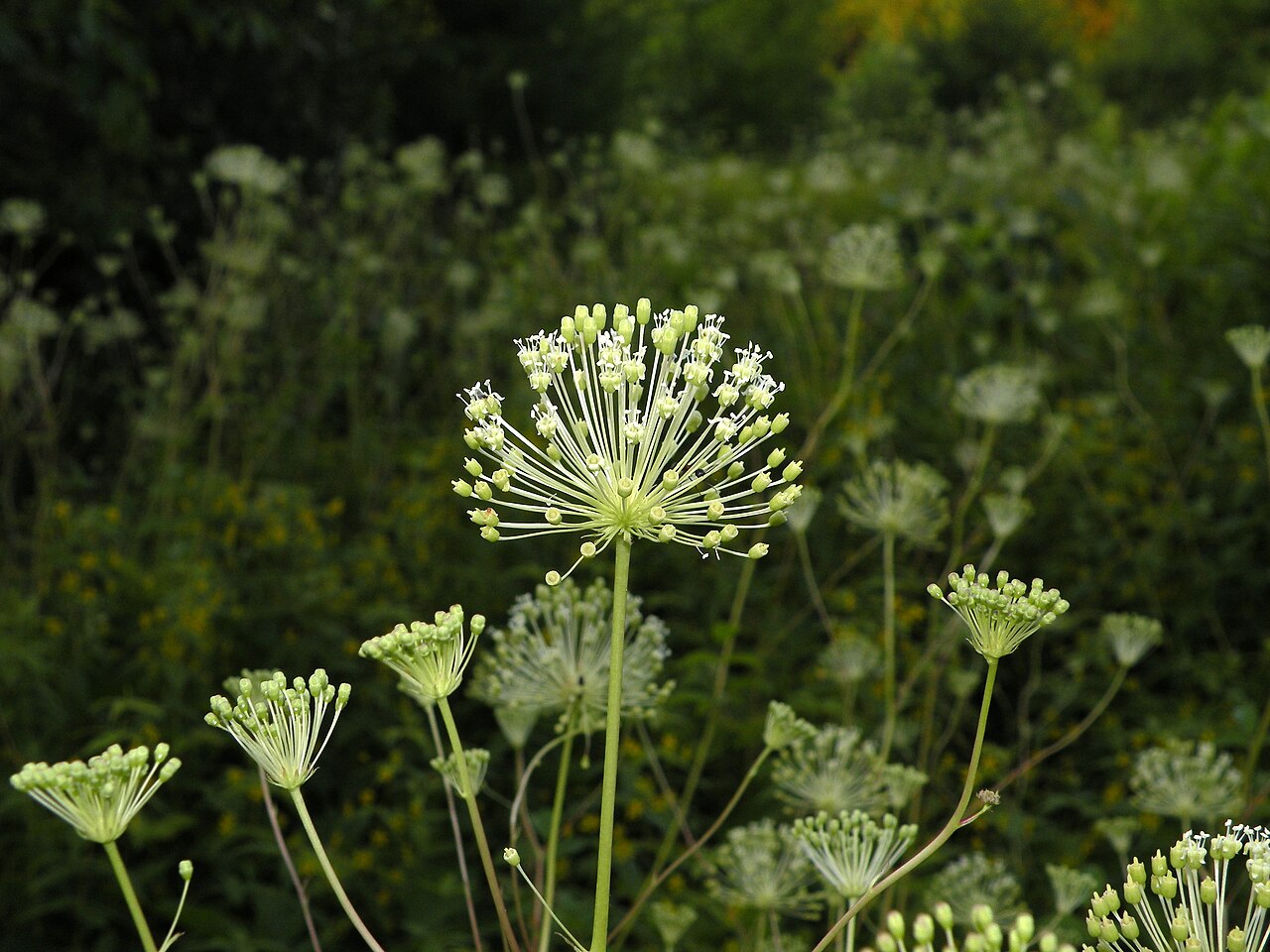
In June and July, two to several round umbels, each 1 to 1 1/4 inches across, rise on long, bare stalks from the top of the stem. Each umbel has up to about 30 tiny flowers with five greenish-white to creamy petals curved backward and five white stamens.
Fruit
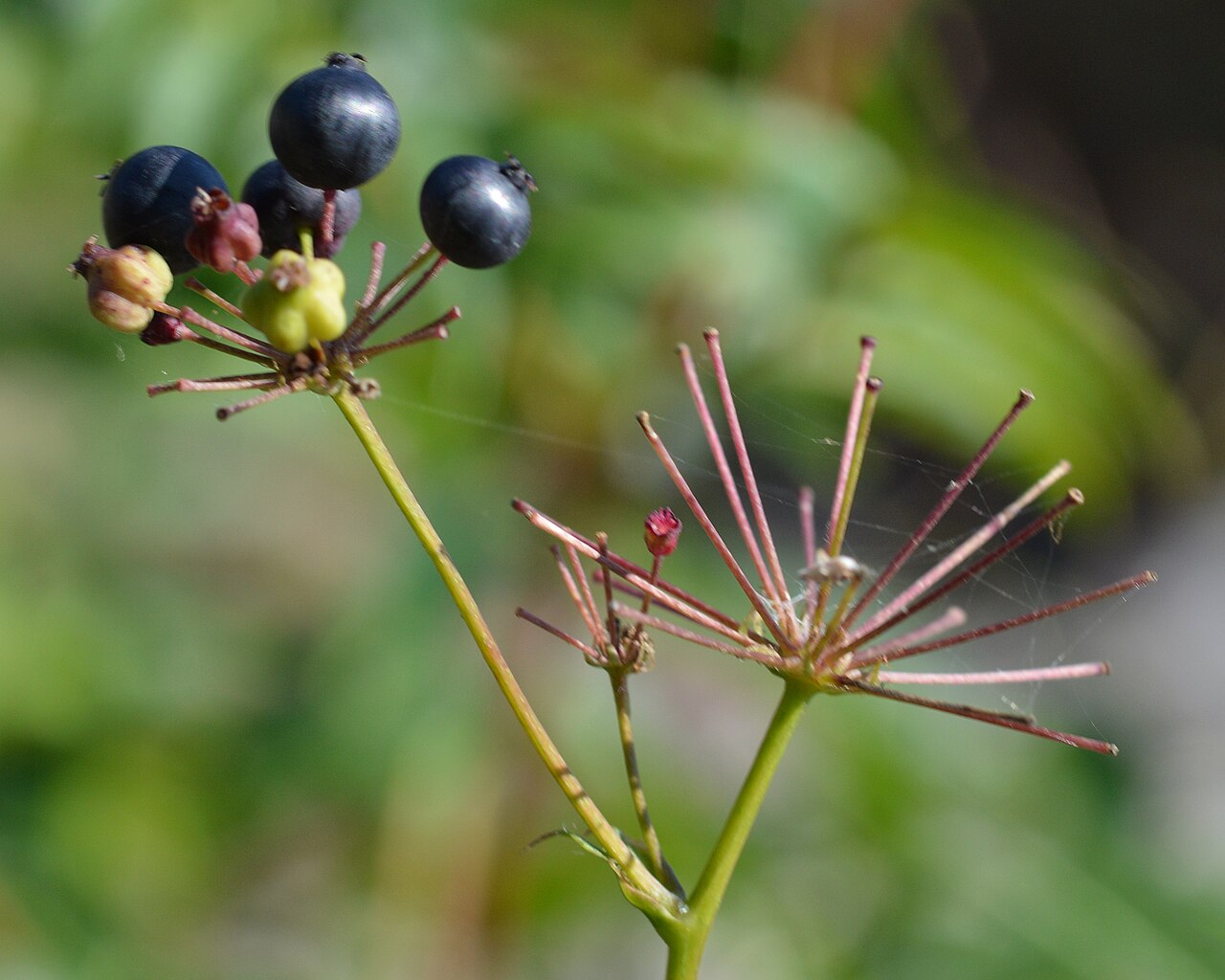
The flowers are followed by round berries about 1/4 to 1/3 inch across, which ripen from green to dark purple-black in August and September. Each berry has five small seeds and resembles a blueberry at a glance.
Look-alikes
Wild sarsaparilla (Aralia nudicaulis) has no bristles, a single leaf and a separate leafless flower stalk under the leaf, and it grows in shady woods. Spikenard (A. racemosa) is much larger, with long branched flower clusters and no bristles. Hercules’ club (A. spinosa) is a tall, spiny shrub or small tree of the South.
Safety
Bristly sarsaparilla berries are not considered edible and may cause stomach upset if eaten in quantity, so keep children and pets from eating them. The stiff bristles on the lower stem can prick and irritate skin; wear gloves to handle or divide plants.
Quick Facts
| Scientific Name | Aralia hispida |
| Family | Araliaceae (ginseng family) |
| Plant Type | Perennial subshrub with a woody, bristly stem base |
| Mature Height | 1–3 ft |
| Mature Spread | 1–2 ft; slowly spreads by rhizomes |
| Growth Rate | Moderate |
| Sun Exposure | Full sun to part shade |
| Water Needs | Low to medium; drought tolerant once established |
| Soil Type | Dry sand, gravel, thin soil over rock |
| Soil pH | About 4.5–6.5 (acidic) |
| Bloom Time | June–July |
| Flower Color | Greenish-white to cream |
| Fall Color | Leaves yellow to reddish |
| Fruit | Dark purple-black berry, 1/4–1/3 in (not edible) |
| Deer Resistant | Moderately; bristly stems discourage browsing |
| USDA Hardiness Zones | 3–7 |
Native Range
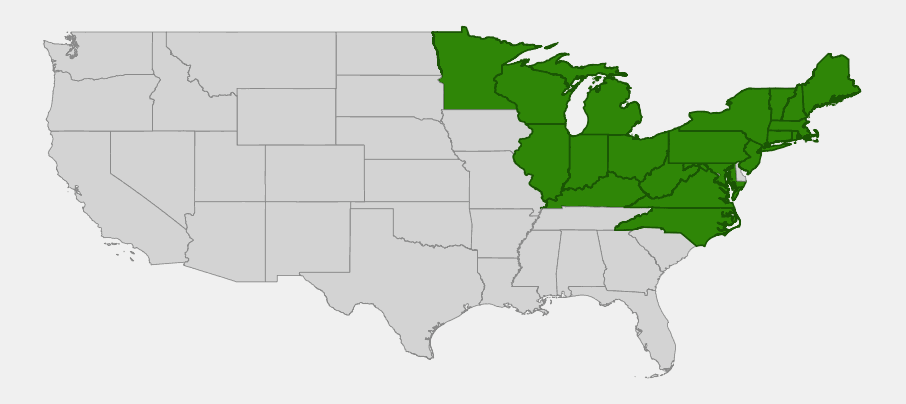
Bristly sarsaparilla is native to northeastern North America. USDA PLANTS records it in eastern Canada, from Saskatchewan and Manitoba east through Ontario and Quebec to the Maritime provinces, Newfoundland and Labrador, and in 20 U.S. states from Minnesota and Illinois east to Maine and south in the Appalachians to Virginia, West Virginia, Kentucky and North Carolina.
It is most common in the northern forest regions: northern Minnesota, Wisconsin and Michigan, New York, northern New England and eastern Canada. In Minnesota, records are concentrated in the northeastern and north-central counties, especially along the North Shore of Lake Superior. Farther south it is scattered on dry ridges, rocky summits and sandy barrens, mainly in the Appalachians, and it becomes uncommon to rare near the southern and western edges of its range, including Illinois, Indiana, Kentucky and North Carolina.
Typical habitats are dry, open, sandy or rocky places: rock outcrops and ledges, bluffs, sand plains and pine barrens, clearings, burns, logged areas, roadsides and open woods. It colonizes quickly after fire and disturbance and declines as shade increases.
📋 Regional plant lists featuring Bristly Sarsaparilla: New York, Pennsylvania & Northern New Jersey · Ohio & Indiana · Michigan, Wisconsin & Eastern Minnesota · Kentucky & Tennessee · Connecticut, Massachusetts & Rhode Island · New Hampshire, Maine & Vermont · Maryland, Virginia & West Virginia · Delaware, Southern New Jersey & Long Island · Illinois, Iowa & Missouri · North & South Carolina
Growing & Care Guide
Bristly sarsaparilla is rarely sold, but it is a tough, low-care native for dry, sunny, sandy or rocky ground in the North. It does best where competition is light and the soil is poor.
Light
Give it full sun to part shade. It flowers and fruits best in sun and gradually declines under a closed tree canopy.
Soil & Water
Plant it in well-drained, acidic, sandy, gravelly or rocky soil. It tolerates drought once established and dislikes rich, heavy or wet soil. Water new plants during their first summer, then rarely. No fertilizer is needed.
Planting Tips
Plant nursery-grown plants in spring or fall, 18 to 24 inches apart, among rocks, on a sandy slope or at the sunny edge of a pine or oak planting. It combines well with lowbush blueberry, sweetfern and native grasses. Do not dig plants from the wild.
Pruning & Maintenance
Little care is needed. Leave the woody stem bases in place, since new growth arises from them in spring. Remove tree seedlings that would eventually shade it. Wear gloves when working around the bristly stems.
Propagation
Sow cleaned seed outdoors in fall; germination is slow and may take two winters. Plants can also be increased by carefully dividing rhizomes in early spring or by root cuttings.
Landscape Uses
- Dry, sandy and rocky gardens: a native for poor soils where little else thrives
- Pine and oak barrens restoration: a characteristic plant of open, fire-adapted sites
- Bird gardens: late-summer berries for songbirds
- Pollinator plantings: early-summer umbels for bees and flies
- Revegetating disturbed ground: colonizes burns, clearings and cut slopes
Wildlife & Ecological Value
Bristly sarsaparilla is a modest but useful member of northern clearings and barrens, feeding pollinators in early summer and birds in late summer.
For Pollinators
The small, open flowers offer easily reached nectar and pollen. They are visited by small bees, syrphid flies and other flies, beetles and small wasps.
For Birds
The dark berries are eaten by songbirds such as thrushes and other fruit-eating birds, which spread the seeds into new clearings and burns.
For Mammals
Small mammals eat fallen berries and seeds. The bristly stems are less attractive to browsing deer and hares than smooth-stemmed plants.
Ecosystem Role
It is an early-successional plant: buried seeds and rhizomes respond quickly to fire, logging and other disturbance, helping to cover and stabilize bare sand and rock. As trees grow and the canopy closes, it declines, persisting mainly on open rocks and sandy openings.
Cultural & Historical Uses
Bristly sarsaparilla belongs to the same genus as wild sarsaparilla and spikenard, plants whose aromatic roots were widely used in folk medicine. Indigenous peoples of the Northeast and Great Lakes and later settlers used bristly sarsaparilla roots in traditional medicines. These uses are historical and not a recommendation; do not use the plant as a home remedy.
The species name hispida means “bristly,” for the stiff hairs on the stem. The common name “dwarf elder” refers to its compound leaves and dark berries, which recall elderberries, though the two are not related.
For foresters and naturalists in the North, bristly sarsaparilla is a familiar sign of recent fire or logging. It is especially common on the burned and rocky landscapes of the Canadian Shield, the Adirondacks and northern Minnesota.
Frequently Asked Questions
Are bristly sarsaparilla berries edible?
No. They look like blueberries but are not considered edible and may upset the stomach. Leave them for the birds.
How is bristly sarsaparilla different from wild sarsaparilla?
Bristly sarsaparilla has bristly, leafy stems with the flowers on top and grows in sunny, dry, sandy or rocky places. Wild sarsaparilla has a single leaf, a separate flower stalk under the leaf and grows in shady woods.
Does bristly sarsaparilla need sun?
Yes, mostly. It grows best in full sun to part shade and fades out under dense shade.
Why does it appear after fires?
Its seeds and rhizomes survive in the soil and respond to the extra light and bare ground after fire or logging.
Is it a shrub or a perennial?
Both, in a sense. The lower stem is woody and persists over winter, but the upper stem dies back each year, so it is usually described as a subshrub.

Looking for a nursery that carries Bristly Sarsaparilla?
Browse our native plant nursery directory: Connecticut · Illinois & Indiana · Kentucky, Maine, Maryland, Massachusetts, Michigan & Minnesota · New Hampshire, New Jersey, New York, North Carolina & Ohio · Pennsylvania, Rhode Island, Vermont & Virginia · West Virginia & Wisconsin
