
Heart-Leaved Skullcap (Scutellaria ovata)
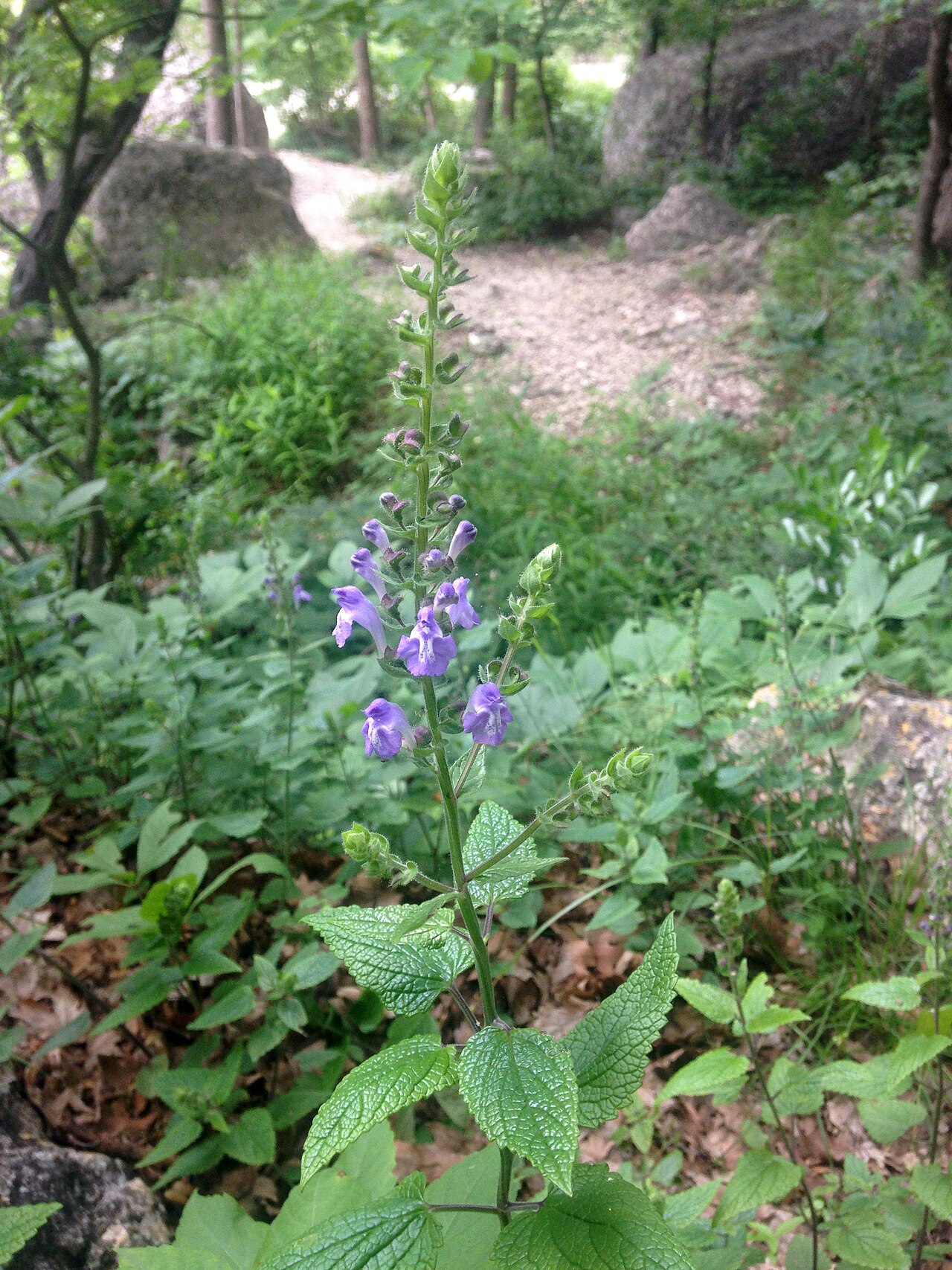
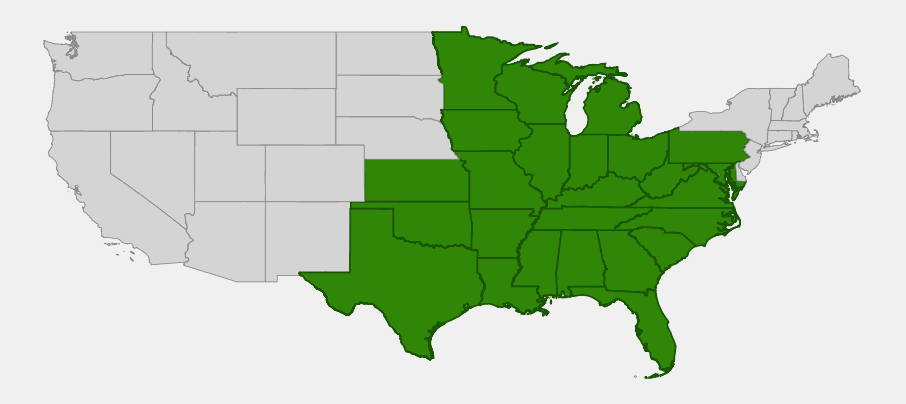
Scutellaria ovata, known as Heart-Leaved Skullcap (USDA: heartleaf skullcap; also egg-leaf skullcap), is a native perennial of the mint family (Lamiaceae). It grows in open woodlands, rocky slopes, bluffs and woodland edges across much of the central and eastern United States, from Minnesota, Wisconsin and Michigan south to Texas and Florida and east to Pennsylvania, Maryland and the Carolinas.
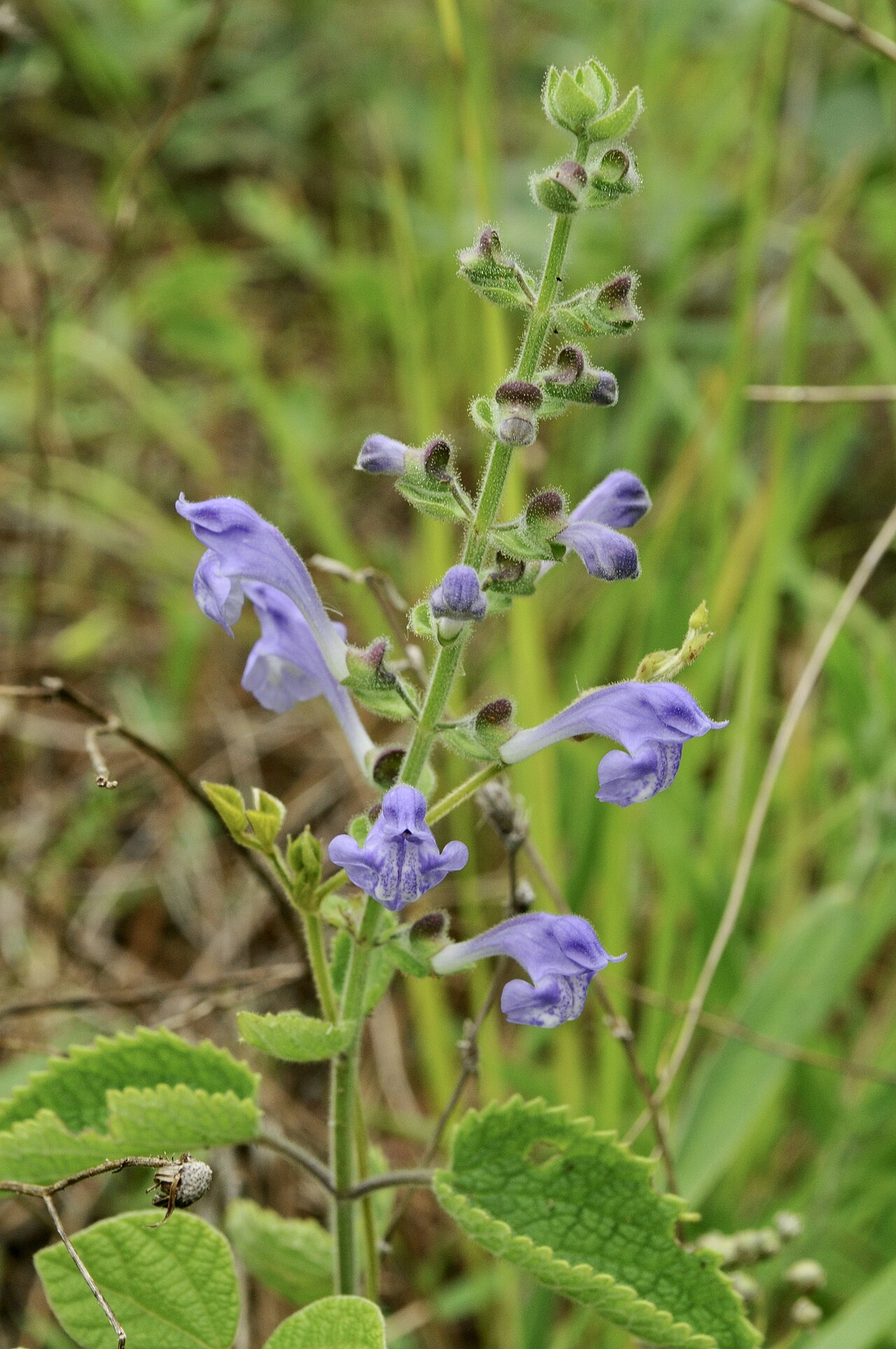
It is one of the showiest of the native skullcaps. From spring into early summer, upright stems 1 to 3 feet tall carry broad, heart-shaped, scalloped leaves in opposite pairs and end in spikes of hooded, blue-violet flowers, each with a pale patch on its lower lip. Like all skullcaps, the calyx at the base of each flower has a small, raised ridge, the “skullcap” or scutellum, that gives the genus its name.
The Lady Bird Johnson Wildflower Center calls heart-leaf skullcap an under-used plant for gardens, with showy blue flowers on spikes similar to a salvia. It thrives in part shade and spreads steadily by fleshy underground stems, making it a good native groundcover-style perennial for woodland gardens, shady borders and naturalized areas, where it attracts bees.
Identification
Look for a square-stemmed mint-family plant of shady woodland edges with broad, heart-shaped, round-toothed leaves in opposite pairs and upright spikes of blue-violet, two-lipped flowers in spring and early summer.
Stems & Growth Form
Stems are upright, usually unbranched or with a few branches near the top, square in cross section and 1 to 3 feet tall. They are covered with soft, often glandular hairs. Plants spread by slender, fleshy rhizomes and often form loose colonies.
Leaves
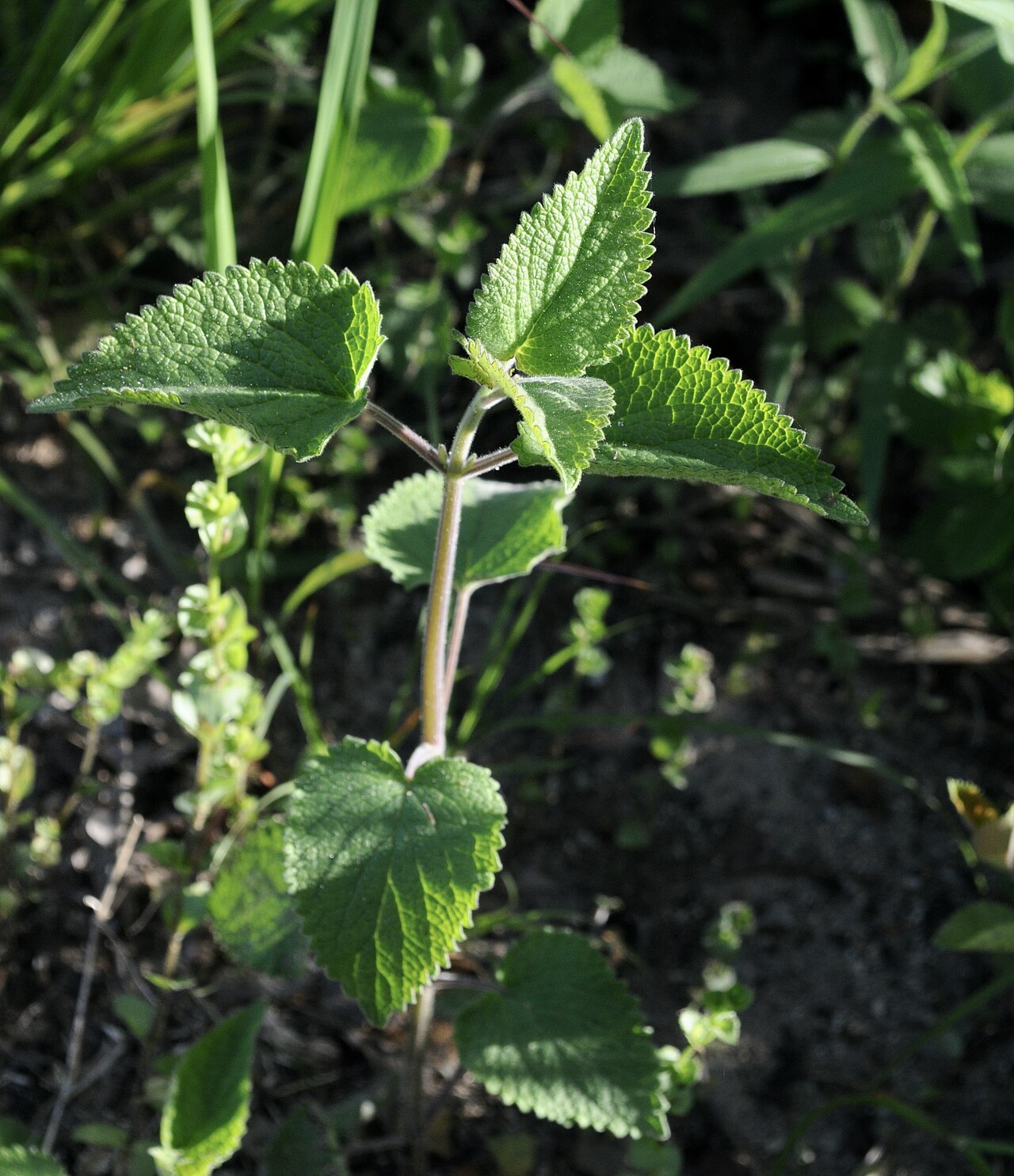
The leaves are opposite, broadly oval to heart-shaped, 1-1/2 to 5 inches long, with a heart-shaped (cordate) base, rounded teeth along the edges and long leaf stalks. They are soft-hairy and somewhat wrinkled, with conspicuous veins, and the lower surface is paler and often dotted with tiny glands. The leaves are largest near the middle of the stem.
Flowers
From about April to June, sometimes into July, the stems end in one or several upright spikes (racemes) of flowers, often with smaller side spikes. Each flower is about 3/4 to 1 inch long, tubular and two-lipped, blue to violet, with a hood-like upper lip and a broad lower lip that has a white or pale center. The small green calyx at the base of each flower has a raised, cap-like ridge on its upper side.
Fruit & Seeds
After flowering, the calyx closes and each flower produces four small, rough nutlets. When ripe, the calyx splits along the ridge, and the nutlets are shaken out by wind and passing animals.
Variation
Heart-leaved skullcap is a variable species. Botanists have named several subspecies and varieties that differ in leaf hairiness, leaf shape and the size of the bracts in the flower spike, and plants from Texas, the Ozarks and the Appalachians can look noticeably different.
Look-alikes
Side-flowering skullcap (S. lateriflora) grows in wet places and has small flowers in one-sided spikes from the leaf axils. Helmet skullcap (S. integrifolia) has narrow, mostly untoothed upper leaves. Downy skullcap (S. incana) has narrower, tapering leaf bases and grayish, downy foliage. Hairy skullcap (S. elliptica) has smaller, oval leaves that are not heart-shaped at the base.
Quick Facts
| Scientific Name | Scutellaria ovata |
| Family | Lamiaceae (mint family) |
| Plant Type | Herbaceous perennial, spreading by rhizomes |
| Mature Height | 1–3 ft |
| Mature Spread | 1–2 ft; forms loose colonies |
| Growth Rate | Moderate to fast |
| Sun Exposure | Partial shade to shade |
| Water Needs | Moderate; moist, well-drained soil |
| Soil Type | Moist sand, loam, clay or rocky limestone soils |
| Soil pH | About 6.0–8.0 (slightly acidic to alkaline) |
| Bloom Time | April–June (sometimes July) |
| Flower Color | Blue to violet with a pale lower lip |
| Fall Color | None notable |
| Fruit | Four small nutlets in a capped calyx |
| Deer Resistant | Moderately; aromatic mint-family foliage is seldom favored |
| USDA Hardiness Zones | 5–9 |
Native Range
Heart-leaved skullcap is native to the central and eastern United States. USDA PLANTS lists it as native to the lower 48 states and records it from 25 states, from Minnesota, Wisconsin, Michigan and Pennsylvania south to Texas, Louisiana, Mississippi, Alabama, Georgia and Florida, and west to Iowa, Kansas and Oklahoma.
It is most common in the Ozarks and Ouachitas of Missouri, Arkansas and Oklahoma, the Interior Low Plateaus of Tennessee and Kentucky, the Appalachian foothills and Piedmont, and in East Texas. In Texas, the Lady Bird Johnson Wildflower Center notes it in open woodlands, along roads and on brushy slopes in East and South Texas, and it also grows in shaded canyons of the Edwards Plateau, such as Lost Maples. At the northern edge of its range, in southern Minnesota, Wisconsin, Michigan and Pennsylvania, it is scattered and local.
Habitats include dry to moist open woods, rocky wooded slopes and bluffs, limestone and dolomite outcrops and glades, woodland edges, thickets, stream banks and roadsides. It grows in moist sand, loam, clay and limestone soils, and is often most abundant on calcareous, rocky ground.
📋 Regional plant lists featuring Heart-Leaved Skullcap: New York, Pennsylvania & Northern New Jersey · Ohio & Indiana · Michigan, Wisconsin & Eastern Minnesota · Kentucky & Tennessee · Nebraska, Kansas & Eastern Colorado · Maryland, Virginia & West Virginia · Illinois, Iowa & Missouri · Alabama, Georgia & Mississippi · North & South Florida · North & South Carolina · Arkansas, Louisiana, Eastern Oklahoma & Eastern Texas · South & West Texas
Growing & Care Guide
Heart-leaved skullcap is an easy, adaptable native perennial for part shade. It is not fussy about soil and spreads steadily into a loose patch. Buy plants or seed from a native plant nursery, preferably from a source near your region, since the species varies from place to place.
Light
Grow it in part shade or light shade, such as under high tree canopy or on the east side of a building. It tolerates more sun where the soil stays moist, but in hot, sunny sites the leaves may scorch and the plants decline in midsummer.
Soil & Water
It does well in average, well-drained soil, from sandy loam to clay and rocky limestone soils. Keep it evenly moist while it establishes. Once established, it tolerates short dry spells, and plants in dry shade may go partly dormant in late summer. No fertilizer is needed.
Planting Tips
Plant in spring or fall, 12 to 18 inches apart. It works well in woodland gardens, shade borders, along shaded paths and under deciduous trees, combined with ferns, woodland sedges, columbine and other spring wildflowers. Because it spreads by rhizomes, give it room or plant it where a loose colony is welcome.
Pruning & Maintenance
Little maintenance is needed. Cut stems back after flowering if they flop or look tired; this may encourage some fresh foliage. Pull or dig unwanted shoots at the edge of the patch in spring to control spread. Leave some stems standing into fall to let seed ripen.
Propagation
Divide established clumps in early spring or fall; the fleshy rhizomes transplant easily. It can also be grown from seed collected when the calyces dry and turn brown. Sow seed in fall outdoors, or give it a few weeks of cold, moist stratification before sowing in spring. Stem cuttings taken in late spring root readily.
Landscape Uses
- Woodland gardens: blue spring and early-summer color in part shade
- Shade borders: a native alternative to non-native salvias and catmints in shade
- Naturalized areas: a spreading, colony-forming perennial for woodland edges
- Pollinator gardens: nectar for bumblebees and other long-tongued bees
- Rock gardens and slopes: on shaded limestone or rocky ground
Wildlife & Ecological Value
Heart-leaved skullcap adds nectar to shady woodland edges in late spring, when many woodland wildflowers have finished blooming.
For Pollinators
The tubular, two-lipped flowers are visited mainly by bumblebees and other medium to large bees, which land on the lower lip and push into the throat for nectar. Small bees and butterflies also visit. Skullcaps also host a few specialized insects, such as the tiny skullcap skeletonizer moth, whose caterpillars feed on the leaves.
For Birds
The plant has little direct value for birds, but its patches provide low cover and insect food for ground-foraging birds along woodland edges.
For Mammals
The aromatic, hairy foliage is not a preferred food for deer or rabbits, which usually browse it only lightly.
Ecosystem Role
Its spreading rhizomes help hold soil on rocky wooded slopes and bluffs, and it is part of the diverse herb layer of open oak and hickory woodlands and glades.
Cultural & Historical Uses
The genus name Scutellaria comes from the Latin scutella, a small dish or shield, after the raised ridge on the calyx. The English name skullcap refers to the same feature, which reminded early botanists of a small cap or helmet. The species name ovata means egg-shaped, describing the leaves.
Several skullcaps, especially side-flowering skullcap (S. lateriflora), have been used in herbal medicine. Heart-leaved skullcap has no well-established medicinal use, and skullcap products have been linked to liver problems, often because of contamination with other plants. Do not use wild skullcap as a home remedy.
For gardeners, heart-leaved skullcap is a rewarding regional native for shade, offered by some native plant nurseries in Texas, the Ozarks and the Southeast. It is valued for its spring bloom, its tolerance of rocky and limestone soils, and its appeal to bumblebees.
Frequently Asked Questions
Does heart-leaved skullcap grow in shade?
Yes. It prefers part shade to light shade and moist, well-drained soil, and does well under high tree canopy and along woodland edges.
Will heart-leaved skullcap spread?
It spreads steadily by fleshy rhizomes into loose colonies. It is easy to control by pulling or dividing extra shoots in spring.
When does heart-leaved skullcap bloom?
Mainly from April to June, sometimes into July, with spikes of blue-violet flowers.
How do I tell it from other skullcaps?
Look for the broad, heart-shaped, round-toothed leaves on long stalks, and showy terminal spikes of fairly large blue-violet flowers. Side-flowering skullcap has smaller flowers along the leaf axils and grows in wet places.
Is heart-leaved skullcap safe for pets?
It is not known as a significant poisonous plant, but it should not be eaten or used as an herbal remedy. Keep pets from chewing on garden plants.

Looking for a nursery that carries Heart-Leaved Skullcap?
Browse our native plant nursery directory: Alabama & Arkansas · Florida & Georgia · Illinois, Indiana, Iowa & Kansas · Kentucky, Louisiana, Maryland, Michigan, Minnesota, Mississippi & Missouri · North Carolina, Ohio & Oklahoma · Pennsylvania, South Carolina, Tennessee, Texas & Virginia · West Virginia & Wisconsin
