
Scarlet Spiderling (Boerhavia coccinea)
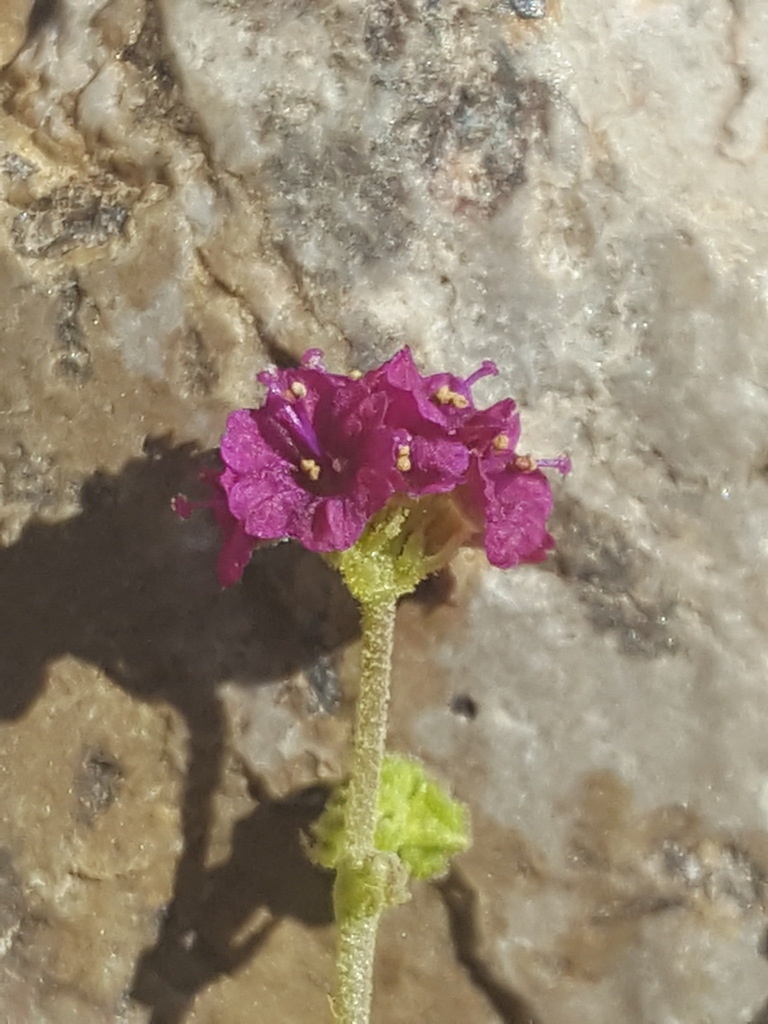
Boerhavia coccinea, known as Scarlet Spiderling, red spiderling or tar vine, is a sprawling, warm-season perennial in the four o’clock family (Nyctaginaceae). It is common across the desert Southwest and Texas, where it trails across roadsides, washes, vacant lots and sunny, disturbed ground, and it is native in Puerto Rico and much of tropical America.
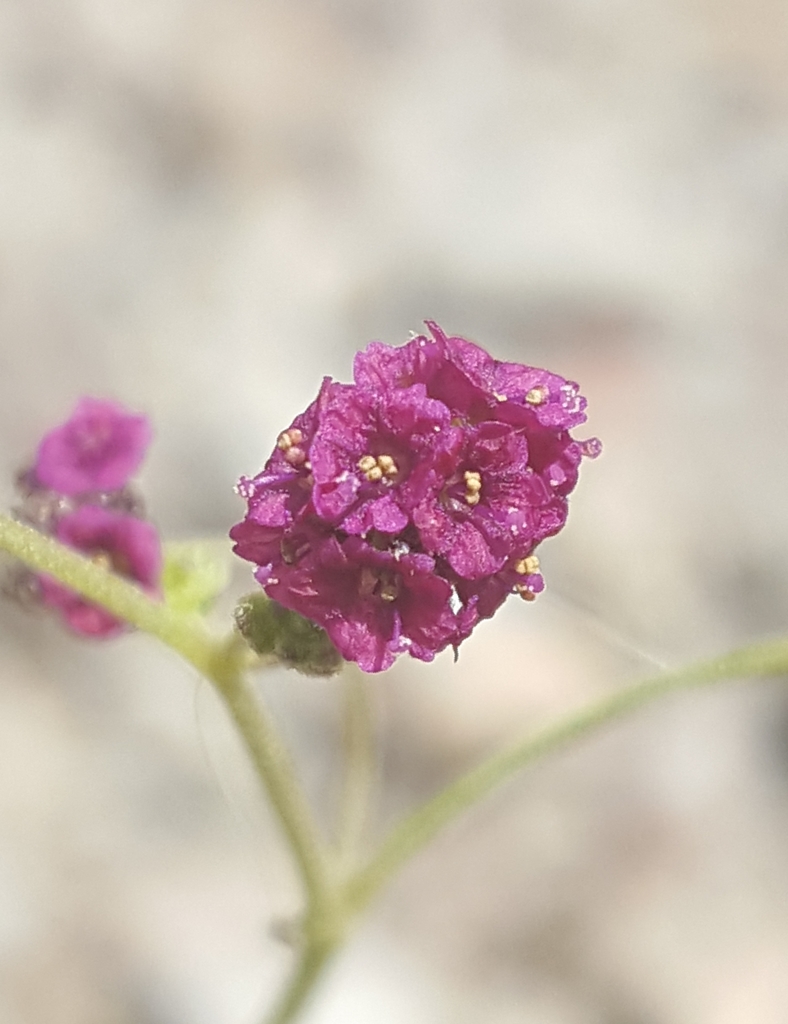
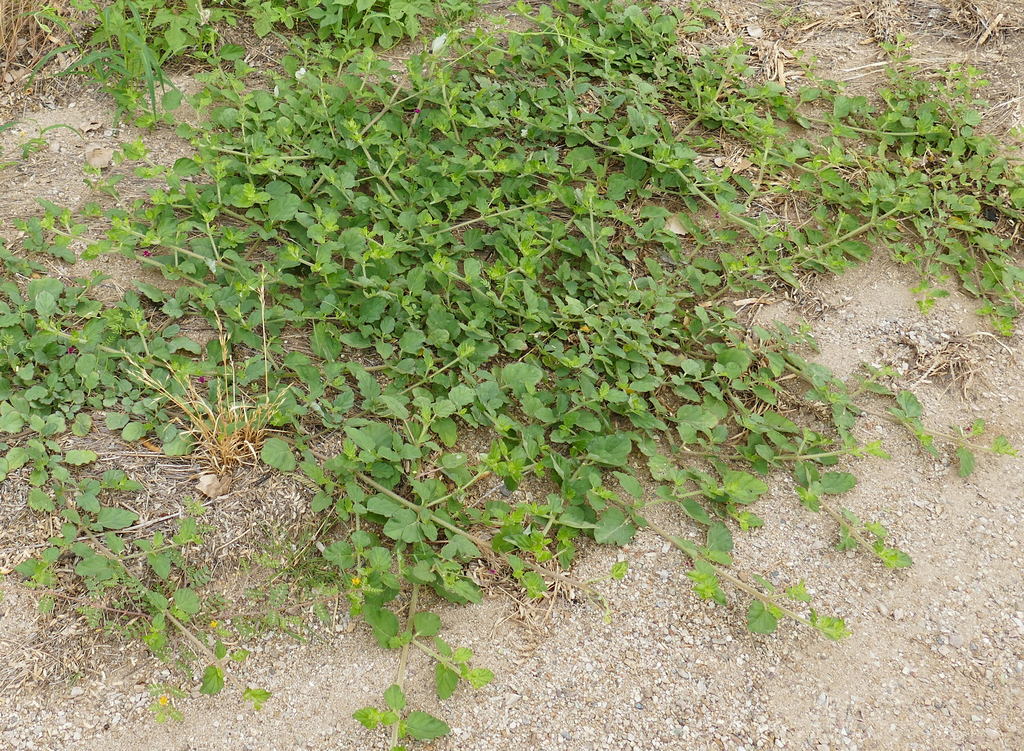
The plant forms loose mats of long, sticky, reddish stems with pairs of wavy-edged, oval leaves. From spring to late fall, slender branched stalks rise above the foliage and carry small, rounded clusters of tiny magenta to red-purple flowers, each only about 1/8 inch long. The flowers are followed by small, club-shaped, glandular-sticky fruits that cling to fur, feathers and clothing, which is how the plant gets around.
Scarlet spiderling is more often seen than planted. It is a tough, heat-loving native that covers bare ground in hot, dry places and offers nectar to small bees and other insects, but it can be weedy in gardens and lawns. This guide covers how to identify it, where it grows, and where it fits in a native landscape.
Identification
Look for a low, sprawling plant with sticky stems, paired oval leaves with wavy edges, and small, button-like clusters of tiny magenta flowers held up on thin, branching stalks.
Growth Habit
Scarlet spiderling is a perennial herb that grows from a thick, somewhat woody taproot. It sends out many trailing to ascending stems that can reach 3 feet or more in length, so a single plant may form a mat several feet across while staying under about a foot tall. The stems are often reddish and are covered in short hairs, many of them glandular and slightly sticky to the touch.
Leaves
The leaves are opposite, on short stalks, and broadly oval to roughly triangular, about 1/2 to 2 inches long. The two leaves of a pair are often unequal in size. The edges are wavy and may be tinged with red, and the undersides are paler, sometimes with tiny dark dots.
Flowers
Flowers are borne in small, rounded heads at the tips of slender, much-branched stalks that stand above the leaves. Each flower is a tiny, bell-shaped, five-lobed perianth about 1/8 inch long, usually bright magenta to deep red-purple, occasionally pinker or paler. A few stamens stick out beyond the lobes. Individual flowers open in the morning and fade the same day, but plants keep blooming from spring through fall in warm areas, with a strong flush after summer rains.
Fruit & Seeds
The fruit is a small, club-shaped, five-ribbed anthocarp about 1/8 inch long, covered in sticky glandular hairs. Fruits cling to animals, shoes and clothing, which spreads the seeds; this stickiness is behind the name “tar vine.”
Look-alikes
Red spiderling (Boerhavia diffusa) is very similar and the two are often confused or treated together; B. coccinea is usually the hairier, stickier plant with denser flower clusters. Erect spiderling (Boerhavia erecta) is more upright, with white to pale pink flowers and hairless fruits. Trailing four o’clock (Allionia incarnata) also trails over the ground in the Southwest, but its pink flowers are much larger and grouped in threes, so each cluster looks like a single flower.
Safety Notes
Scarlet spiderling is not known as a poisonous plant, and it has a long history of medicinal use in Mexico and elsewhere. Even so, do not eat it or use it as a remedy without expert guidance, and do not confuse it with other low, weedy plants.
Quick Facts
| Scientific Name | Boerhavia coccinea |
| Family | Nyctaginaceae (four o’clock family) |
| Plant Type | Sprawling herbaceous perennial |
| Mature Height | 6–12 in (stems trail to 3 ft or more) |
| Mature Spread | 2–4 ft |
| Growth Rate | Fast |
| Sun Exposure | Full sun |
| Water Needs | Low; dry to moderately moist soil |
| Soil Type | Sandy, gravelly or disturbed soils |
| Soil pH | About 6.0–8.0 |
| Bloom Time | March–November (most after summer rains) |
| Flower Color | Magenta to red-purple |
| Fall Color | None notable |
| Fruit | Small, sticky, club-shaped anthocarps |
| Deer Resistant | Moderately; occasionally browsed |
| USDA Hardiness Zones | 8–11 |
Native Range
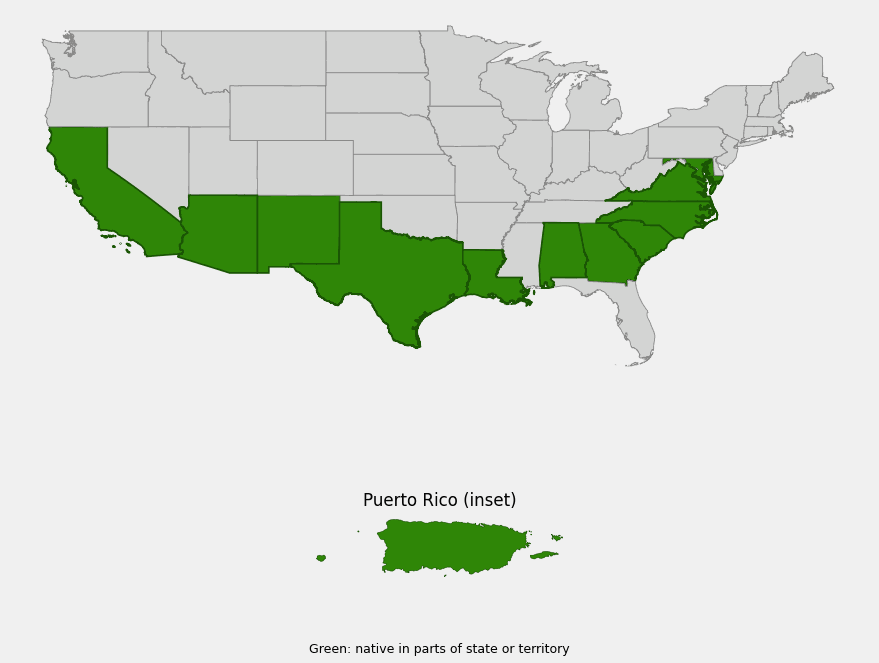
Scarlet spiderling is native to the warm parts of the Americas, from the southern United States through Mexico and the West Indies to South America. USDA PLANTS lists it as native in Alabama, Arizona, California, Georgia, Louisiana, Maryland, New Mexico, North Carolina, South Carolina, Texas, Virginia and Puerto Rico. The Atlas of Florida Plants treats it as not native in Florida, so Florida is left off the map, and it is introduced in Hawaii.
The plant is most common in the Southwest: southern California deserts, Arizona, New Mexico and Texas, where it is a familiar summer weed of roadsides, washes and open desert grassland. Records along the Gulf Coast and the Atlantic Coastal Plain from Georgia to Maryland are scattered and mostly from disturbed ground, such as ports, rail yards and sandy waste places, and some floras regard those eastern populations as introduced. Its true native range is hard to pin down, because it spreads so easily on people and animals.
Typical habitats are sunny, open, often disturbed places with sandy or gravelly soil: roadsides, desert washes, field edges, vacant lots, lawns, desert grasslands and thornscrub. It thrives in heat and responds quickly to summer monsoon rains.
📋 Regional plant lists featuring Scarlet Spiderling: California & Nevada · Arizona & New Mexico · South & West Texas · Arkansas, Louisiana, Eastern Oklahoma & Eastern Texas · Alabama, Georgia & Mississippi · North & South Carolina · Maryland, Virginia & West Virginia · Puerto Rico
Growing & Care Guide
Scarlet spiderling is rarely sold, because it comes up on its own wherever the ground is bare, hot and sunny. If you want it in a wild or habitat garden, the main job is deciding where to let it stay.
Light
Give it full sun. It tolerates light shade but flowers less and gets lanky.
Soil & Water
It grows in almost any well-drained soil, including sand, gravel, caliche and compacted ground. Once its taproot is down it is very drought tolerant; summer rain or an occasional deep watering brings on new growth and heavy flowering. Rich, constantly watered soil only makes it sprawl more.
Planting Tips
Let volunteer plants grow where a low, sprawling cover is useful, such as along the edge of a gravel path, on a dry bank or in a desert wildflower patch. It is too loose and weedy for a tidy border, and in lawns and vegetable beds it is usually treated as a weed.
Pruning & Maintenance
Little care is needed. Trim back trailing stems if they run over paths or smaller plants. To limit spread, pull young plants before the sticky fruits ripen, getting as much of the taproot as you can. Stems die back in frost and regrow from the root in spring in mild climates.
Propagation
It grows readily from seed sown on warm soil in late spring or early summer, and it self-sows freely. Mature plants have deep taproots and do not transplant well.
Landscape Uses
- Desert and xeric gardens: a tough, heat-loving native for bare, sunny ground
- Dry banks and gravel edges: a low, sprawling cover that needs no watering
- Habitat gardens: small summer-long flowers for small bees and other insects
- Revegetation of disturbed sites: an early colonizer of roadsides and vacant lots
- Nature study: a common plant for learning the four o’clock family
Wildlife & Ecological Value
Scarlet spiderling is a modest but steady food source in hot, open habitats where little else is blooming in midsummer.
For Pollinators
The tiny flowers open in the morning and offer nectar and pollen to small native bees, flies and other small insects. Because plants bloom for months, especially after summer rains, they provide a long-lasting resource in hot, dry places.
For Birds
Ground-feeding birds may eat the small fruits and seeds, and the sticky fruits can hitch rides on feathers, which helps spread the plant.
For Mammals
Rabbits and other small mammals may nibble the foliage, and the fruits stick to fur, so mammals are one of the main ways the seeds travel.
Ecosystem Role
Scarlet spiderling is a pioneer of disturbed, open ground. Its deep taproot and mats of stems help hold loose soil, and it fills in quickly after the ground is scraped, burned or flooded, before longer-lived plants move in.
Cultural & Historical Uses
The genus Boerhavia honors Herman Boerhaave, an eighteenth-century Dutch physician and botanist. The species name coccinea means “scarlet,” for the bright flowers. The common name “spiderling” probably comes from the thin, spreading flower stalks and trailing stems; “tar vine” refers to the sticky stems and fruits.
Scarlet spiderling and its close relatives have long been used in traditional medicine. In Mexico it has been used to treat diarrhea and dysentery, and plants in this group are used for pain and inflammation in parts of Africa and South America. These uses are traditional and are not a substitute for medical advice.
Botanists still debate where the species is truly native, because it is so easily spread by people and animals and is hard to separate from red spiderling (B. diffusa). In the U.S. Southwest it is clearly part of the native flora; in some other parts of the world it is treated as an introduced weed.
Frequently Asked Questions
Is scarlet spiderling a weed?
It is native to the U.S. Southwest and Texas, but it behaves like a weed in lawns, gardens and other disturbed ground. In wild or habitat gardens it can be left as a low, drought-tolerant cover.
Why are the fruits sticky?
The small fruits are covered in glandular hairs that make them sticky, so they cling to animals, birds and clothing. That is how the plant spreads its seeds, and why it is sometimes called tar vine.
Is scarlet spiderling native in Florida?
The Atlas of Florida Plants lists it as not native in Florida. It is native in the Southwest, Texas and Puerto Rico, and USDA also lists it as native in several southeastern states, where records are scattered.
How is it different from red spiderling?
Red spiderling (Boerhavia diffusa) is very similar. Scarlet spiderling is usually stickier and hairier, with denser flower clusters, but the two are often confused and some botanists treat them together.
Is scarlet spiderling poisonous?
It is not known to be poisonous and has been used in traditional medicine, but it should not be eaten or used as a remedy without expert guidance.

Looking for a nursery that carries Scarlet Spiderling?
Browse our native plant nursery directory: Alabama & Arizona · California · Georgia · Louisiana & Maryland · New Mexico & North Carolina · South Carolina, Texas & Virginia
