
Woollypod Milkvetch (Astragalus purshii)
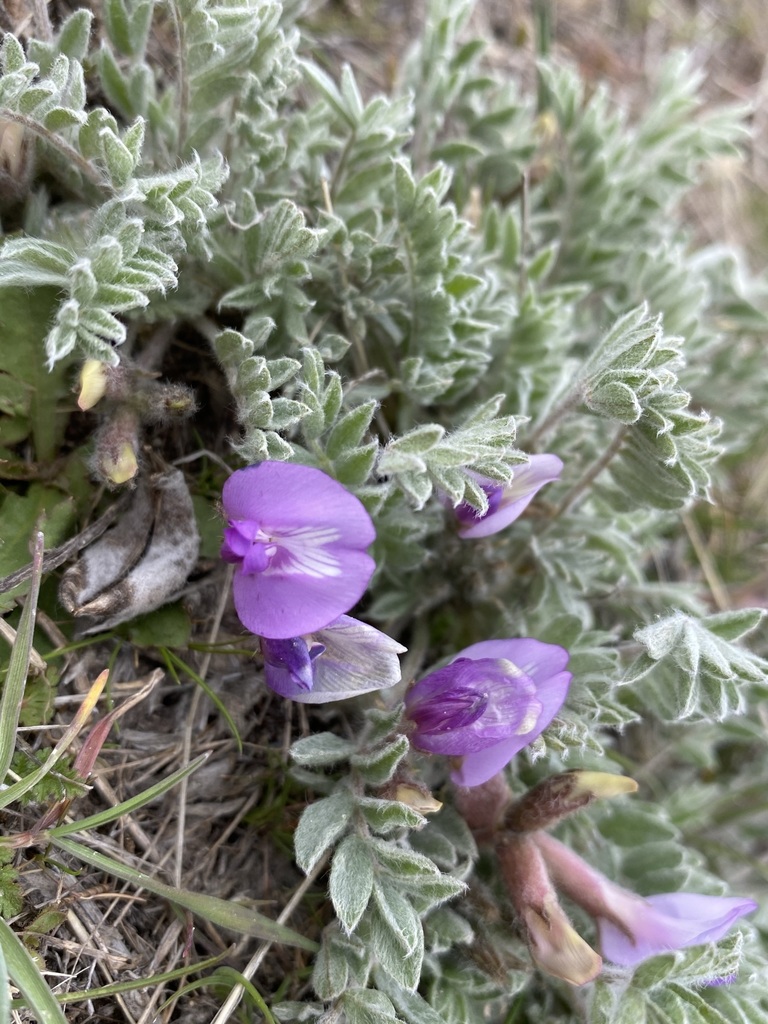
Astragalus purshii, known as Woollypod Milkvetch or Pursh’s milkvetch, is a small, mat-forming perennial of the pea family (Fabaceae) native to the dry interior of western North America. It grows in low, silvery cushions only 1 to 5 inches tall, with pinnately compound leaves covered in white woolly hairs. In spring it bears short clusters of pea flowers that range from cream and white to pink, rose and deep purple, often with a darker tip on the keel.
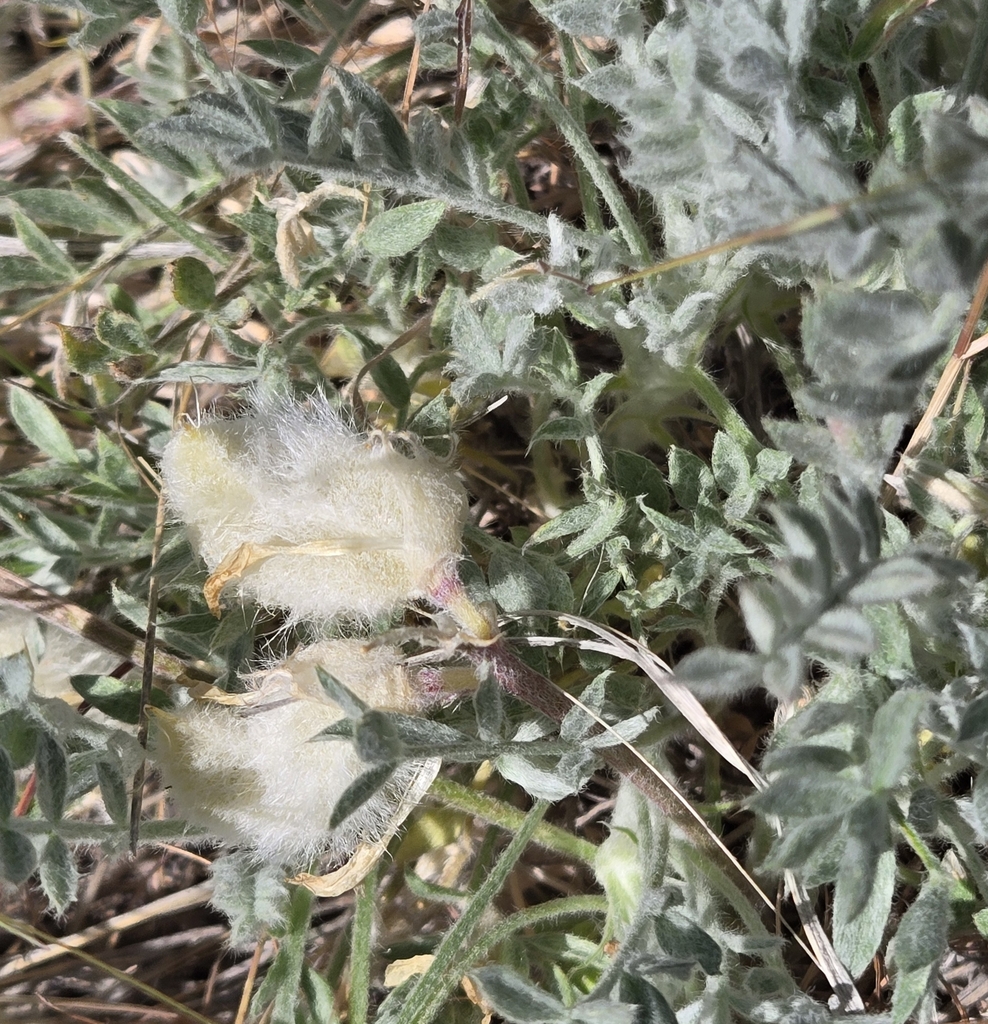
Its best feature is in the name. After flowering, it forms plump seed pods so densely covered in long, white, cottony hairs that they look like small cotton balls or rabbit’s feet resting on the ground. It is one of the first wildflowers to bloom in the sagebrush steppe, often flowering in March, April or May, soon after snowmelt.
Woollypod milkvetch is a plant of open, dry, rocky or sandy ground, from low sagebrush flats to mountain slopes. It is an attractive plant for rock gardens and dry native plantings within its range, though it is seldom sold. Like many milkvetches, it should not be eaten by people or livestock; see the safety note below.
Identification
Look for a low, silvery-gray mat of feather-like leaves hugging the ground in early spring, with short clusters of cream to purple pea flowers, later followed by fat, white, cottony pods.
Growth Habit
Woollypod milkvetch grows from a branched, woody root crown and taproot, forming a low tuft or mat, usually 1 to 5 inches tall and 4 to 12 inches across. The stems are short and often hidden among the leaves.
Leaves
The leaves are pinnately compound, up to about 6 inches long, with 5 to 19 small, oval to rounded leaflets. Leaves and stems are densely covered in white, woolly or silky hairs, so the whole plant looks silvery gray-green.
Flowers
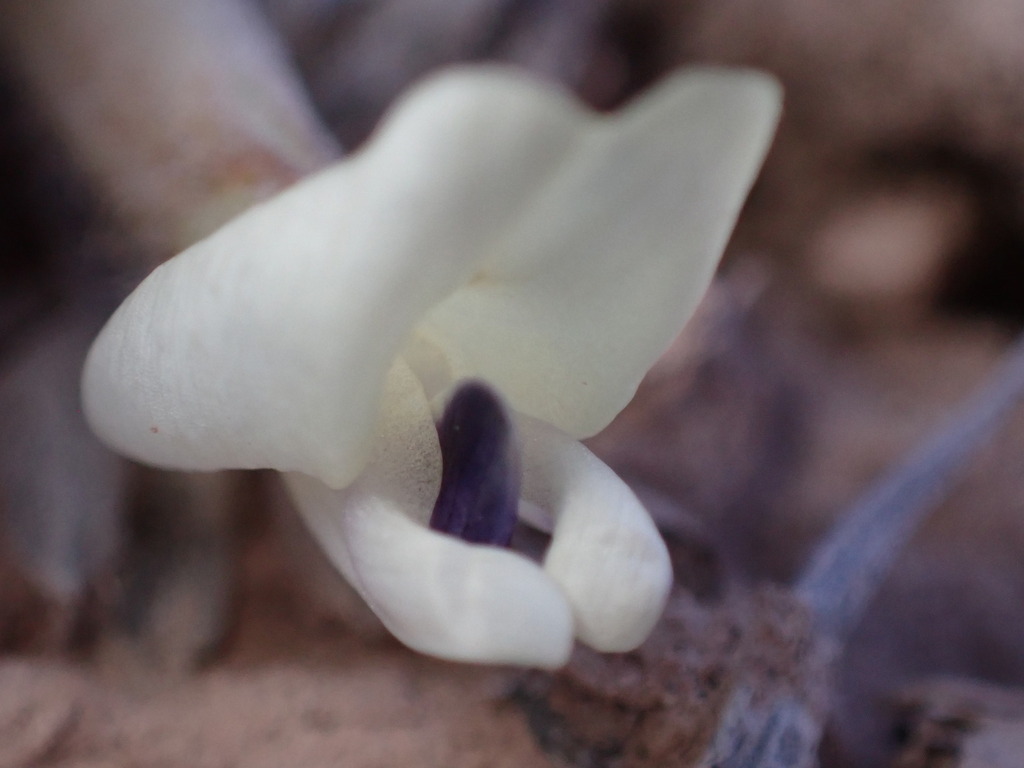
Clusters of 1 to about 11 pea-shaped flowers rise on short stalks from the leaf bases. Each flower is roughly 1/2 to 1 inch long. Color varies by region and variety: cream or white with a purple-tipped keel in much of the Great Basin and northern Rockies, and pink, rose or bright purple in other populations. The calyx is densely hairy. Bloom is usually from March to June, depending on elevation.
Fruit
The pods are about 1/2 to 1 1/4 inches long, curved to nearly straight, and completely hidden under a thick coat of long, white, cottony hairs. They often lie on the ground around the plant in late spring and early summer, and are the easiest way to identify the species.
Varieties
Botanists recognize several varieties that differ in flower color, pod shape and range. Variety purshii is widespread in the Northwest and northern Rockies; variety glareosus ranges from British Columbia to Utah; variety concinnus grows in Idaho and Montana; variety tinctus grows in the Sierra Nevada and mountains of California and Nevada; and varieties lectulus, lagopinus and ophiogenes have narrower ranges in California, Nevada, Idaho and Oregon.
Look-alikes
Many low milkvetches grow in the same habitats. Freckled milkvetch has inflated, often mottled pods that are not woolly. Scarlet milkvetch has bright red flowers. Locoweeds (Oxytropis) have a sharp, beak-like point on the keel. The thick, cottony pods set woollypod milkvetch apart.
Quick Facts
| Scientific Name | Astragalus purshii |
| Family | Fabaceae (pea family) |
| Plant Type | Mat-forming herbaceous perennial |
| Mature Height | 1–5 in |
| Mature Spread | 4–12 in |
| Growth Rate | Slow |
| Sun Exposure | Full sun |
| Water Needs | Very low; dry sites |
| Soil Type | Dry, well-drained sandy, gravelly or rocky soils |
| Soil pH | Neutral to alkaline (about 6.5–8.5) |
| Bloom Time | March–June |
| Flower Color | Cream, white, pink, rose or purple |
| Fall Color | Dormant by midsummer |
| Fruit | Pods densely covered in white, cottony hairs |
| Deer Resistant | Unknown; potentially toxic to livestock |
| USDA Hardiness Zones | 3–8 |
Native Range
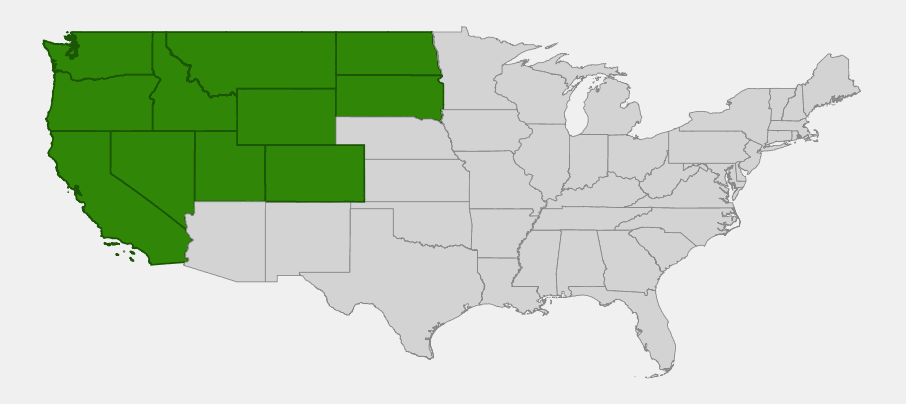
Woollypod milkvetch is native to the interior West. USDA PLANTS lists it as native in California, Colorado, Idaho, Montana, Nevada, North Dakota, Oregon, South Dakota, Utah, Washington and Wyoming, and in Alberta, British Columbia and Saskatchewan in Canada.
It is most common in the sagebrush steppe and dry grasslands of the Columbia Basin, the Snake River Plain, the Great Basin and the northern Rocky Mountains. In Oregon and Washington it grows east of the Cascades; in California it grows on the east side of the Sierra Nevada, the Modoc Plateau and in mountains of the eastern and southern part of the state; and in the Dakotas it reaches the dry plains and badlands of the western part of the states.
It grows on open, dry, often rocky, gravelly or sandy slopes, ridges, flats and benches, in sagebrush, bitterbrush and grassland communities and open pine or juniper woodland. It does well on thin, disturbed or shallow soils and ranges from low valleys to high mountain slopes.
📋 Regional plant lists featuring Woollypod Milkvetch: Idaho, Eastern Oregon & Eastern Washington · Montana & Wyoming · Utah & Western Colorado · North Dakota, South Dakota & Western Minnesota · California & Nevada
Growing & Care Guide
Woollypod milkvetch is a plant for experienced dry-land and rock gardeners within its native range. It needs full sun, lean soil and very little water, and it resents rich, wet conditions.
Light
Full sun. It grows in open sites with no shade in the wild.
Soil & Water
Use a lean, gritty, very well-drained soil such as sand, gravel or rocky loam; heavy or rich soils cause rot. Water lightly until established. After that, natural rainfall is usually enough. It goes dormant in the summer heat and should be kept dry then.
Planting Tips
Plant small container-grown seedlings in fall or early spring. It has a deep taproot and does not transplant well once established, so place it carefully: a rock garden, crevice garden, gravel bed or dry slope with low companions that will not shade it.
Pruning & Maintenance
No pruning is needed. Keep taller plants and mulch away from the crown. Avoid fertilizer and summer irrigation. Plants may be short-lived in gardens, but they can reseed on open gravel.
Propagation
Grow from seed. The hard seed coat needs scarification (nicking or sanding) before sowing; sow in fall or late winter in a gritty mix. Collect seed only where permitted, and leave most pods for wildlife and natural reseeding. Some varieties are rare, so never dig wild plants.
Landscape Uses
- Rock and crevice gardens: a silver, low cushion with early flowers
- Dry native plantings: for sagebrush-steppe and xeric gardens within its range
- Early-season bloom: flowers soon after snowmelt for early bees
- Habitat restoration: a native legume of sagebrush and grassland sites
- Wildflower viewing: a classic spring wildflower of the interior West
Wildlife & Ecological Value
In the sagebrush steppe, woollypod milkvetch is part of the early spring flush of small wildflowers that feeds the first native bees of the year.
For Pollinators
The flowers are pollinated mainly by bees, including bumble bees and other native bees, which can open the pea-shaped flowers. Milkvetches are also caterpillar host plants for several butterflies, including some blues and sulphurs.
For Birds
Seed-eating birds of the sagebrush and grassland may eat the seeds, and greater sage-grouse and other birds forage on forbs and the insects they attract in spring.
For Mammals
Ground squirrels and other small mammals may eat the seeds and pods. Like other Astragalus, it may be toxic to livestock if eaten in quantity.
Ecosystem Role
As a legume, woollypod milkvetch hosts nitrogen-fixing bacteria in root nodules, adding nitrogen to poor, dry soils. It colonizes open and disturbed rocky ground and adds diversity to the spring forb community of sagebrush and grassland habitats.
Cultural & Historical Uses
The species is named for Frederick Pursh, a German-American botanist who wrote one of the first floras of North America in 1814. It was described from material collected by the Scottish plant explorer David Douglas, who traveled in the Columbia River country in the 1820s.
The name Astragalus is an old Greek plant name. The genus is the largest in the plant kingdom, with well over 2,000 species, and is especially diverse in the dry interior of western North America, where hundreds of milkvetches grow.
Safety note: many Astragalus species are toxic to livestock and people, and some cause “locoism” or accumulate selenium. The toxicity of woollypod milkvetch is not well documented, so treat it as potentially poisonous: do not eat any part of it, and keep grazing animals from eating it in quantity.
Frequently Asked Questions
Why is it called woollypod milkvetch?
Its seed pods are covered in thick, white, cottony hairs that make them look like little balls of wool.
When does woollypod milkvetch bloom?
It blooms early, usually from March to June depending on elevation, soon after snowmelt.
What color are the flowers?
It varies by region and variety, from cream or white with a purple tip to pink, rose and deep purple.
Is woollypod milkvetch poisonous?
Many milkvetches are toxic to livestock and people. Its own toxicity is not well documented, so treat it as potentially poisonous and do not eat it.
Can I grow woollypod milkvetch in my garden?
Yes, in a sunny rock garden or dry, gravelly bed within its native range. It needs excellent drainage and little water, and is usually grown from scarified seed.

Looking for a nursery that carries Woollypod Milkvetch?
Browse our native plant nursery directory: California · Colorado · Idaho · Montana · Nevada & North Dakota · Oregon · South Dakota & Utah · Washington · Wyoming
