
Toothleaf Goldeneye (Viguiera dentata)
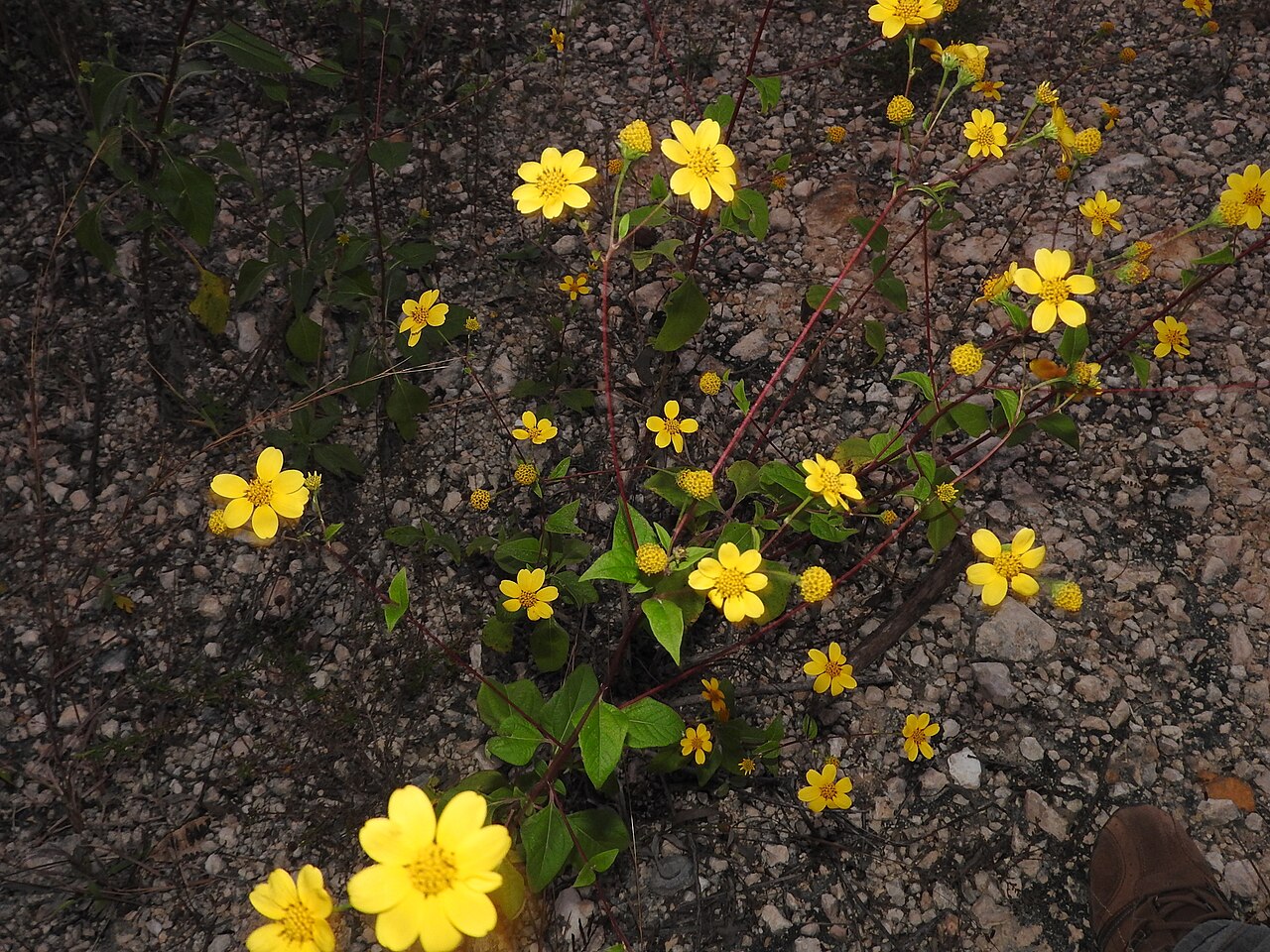
Viguiera dentata, known as Toothleaf Goldeneye, sunflower goldeneye or plateau goldeneye, is a bushy, multi-stemmed perennial in the aster family (Asteraceae). It is native from central Texas west through New Mexico to Arizona, and south through Mexico to Central America. Some recent botanical works place it in the genus Aldama as Aldama dentata, but most gardeners, nurseries and USDA PLANTS still use Viguiera dentata.
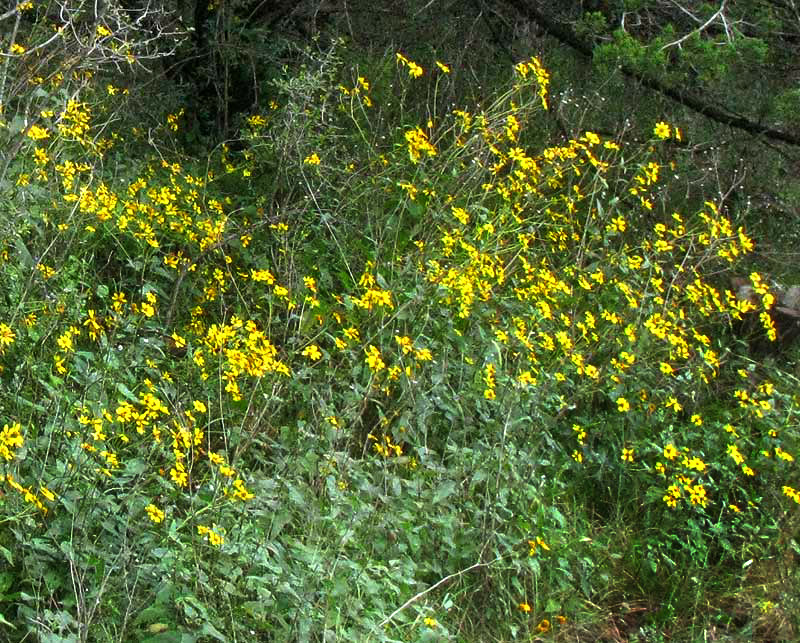
In late summer and fall, toothleaf goldeneye covers itself in small, sunflower-like heads about 1 to 1 1/2 inches across, held on long, slender stalks above rough, toothed leaves. Plants usually reach 3 to 6 feet tall and spread into loose colonies, so a good stand can turn a limestone hillside, canyon or roadside bright gold for weeks in October and November.
It is one of the most important fall nectar plants in the Texas Hill Country and the desert mountains of the Southwest. Bees, butterflies and many other insects crowd the flowers, and finches and other seed-eating birds work the seed heads into winter. For gardeners in its range it is a tough, drought-tolerant plant for large beds, wildlife gardens and naturalized areas.
Identification
Look for a tall, open, much-branched plant with rough, toothed, triangular to lance-shaped leaves and many small yellow daisies on long, nearly leafless stalks in fall.
Growth Habit
Toothleaf goldeneye is a perennial herb or subshrub with several to many stems from a woody base. Stems are slender, branched and rough-hairy. Plants are typically 3 feet tall in full sun and up to about 6 feet in partial shade, and they spread by seed into open colonies. In mild winters the base may stay woody, but in most of its U.S. range the stems die back after frost.
Leaves
The leaves are 1 1/2 to 4 inches long, broadly lance-shaped to triangular-ovate, with toothed edges, the feature behind the name “toothleaf.” They are opposite on the lower stem and usually alternate higher up. The upper surface is rough like sandpaper, and the underside is paler and grayish with soft hairs. Each leaf has three main veins from near the base.
Flowers
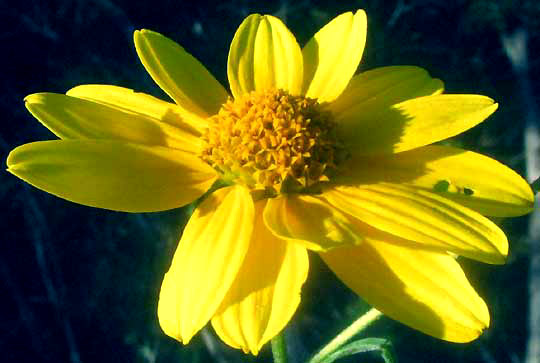
The flower heads are borne singly or in loose clusters at the ends of long stalks. Each head has about 10 to 14 bright yellow ray flowers, each roughly 1/2 inch long, around a domed, golden-yellow disk about 1/2 inch wide. The green bracts beneath the head are narrow and hairy. The main bloom runs from September through November, with scattered flowers earlier after summer rains.
Fruit & Seeds
Each disk flower produces a small, dark, flattened seed (cypsela) wrapped in a papery scale. The tip carries two thin awns and a few short scales instead of a fluffy pappus, so the seeds mostly fall near the parent plant. The dry seed heads turn tan and spiky by early winter.
Look-alikes
Skeletonleaf goldeneye (Viguiera stenoloba) is a rounded shrub with very narrow, thread-like leaf lobes. Showy goldeneye (Heliomeris multiflora) is a smaller plant with narrow, untoothed leaves. Common sunflower (Helianthus annuus) has much larger heads with a brown center. Toothleaf goldeneye’s mix of rough, toothed, broad leaves and many small yellow heads on long stalks is distinctive.
Quick Facts
| Scientific Name | Viguiera dentata (syn. Aldama dentata) |
| Family | Asteraceae (aster family) |
| Plant Type | Herbaceous perennial or subshrub |
| Mature Height | 3–6 ft |
| Mature Spread | 2–4 ft; spreads into colonies |
| Growth Rate | Fast |
| Sun Exposure | Full sun to part shade |
| Water Needs | Low; dry, well-drained soil |
| Soil Type | Rocky, limestone, caliche, clay, loam or sandy soils |
| Soil pH | About 6.5–8.5 (tolerates alkaline soil) |
| Bloom Time | September–November |
| Flower Color | Bright yellow |
| Fall Color | Gold flowers; tan seed heads in winter |
| Fruit | Small dark seeds (cypselae) in dry heads |
| Deer Resistant | Low to moderate |
| USDA Hardiness Zones | 7–10 |
Native Range
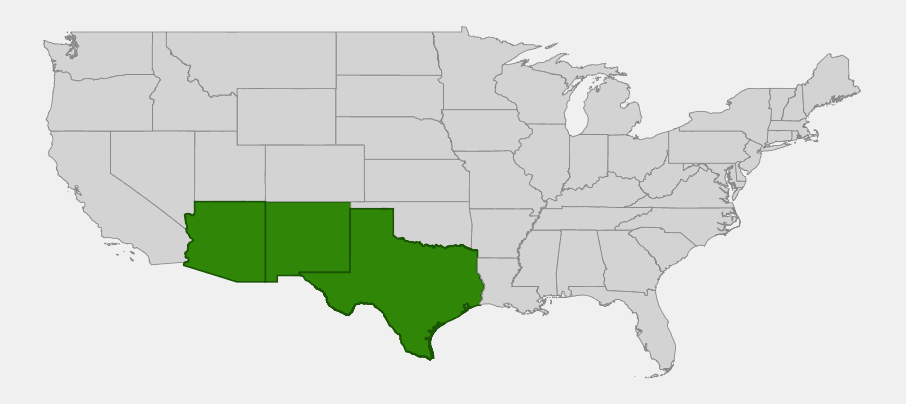
Toothleaf goldeneye ranges from central Texas west to Arizona and south through much of Mexico to Central America, with records reported from Cuba. USDA PLANTS lists it as native in Arizona, New Mexico and Texas.
In Texas it is most common on the Edwards Plateau (Hill Country) and in the Trans-Pecos, and it reaches into the brush country to the south. In New Mexico and Arizona it grows mainly in the southern mountains, foothills and canyons, such as the Organ, San Andres and Guadalupe Mountains and the sky islands of southeastern Arizona.
It favors open, dry, often rocky sites: limestone hills and ledges, canyon slopes, oak-juniper and pinyon woodland edges, grassland openings, arroyos and disturbed ground along roads and fences. It often forms dense stands where soil has been disturbed.
📋 Regional plant lists featuring Toothleaf Goldeneye: South & West Texas · Arizona & New Mexico
Growing & Care Guide
Toothleaf goldeneye is easy to grow in the Southwest and Texas. Native plant nurseries and seed companies in Texas often offer it, and once it is established it needs almost no care beyond an annual cut back.
Light
Full sun to part shade. In full sun plants stay about 3 feet tall and bushy; in part shade they grow taller and lankier but still bloom well.
Soil & Water
It grows in almost any well-drained soil, including shallow limestone, caliche, rocky ground and clay. It is very drought tolerant. Water new plants through their first summer, then only during long droughts. Too much water and rich soil make plants floppy.
Planting Tips
Plant in spring or fall, 3 to 4 feet apart, or sow seed where you want it. Give it room: it is best at the back of a border, in a large wildflower bed, along a fence or on a slope where its fall color can be seen from a distance. It combines well with fall asters, salvias, Maximilian sunflower and native grasses.
Pruning & Maintenance
Leave the seed heads standing through most of the winter for birds, then cut the stems back to a few inches in late winter. Cutting plants back by about a third in early summer keeps them shorter and bushier for the fall show. Remove unwanted seedlings in spring if it spreads further than you like.
Propagation
Grow it from seed sown in fall or early spring; seed germinates readily and plants often bloom the first fall. Tip cuttings and division of older clumps in late winter also work. It reseeds readily under good conditions.
Landscape Uses
- Fall color: masses of gold flowers in October and November
- Pollinator gardens: a major late-season nectar source for bees and butterflies
- Bird gardens: seed heads feed finches and sparrows in winter
- Naturalized areas and slopes: fast, drought-tolerant cover on rocky or disturbed ground
- Back of the border: tall, airy filler behind lower perennials
Wildlife & Ecological Value
Because it blooms heavily so late in the year, toothleaf goldeneye is one of the most valuable wildlife plants in its range when few other flowers are left.
For Pollinators
Honey bees, native bees, wasps, flies and butterflies visit the flowers heavily. Beekeepers in the Texas Hill Country value it as a fall nectar source, and the Lady Bird Johnson Wildflower Center lists it as a larval host for the bordered patch (Chlosyne lacinia) and the Cassius blue (Leptotes cassius).
For Birds
Lesser goldfinches, house finches, sparrows and other seed-eating birds feed on the seeds through fall and winter. The dense stands also give cover to quail and small birds.
For Mammals
Deer will browse it, especially young growth, but it usually recovers and blooms. Rodents eat fallen seeds.
Ecosystem Role
Toothleaf goldeneye quickly colonizes disturbed, rocky and burned ground, helping hold soil, and it feeds pollinators at the end of the growing season when they are building reserves for winter.
Cultural & Historical Uses
The Spanish botanist Antonio José Cavanilles first described the species in the 1790s as Helianthus dentatus, and it was later moved to Viguiera, a genus named for the French physician and botanist L. G. A. Viguier. In 2011, Edward Schilling and José Panero split the large genus Viguiera based on DNA studies and placed this species in Aldama. Both names appear in current references.
In Mexico the plant is known as chimalacate or chimalacatl, a name from Nahuatl usually translated as “shield cane,” and as chamiso or tacote. It is a familiar roadside flower throughout central Mexico.
In Texas, where its October bloom often follows fall rains, toothleaf goldeneye is one of the plants that gives the Hill Country its second, autumn wildflower season.
Frequently Asked Questions
When does toothleaf goldeneye bloom?
Mainly September through November, peaking in October in Texas. A few flowers may appear earlier after summer rains.
How tall does it get?
Usually about 3 feet in full sun and up to 6 feet in partial shade.
Is it drought tolerant?
Yes. Once established it needs little or no supplemental water in its native range and grows in shallow, rocky, alkaline soils.
Will it spread in my garden?
It reseeds readily and forms colonies in good conditions. Pull extra seedlings in spring, or cut off some seed heads in winter if you want less spread.
Is it the same as Aldama dentata?
Yes. Aldama dentata is a newer name for the same species, used in some recent floras after the genus Viguiera was split.

Looking for a nursery that carries Toothleaf Goldeneye?
Browse our native plant nursery directory: Arizona · New Mexico · Texas

