
California Broomsage (Lepidospartum squamatum)
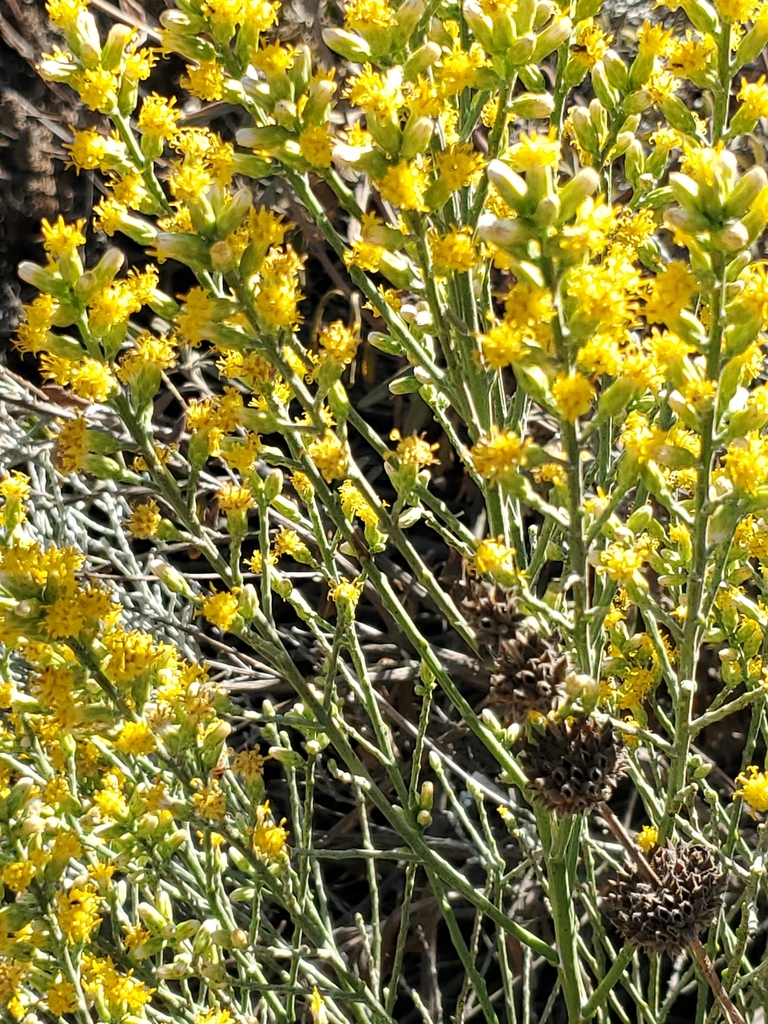
Lepidospartum squamatum, known as California Broomsage or scale broom, is a tough, broom-like shrub in the aster family. It grows from a woody base into a rounded mass of slender, green, nearly leafless stems, usually 3 to 6 feet tall, and covers itself with small, golden-yellow flower heads from late summer into fall.
It is a specialist of sandy and gravelly washes, river floodplains and alluvial fans in southern and central California, with scattered records in western Arizona and northern Baja California. It is one of the defining shrubs of alluvial fan sage scrub, a plant community that depends on periodic floods to scour and rebuild its stony soils.
In gardens, California broomsage is an excellent, very drought-tolerant shrub for dry, sunny, fast-draining sites. It brings late-season color and late-season nectar to native bees and butterflies when much of the California landscape is dry and brown.
Identification
Look for a gray-green to bright green, broom-like shrub of washes and floodplains, with many upright, rush-like stems, almost no leaves and clusters of small yellow flower heads in late summer and fall.
Growth Habit
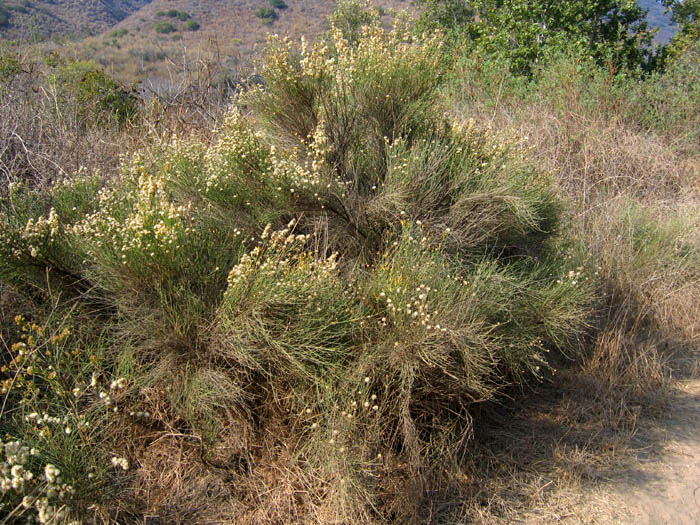
A rounded, many-stemmed shrub usually 3 to 6 feet tall and wide, sometimes taller. Young stems are covered with white, felt-like hairs and become green and smooth with age. The plant looks like a large green broom or a clump of rushes for most of the year.
Leaves
Young plants and new shoots have narrow, threadlike leaves up to about an inch long that soon drop. Mature stems carry only tiny, scale-like leaves pressed against the stem, which gives the genus its name (from Greek lepis, scale, and spartum, broom).
Flowers
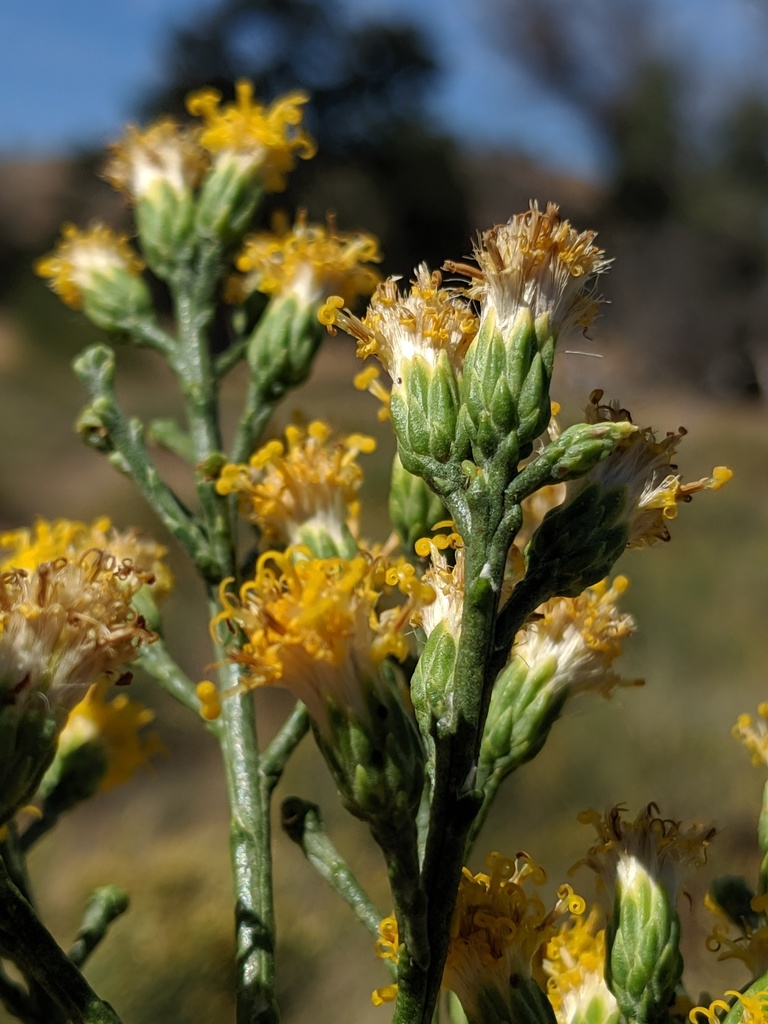
The flower heads are small, about 1/4 to 1/2 inch long, with only tubular disk flowers and no petal-like rays. They are bright yellow and grouped in clusters at the tips of the branches, so a plant in full bloom looks golden. Each head is wrapped in overlapping, scale-like green bracts. Flowering runs mainly from about August to November.
Fruit
The small, hairy seeds (achenes) carry a tuft of soft white bristles (pappus) and are carried off by the wind. Plants in seed take on a pale, fluffy look in late fall.
Look-alikes
Desert broom (Baccharis sarothroides) is also a green, broom-like shrub, but it has separate male and female plants with whitish flower heads. Narrowleaf goldenbush and other goldenbushes have obvious leaves and showy rays or larger heads. Rabbitbrushes have leafier, often felted stems.
Quick Facts
| Scientific Name | Lepidospartum squamatum |
| Family | Asteraceae (aster family) |
| Plant Type | Evergreen, broom-like shrub |
| Mature Height | 3–6 ft (occasionally to 10 ft) |
| Mature Spread | 3–6 ft |
| Growth Rate | Moderate |
| Sun Exposure | Full sun |
| Water Needs | Very low; very drought tolerant once established |
| Soil Type | Sandy, gravelly or rocky, fast-draining soil |
| Soil pH | Slightly acidic to alkaline (about 6.0–8.0) |
| Bloom Time | Late summer to fall (August–November) |
| Flower Color | Golden yellow |
| Fall Color | None (fluffy seed heads in late fall) |
| Fruit | Small achene with white bristles, wind-dispersed |
| Deer Resistant | Yes, generally |
| USDA Hardiness Zones | 8–10 |
Native Range
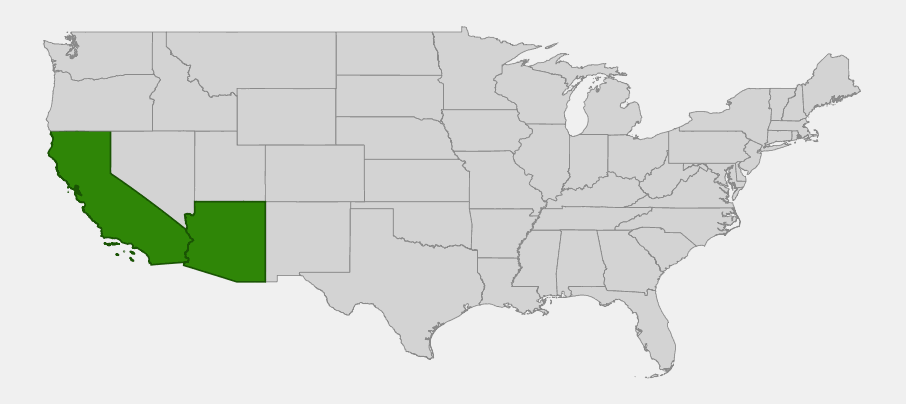
California broomsage is native to the southwestern United States and northern Baja California, Mexico. USDA PLANTS records it in California and Arizona.
Most of its range is in California: the South Coast and Transverse Ranges, the Peninsular Ranges, the inner South Coast Ranges, the southern Sierra Nevada foothills and the western edge of the Mojave Desert. It is common along rivers and washes in the Los Angeles, San Gabriel, San Bernardino and Riverside areas. Arizona records are few and lie at the far eastern edge of its range.
It grows on sandy and cobbly alluvial fans, dry washes, stream terraces and floodplains, mostly below about 5,000 feet. These sites flood occasionally and dry out hard in summer, and broomsage is well adapted to that cycle of disturbance. Much of its alluvial fan habitat has been lost to development, flood-control channels and gravel mining, so remaining stands are valuable.
📋 Regional plant lists featuring California Broomsage: Arizona & New Mexico · California & Nevada
Growing & Care Guide
California broomsage is an easy, low-care shrub in hot, dry, sunny gardens with fast drainage, especially in southern California and similar Mediterranean and desert-edge climates. Its natural home is sand and cobbles, so lean soil suits it far better than rich garden beds.
Light
Full sun. In shade it becomes sparse and floppy and flowers poorly.
Soil & Water
Plant in sandy, gravelly or rocky soil with excellent drainage. Water regularly through the first summer to establish deep roots, then very little. Established plants in coastal and inland southern California usually need no summer water, and heavy watering in heavy soil can shorten their life.
Planting Tips
Plant in fall or winter so winter rain helps roots establish. It suits dry slopes, gravel gardens, basins and swales that hold water briefly after storms, and restoration plantings along washes. Give it room; it looks best as a loose, natural mound.
Pruning & Maintenance
Little pruning is needed. Cut back old, untidy stems in late winter if desired; plants usually resprout from the base. Avoid fertilizer and rich amendments.
Propagation
Grow from fresh seed collected in late fall, sown on the surface of a sandy mix, or from cuttings. Seed germination can be patchy, so sow generously. Collect seed only where permitted and never dig plants from the wild.
Landscape Uses
- Dry gardens and slopes: a tough, evergreen-looking shrub that needs no summer water
- Late-season color: golden flowers from late summer into fall
- Pollinator gardens: late nectar for native bees and butterflies
- Habitat restoration: a key shrub of alluvial fan sage scrub and dry washes
- Erosion control: deep roots help hold sandy, gravelly soils
Wildlife & Ecological Value
California broomsage flowers when few other plants in its habitat are blooming, so it matters to insects and to the animals that feed on them.
For Pollinators
Its late summer and fall flowers attract many native bees, wasps, flies and butterflies, providing nectar and pollen during the dry season.
For Birds
Seed-eating birds feed on the seeds, and insect-eating birds hunt the insects on the flowers. The dense shrubs give cover to quail, wrens and sparrows in open wash habitat.
For Mammals
Small mammals and reptiles shelter under and among the stems in the open, sandy washes where cover is scarce.
Ecosystem Role
It is one of the signature shrubs of alluvial fan sage scrub, a plant community shaped by floods that has become rare in southern California. Its roots stabilize sandy floodplain soils, and it resprouts or reseeds after floods and fires.
Cultural & Historical Uses
The genus name Lepidospartum means “scale broom,” from the Greek lepis (scale) and spartum (a broom plant), and the species name squamatum also means “scaly.” Both refer to the tiny scale-like leaves on the green stems.
There are only a few species in the genus, all shrubs of the dry Southwest. California broomsage is the most widespread and best known of them.
Because alluvial fan sage scrub has been reduced by urban growth, flood control and mining, California broomsage is widely used in habitat restoration projects in southern California, and it is recommended by many native plant nurseries for low-water landscaping.
Frequently Asked Questions
Does California broomsage need summer water?
Not once established. After its first summer it can usually rely on winter rain alone in its native range. Too much summer water in heavy soil can cause problems.
When does California broomsage bloom?
From about August into November, when it is covered with small, golden-yellow flower heads.
Is California broomsage related to sagebrush?
No. Despite the name, it is not a true sage or sagebrush. It belongs to the aster family, along with goldenbushes and groundsels.
Why does it have almost no leaves?
Its leaves are small and short-lived, an adaptation to hot, dry summers. The green stems do most of the photosynthesis, which reduces water loss.
Where does California broomsage grow wild?
Mainly in sandy washes, floodplains and alluvial fans of southern and central California, with a few records in western Arizona and populations in northern Baja California.

Looking for a nursery that carries California Broomsage?
Browse our native plant nursery directory: Arizona · California

