
Big Bursage (Ambrosia ambrosioides)
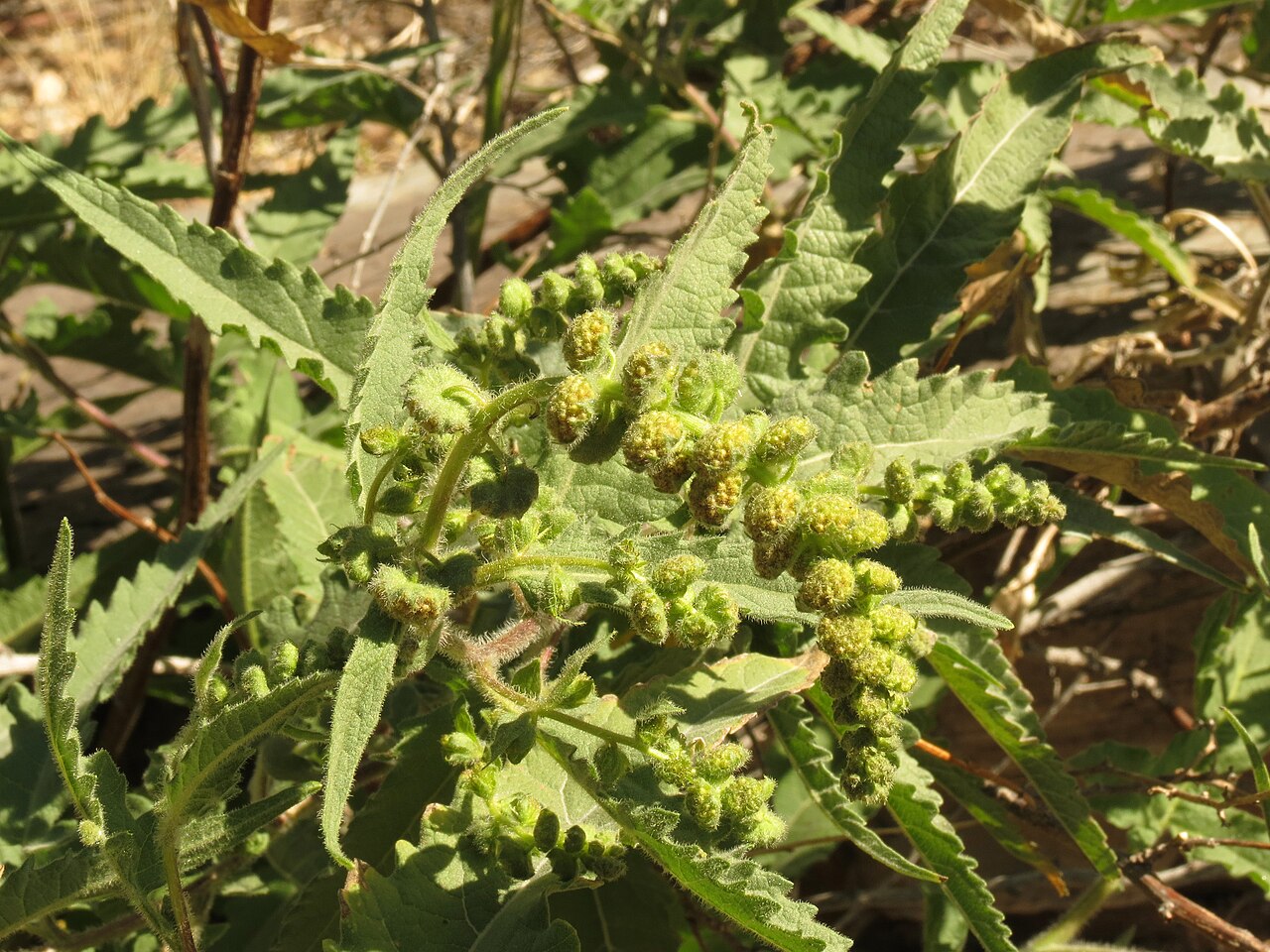
Ambrosia ambrosioides, known as Big Bursage, canyon ragweed, ambrosia leaf bur ragweed (the USDA name) or chicura in Sonora, is a large, open shrub of the sunflower family (Asteraceae) that grows in the washes and canyons of the Sonoran Desert. It reaches 3 to 6 feet tall and is easy to spot by its long, bright green, coarsely toothed leaves, which are much larger than those of the small gray bursages that cover the surrounding desert flats.
Like all ragweeds, big bursage is wind-pollinated. In late winter and spring it produces slender spikes of small, greenish, nodding male flower heads, with inconspicuous female heads clustered below them. The female heads ripen into burs about 1/2 inch long, covered with hooked spines that catch on fur and clothing. The leaves are sticky and aromatic, and in a long dry spell the shrub drops many of them, leafing out again after rain.
In the United States, big bursage grows in southern Arizona and, rarely, in southern California; its range continues south through Sonora and the Baja California peninsula into northwestern Mexico. It is a valuable shrub for wash restoration and a source of shelter and food for desert insects, birds and small mammals. This guide covers how to identify it, where it grows, how to use it in a desert garden, and an important note about its allergenic pollen.
Identification
Big bursage is one of the easiest bursages to recognize. Its large, toothed, green leaves set it apart from the small, gray, finely lobed leaves of triangle-leaf bursage and white bursage, which often grow nearby on the open desert.
Growth Habit
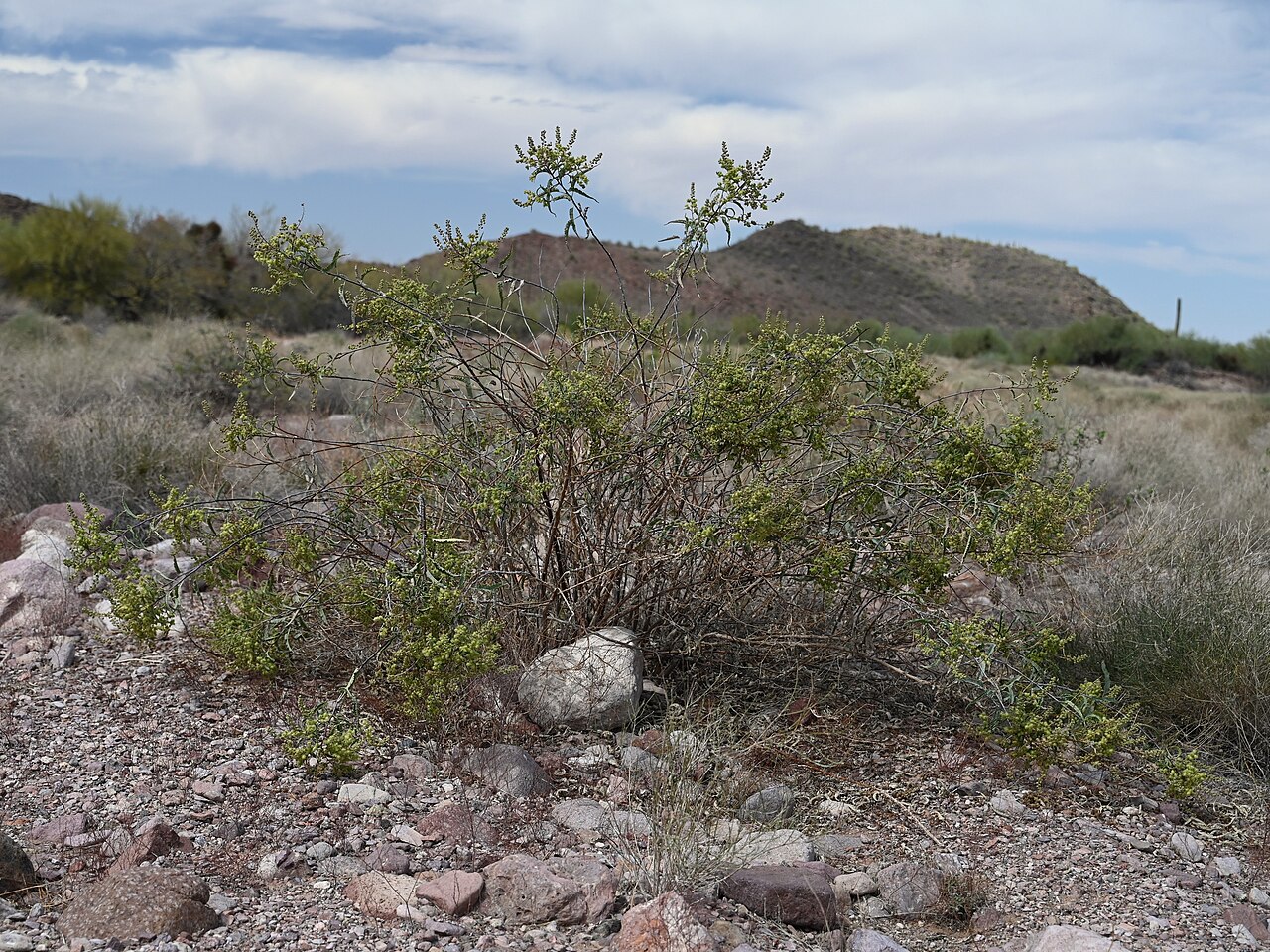
Big bursage is a loosely branched, rounded to sprawling shrub, usually 3 to 6 feet tall and about as wide. Its stems are brittle and become woody at the base, while the younger branches are greenish and often sticky. It grows quickly after good rains and can look thin and partly leafless during long droughts.
Leaves
The leaves are the best field mark. They are long and narrow, roughly lance-shaped, about 1 1/2 to 7 inches long and 1/2 to 1 1/2 inches wide, with coarsely toothed or wavy edges. They are bright to dark green, rough or sticky to the touch, and have a strong resinous smell when crushed. Leaves are often wrinkled, and some carry irregular galls made by tiny eriophyid mites.
Flowers
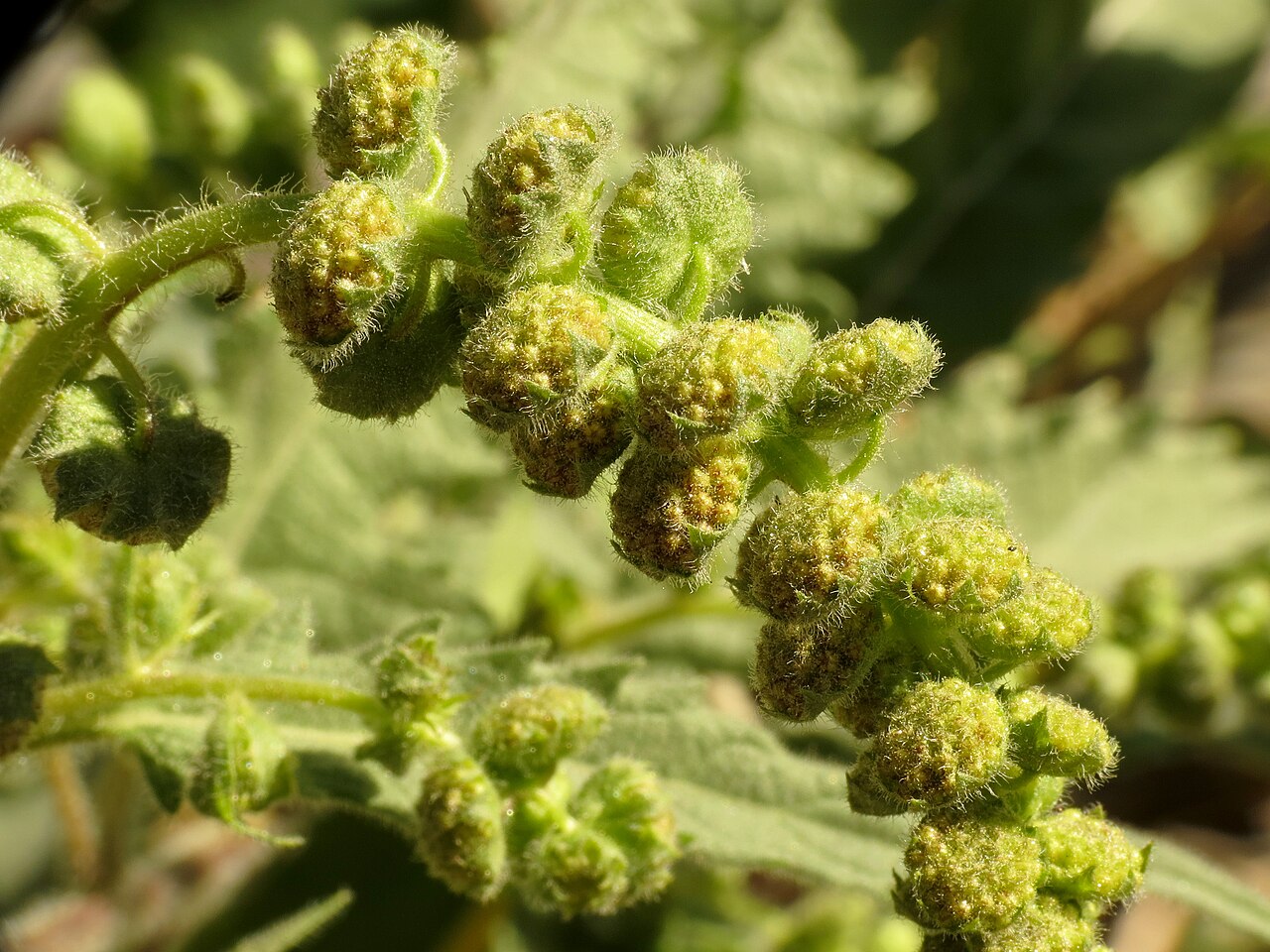
Big bursage is monoecious, with separate male and female flower heads on the same plant. The male heads are small, cup-shaped and greenish yellow, hanging in slender spikes (racemes) at the branch tips and in the leaf axils. They release clouds of yellow pollen when the plant is shaken. The female heads sit below them and have no petals at all. Flowering is mainly from February to May, depending on rainfall.
Fruit
Each female head develops into a hard, rounded bur about 3/8 to 5/8 inch long, covered with hooked spines. The burs ripen in spring and cling to fur, feathers and clothing, which is how the seeds are carried to new sites along washes.
Look-alikes
Hollyleaf bursage (Ambrosia ilicifolia) of the lower Colorado Desert has stiff, holly-like leaves that clasp the stem and end in spiny teeth. Triangle-leaf bursage and white bursage are much smaller, gray shrubs with small leaves. Big bursage could also be mistaken for a young seepwillow in a wash, but seepwillow has smooth, willow-like leaves and fluffy white seed heads instead of burs.
Quick Facts
| Scientific Name | Ambrosia ambrosioides (Cav.) W.W. Payne |
| Family | Asteraceae (sunflower family) |
| Plant Type | Deciduous to semi-evergreen shrub; drought-deciduous |
| Mature Height | 3–6 ft |
| Mature Spread | 3–6 ft |
| Growth Rate | Fast with water; slow in drought |
| Sun Exposure | Full sun to light shade |
| Water Needs | Low; occasional deep watering in summer |
| Soil Type | Sandy, gravelly or rocky, well-drained soils of washes and canyon floors |
| Soil pH | About 6.5–8.5 |
| Bloom Time | February–May |
| Flower Color | Greenish yellow (inconspicuous, wind-pollinated) |
| Fall Color | None; may drop leaves in drought |
| Fruit | Burs about 1/2 in long with hooked spines |
| Deer Resistant | Generally avoided because of its resinous leaves |
| USDA Hardiness Zones | 9–11 |
Native Range
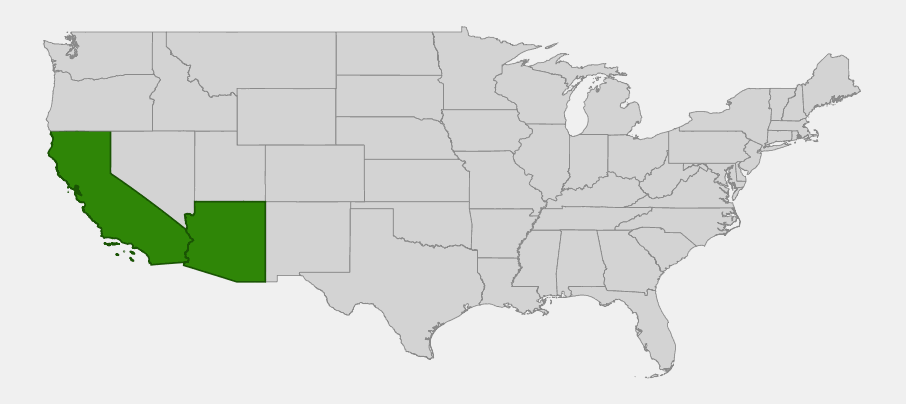
Big bursage is a plant of the Sonoran Desert. USDA PLANTS lists it as native to Arizona and California in the United States. In Mexico it grows in Sonora, Baja California and Baja California Sur, and it has also been reported from Chihuahua and Durango.
In Arizona it is common in the southern and central part of the state, from the Phoenix area and the Superstition Mountains south to Tucson and the border, including Saguaro National Park and Organ Pipe Cactus National Monument. In California it is much rarer, known from only a few places, mainly in San Diego County.
Its typical habitat is the bottom of sandy or gravelly washes, arroyo banks and rocky canyon floors, where runoff gives it more water than the surrounding slopes receive. It grows at low elevations in the desert and up into the lower desert foothills, alongside palo verdes, mesquites and ironwood.
📋 Regional plant lists featuring Big Bursage: Arizona & New Mexico · California & Nevada
Growing & Care Guide
Big bursage is not a showy garden plant, but it is a tough, fast-growing native shrub for low-desert landscapes, wash plantings and habitat gardens in southern Arizona. It is occasionally sold by native plant nurseries in the Tucson and Phoenix areas and is easy to grow from seed. Before planting it near a house, read the note on pollen below.
Light
Give it full sun or light shade. In the wild it often grows in the filtered shade of palo verdes and mesquites along washes, and it tolerates the full reflected heat of the low desert.
Soil & Water
Plant it in sandy, gravelly or rocky soil that drains well. It is adapted to washes, so it appreciates occasional deep watering, about every two to four weeks in the hot season once established, and little or none in winter in a wet year. With no water at all it survives but drops its leaves and looks sparse. Good spots are along a dry streambed, a swale or a basin that collects runoff.
Planting Tips
Plant in fall or early spring so roots can establish before the summer heat. Space plants 4 to 6 feet apart. Keep it away from patios, paths and windows, since the burs catch on clothing and pets and the pollen is allergenic. It combines well with palo verdes, desert lavender and other wash shrubs.
Pruning & Maintenance
Cut back dead or straggly stems in late winter, after the burs have dropped or before flowering if you want fewer burs. It can be cut hard to rejuvenate an old plant and will resprout quickly with water. Wear gloves: the leaves are sticky and can irritate sensitive skin.
Propagation
Grow it from seed. Collect the ripe burs in late spring, then sow them shallowly in a sandy mix in warm weather or before the summer rains. Seedlings grow quickly with regular water. Big bursage also self-sows along washes and irrigated areas.
Pollen & Allergy Note
Big bursage is a ragweed, and like other Ambrosia species it releases large amounts of wind-borne pollen in spring. People with ragweed or hay-fever allergies may react to it. Avoid planting it near homes, schools or outdoor seating, and avoid handling flowering branches if you are sensitive. The plant is not known to be poisonous, but it is not a food plant.
Landscape Uses
- Wash and arroyo restoration: a fast-growing native shrub that helps stabilize sandy wash banks
- Habitat gardens: cover and burs for quail, sparrows and lizards, and food for many insects
- Low-water screens: a quick, leafy green screen in a dry landscape with occasional deep water
- Revegetation of disturbed desert: establishes readily from seed on disturbed ground near washes
- Natural areas and buffers: best used away from homes because of its allergenic pollen and clinging burs
Wildlife & Ecological Value
Big bursage is not visited by showy pollinators, but its foliage, flowers, seeds and shade support a surprising amount of desert life.
For Pollinators
Big bursage is wind-pollinated and offers no nectar. Some bees collect its abundant pollen, but it is not an important nectar plant. Gardeners who want to attract bees and butterflies should combine it with flowering shrubs such as desert lavender and brittlebush.
For Insects
The leaves and flower heads host a variety of small insects, including small fruit flies of the genus Euaresta, whose larvae develop in ragweed flower heads, as well as planthoppers and leafhoppers. Eriophyid mites, including Aceria ambrosioides, form irregular galls on the leaves. These insects in turn feed spiders, lizards and insect-eating birds.
For Birds & Mammals
Its dense, leafy growth in washes provides shade and cover for quail, sparrows, wrens and small mammals. Small rodents and some birds eat the seeds, and the hooked burs travel on the fur of mammals. Deer and livestock rarely browse it because of its strong, resinous taste.
Ecosystem Role
As a fast-growing wash shrub, big bursage helps hold sandy soils in place during floods and quickly recolonizes channels after they have been scoured. It forms part of the shrub layer under palo verdes, mesquites and ironwood in the Sonoran Desert’s wash woodlands.
Cultural & Historical Uses
The genus name Ambrosia comes from the Greek word for the food of the gods, an ironic name for a genus best known for hay-fever pollen. The species name ambrosioides means “like Ambrosia”; the plant was first described by the Spanish botanist Antonio José Cavanilles as Franseria ambrosioides and was later moved to Ambrosia by Willard W. Payne, when the bur-ragweeds of Franseria were merged with the ragweeds.
In Sonora the plant is called chicura. The Seri people of the Sonoran coast smoked its dried leaves and used its roots to make medicinal teas and pigments. Folk uses of plants are part of cultural history and are not a recommendation to use them today.
The name canyon ragweed describes its typical home well. Hikers in Saguaro National Park and the Tucson Mountains often notice it as the large, green, sticky-leaved shrub that lines sandy washes in spring, and later as the source of the spiny burs stuck to their socks.
Frequently Asked Questions
How do I tell big bursage from other bursages?
Look at the leaves. Big bursage has long, green, coarsely toothed leaves up to about 7 inches long and grows 3 to 6 feet tall, usually in washes. Triangle-leaf bursage and white bursage are small, gray shrubs with small leaves that cover open desert flats and slopes.
Does big bursage cause allergies?
It can. It is a ragweed and releases a lot of wind-borne pollen in spring. People with ragweed allergies may react to it, so do not plant it close to homes or seating areas.
Where does big bursage grow?
It grows in the Sonoran Desert of southern Arizona, a few places in southern California, and northwestern Mexico, mainly in sandy and rocky washes and canyon bottoms.
Is big bursage good for wildlife?
Yes, in a quiet way. It provides cover in washes for birds, lizards and small mammals, and it hosts many small insects, including ragweed fruit flies and gall-making mites, that feed other wildlife.
How much water does it need?
It is drought-tolerant once established. Occasional deep watering in summer keeps it leafy; without it, the shrub survives but drops many of its leaves until rain returns.

Looking for a nursery that carries Big Bursage?
Browse our native plant nursery directory: Arizona · California

