
Linearleaf Phacelia (Phacelia linearis)
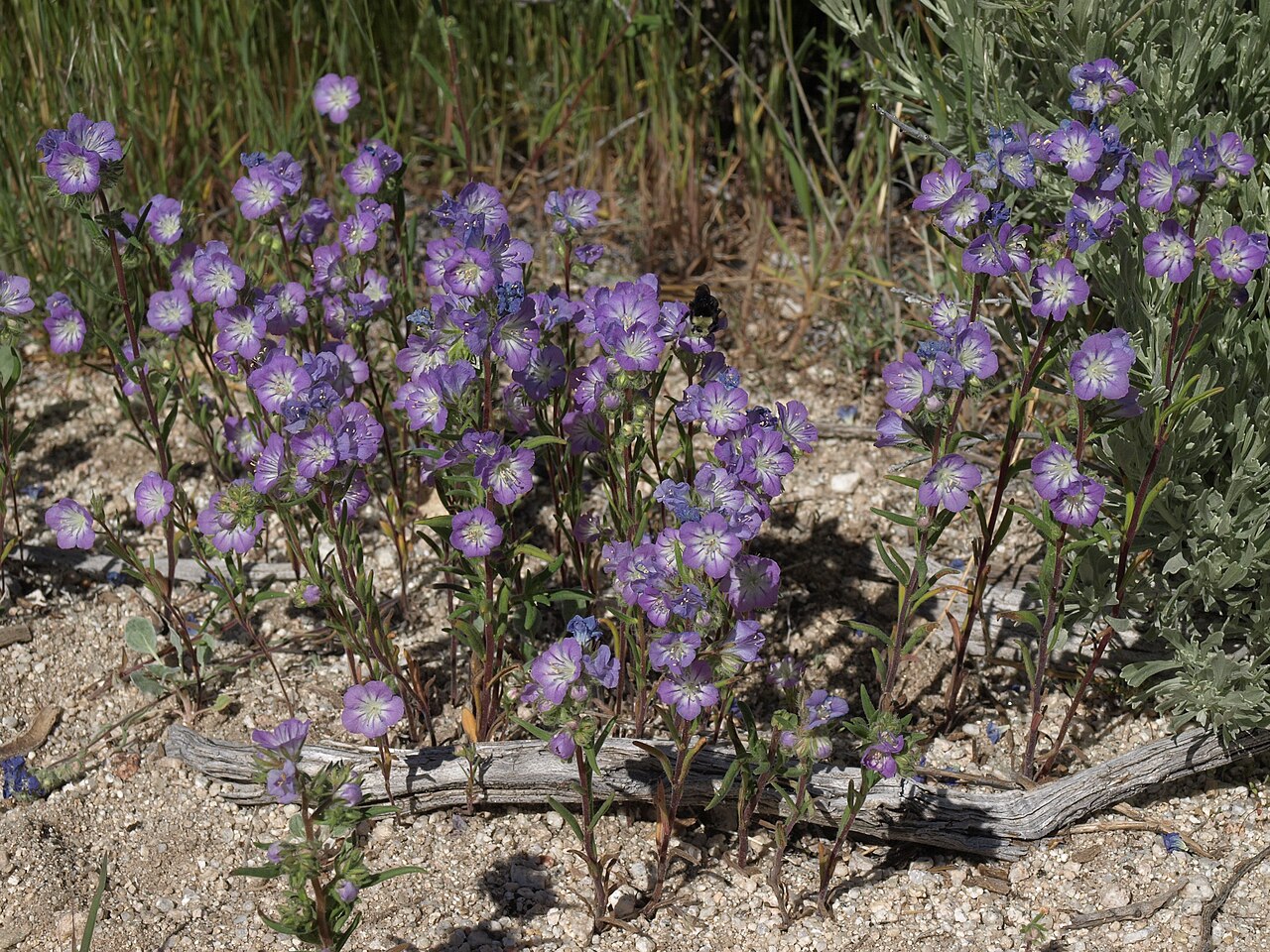
Phacelia linearis, known as Linearleaf Phacelia, threadleaf phacelia or threadleaf scorpionweed, is a spring-blooming annual wildflower of the dry interior West. It belongs to the borage family (Boraginaceae), in the group once treated as the waterleaf family (Hydrophyllaceae). It is one of the most widespread phacelias in western North America.
From April to June it bears broad, bowl-shaped lavender to blue-violet flowers, about 1/2 inch across, that are unusually large and open for a phacelia. They sit in short, loosely coiled clusters at the tips of slender, upright stems clothed in narrow, hairy leaves. In a good spring, plants can tint whole slopes of sagebrush and grassland pale purple.
Linearleaf phacelia grows in open, dry places from British Columbia and Alberta south to northern California, Nevada and Utah, and east to Montana and Wyoming. It thrives on bare soil, so it often appears after fire or other disturbance and among shrubs. Gardeners in the region can grow it from seed as a cheerful, bee-friendly spring annual.
Identification
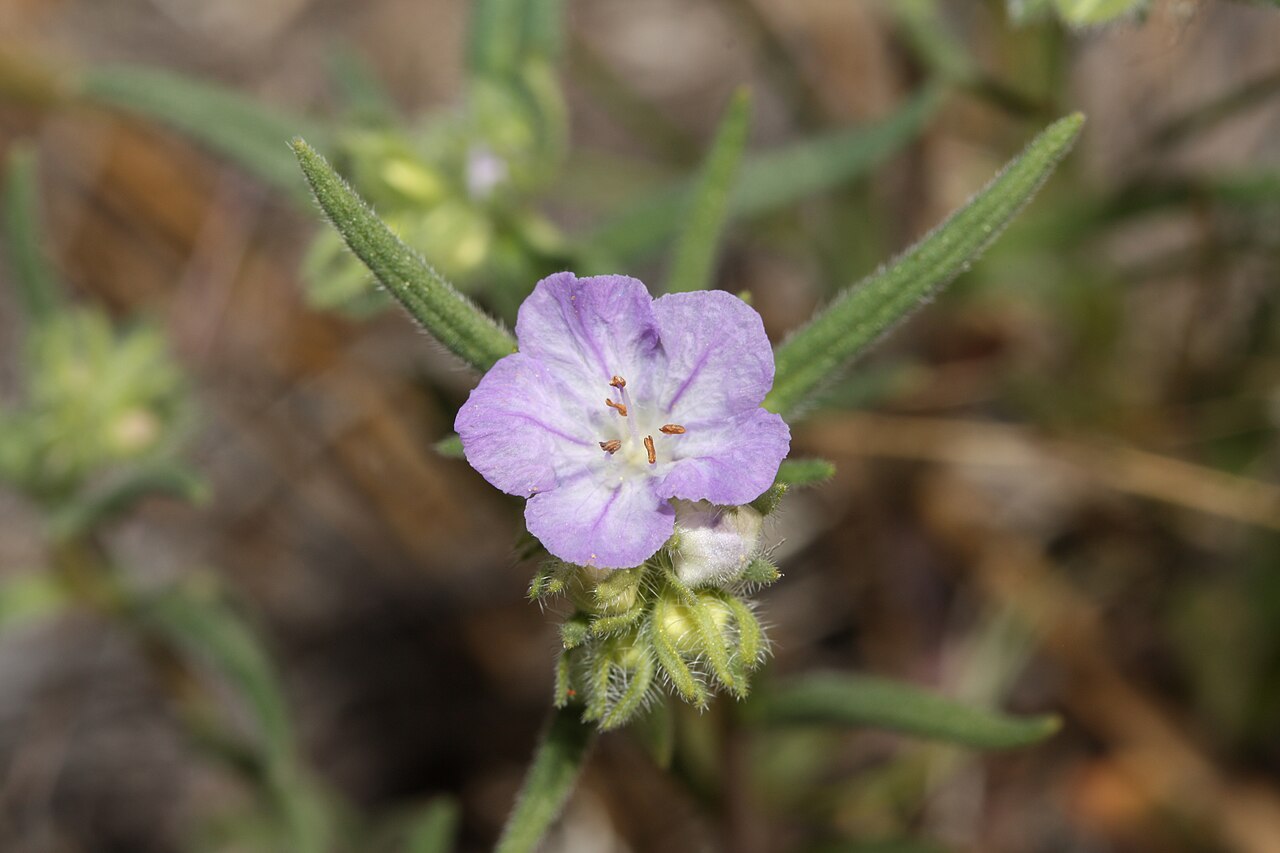
Look for a small, upright annual with narrow, grass-like to linear leaves (some with a few slender side lobes) and wide-open, lavender, bowl-shaped flowers in short coils.
Growth Habit
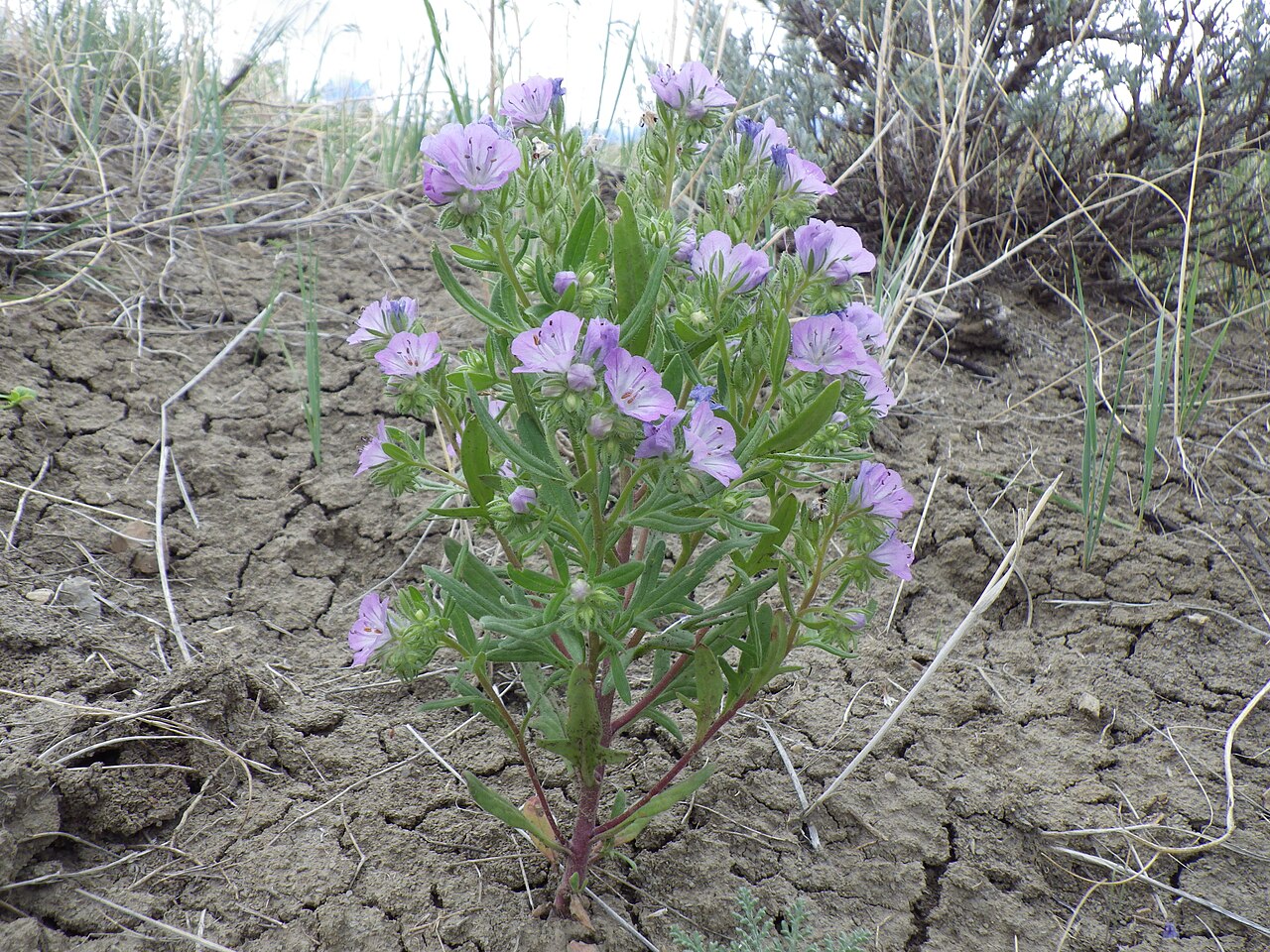
Linearleaf phacelia is an annual that grows 4 to 20 inches tall from a slender taproot. Plants have a single stem or branch from near the base into a small bush. Stems are reddish to green and covered with short, stiff and glandular hairs.
Leaves
Leaves are alternate, narrow and 1 to 4 inches long. Most are simple and linear to lance-linear, while some larger leaves have one to four narrow lobes near the base. They are hairy and gray-green. The narrow leaves give the species both its scientific and common names.
Flowers
Flowers are held in short, coiled (scorpioid) clusters at the stem tips and in upper leaf axils. Each flower is broadly bell- to saucer-shaped, about 3/8 to 5/8 inch across, with five rounded lobes in lavender, blue-violet or occasionally white, and often a paler center. The stamens stick out slightly beyond the petals. Bloom time is April to June, a little later at higher elevations.
Fruit & Seeds
The fruit is a small, oval, hairy capsule that holds about 6 to 15 tiny, pitted seeds. Seeds drop in early summer, and the plant dies soon after setting seed.
Look-alikes
Silverleaf phacelia (Phacelia hastata) is a perennial with silvery, lance-shaped leaves and dense, fuzzy, whitish to pale purple coils of small flowers. Many other annual phacelias have deeply divided or toothed leaves and much smaller, tubular flowers. Linearleaf phacelia’s mostly linear leaves and wide, open, lavender flowers are a good combination for identification.
Safety Notes
Like several other phacelias, the glandular hairs can cause an itchy rash in some people who handle the plant, similar to a mild poison ivy reaction. Wear gloves if you are sensitive.
Quick Facts
| Scientific Name | Phacelia linearis |
| Family | Boraginaceae (borage family; formerly Hydrophyllaceae) |
| Plant Type | Annual wildflower |
| Mature Height | 4–20 in |
| Mature Spread | 4–10 in |
| Growth Rate | Fast (completes its life cycle in one spring) |
| Sun Exposure | Full sun |
| Water Needs | Low; dry soil after spring moisture |
| Soil Type | Sandy, gravelly, rocky or loamy, well-drained |
| Soil pH | About 6.0–8.0 |
| Bloom Time | April–June |
| Flower Color | Lavender to blue-violet, sometimes white |
| Fall Color | None; annual dies after seeding |
| Fruit | Small hairy capsules with pitted seeds |
| Deer Resistant | Moderate |
| USDA Hardiness Zones | Annual; grows wild in zones 4–8 |
Native Range
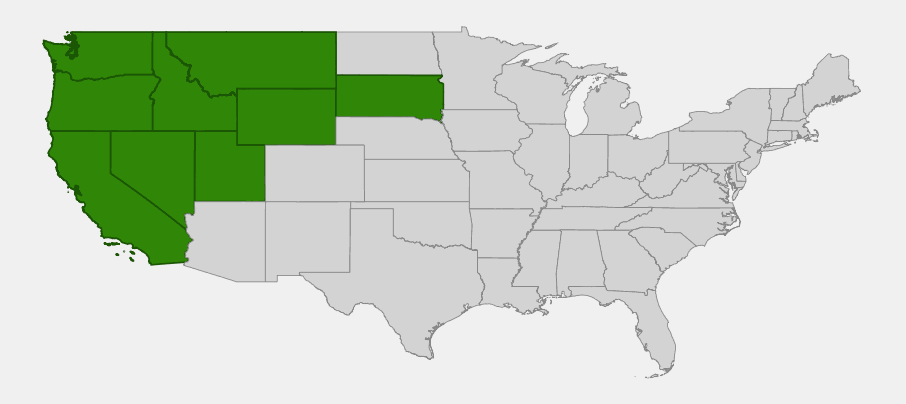
Linearleaf phacelia is native to western North America, from southern British Columbia and Alberta south to northern California, Nevada and Utah, and east to Montana and Wyoming. USDA PLANTS lists it as native in California, Idaho, Montana, Nevada, Oregon, South Dakota, Utah, Washington and Wyoming; the South Dakota records are outlying, at the eastern edge of its range. USDA also lists Connecticut and Maine, but the New England flora (Go Botany) treats those as rare introductions in fields and disturbed ground, so they are left out here.
It is most common in the Columbia Basin and the foothills east of the Cascades in Washington and Oregon, across the Snake River Plain and mountains of Idaho, in western Montana, and in the northern Great Basin of Nevada and Utah. In California it grows mainly on the east side of the Sierra Nevada and in the northeastern part of the state.
Its habitat is dry, open ground: sagebrush steppe, bunchgrass slopes, the edges of ponderosa pine and juniper woodland, rocky foothills, lava and talus slopes, and burned or disturbed areas. It is often found among shrubs, where the soil is loose and competition from grasses is lower.
📋 Regional plant lists featuring Linearleaf Phacelia: Idaho, Eastern Oregon & Eastern Washington · California & Nevada · Montana & Wyoming · Utah & Western Colorado · North Dakota, South Dakota & Western Minnesota · Western Oregon & Western Washington
Growing & Care Guide
Linearleaf phacelia is grown from seed, which some native seed companies in the Northwest and Intermountain West include in wildflower mixes. As an annual of dry country, it needs a sunny, open spot and very little care.
Light
Full sun. It flowers poorly and gets leggy in shade.
Soil & Water
Any well-drained, lean soil works: sandy, gravelly, rocky or loamy. It grows on winter and spring moisture and finishes its life cycle as the soil dries in early summer, so no summer water is needed. Rich soil and irrigation favor weeds that crowd it out.
Planting Tips
Sow seed in fall on bare, raked soil and press it in lightly; winter cold and moisture help it germinate in spring. Scatter it in open patches between bunchgrasses and shrubs, in a gravel garden, or on a dry slope. It does not transplant well, so sow it where you want it to grow.
Pruning & Maintenance
No pruning is needed. Let plants set seed and drop it before you pull the dry stems in summer, so it can return next year. Keep the area free of cheatgrass and other aggressive annual weeds, which compete for the same spring moisture.
Propagation
Grow it only from seed. Collect ripe capsules in early summer just as they begin to dry, and store the seed dry until fall sowing. Leave plenty of seed on wild plants, and collect only with permission.
Landscape Uses
- Spring wildflower meadows: a pastel purple annual among bunchgrasses and perennials
- Pollinator gardens: a valued early-season source of pollen and nectar for native bees
- Dry gravel and rock gardens: thrives in lean, well-drained soil without summer water
- Restoration and post-fire seeding: quickly covers bare ground in sagebrush and grassland
- Pairing with shrubs: grows naturally among sagebrush and bitterbrush
Wildlife & Ecological Value
Linearleaf phacelia blooms early, when bees in dry country need pollen and nectar most, and it quickly fills bare ground with flowers.
For Pollinators
The open flowers are visited by many native bees, including bumble bees, mason bees and small sweat bees, plus bee flies and butterflies. The Lady Bird Johnson Wildflower Center lists this species as having special value to native bees.
For Birds
Sparrows, finches and other seed-eating birds feed on the small seeds that fall in early summer.
For Mammals
Deer, elk and small mammals may graze it lightly in spring, but its hairy foliage makes it less palatable than many wildflowers.
Ecosystem Role
As a fast-growing native annual of bare and disturbed ground, linearleaf phacelia helps hold soil after fire and supports pollinator populations in early spring. It is a native alternative to the weedy annuals that often colonize disturbed sagebrush country.
Cultural & Historical Uses
Linearleaf phacelia was one of the first western wildflowers collected by Euro-American naturalists. It was first described from specimens gathered by the Lewis and Clark expedition, and Frederick Pursh named it Hydrophyllum lineare in his Flora Americae Septentrionalis (1813–1814). It was later moved to Phacelia.
The genus name Phacelia comes from the Greek phakelos, “bundle” or “cluster,” for the crowded flower coils. The coiled flower clusters, which unroll as they bloom, are the source of the common name “scorpionweed” used for many phacelias.
The species name linearis and the common names “linearleaf” and “threadleaf” all refer to the narrow leaves.
Frequently Asked Questions
Is linearleaf phacelia an annual or a perennial?
It is an annual. It germinates in fall or early spring, blooms April to June, sets seed and dies by early summer.
How do I grow linearleaf phacelia?
Sow the seed in fall on bare, well-drained soil in full sun, press it in lightly and let winter moisture do the rest. It needs no summer water.
Does linearleaf phacelia attract bees?
Yes. Its open lavender flowers are visited by many native bees, as well as bee flies and butterflies.
Can linearleaf phacelia cause a rash?
Some people get an itchy rash from the glandular hairs of phacelias, so wear gloves if your skin is sensitive.
Where does linearleaf phacelia grow?
In dry, open places in the interior West, from British Columbia and Alberta to northern California, Nevada and Utah, and east to Montana and Wyoming.

Looking for a nursery that carries Linearleaf Phacelia?
Browse our native plant nursery directory: California · Idaho · Montana · Nevada · Oregon · South Dakota & Utah · Washington · Wyoming

