
Panicled Willowherb (Epilobium brachycarpum)
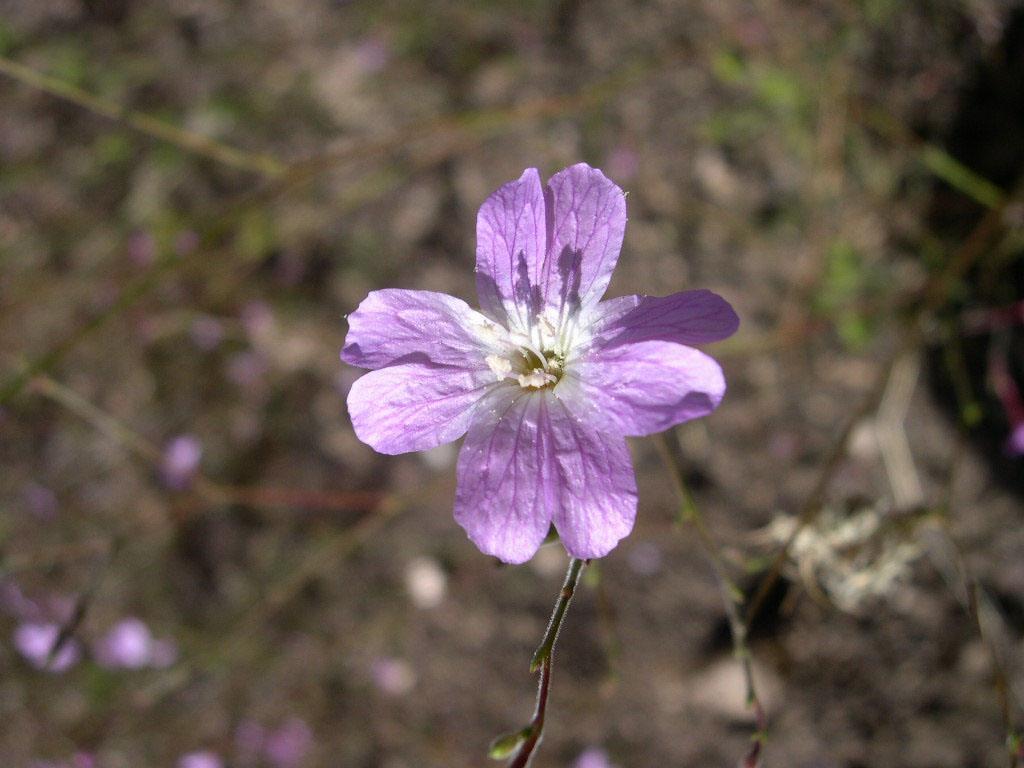
Epilobium brachycarpum, known as Panicled Willowherb, tall annual willowherb (the USDA PLANTS name), or tall fireweed, is a slender, late-blooming annual wildflower of dry, open ground across western North America. It belongs to the evening primrose family (Onagraceae). Older books call it Epilobium paniculatum, the source of the common name “panicled.”
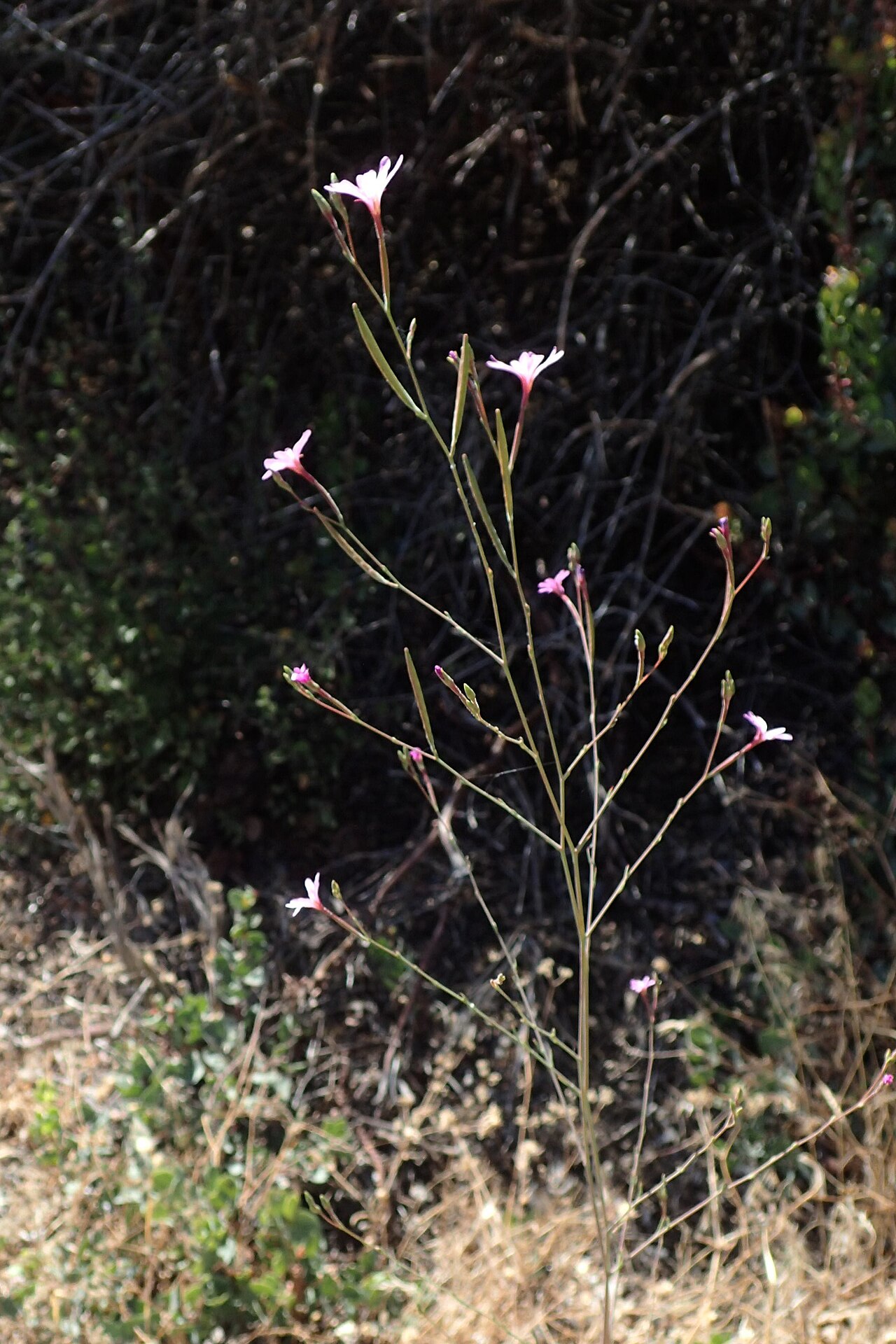
It is a wiry, airy plant, usually 1 to 4 feet tall and occasionally taller, with narrow leaves and many thin, spreading branches near the top. From midsummer into fall, when most other annuals have dried up, the branch tips carry small pink, lavender or white flowers with four deeply notched petals, followed by slender pods that release seeds with silky tufts.
Panicled willowherb grows from British Columbia and the Canadian prairies south through the western United States to Mexico, with scattered native records east to the Great Lakes. It thrives in grasslands, sagebrush, open forests, burns and roadsides, often appearing in large numbers after fire or soil disturbance. It is not a garden showpiece, but it is a useful native pioneer and late-season nectar plant.
Identification
Look in late summer for a tall, thin, branching annual on dry, open ground, with narrow leaves, small four-petaled pink to white flowers at the branch tips, and long, slender seed pods.
Growth Habit
Panicled willowherb is an annual that germinates in fall or spring and blooms from midsummer on. It forms a single, erect main stem, usually 1 to 4 feet tall and sometimes up to about 6 feet, that branches widely in its upper part into an open, airy, broom-like panicle. The lower stem often has a shiny surface that peels in thin, papery strips. Upper stems may be finely hairy or sticky-glandular.
Leaves
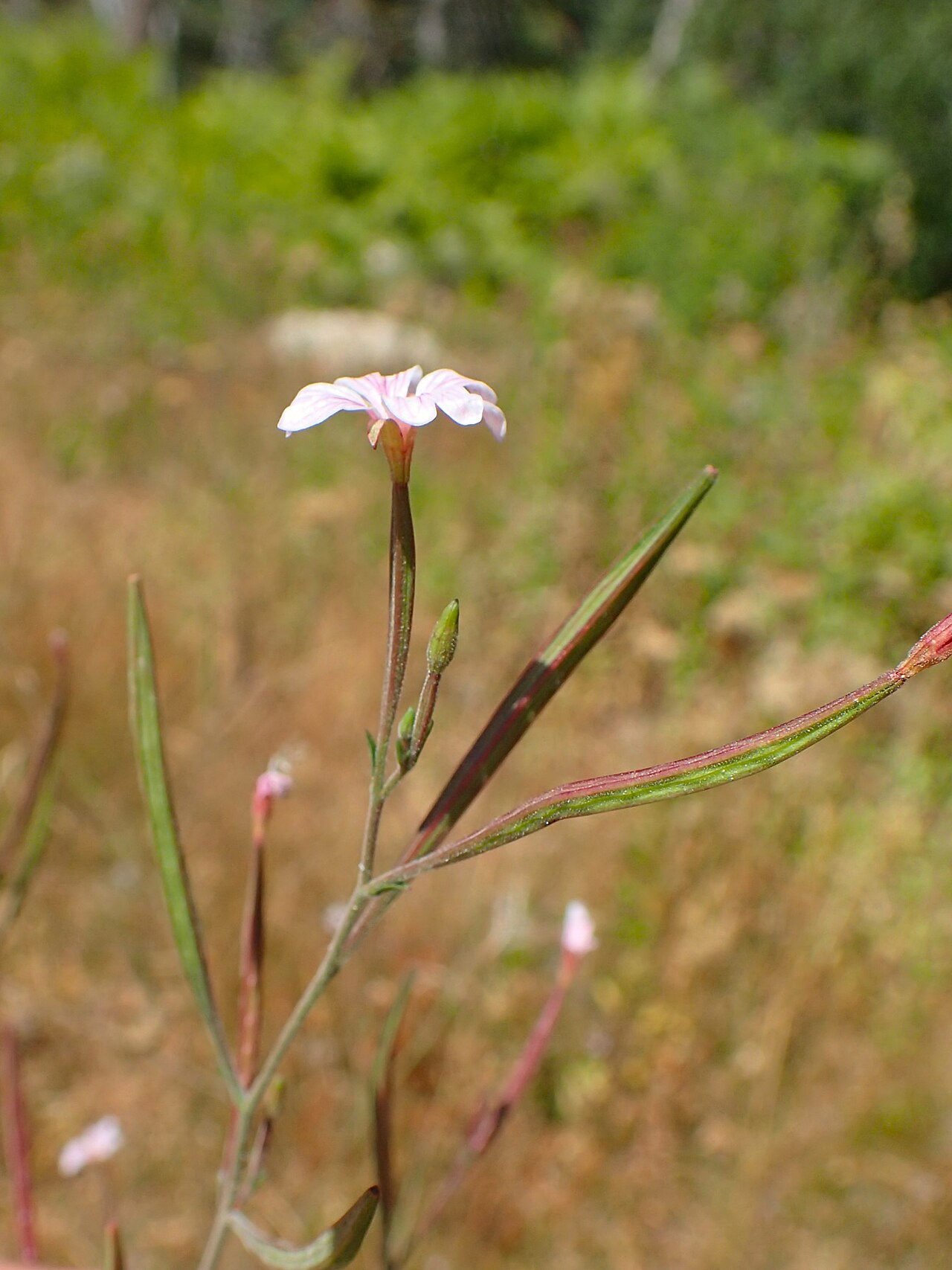
The leaves are narrow, linear to lance-shaped, about 1/2 to 2 inches long, with smooth or slightly toothed edges. They are often folded lengthwise along the midrib and frequently drop early, so plants in late summer can look nearly leafless, with only small leaves and short leafy shoots in the leaf axils.
Flowers
Flowers appear from about June to October, mostly in July and August. They sit at the tips of the branches at the end of a slender floral tube. Each has four petals, each petal notched at the tip, in pink, rose, lavender or white. Flower size varies greatly: some populations have showy flowers up to about 3/4 inch across that are visited by insects, while others have tiny, mostly self-pollinating flowers only a few millimeters long.
Fruit & Seeds
The fruit is a slender, straight capsule, about 3/4 to 1 1/4 inches long, that splits into four parts. It releases many tiny seeds, each topped with a tuft of silky white hairs that carries it on the wind, much like fireweed.
Look-alikes
Fringed willowherb (Epilobium ciliatum) is a perennial of moist ground with broader, toothed leaves and smaller flowers. Fireweed is a much larger perennial with dense spikes of big magenta flowers. Annual clarkias and groundsmoke (Gayophytum) also grow in dry, open western habitats, but clarkias lack the silky-tufted seeds, and groundsmoke has much tinier white flowers on hair-thin stems.
Safety Notes
Panicled willowherb is not known to be toxic to people or animals.
Quick Facts
| Scientific Name | Epilobium brachycarpum (syn. Epilobium paniculatum) |
| Family | Onagraceae (evening primrose family) |
| Plant Type | Annual wildflower |
| Mature Height | 1–4 ft (occasionally to 6 ft) |
| Mature Spread | 6–18 in |
| Growth Rate | Fast (one season) |
| Sun Exposure | Full sun to part shade |
| Water Needs | Low; dry to moderately moist soil |
| Soil Type | Sandy, gravelly, rocky or loamy; tolerates poor, disturbed soil |
| Soil pH | About 5.5–8.0 |
| Bloom Time | June–October (mostly July–August) |
| Flower Color | Pink, rose, lavender or white |
| Fall Color | Stems turn reddish as plants dry |
| Fruit | Slender capsules releasing silky-tufted seeds |
| Deer Resistant | Moderately; lightly browsed |
| USDA Hardiness Zones | Annual; grows across zones 3–9 |
Native Range
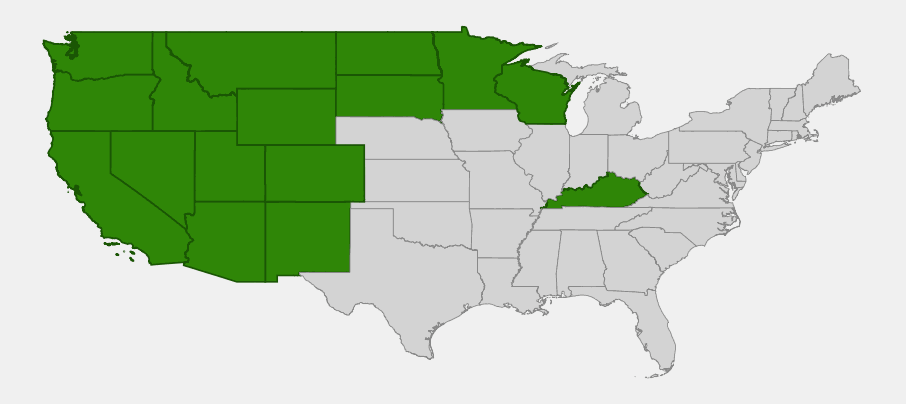
Panicled willowherb is native to western and central North America. USDA PLANTS lists it as native in Arizona, California, Colorado, Idaho, Kentucky, Minnesota, Montana, North Dakota, New Mexico, Nevada, Oregon, South Dakota, Utah, Washington, Wisconsin and Wyoming, and in Canada from British Columbia east to Manitoba, Ontario and Quebec. It also ranges south into Mexico.
The heart of its range is the West, where it is common from the Pacific Coast to the Rocky Mountains and the western Great Plains, both west and east of the Cascades in Washington and Oregon. Records from Minnesota, Wisconsin and Kentucky are outlying eastern records; regional atlases such as BONAP and the Canadian checklist VASCAN treat the species as native in that part of its range, so they are kept here as native.
It grows in sunny, dry to seasonally moist, open places: grasslands, sagebrush steppe, oak savanna, open pine and mixed-conifer forest, rocky slopes, gravel bars, burns, clearings and roadsides. It is an important early colonizer after wildfire and logging. It has spread as an introduced weed to parts of Europe and South America.
📋 Regional plant lists featuring Panicled Willowherb: Idaho, Eastern Oregon & Eastern Washington · Western Oregon & Western Washington · Montana & Wyoming · Utah & Western Colorado · Arizona & New Mexico · California & Nevada · North Dakota, South Dakota & Western Minnesota · Michigan, Wisconsin & Eastern Minnesota · Kentucky & Tennessee
Growing & Care Guide
Panicled willowherb is seldom sold, and most gardeners meet it as a volunteer. It is easy to keep in a naturalistic meadow or restoration planting, where it adds late-summer flowers after most annuals are done.
Light
It grows best in full sun and also tolerates light, open shade under scattered trees.
Soil & Water
It is not fussy about soil and does well in poor, sandy, gravelly or disturbed ground. Plants germinate with fall or spring moisture and then tolerate summer drought, flowering on stored moisture. No irrigation is needed in its home range once seedlings are up.
Planting Tips
Sow seed on bare, open soil in fall or early spring and press it in lightly; it needs light and little competition to germinate. It fits best in meadow, prairie and steppe plantings, on slopes, and in post-fire or construction-disturbed areas, alongside bunchgrasses and other native forbs.
Pruning & Maintenance
No care is needed. Leave the plants standing until the capsules open in fall if you want it to reseed. Because the wind-borne seeds travel, remove plants before seed release if you do not want it in nearby beds.
Propagation
Grow it from seed collected in late summer or fall when the capsules begin to split. Store seed dry and sow it on the soil surface. Plants reseed readily on open ground and usually decline as perennial vegetation fills in.
Landscape Uses
- Post-fire and disturbed-site restoration: a fast native colonizer of bare, burned or graded ground
- Meadow and steppe plantings: airy late-summer flowers among bunchgrasses
- Late-season pollinator food: blooms from midsummer into fall when nectar is scarce
- Naturalistic gardens: a self-sowing filler for dry, informal areas
- Erosion cover on slopes: quick temporary cover while perennials establish
Wildlife & Ecological Value
Panicled willowherb blooms when much of the western landscape is dry, so its flowers and seeds are useful to wildlife late in the season.
For Pollinators
Large-flowered plants are visited by bees, flies and small butterflies and moths, including sphinx moths, for nectar and pollen in late summer. Willowherbs are larval host plants for some sphinx moths, such as the white-lined sphinx.
For Birds
Small seed-eating birds such as finches pick at the ripening capsules in fall, and the tall stems shelter insects that birds eat.
For Mammals
Deer and elk browse the plants lightly, and small mammals may eat the seeds. It is generally considered fair forage at best.
Ecosystem Role
As an annual pioneer, it quickly covers bare soil after fires, floods, landslides and other disturbances, reducing erosion and providing early habitat before perennial grasses, shrubs and trees return.
Cultural & Historical Uses
The species was described in 1831 by the Czech botanist Carl Presl from specimens collected in western North America. The name brachycarpum means “short-fruited.” For much of the twentieth century it was known as Epilobium paniculatum, referring to its branched, panicle-like flower clusters, and several varieties were named before botanists merged them into one variable species.
Botanists have studied it as an example of how flower size and mating system can vary within one species: some populations have showy flowers that attract insects, while others have tiny flowers that pollinate themselves.
Because it appears so quickly after wildfire, land managers in the West know it as one of the common annuals of the first summers after a burn, often alongside fireweed, before longer-lived plants take over.
Frequently Asked Questions
Is panicled willowherb the same as tall annual willowherb?
Yes. “Tall annual willowherb” is the USDA PLANTS common name for Epilobium brachycarpum; “panicled willowherb” comes from its older scientific name, Epilobium paniculatum. It is also called tall fireweed.
Is panicled willowherb a weed?
It is a native annual that colonizes disturbed ground and can be abundant after fire or roadwork, but it usually fades as perennial plants return. It is introduced and weedy in parts of Europe and South America.
When does panicled willowherb bloom?
From about June to October, mostly in July and August, after many other annuals have finished.
Is it native in the eastern United States?
Its range is mainly western, but USDA lists native records from Minnesota, Wisconsin and Kentucky, which are treated here as outlying parts of its native range.
Can I grow panicled willowherb?
Yes. Scatter seed on bare, sunny ground in fall or early spring. It reseeds easily in meadows and restoration sites and needs no watering once established.

Looking for a nursery that carries Panicled Willowherb?
Browse our native plant nursery directory: Arizona · California · Colorado · Idaho · Kentucky, Minnesota & Montana · Nevada, New Mexico & North Dakota · Oregon · South Dakota & Utah · Washington · Wisconsin & Wyoming

