
Virginia Snakeroot (Aristolochia serpentaria)
Aristolochia serpentaria, known as Virginia Snakeroot or Virginia serpentary, is a small, upright woodland perennial of the birthwort or pipevine family (Aristolochiaceae). Some botanists place it in the segregate genus Endodeca, as Endodeca serpentaria. It is a close relative of the big, climbing Dutchman’s pipe vines, but it stays under 2 feet tall and does not climb.
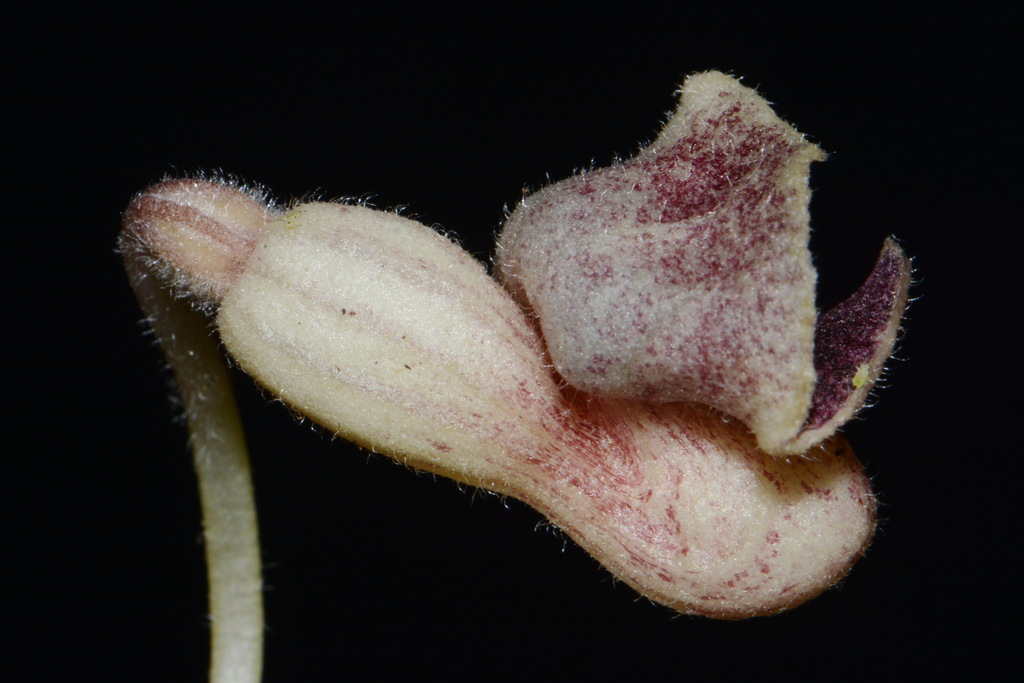
In late spring and early summer it produces curious, S-shaped, pipe-like flowers about half an inch long, dull brownish purple to maroon, held on short stalks at the base of the plant. They are so close to the ground that most people never notice them. The leaves vary from heart-shaped to long and narrow, and the roots have a strong, camphor-like smell.
Virginia snakeroot is best known as a larval host plant of the pipevine swallowtail butterfly, and as a once-famous medicinal root. All parts of the plant contain aristolochic acid, which is toxic to the kidneys and can cause cancer. Never eat or use it as a herbal remedy. It is a fine plant to grow and enjoy in a shady native garden, but not to take internally.
Identification
Look for a low, upright woodland plant with a slender, zigzag stem, pointed heart-shaped to narrow leaves, and small, brownish purple, S-shaped flowers near the ground in May and June.
Growth Habit
Virginia snakeroot is a herbaceous perennial, usually 8 to 20 inches tall, with one or a few slender, upright, often zigzag stems rising from a short rhizome and a cluster of thin, fibrous, aromatic roots. It does not climb or twine. Plants usually grow singly or in small, scattered groups on the forest floor.
Leaves
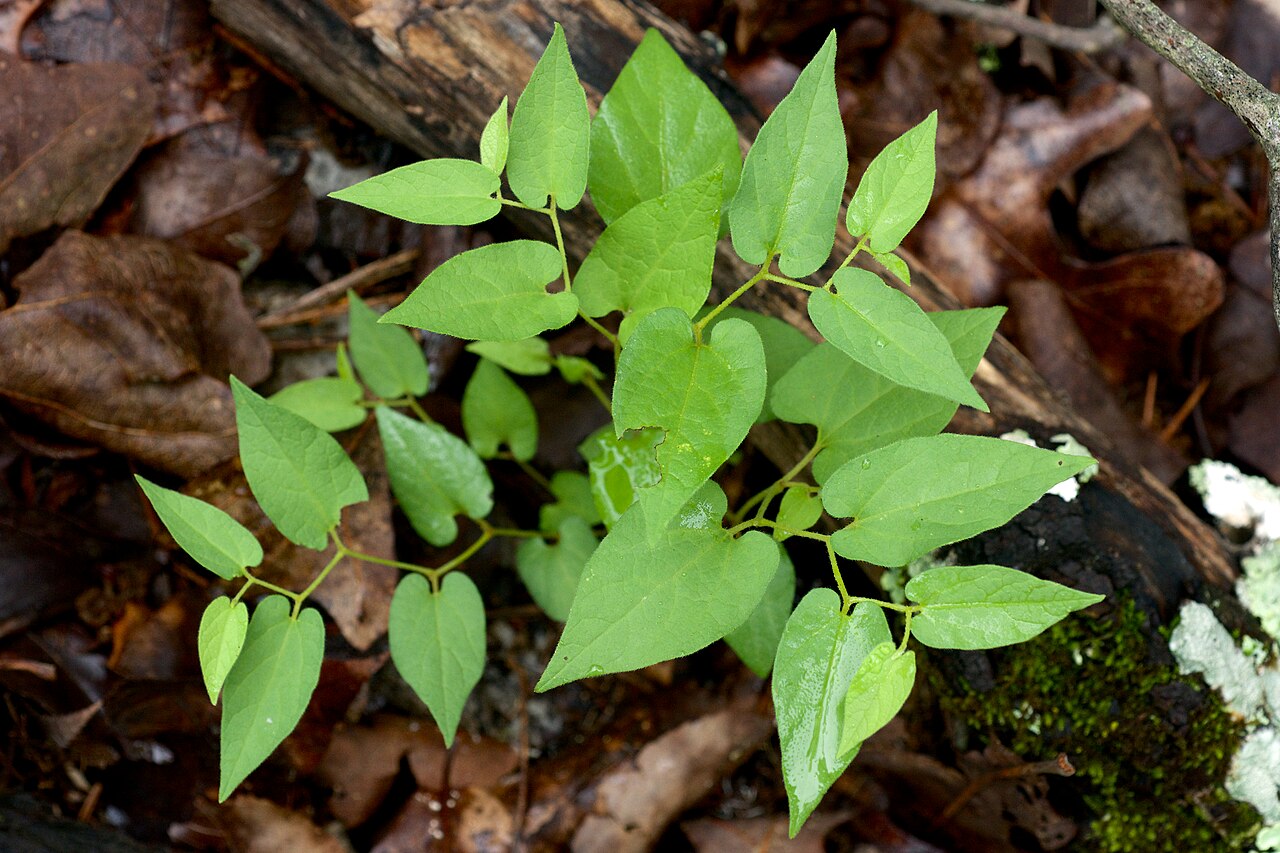
The leaves are alternate and short-stalked, about 2 to 5 inches long, with a pointed tip and a heart-shaped or rounded base. Their shape varies a great deal: some plants have broad, heart-shaped leaves, while others, especially in the Deep South, have long, narrow, lance-shaped or arrow-shaped leaves. The leaves are often slightly hairy.
Flowers
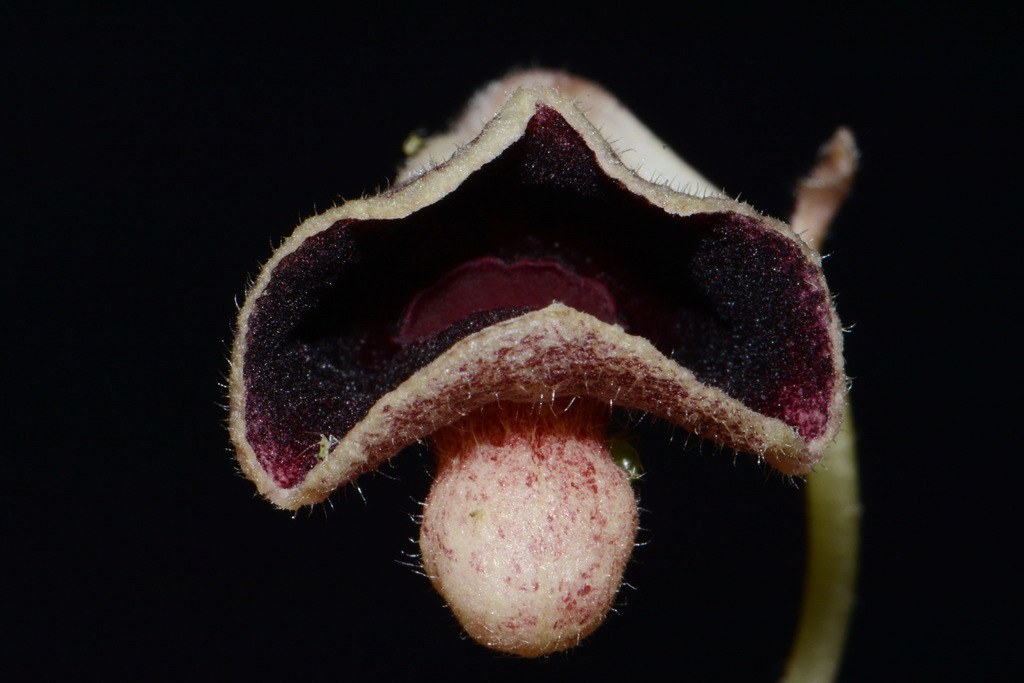
Flowers appear from about May to July. They grow singly on short, curved stalks from the lowest nodes of the stem, often lying on or partly buried in the leaf litter. Each flower is a curved, S-shaped tube about 1/2 inch long, swollen at the base, ending in a flared, three-lobed lip. They are dull brownish purple, maroon or cream with purple, and lack petals; the colored tube is formed by the sepals.
Fruit & Seeds
The fruit is a small, rounded to oval capsule, about 1/2 inch long, with six ribs, that ripens in summer and splits open to release flat seeds.
Look-alikes
Wild ginger (Asarum canadense), in the same family, has a pair of broad, kidney-shaped leaves and a single, cup-shaped maroon flower at ground level, but no upright, leafy stem. Little brown jugs has evergreen, arrow-shaped, mottled basal leaves and jug-shaped flowers. Climbing woolly Dutchman’s pipe and Dutchman’s pipe are large vines with much bigger leaves and flowers.
Safety Notes
Toxic. Like all Aristolochia species, Virginia snakeroot contains aristolochic acid, which can cause severe, sometimes irreversible kidney damage and is linked to cancers of the urinary tract. The U.S. Food and Drug Administration has warned consumers not to use botanical products that contain aristolochic acid. Do not eat any part of the plant or use it as a herbal remedy or tea, keep it away from children and pets, and wear gloves if you handle the roots.
Quick Facts
| Scientific Name | Aristolochia serpentaria |
| Family | Aristolochiaceae (birthwort or pipevine family) |
| Plant Type | Herbaceous perennial wildflower |
| Mature Height | 8–20 in |
| Mature Spread | 6–12 in |
| Growth Rate | Slow |
| Sun Exposure | Part shade to full shade |
| Water Needs | Low to moderate; dry to average soil |
| Soil Type | Well-drained loam, rocky or sandy woodland soil |
| Soil pH | About 5.0–7.0 |
| Bloom Time | May–July |
| Flower Color | Brownish purple to maroon |
| Fall Color | Not significant |
| Fruit | Small, six-ribbed capsules |
| Deer Resistant | Yes; toxic foliage is rarely browsed |
| USDA Hardiness Zones | 5–9 |
Native Range
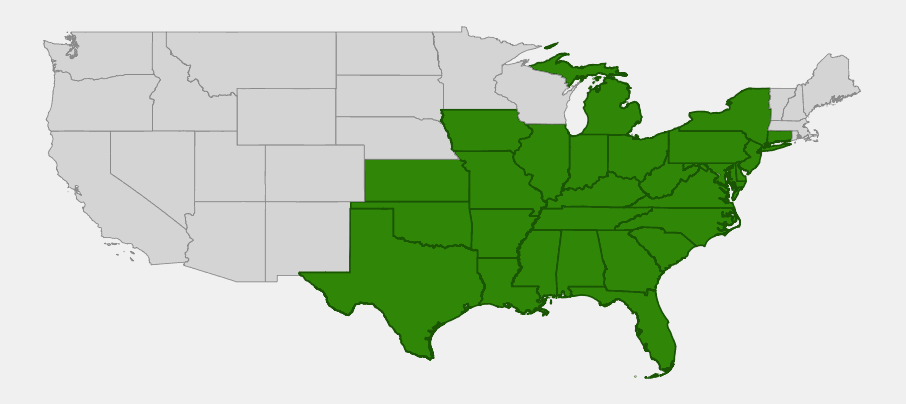
Virginia snakeroot is native to the eastern United States. USDA PLANTS lists it as native in Alabama, Arkansas, Connecticut, Delaware, Florida, Georgia, Illinois, Indiana, Iowa, Kansas, Kentucky, Louisiana, Maryland, Michigan, Mississippi, Missouri, New Jersey, New York, North Carolina, Ohio, Oklahoma, Pennsylvania, South Carolina, Tennessee, Texas, Virginia and West Virginia, as well as the District of Columbia.
It is most frequent in the Appalachian and Piedmont regions, the Ohio and Tennessee valleys and the Ozarks. It is scattered to rare at the edges of its range: in Connecticut, New York, southern Michigan, Iowa and eastern Kansas in the north and west, and in central Florida and central Texas in the south.
Typical habitats are dry to moist deciduous and mixed woods, especially oak and hickory forest, wooded slopes and ravines, rocky hillsides and the edges of woodland clearings. It usually grows in well-drained soil under a deciduous canopy, often among leaf litter where it is easily overlooked.
📋 Regional plant lists featuring Virginia Snakeroot: North & South Florida · Alabama, Georgia & Mississippi · North & South Carolina · Maryland, Virginia & West Virginia · Kentucky & Tennessee · Arkansas, Louisiana, Eastern Oklahoma & Eastern Texas · Illinois, Iowa & Missouri · Ohio & Indiana · Nebraska, Kansas & Eastern Colorado · Michigan, Wisconsin & Eastern Minnesota · New York, Pennsylvania & Northern New Jersey · Delaware, Southern New Jersey & Long Island · Connecticut, Massachusetts & Rhode Island · New Hampshire, Maine & Vermont · South & West Texas
Growing & Care Guide
Virginia snakeroot is offered by a few native plant nurseries, mainly for butterfly gardeners who want to host pipevine swallowtails. It is a small, slow plant for shady woodland gardens. Buy nursery-propagated plants rather than digging wild ones, which are uncommon in many areas.
Light
Grow it in partial to full shade under deciduous trees. It appreciates dappled spring sun before the canopy fills in, but scorches in hot, full sun.
Soil & Water
It prefers well-drained, humus-rich or rocky woodland soil that is slightly acidic. Once established it tolerates dry summer shade, but water during long droughts. Avoid soggy soil.
Planting Tips
Plant it near a path or at the front of a woodland bed, where its small size and odd flowers can be seen up close. Group several plants together; a single pipevine swallowtail caterpillar can strip a small plant, and a group provides enough food for the larvae. Mulch with shredded leaves.
Pruning & Maintenance
Little care is needed. Leave the fallen leaves around it as natural mulch. Do not spray insecticides; caterpillars chewing the leaves are usually pipevine swallowtails, the reason to grow it. Wear gloves when dividing or handling the roots.
Propagation
Sow fresh seed in late summer or fall outdoors, or give it cold, moist stratification before spring sowing. Seedlings grow slowly. Established clumps can be carefully divided in early spring or fall.
Landscape Uses
- Butterfly gardens: larval host plant for the pipevine swallowtail
- Woodland and shade gardens: a small, unusual plant for dry to average shade
- Conversation piece: curious S-shaped flowers near the ground
- Woodland restoration: part of the diverse herb layer of oak-hickory forests
- Deer-browsed sites: toxic foliage is rarely eaten
Wildlife & Ecological Value
Virginia snakeroot is a small plant with an outsized role for one of the most striking butterflies of eastern forests.
For Pollinators
The tubular flowers are thought to be pollinated mainly by small flies, such as fungus gnats, which crawl into the curved tube and are held briefly before escaping with pollen. Seed set is often low. Virginia snakeroot is also a larval host plant of the pipevine swallowtail (Battus philenor). The caterpillars take up aristolochic acids from the leaves, which make both the caterpillars and the adult butterflies distasteful to birds.
For Birds
Birds do not eat the plant, and they learn to avoid pipevine swallowtails, whose bad taste comes from these plants. Several other butterflies, such as the spicebush swallowtail, the dark form of the female eastern tiger swallowtail and the red-spotted purple, are thought to gain protection by resembling it.
For Mammals
The toxic foliage is rarely browsed by deer or other mammals.
Ecosystem Role
As one of the few herbaceous Aristolochia species in the East, Virginia snakeroot lets pipevine swallowtails breed in forests where the climbing pipevines are absent. It is part of the diverse herb layer of oak and hickory woodlands.
Cultural & Historical Uses
Linnaeus named the species in 1753. Aristolochia comes from Greek words meaning “best birth,” from the old belief, based on the womb-like shape of some flowers, that these plants helped in childbirth. Serpentaria and the common name snakeroot refer to its long use as a supposed remedy for snakebite.
In the 1700s and 1800s Virginia snakeroot was one of the best-known American medicinal plants. Its aromatic roots were collected in large quantities in the Appalachians and shipped to Europe, and it was listed in official pharmacopoeias as a tonic and fever remedy. Heavy digging reduced wild populations in some areas.
Modern research has shown that aristolochic acid, found in this and other Aristolochia species, causes kidney failure and urinary tract cancers. Herbal products made from these plants have caused serious poisonings around the world, and the U.S. Food and Drug Administration has warned against using them. Virginia snakeroot is now best appreciated as a butterfly host plant and woodland curiosity.
Frequently Asked Questions
Is Virginia snakeroot poisonous?
Yes. It contains aristolochic acid, which can cause severe kidney damage and cancer. Do not eat it or use it as an herbal remedy, and keep it away from children and pets.
Does Virginia snakeroot really cure snakebite?
No. Despite its name and long history in folk medicine, there is no good evidence that it works against snakebite, and it is toxic.
Which butterfly uses Virginia snakeroot?
The pipevine swallowtail (Battus philenor) lays its eggs on it, and the caterpillars eat the leaves. The plant’s chemicals make the butterflies distasteful to predators.
Why can’t I find the flowers?
The small, brownish purple flowers grow on short stalks at the base of the stem, often lying on or under the leaf litter. Brush the leaves aside in late spring to see them.
Can I grow Virginia snakeroot in my garden?
Yes, in partial to full shade with well-drained woodland soil. Buy nursery-propagated plants, and plant several together to feed pipevine swallowtail caterpillars.

Looking for a nursery that carries Virginia Snakeroot?
Browse our native plant nursery directory: Alabama & Arkansas · Connecticut, Delaware, Florida & Georgia · Illinois, Indiana, Iowa & Kansas · Kentucky, Louisiana, Maryland, Michigan, Mississippi & Missouri · New Jersey, New York, North Carolina, Ohio & Oklahoma · Pennsylvania, South Carolina, Tennessee, Texas & Virginia · West Virginia

