
Wallace’s Woollydaisy (Antheropeas wallacei)
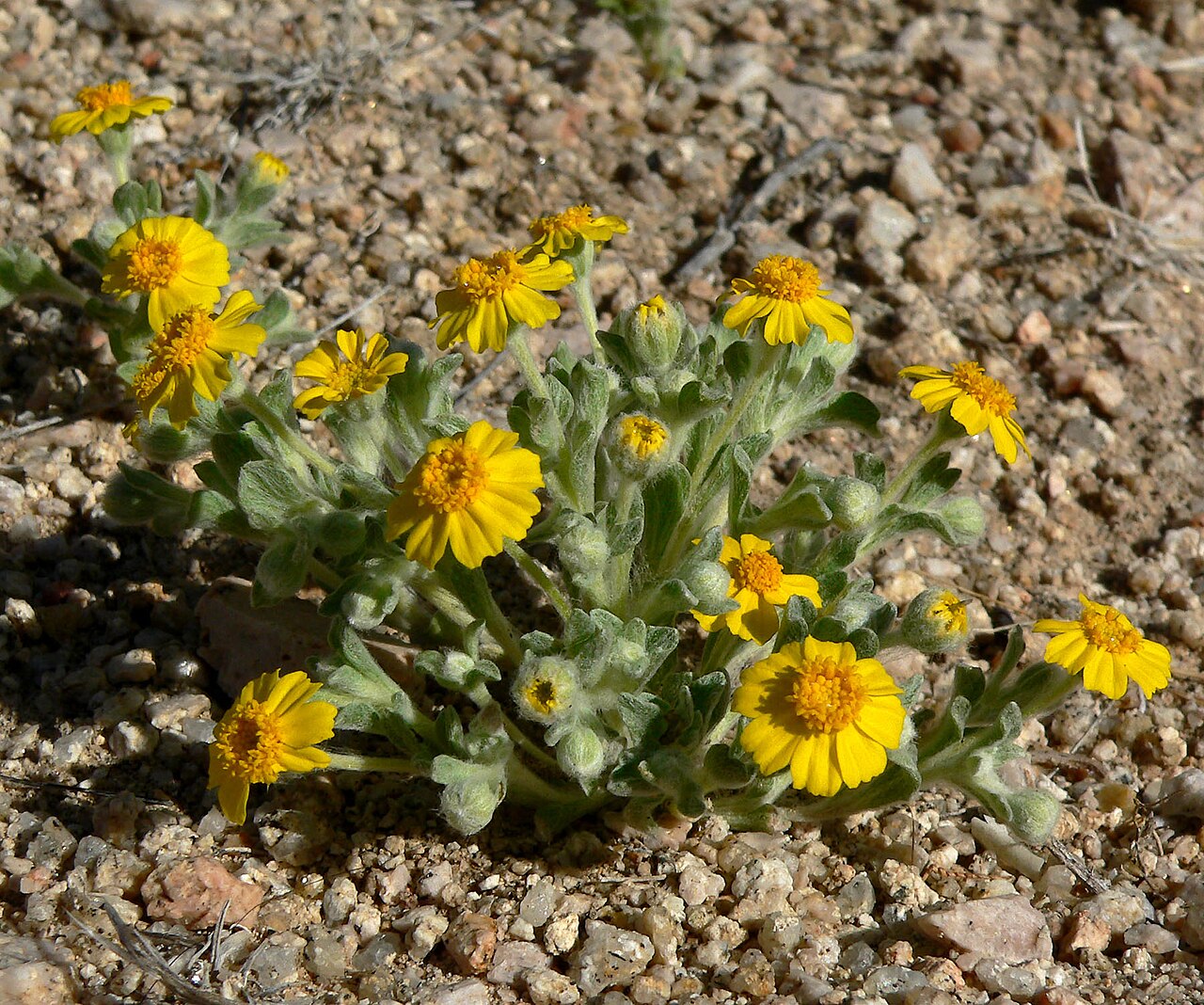
Antheropeas wallacei, known as Wallace’s Woollydaisy, woolly daisy or Wallace’s woolly sunflower, is a tiny annual wildflower of the Mojave and Sonoran deserts. It is still widely listed under its older name, Eriophyllum wallacei, in field guides, Calflora and iNaturalist.
Each plant is a small, rounded tuft usually only 1 to 4 inches tall, densely covered with white, woolly hairs that help it conserve water and reflect the desert sun. In spring the tufts are dotted or covered with bright golden-yellow daisy heads. After a wet winter, thousands of plants can turn gravelly desert flats and slopes gold.
It is a classic “belly flower,” a plant best appreciated by kneeling down close to the ground. Wallace’s woollydaisy is not a garden plant in the usual sense, but it can be grown from seed in desert rock gardens and wildflower seedings in the arid Southwest.
Identification
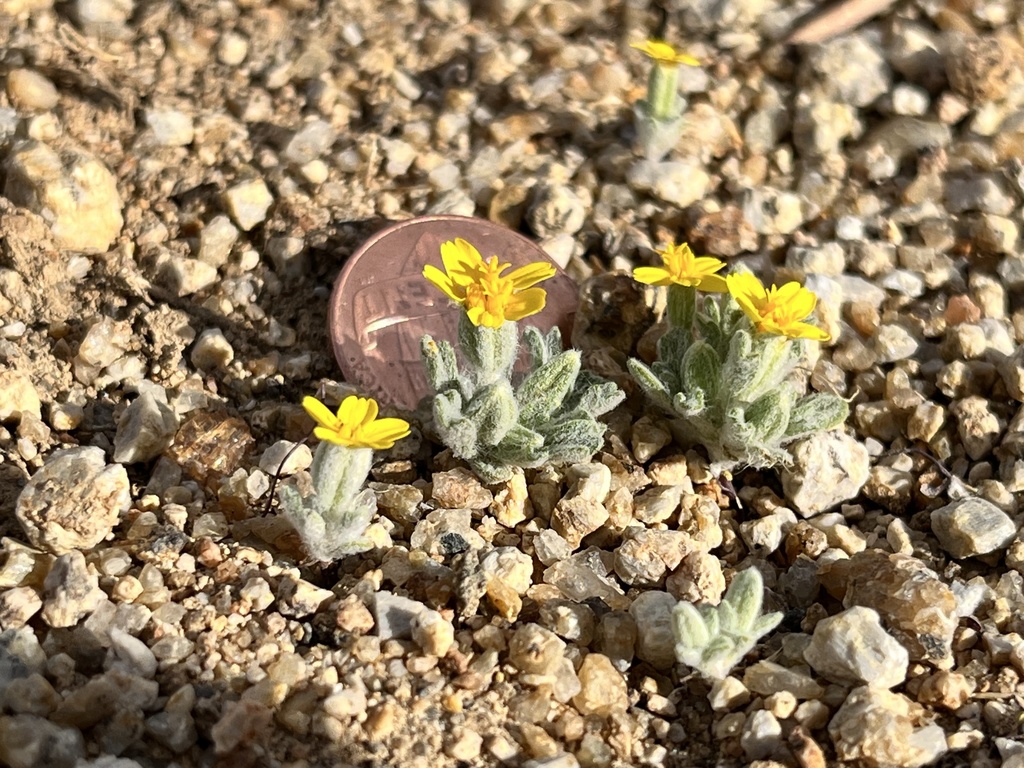
Look in spring on sandy or gravelly desert ground for tiny, tufted, white-woolly annuals, usually only 1 to 4 inches tall, topped with bright yellow daisies only about 1/4 inch across.
Growth Habit
A small winter annual that branches from the base into a compact, rounded tuft or mat, usually 1 to 4 inches tall (rarely to 6 inches) and about as wide. The whole plant is covered in white to grayish wool.
Leaves
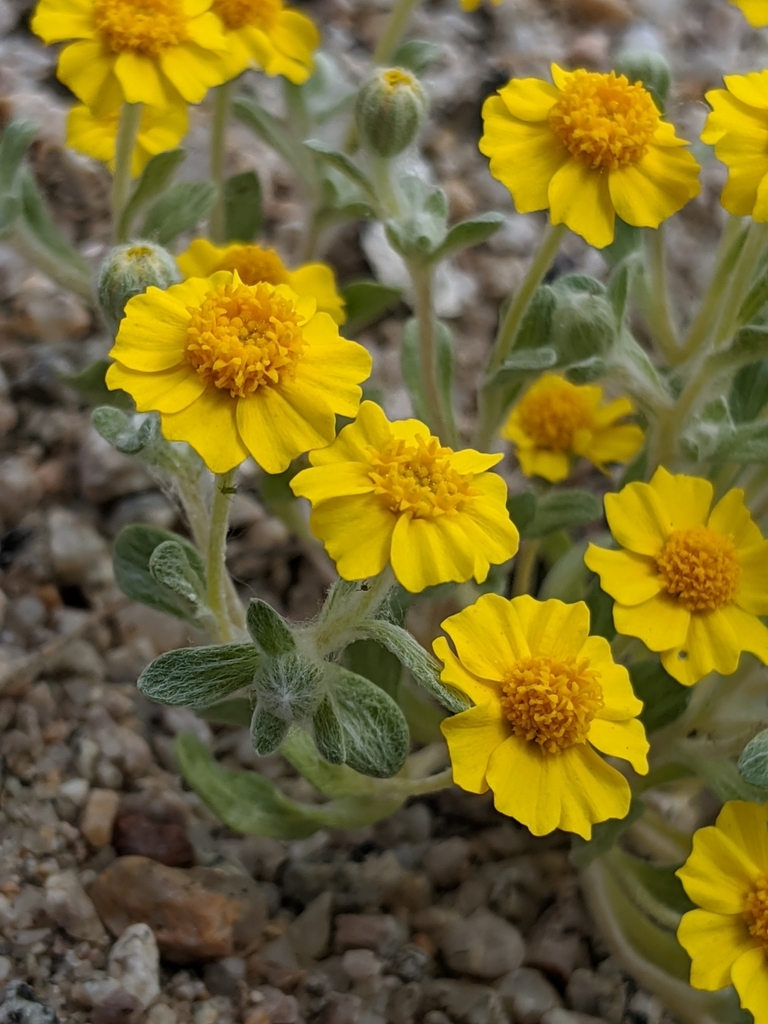
Leaves are small, about 1/4 to 3/4 inch long, spoon-shaped to broadly oval, and often slightly three-lobed at the tip. They are thick with white, woolly hairs.
Flowers
The flower heads sit singly at the tips of short stems, just above the leaves. Each head is about 1/4 inch across, with 5 to 10 short, broad, golden-yellow (rarely cream) rays around a center of yellow disk flowers. Bloom is mainly from about February to June, depending on winter rains and elevation.
Fruit
The small, dry seeds (achenes) are tipped with a crown of tiny scales. Plants die after setting seed in late spring, and the seed waits in the soil until the next good rainy season.
Look-alikes
White woolly daisy (Antheropeas lanosum, often called Eriophyllum lanosum) looks similar but has white rays. Mojave desertstar forms similar tiny mats but has white to pinkish rays and bristly, not woolly, leaves. Goldfields (Lasthenia) have narrow, green leaves without dense wool. Woolly sunflower is a much larger perennial of mountains and foothills.
Quick Facts
| Scientific Name | Antheropeas wallacei (syn. Eriophyllum wallacei) |
| Family | Asteraceae (aster family) |
| Plant Type | Tiny winter annual wildflower |
| Mature Height | 1–4 in (rarely to 6 in) |
| Mature Spread | 1–6 in |
| Growth Rate | Fast (completes its life cycle in one season) |
| Sun Exposure | Full sun |
| Water Needs | Very low; relies on winter rain |
| Soil Type | Sandy, gravelly or rocky, fast-draining desert soil |
| Soil pH | Neutral to alkaline (about 6.5–8.5) |
| Bloom Time | Spring (February–June) |
| Flower Color | Golden yellow |
| Fall Color | None (annual) |
| Fruit | Small achene with a crown of scales |
| Deer Resistant | Yes (rarely browsed) |
| USDA Hardiness Zones | Annual; suited to dry climates in zones 7–10 |
Native Range
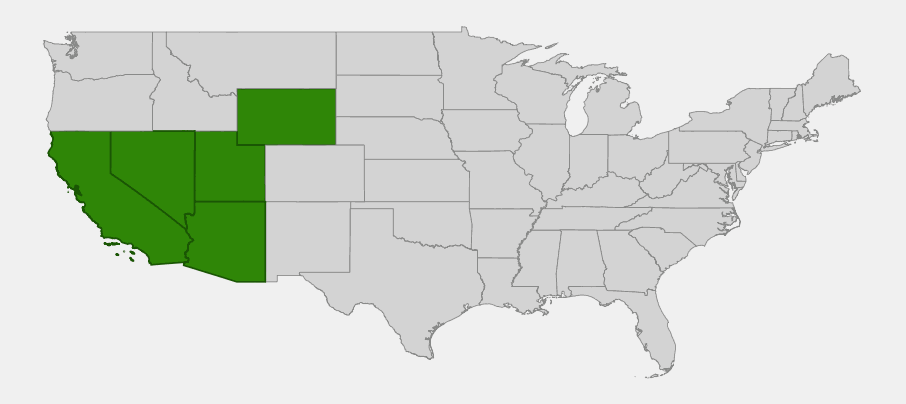
Wallace’s woollydaisy is native to the deserts of the southwestern United States and northwestern Mexico. In the United States it grows mainly in California, Nevada, Arizona and Utah, and it also reaches Baja California. USDA PLANTS and the Biota of North America Program also record an isolated, outlying population in Wyoming, far to the north of the main range.
It is most common in the Mojave Desert of southeastern California, southern Nevada, northwestern Arizona and southwestern Utah, and it extends into the western Sonoran (Colorado) Desert, the desert slopes of the Peninsular and Transverse Ranges, and the Owens Valley and lower eastern Sierra Nevada.
It grows on sandy and gravelly flats, washes, bajadas, granitic and volcanic slopes and open spaces between shrubs, in creosote bush scrub, Joshua tree woodland and pinyon-juniper woodland, from near sea level to about 7,500 feet.
📋 Regional plant lists featuring Wallace’s Woollydaisy: Montana & Wyoming · Utah & Western Colorado · Arizona & New Mexico · California & Nevada
Growing & Care Guide
Wallace’s woollydaisy is a desert annual, so it is grown from seed rather than as a permanent plant. It is best for desert rock gardens, gravel gardens and wildflower seedings in the arid Southwest, where it can reseed on its own in good years.
Light
Full sun. It will not thrive in shade.
Soil & Water
Sow in lean, sandy or gravelly soil with excellent drainage. It relies on winter rain. In a dry winter, a few light waterings after sowing help germination, but avoid keeping the soil wet. Do not water once plants are flowering and setting seed.
Planting Tips
Scatter seed in fall, before the winter rains, on bare, open ground and press it lightly into the surface. Do not bury it deeply or cover it with thick mulch. It does best where it does not compete with taller plants or weeds.
Pruning & Maintenance
No pruning is needed. Leave plants in place until they drop their seed in late spring so they can reseed. Weed carefully around them, especially invasive grasses such as red brome and Mediterranean grass.
Propagation
From seed only. Native seed suppliers in the Southwest sometimes offer it, alone or in desert wildflower mixes. Germination depends on cool temperatures and enough rain, and some seed may stay dormant for several years. Collect wild seed only where permitted.
Landscape Uses
- Desert wildflower seedings: adds gold to spring wildflower displays
- Rock and gravel gardens: fits between stones and small shrubs
- Habitat restoration: part of native annual communities in desert scrub
- Pollinator support: early spring nectar and pollen for small bees
- Nature study: a classic tiny “belly flower” of the desert
Wildlife & Ecological Value
Like other desert annuals, Wallace’s woollydaisy plays a large part in the brief spring burst of life that follows good winter rains.
For Pollinators
The flowers are visited by small native bees, including specialist desert bees, as well as bee flies, beetles and small butterflies.
For Birds
The seeds are eaten by sparrows, quail and other ground-feeding birds, and seed-eating birds forage across woollydaisy flats in late spring.
For Mammals
Kangaroo rats, pocket mice and other desert rodents gather and store the small seeds. The wool makes the foliage unappealing to most grazing animals.
Ecosystem Role
Its long-lived seed bank lets it wait out drought years and bloom in great numbers when rains return. Native annuals like this one face strong competition from invasive annual grasses, which also increase fire risk in desert scrub.
Cultural & Historical Uses
Asa Gray first described the species in 1857 as Bahia wallacei. It was later moved to Eriophyllum, and Per Axel Rydberg placed it in the small genus Antheropeas, the name USDA PLANTS follows today.
The older genus name Eriophyllum means “woolly leaf,” a description that fits this plant perfectly. The dense hairs reduce water loss and reflect sunlight, an adaptation shared by many desert plants.
In wet years, woollydaisy displays are a highlight of spring wildflower trips to Joshua Tree, Mojave National Preserve, Anza-Borrego Desert State Park, Red Rock Canyon near Las Vegas and other desert parks.
Frequently Asked Questions
Is Wallace’s woollydaisy the same as Eriophyllum wallacei?
Yes. Eriophyllum wallacei is the older and still widely used name. USDA PLANTS now lists it as Antheropeas wallacei.
When does Wallace’s woollydaisy bloom?
Mainly from February to June, depending on winter rain and elevation. In very dry years few plants appear at all.
How big does it get?
It is tiny, usually just 1 to 4 inches tall, with flower heads only about a quarter inch across.
Can I grow Wallace’s woollydaisy in my garden?
Yes, from seed, in a sunny, very well-drained gravel or desert garden in the arid Southwest. Sow in fall and let the plants reseed.
Why is the plant so woolly?
The dense white hairs reflect sunlight and slow water loss, helping the plant survive in hot, dry desert conditions.

Looking for a nursery that carries Wallace’s Woollydaisy?
Browse our native plant nursery directory: Arizona · California · Nevada · Utah · Wyoming

