
Golden Wave Tickseed (Coreopsis basalis)
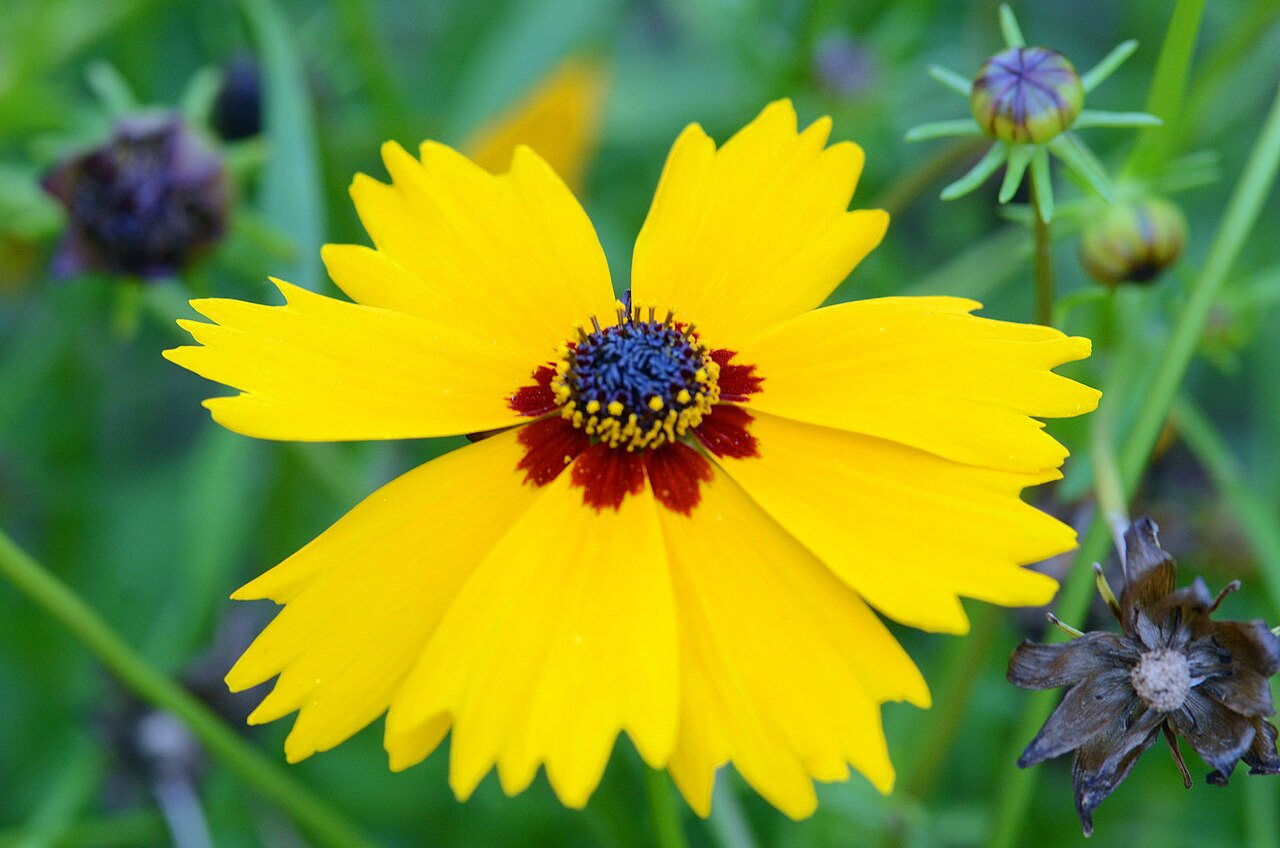
Coreopsis basalis, known as Golden Wave Tickseed or goldenmane tickseed, is a native annual wildflower of sandy fields, prairies and roadsides in the southern United States. It belongs to the aster family (Asteraceae) and is a close cousin of the plains coreopsis and lanceleaf coreopsis that brighten the same landscapes.
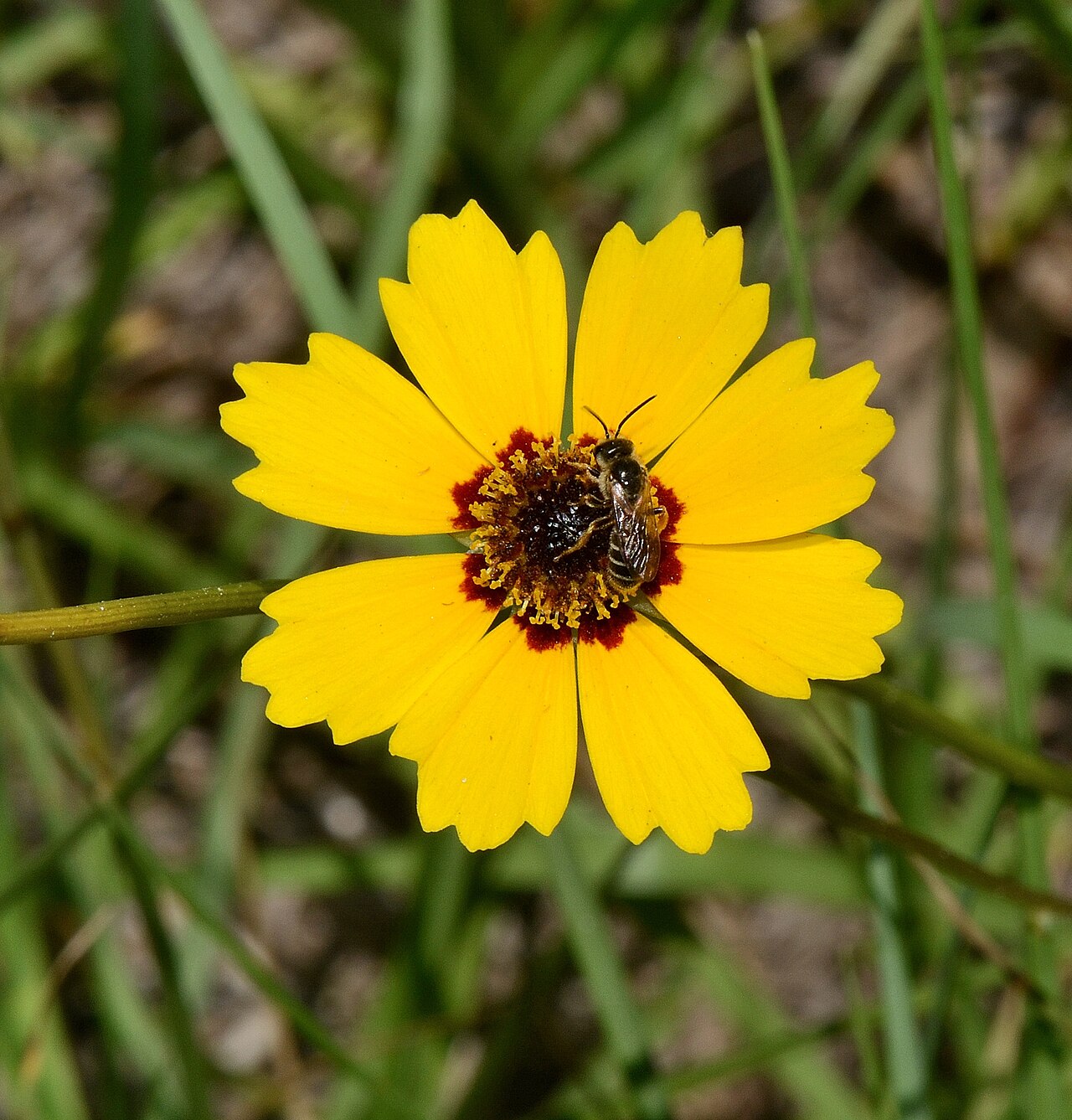
In spring and early summer it carries showy flower heads about 1 1/2 to 2 inches across on long, slender stalks. Each head has eight bright yellow, toothed rays, each with a maroon to red-brown blotch at its base, which together form a dark ring around a purple-brown center. The finely divided leaves are crowded toward the lower part of the plant, which is what the species name basalis refers to.
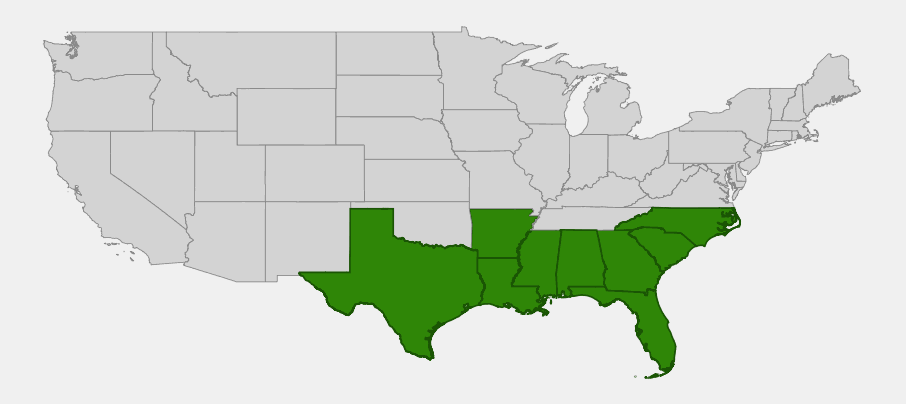
Golden wave tickseed is native from Texas and Arkansas east along the Gulf Coastal Plain to Florida and the Carolinas. It is one of the classic Texas spring wildflowers, often blooming alongside bluebonnets and Indian blanket, and is widely sold in native wildflower seed mixes for meadows and pollinator plantings.
Identification
Look for a low, bushy annual in sandy, sunny ground with finely divided lower leaves and long-stalked, golden-yellow daisies whose rays each have a maroon spot at the base.
Growth Habit
Golden wave tickseed is a winter or spring annual that grows from a slender taproot. It germinates in fall or late winter, forms a leafy base, and then sends up branched stems about 8 to 24 inches tall. Plants are usually somewhat hairy, especially toward the base.
Leaves
The leaves are opposite and mostly crowded on the lower third of the plant. The lowest are long-stalked and simple or deeply divided into a few rounded to elliptic lobes; leaves higher on the stem are cut into three to nine narrow to elliptic lobes. Plants from central Texas tend to have narrower lobes and were once treated as a separate variety or species, Coreopsis wrightii.
Flowers
The flower heads sit alone on slender, leafless stalks about 2 1/2 to 6 inches long. Each head has eight wedge-shaped, bright yellow ray florets, about 1/2 to 3/4 inch long, with toothed tips and a maroon to reddish-brown patch near the base. The center is made up of many small disc florets with dark red-brown to purple tips. Bloom runs mainly from about April into July, earlier in the south and in warm years.
Fruit & Seeds
After flowering, the heads form small, dark, wingless seeds (cypselae) about 1/16 inch long, with slightly rolled edges. Like other tickseeds, the seeds are small and flat, and they drop near the parent plant to sprout the following fall or spring.
Look-alikes
Plains coreopsis (Coreopsis tinctoria) also has yellow rays with maroon bases, but its leaves are spread along the stem, its stems are smooth and taller, and its flower heads are usually smaller and more numerous. Lanceleaf coreopsis (Coreopsis lanceolata) is a perennial with plain yellow rays and a yellow center. Indian blanket (Gaillardia pulchella) has red rays tipped with yellow and a domed center.
Safety Notes
Golden wave tickseed is not known to be toxic to people, pets or livestock.
Quick Facts
| Scientific Name | Coreopsis basalis |
| Family | Asteraceae (aster family) |
| Plant Type | Annual wildflower |
| Mature Height | 8–24 in |
| Mature Spread | 8–12 in |
| Growth Rate | Fast |
| Sun Exposure | Full sun |
| Water Needs | Low; drought tolerant |
| Soil Type | Sandy, well-drained soil; also loam |
| Soil pH | About 5.5–7.5 |
| Bloom Time | April–July |
| Flower Color | Yellow with a maroon center ring |
| Fall Color | None (annual) |
| Fruit | Small, dark, flat seeds |
| Deer Resistant | Moderately |
| USDA Hardiness Zones | Annual; grows wild in zones 7–10 |
Native Range
Golden wave tickseed is native to the southeastern and south-central United States, from Texas and Arkansas east through Louisiana, Mississippi and Alabama to Georgia, Florida and the Carolinas.
USDA PLANTS also maps it in Connecticut and Illinois, but those isolated populations appear to be escapes from cultivation and seed mixes, so they are not treated as part of its native range here. Because the plant is widely sown along roadsides and in wildflower plantings, new populations outside its historic range continue to appear.
In the wild it grows in open, sunny places with sandy or gravelly soil: sandy prairies and savannas, old fields, pastures, open pinelands, coastal plain sandhills, roadsides and other disturbed ground. It is especially common in the sandy soils of central and east Texas.
📋 Regional plant lists featuring Golden Wave Tickseed: North & South Carolina · Alabama, Georgia & Mississippi · North & South Florida · Arkansas, Louisiana, Eastern Oklahoma & Eastern Texas · South & West Texas
Growing & Care Guide
Golden wave tickseed is easy to grow from seed and is sold by native seed companies in Texas and the Southeast, both on its own and in wildflower mixes. As an annual it comes back year after year by reseeding, as long as it has open, sunny ground.
Light
Give it full sun. It tolerates a little afternoon shade but flowers less and gets floppy with less than about six hours of direct sun.
Soil & Water
It grows best in sandy or gravelly, well-drained soil of low to moderate fertility, but it also tolerates loam and some clay if drainage is good. Rich soil and heavy watering make plants lush and short-lived. Once seedlings are established it is drought tolerant and needs little or no supplemental water.
Planting Tips
Sow seed in fall, from about September to November, on bare, lightly raked soil, and press it in without burying it deeply. Fall-sown seedlings overwinter as small rosettes and bloom in spring. Mix it with bluebonnets, Indian blanket and native grasses for a classic Texas spring display.
Pruning & Maintenance
Deadheading prolongs bloom in a garden bed, but leave some flowers to set seed if you want plants to return. In meadows, mow after the seeds have ripened and dropped, usually in early to mid summer, and lightly disturb the soil in fall to give seedlings room. Avoid heavy mulch, which blocks reseeding.
Propagation
Grow it from seed. Fresh seed sown outdoors in fall germinates readily as the weather cools; for spring sowing, a short period of cold, moist stratification can improve germination. It does not transplant well once large, so sow it where it is to bloom or move seedlings while small.
Landscape Uses
- Wildflower meadows: a reliable spring bloomer in native seed mixes
- Pollinator gardens: nectar and pollen for small bees, flies and butterflies
- Roadside and right-of-way plantings: self-sows in sunny, sandy ground
- Children’s and cottage gardens: fast, cheerful color from seed
- Restoration: sandy prairies, old fields and open pinelands
Wildlife & Ecological Value
Golden wave tickseed blooms in large drifts in spring, providing nectar and pollen when many native bees are most active.
For Pollinators
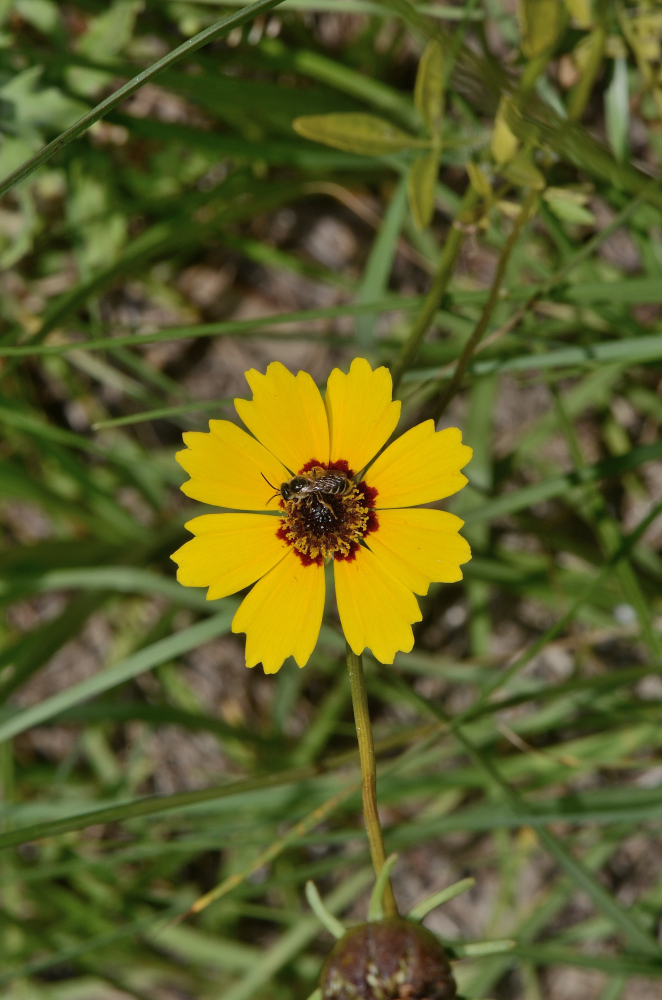
The open flower heads are visited by many small native bees, including sweat bees, mining bees and leafcutter bees, as well as honey bees, hover flies, beetles and small butterflies. Like other tickseeds, it is a good source of both pollen and nectar for short-tongued bees.
For Birds
Finches, sparrows and other seed-eating birds pick seeds from the dry heads in summer, and the insects drawn to the flowers feed nesting songbirds.
For Mammals
Deer and rabbits may nibble young plants, but they usually leave flowering plants alone. It is not an important mammal food.
Ecosystem Role
As a fast-growing annual, golden wave tickseed quickly covers bare, sandy ground after disturbance and helps hold soil in place while slower perennials and grasses establish. In southern prairies and old fields it is one of the spring forbs that add diversity to the plant community.
Cultural & Historical Uses
The German botanist Albert Gottfried Dietrich first described the species as Calliopsis basalis in the 1800s. In the 1800s it was popular in European and American flower gardens under names such as Calliopsis drummondii, honoring the Scottish collector Thomas Drummond, who gathered seed in Texas in the 1830s. The American botanist Sidney Fay Blake later moved it to Coreopsis.
The genus name comes from the Greek koris, “bug,” and opsis, “like,” because the seeds resemble small ticks; that is also the origin of the common name “tickseed.” The species name basalis means “of the base,” referring to the leaves crowded on the lower part of the plant.
Coreopsis as a group was named the state wildflower of Florida in 1991, in recognition of the many species planted along its highways. Golden wave tickseed is one of the annual coreopsis used in Texas and southern roadside wildflower programs.
Frequently Asked Questions
Is golden wave tickseed an annual or a perennial?
It is an annual. Each plant lives less than a year, but it reseeds freely in open, sunny ground, so a planting can return every spring.
When should I sow golden wave tickseed?
Sow seed in fall, from about September to November, so seedlings can overwinter and bloom the following spring.
How is it different from plains coreopsis?
Both have yellow rays with maroon bases. Golden wave tickseed has its leaves crowded toward the base, larger flower heads and hairy lower stems; plains coreopsis is taller and smoother, with leaves spread along the stem and many smaller heads.
Does golden wave tickseed need much water?
No. Once established it is drought tolerant and does best in lean, sandy, well-drained soil without extra watering.
Where is golden wave tickseed native?
It is native from Texas and Arkansas east along the Gulf Coastal Plain to Florida and the Carolinas.

Looking for a nursery that carries Golden Wave Tickseed?
Browse our native plant nursery directory: Alabama & Arkansas · Florida & Georgia · Louisiana & Mississippi · North Carolina · South Carolina & Texas

