
Orange Sneezeweed (Hymenoxys hoopesii)
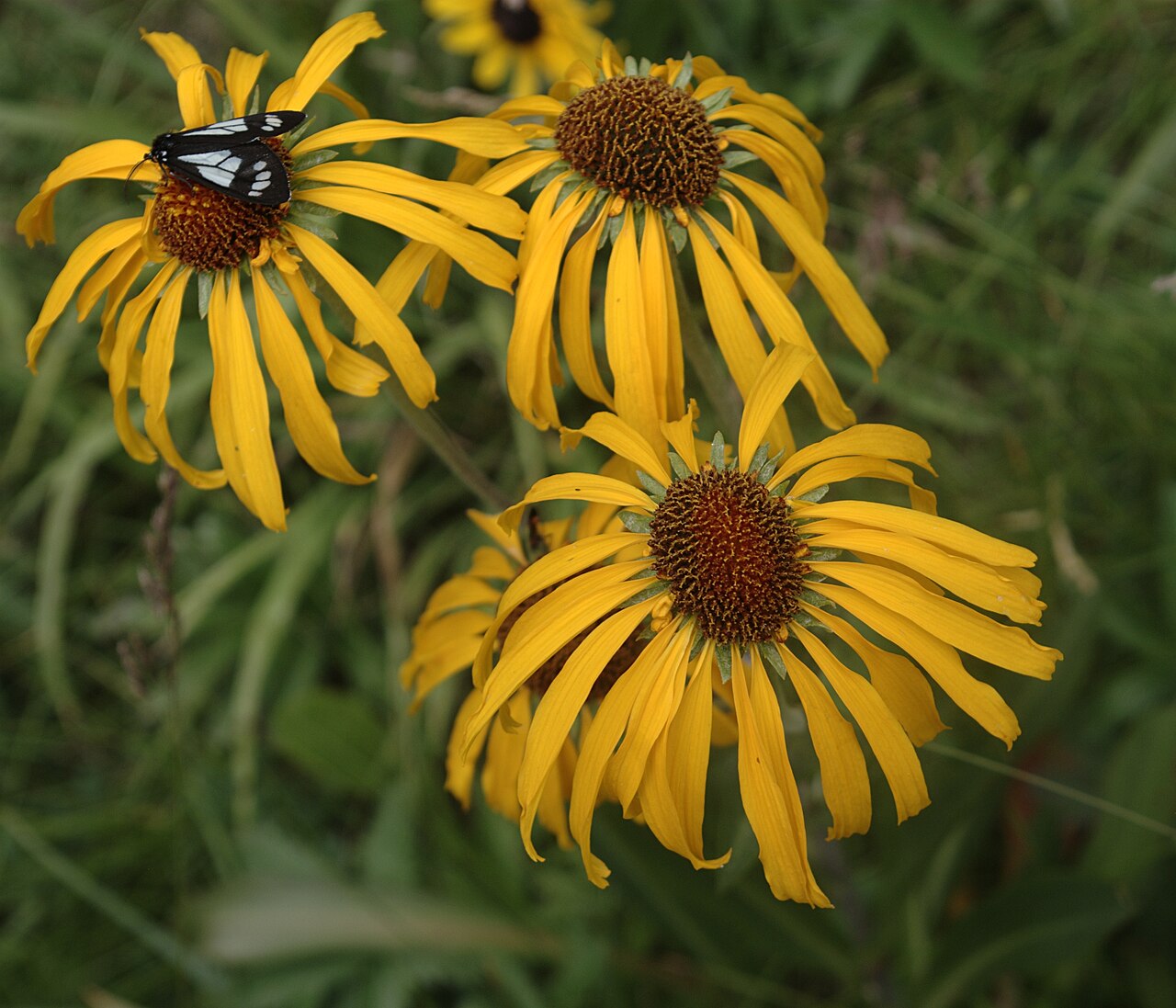
Hymenoxys hoopesii, known as Orange Sneezeweed, owl’s-claws (the USDA name) or yerba del lobo, is a showy perennial wildflower of the aster family (Asteraceae) that grows in mountain meadows of the western United States. It is found from the Rocky Mountains of Wyoming, Colorado and New Mexico west through Utah, Arizona and Nevada to the Sierra Nevada of California and the mountains of southern Oregon. It was long known as Helenium hoopesii and later Dugaldia hoopesii, and many gardeners and nurseries still use those names.
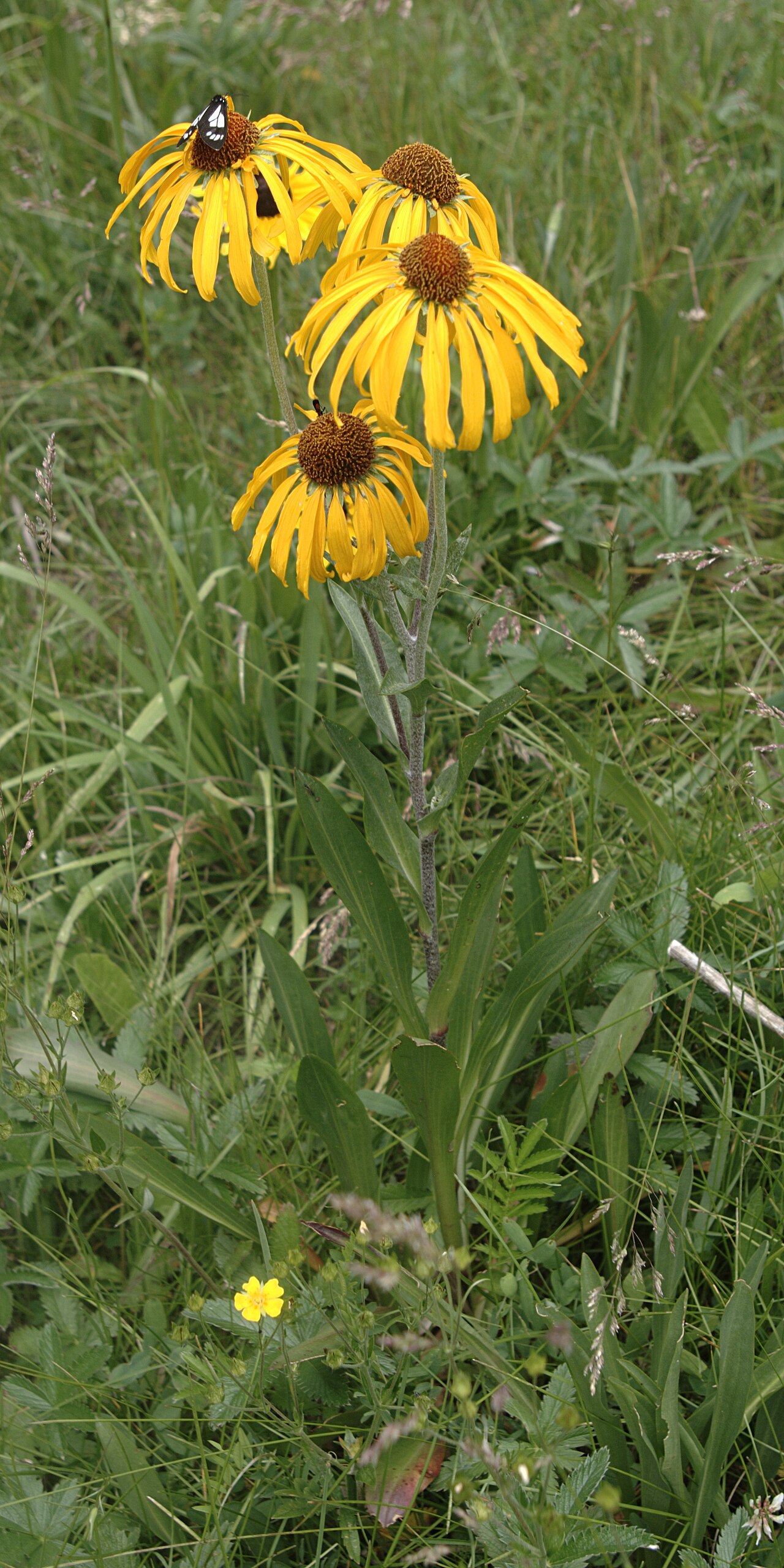
In summer, stout stems 1 to 3 feet tall carry one to several large, golden-orange flower heads, each 2 to 3 inches across, with long, narrow, drooping rays around a domed yellow to orange center. The drooping rays are said to resemble an owl’s claws, hence the common name. Clumps of long, smooth, lance-shaped basal leaves make a bold, lush rosette.
Safety note: orange sneezeweed is poisonous to livestock, especially sheep. It contains bitter sesquiterpene lactones (including hymenovin) that cause “spewing sickness,” a chronic poisoning marked by vomiting, weakness and weight loss that can be fatal, and it has caused major sheep losses on western ranges. Do not eat any part of the plant, keep it away from grazing animals, and wear gloves if your skin is sensitive. With that caution, it is a beautiful, long-blooming plant for high-elevation and cold-climate gardens.
Identification
Look for a stout, clumping plant of mountain meadows with long, smooth basal leaves and big, golden-orange daisies with long, narrow, drooping rays in mid to late summer.
Growth Habit
Orange sneezeweed is a clump-forming perennial with a thick, woody root crown. Each clump produces one to several stout, upright stems 1 to 3 feet tall (occasionally to about 40 inches), which are leafy at the base and less so toward the top. Plants often grow in loose groups in moist meadows.
Leaves
The basal leaves are large, up to about 12 inches long and 1 to 2 inches wide, lance-shaped to oblong, with smooth edges and a smooth or slightly woolly surface, especially when young. The stem leaves are smaller, narrower and alternate, and often partly clasp the stem.
Flowers
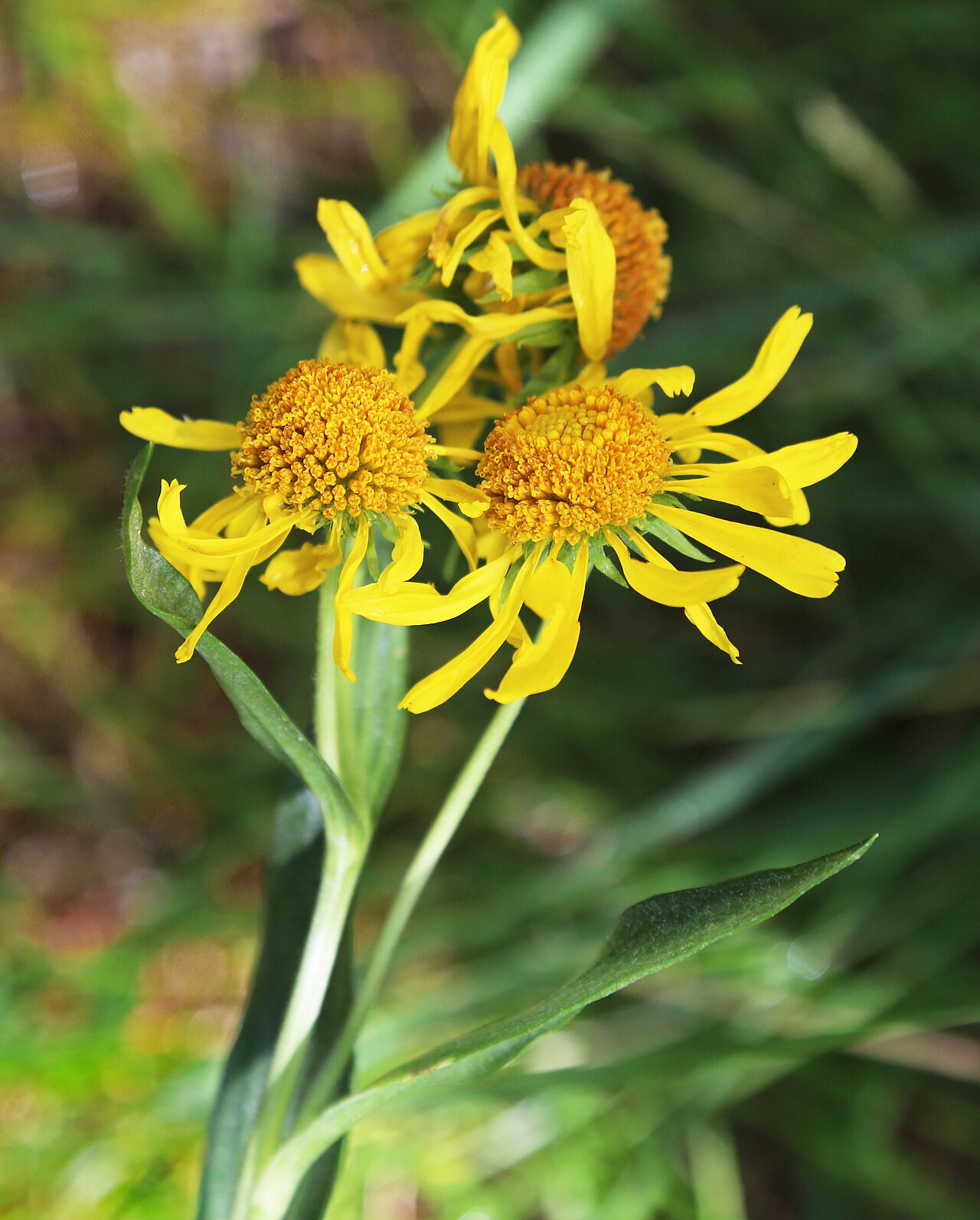
From June to September, each stem carries one to about a dozen flower heads, 2 to 3 inches across. Each head has about 14 to 26 long, narrow ray florets, golden yellow to orange, often with three small teeth at the tip, that spread at first and then droop backward. The center is a dome of tiny yellow to orange-brown disc florets.
Seeds
The seeds are small, hairy achenes topped with a few papery scales (pappus), and they ripen in late summer and fall.
Look-alikes
Common sneezeweed (Helenium autumnale) has winged stems and wedge-shaped, fan-like rays; it grows mainly at lower elevations. Alpine sunflower (Tetraneuris grandiflora) is much shorter, with woolly, divided leaves, and grows above treeline. Arnicas have opposite leaves, and mule’s ears (Wyethia) have broader leaves and shorter, wider rays.
Quick Facts
| Scientific Name | Hymenoxys hoopesii |
| Family | Asteraceae (aster family) |
| Plant Type | Herbaceous perennial wildflower |
| Mature Height | 1–3 ft |
| Mature Spread | 1–2 ft |
| Growth Rate | Moderate |
| Sun Exposure | Full sun to part shade |
| Water Needs | Medium; moist soil |
| Soil Type | Loam, clay loam or gravelly soil; well-drained but moist |
| Soil pH | Slightly acidic to neutral (about 6.0–7.5) |
| Bloom Time | June–September |
| Flower Color | Golden yellow to orange |
| Fall Color | None notable |
| Fruit | Small hairy achenes |
| Deer Resistant | Yes; bitter and toxic |
| USDA Hardiness Zones | 3–8 |
Native Range
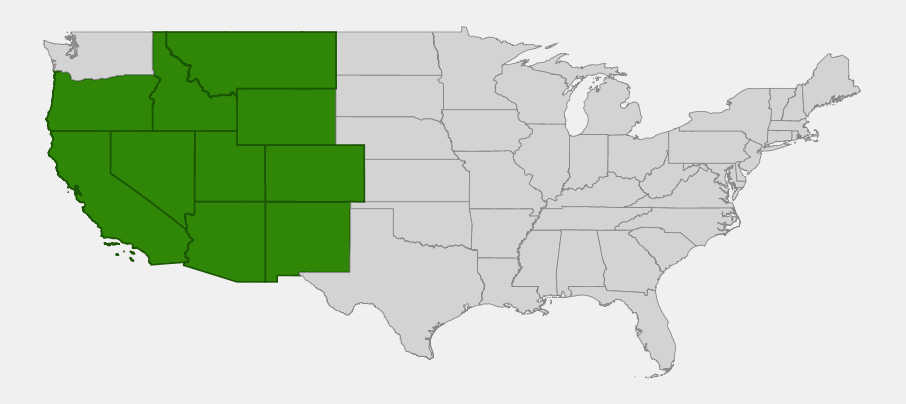
Orange sneezeweed is native to the mountains of the western United States. USDA PLANTS lists it in Arizona, California, Colorado, Idaho, Montana, Nevada, New Mexico, Oregon, Utah and Wyoming. Its center of abundance is the southern and central Rocky Mountains and the high plateaus of Colorado, Utah, New Mexico and Arizona.
In California it grows in the Sierra Nevada and other high ranges, and in Oregon it reaches the mountains of the south-central and southeastern part of the state, east of the Cascade crest. Records from Idaho and from Beaverhead County in southwestern Montana are near the northern edge of its range and are scattered outlying populations.
It grows in moist mountain meadows, along streams, in aspen groves and open spruce-fir and pine forests, and on moist slopes, usually between about 6,000 and 11,000 feet. Because grazing animals generally avoid it, it often becomes more abundant on heavily grazed rangeland, where it can form showy orange drifts.
📋 Regional plant lists featuring Orange Sneezeweed: Montana & Wyoming · Utah & Western Colorado · Arizona & New Mexico · California & Nevada
Growing & Care Guide
Orange sneezeweed is one of the easier mountain wildflowers to grow, as long as summers are not too hot. It does best in cool, high-elevation or northern gardens and is sold by native and rock garden nurseries, often as Helenium hoopesii. Do not plant it where sheep, goats or other livestock graze.
Light
Full sun in cool climates; part shade, especially afternoon shade, in hotter, lower-elevation gardens.
Soil & Water
It likes evenly moist, well-drained loam or gravelly soil, similar to a mountain meadow. Water regularly during dry spells, especially in its first year. Established plants tolerate short dry periods but look best with consistent moisture. Heavy, waterlogged soil in winter can rot the crown.
Planting Tips
Plant in spring or early fall, 12 to 18 inches apart. It combines well with other meadow plants such as lupines, penstemons, geraniums and native grasses, and is a good choice for mountain cabins, rain garden edges and moist meadow gardens.
Pruning & Maintenance
Deadhead spent flowers to extend blooming and to limit self-seeding. Cut stems back in fall or leave them for winter interest, then remove them in spring. Wear gloves if you have sensitive skin, since many plants in this group can cause skin irritation.
Propagation
Grow from seed sown in fall, or cold-stratify seed for about 30 to 60 days before spring sowing. Clumps can also be divided in early spring.
Landscape Uses
- Mountain and cold-climate gardens: bright summer color at high elevation
- Meadow plantings: mixes well with lupines, geraniums and grasses
- Pollinator gardens: long bloom for butterflies and bees
- Cut flowers: long-lasting golden daisies (handle with care)
- Deer-resistant beds: bitter, toxic foliage is avoided by browsers
Wildlife & Ecological Value
Orange sneezeweed is a showy nectar source in high mountain meadows, where the flowering season is short.
For Pollinators
Butterflies, including fritillaries such as the Mormon fritillary, painted ladies and queens, visit the flowers, along with bumble bees, native bees, flies and day-flying moths such as the striking black-and-white police car moth (Gnophaela vermiculata).
For Birds
Small seed-eating birds may pick at the seed heads in fall. Meadows with sneezeweed also support the insects that many mountain birds feed to their young.
For Mammals
Deer, elk and livestock generally avoid it because of its bitter taste, although hungry sheep may eat it when other forage is scarce, which leads to poisoning.
Ecosystem Role
Because grazers avoid it, orange sneezeweed tends to increase on overgrazed meadows, and range managers use its abundance as a sign of heavy grazing pressure. It also hosts a native rust fungus (Puccinia conspicua) and a variety of flower-feeding insects.
Cultural & Historical Uses
Asa Gray described this plant in 1864 as Helenium hoopesii. It was later moved to Dugaldia and, in 1994, to Hymenoxys by the botanist Mark Bierner. The name “sneezeweed” is shared with its relatives in Helenium, whose dried leaves were once used as snuff; the pollen of orange sneezeweed has also been reported to cause allergic reactions.
Some Native American peoples used the root medicinally, for example to treat rheumatism, upset stomachs and indigestion in infants. Because it is toxic, it should not be used as a home remedy.
Orange sneezeweed was one of the most important poisonous range plants for sheep in the Intermountain West in the early 1900s, when sheep grazed heavily in mountain meadows. Research on “spewing sickness” by range scientists helped shape grazing practices that reduced losses.
Frequently Asked Questions
Is orange sneezeweed poisonous?
Yes. It is toxic to livestock, especially sheep, which can develop a chronic poisoning called spewing sickness. People should not eat any part of the plant.
Is orange sneezeweed the same as Helenium hoopesii?
Yes. Helenium hoopesii and Dugaldia hoopesii are older names for the same plant, now called Hymenoxys hoopesii.
Why is it called owl’s-claws?
The long, narrow rays droop backward like curved claws as the flower heads age.
Can I grow orange sneezeweed at low elevation?
Yes, in cooler regions, with afternoon shade and steady moisture. It struggles in hot, humid summers.
When does orange sneezeweed bloom?
From about June to September, peaking in mid to late summer in mountain meadows.

Looking for a nursery that carries Orange Sneezeweed?
Browse our native plant nursery directory: Arizona · California · Colorado · Idaho · Montana · Nevada & New Mexico · Oregon · Utah · Wyoming

