
White Globeflower (Trollius laxus ssp. albiflorus)
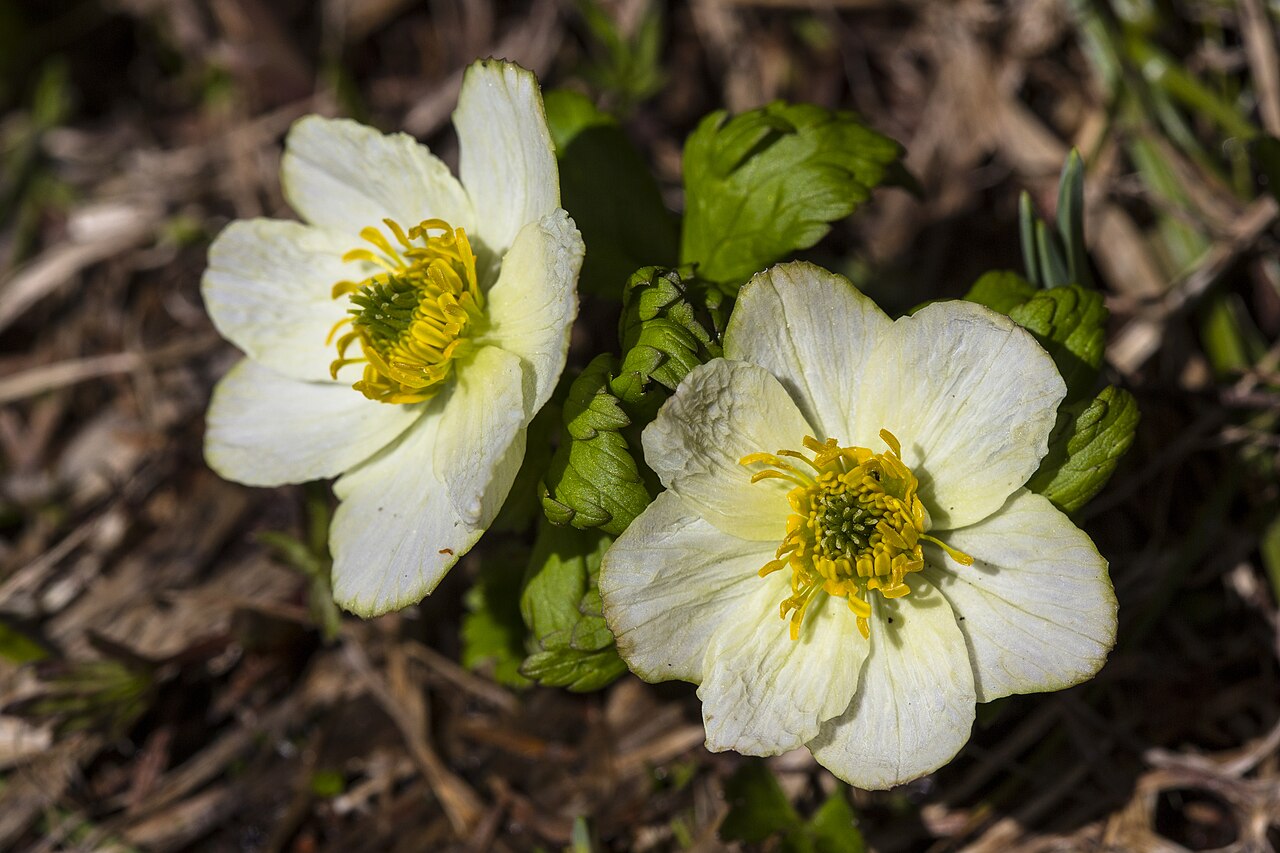
Trollius laxus ssp. albiflorus, known as White Globeflower, American globeflower or western globeflower, is a perennial wildflower of wet subalpine and alpine meadows in the mountains of western North America. It belongs to the buttercup family (Ranunculaceae). Many botanists, including the Flora of North America and iNaturalist, treat it as a separate species, Trollius albiflorus. It forms clumps of deeply divided, glossy green leaves, and each stem bears a single cup-shaped flower about 1 to 1 1/2 inches across with creamy white sepals around a ring of yellow stamens.
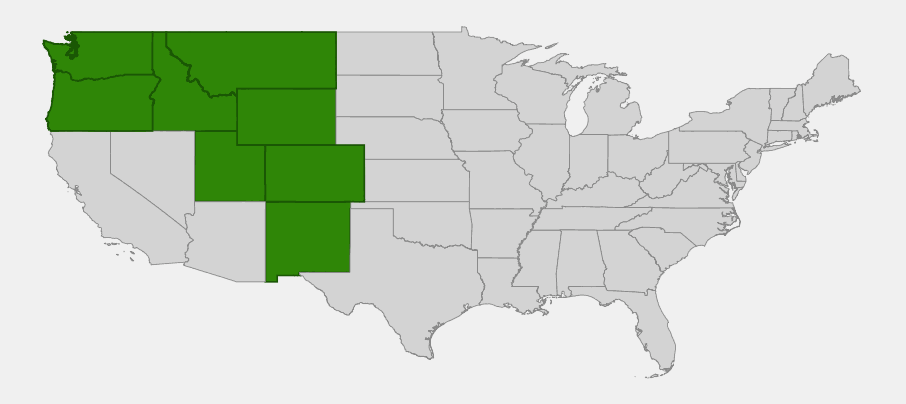
White globeflower is one of the first flowers to bloom after the snow melts. It grows from British Columbia and Alberta south through the Rocky Mountains of Montana, Idaho and Wyoming to Utah, Colorado and northern New Mexico, and west to the Cascades of Washington and the Blue and Wallowa Mountains of northeastern Oregon. It often colors snowmelt meadows alongside marsh marigolds and glacier lilies. It is not the same as the eastern spreading globeflower (Trollius laxus ssp. laxus), a rare yellowish-flowered plant of fens in the Northeast and Great Lakes region, which is not covered by this page’s range.
Safety note: like many members of the buttercup family, white globeflower contains compounds that release protoanemonin, an irritant that can blister the skin and mouth and cause stomach upset if the plant is eaten. Do not eat any part of it, and wash your hands after handling it. It is best enjoyed in the wild or in cool, moist mountain gardens.
Identification
Look for clumps of deeply divided, palm-like leaves in wet mountain meadows near melting snow, with single, creamy white, cup-shaped flowers and a dense center of yellow stamens.
Growth Habit
White globeflower is a clump-forming perennial with a short, thick rootstock and fibrous roots. Plants are usually 4 to 16 inches tall when in flower, and the stems lengthen after flowering, sometimes reaching about 20 inches.
Leaves
Most leaves are basal, on long stalks, and palmately divided into five main segments, each further lobed and sharply toothed, giving them a lacy, buttercup-like look. The leaves are smooth and bright to dark green. One or two smaller, short-stalked leaves grow on the flowering stem.
Flowers
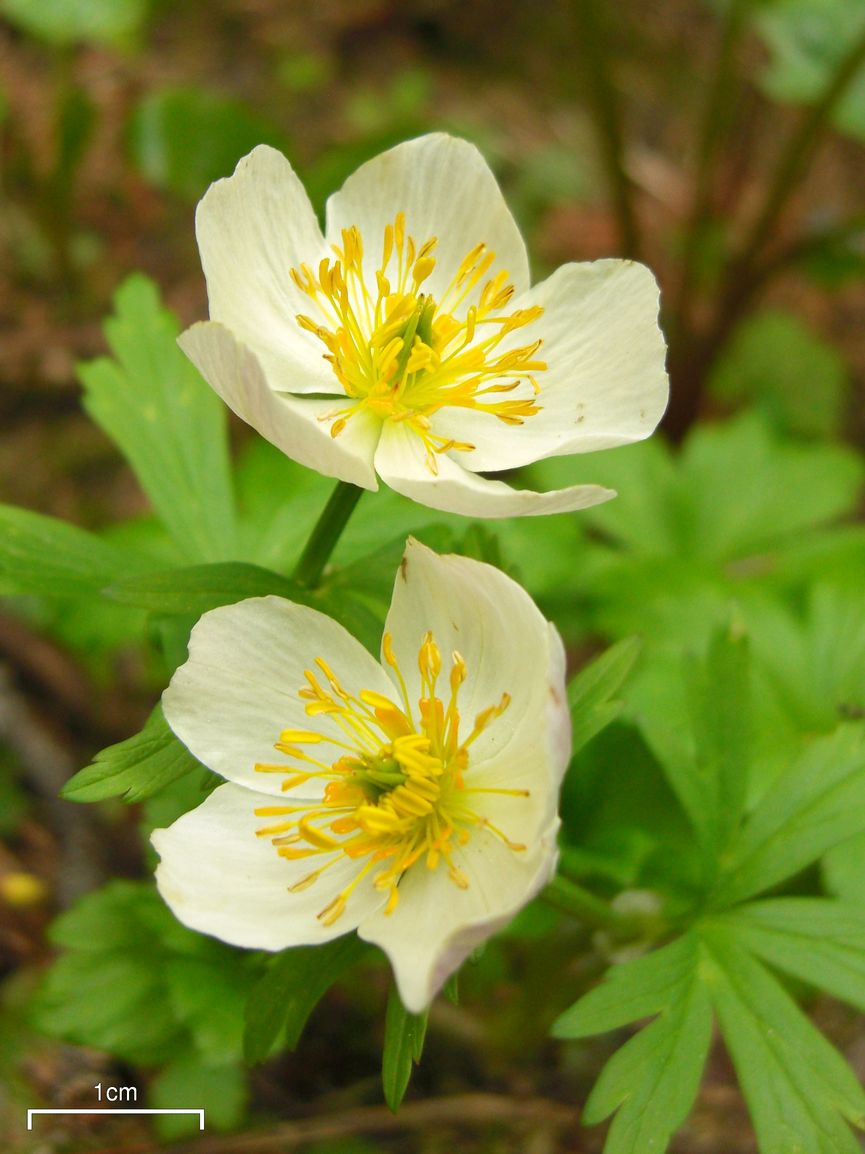
Each stem carries a single, upward-facing flower about 1 to 1 3/4 inches across. The showy parts are five to nine broad, white to creamy or pale yellowish sepals, which may be tinged pink or greenish on the back. Inside them is a ring of small, narrow, yellow, nectar-producing petals, hard to see, around many yellow stamens and a cluster of pistils. It blooms from May to August, shortly after snowmelt, depending on elevation.
Fruit
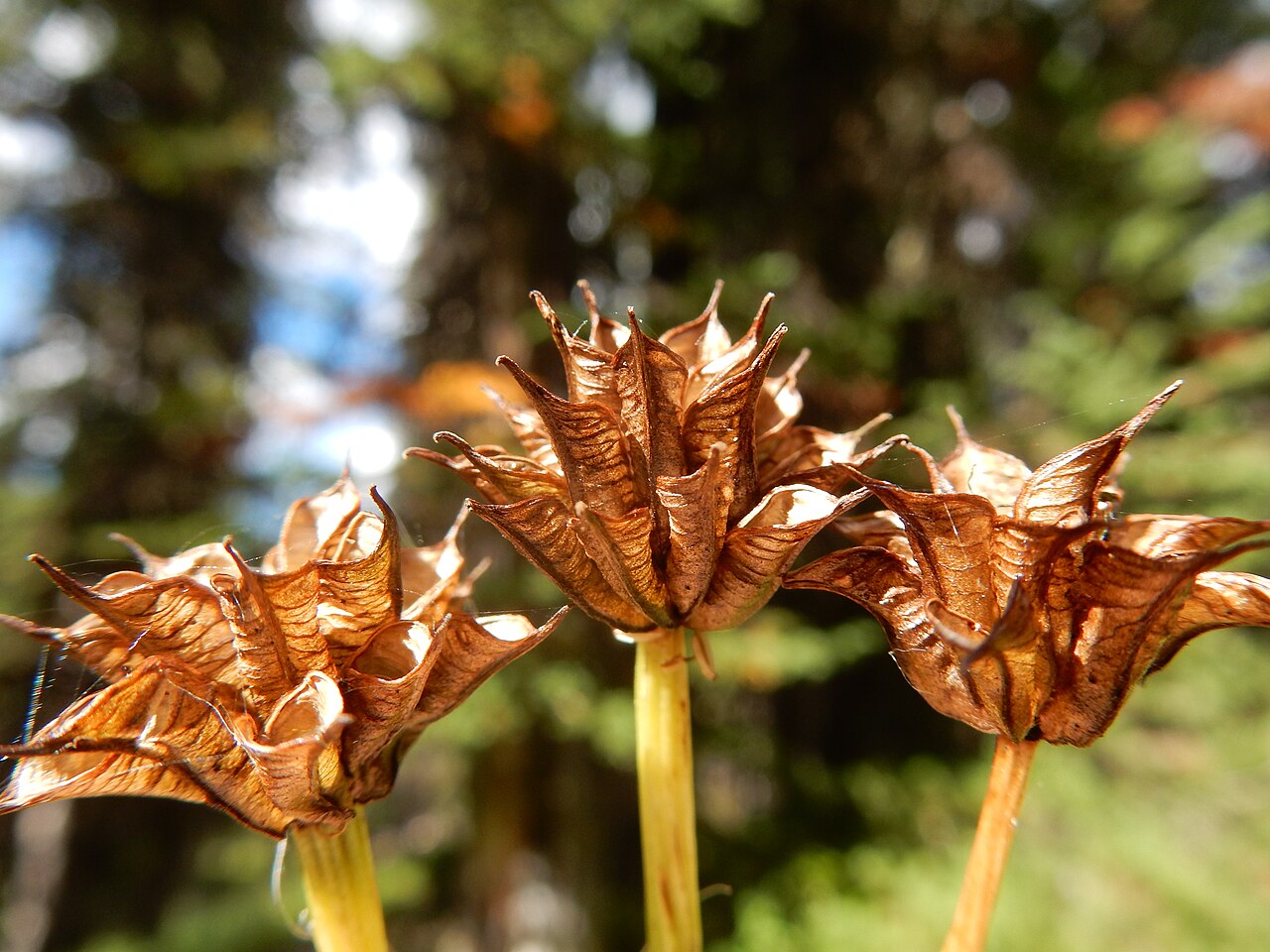
The fruit is a head of 5 to 15 or more beaked follicles, each about 1/2 inch long, which dry brown and split open at the top in late summer to release shiny seeds.
Look-alikes
White marsh marigold (Caltha leptosepala) grows in the same wet meadows and also has white flowers, but its leaves are simple, oblong to heart-shaped and not divided. Western pasqueflower (Pulsatilla occidentalis) is very hairy and develops shaggy, feathery seed heads. Narcissus anemone has several flowers in an umbel on each stem. Eastern spreading globeflower (T. laxus ssp. laxus) has pale yellow to greenish flowers and grows only in the East.
Quick Facts
| Scientific Name | Trollius laxus ssp. albiflorus (syn. Trollius albiflorus) |
| Family | Ranunculaceae (buttercup family) |
| Plant Type | Clump-forming herbaceous perennial |
| Mature Height | 4–16 in (to 20 in in fruit) |
| Mature Spread | 6–12 in |
| Growth Rate | Slow |
| Sun Exposure | Full sun to part shade |
| Water Needs | High; constantly moist to wet |
| Soil Type | Wet, humus-rich mountain meadow soil |
| Soil pH | Slightly acidic to neutral (about 5.5–7.0) |
| Bloom Time | May–August (soon after snowmelt) |
| Flower Color | White to cream with yellow center |
| Fall Color | None notable |
| Fruit | Head of beaked follicles |
| Deer Resistant | Moderate; toxic and seldom eaten |
| USDA Hardiness Zones | 3–7 |
Native Range
White globeflower is native to the mountains of western North America. USDA PLANTS lists it as native in Colorado, Idaho, New Mexico, Oregon, Utah, Washington and Wyoming, and herbarium collections confirm it is also native and widespread in the mountains of western Montana, including Glacier National Park, the Bitterroot Range and the Absaroka Range. In Canada it grows in British Columbia and Alberta.
In the Rocky Mountains it ranges from Alberta and Montana through Idaho and Wyoming, including Yellowstone and Grand Teton national parks, south to the Uinta and Wasatch mountains of Utah, the high country of Colorado and the San Juan and Sangre de Cristo mountains of northern New Mexico. In the Pacific Northwest it grows on both sides of the Cascade crest in Washington and in the Blue and Wallowa Mountains of northeastern Oregon.
It grows in wet subalpine and alpine meadows, along streams and seeps, in boggy openings in spruce-fir forest and on slopes kept wet by melting snow, at roughly 4,500 to 12,000 feet, highest in Colorado. It is often abundant where snowbanks linger into early summer.
📋 Regional plant lists featuring White Globeflower: Idaho, Eastern Oregon & Eastern Washington · Montana & Wyoming · Utah & Western Colorado · Western Oregon & Western Washington
Growing & Care Guide
White globeflower is a choice plant for cool mountain gardens, but it is not easy at low elevations. It needs cold winters, cool summers and constantly moist soil, as in its snowmelt meadows. Use only nursery-propagated plants or seed.
Light
Full sun in cool, high-elevation gardens; part shade, especially in the afternoon, where summers are warmer.
Soil & Water
Plant in rich, moist to wet, humus-rich soil that never dries out, such as the edge of a bog garden, stream or pond. It tolerates soggy soil during spring. Water often in summer; drought causes the leaves to scorch and plants to decline.
Planting Tips
Plant in early spring or fall in a cool, moist site, such as a north-facing slope, a streamside pocket or a bog garden. Mulch to keep the roots cool. It suits gardens in the mountains and in cool-summer regions far better than hot lowland gardens. Never dig plants from the wild.
Pruning & Maintenance
Little pruning is needed. Remove spent flower stems if you do not want seed, and cut back tattered leaves in fall. Wear gloves if you have sensitive skin, because the sap can irritate.
Propagation
Sow fresh seed outdoors in fall; it needs a cold, moist period and may take one or two years to germinate. Plants grow slowly and may take several years to bloom. Established clumps can be carefully divided in early spring.
Landscape Uses
- Mountain gardens: early flowers for cool, moist, high-elevation gardens
- Bog and stream gardens: grows in wet soil at the edge of water
- Rock gardens: a choice alpine perennial for moist, shaded pockets
- Early pollinator food: one of the first flowers after snowmelt
- Wildflower viewing: a highlight of subalpine meadows in early summer
Wildlife & Ecological Value
White globeflower blooms when little else is in flower, making it an important early food source in high mountain meadows.
For Pollinators
Its open flowers offer nectar and pollen to early-season pollinators, especially flies, small native bees and queen bumblebees that emerge soon after snowmelt.
For Birds
It provides little direct food for birds, but its wet meadows are used by birds such as white-crowned sparrows and American pipits, which feed on insects there.
For Mammals
Because of its irritant compounds, it is seldom eaten by deer, elk or livestock. Small mammals such as voles and pikas may nibble it occasionally.
Ecosystem Role
It is a characteristic plant of wet subalpine meadows and snowbed communities. Its roots help hold wet soils on slopes and along streams fed by melting snow.
Cultural & Historical Uses
The genus name Trollius is usually traced to the old German name Trollblume, meaning “round flower,” for the globe-shaped flowers of the Eurasian species. The name albiflorus means “white-flowered,” and laxus means “loose” or “open,” for its open flowers.
Botanists have long debated whether the western white globeflower and the eastern spreading globeflower are one species or two. USDA PLANTS treats them as subspecies of Trollius laxus, while the Flora of North America and many western floras treat the western plant as Trollius albiflorus.
Mary Vaux Walcott painted white globeflower for her early 20th-century series of North American wildflowers, published by the Smithsonian Institution. Today it is a familiar sight for hikers in Glacier, Yellowstone and Rocky Mountain national parks in early summer.
Frequently Asked Questions
Is white globeflower poisonous?
Yes, mildly. Like many buttercup relatives, it contains compounds that release protoanemonin, which can irritate the skin and mouth and cause stomach upset if eaten. Do not eat it.
Is white globeflower the same as Trollius albiflorus?
Yes. USDA PLANTS calls it Trollius laxus ssp. albiflorus, while many western floras and iNaturalist use Trollius albiflorus for the same plant.
When does white globeflower bloom?
From May to August, right after the snow melts. At high elevations it may bloom in July or even August.
How is it different from white marsh marigold?
White globeflower has deeply divided, palm-like leaves. White marsh marigold has simple, undivided, oblong to heart-shaped leaves.
Can I grow white globeflower in my garden?
Only in cool, moist conditions like its mountain meadows. It does best in high-elevation or cool-summer gardens with constantly wet soil and is difficult in hot lowland areas.

Looking for a nursery that carries White Globeflower?
Browse our native plant nursery directory: Colorado · Idaho · Montana · New Mexico · Oregon · Utah · Washington · Wyoming

