
Southern Beeblossom (Oenothera simulans)
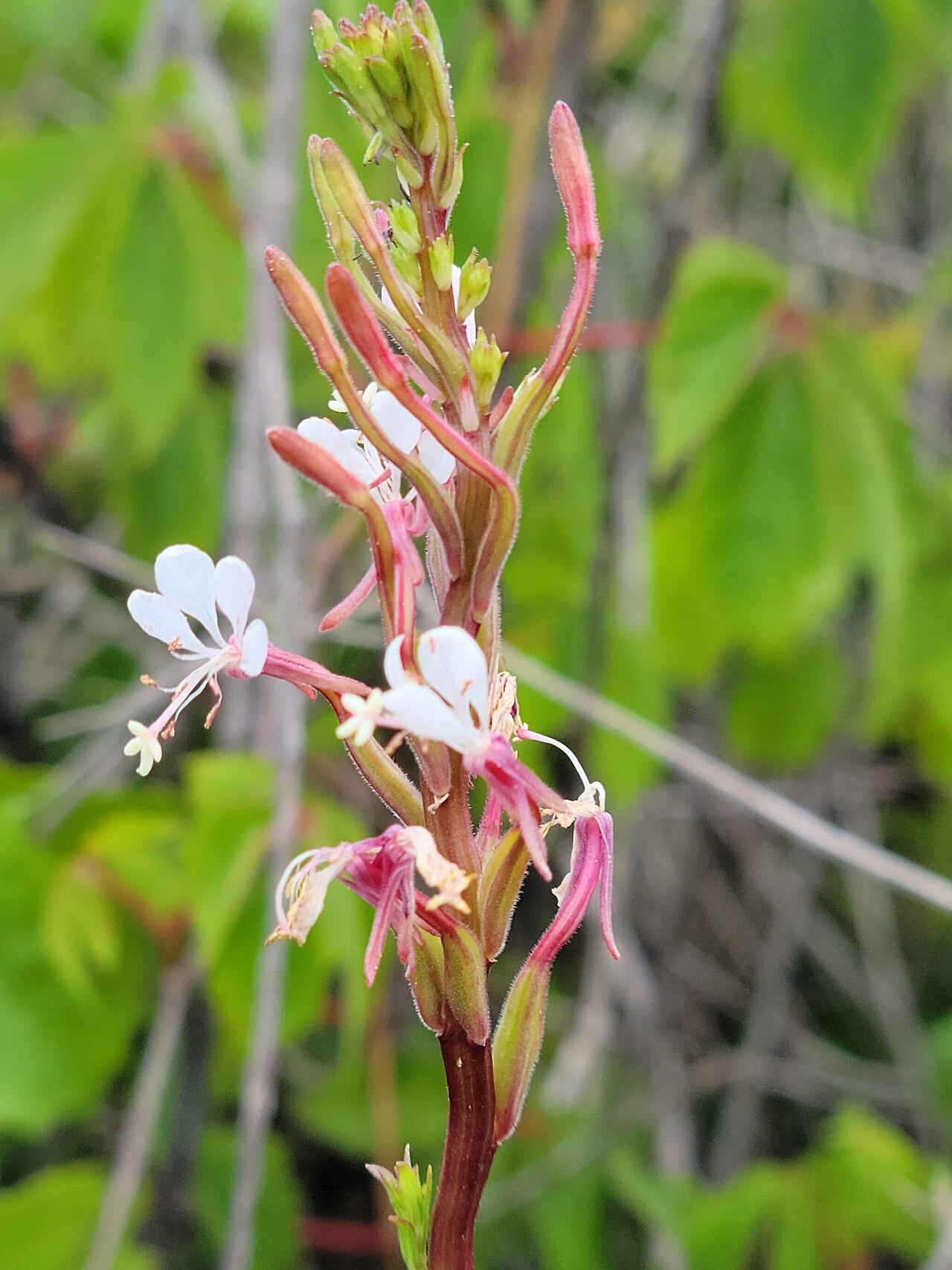
Oenothera simulans, known as Southern Beeblossom, is a tall, airy wildflower of sandy places on the southeastern Coastal Plain. It grows from North Carolina south through Florida and west to Mississippi. Long known as Gaura angustifolia, it is one of the beeblossoms, a group that DNA studies showed belongs within the evening primrose genus Oenothera, in the evening primrose family (Onagraceae).
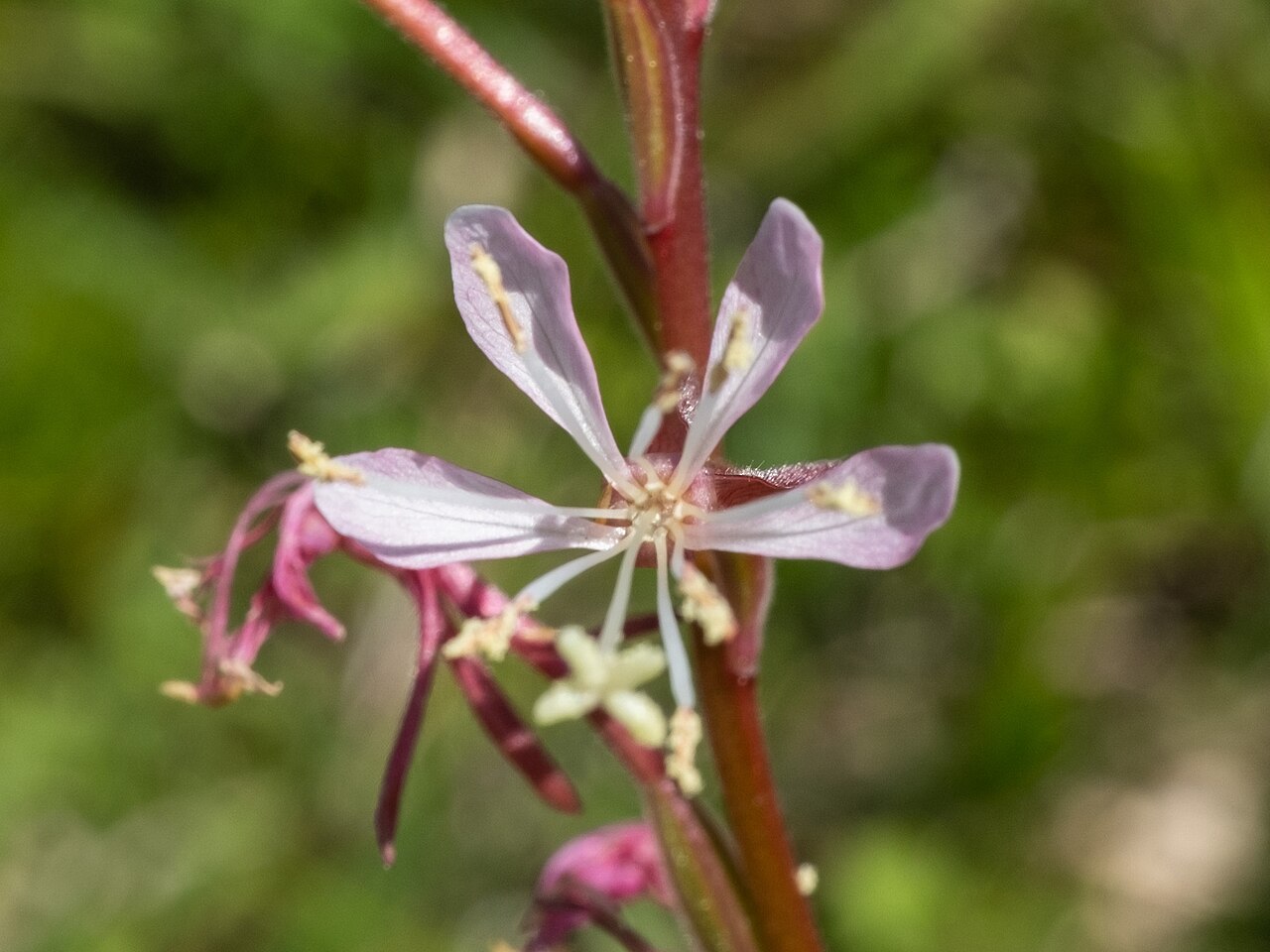
It grows 1 to 5 feet tall, with slender, often reddish, wand-like branches lined with narrow, wavy-toothed leaves. Along the upper stems, small flowers open in a long succession. Each has four petals swept to the upper side and eight long, drooping stamens, giving the flowers a butterfly-like look. Lady Bird Johnson Wildflower Center notes that the flowers open near sunset, white at first, and soon turn pink before fading the next day.
Southern beeblossom is usually an annual or biennial that reseeds freely in open, sandy ground. It is not a showy specimen plant, but it is a good addition to sandy meadows, coastal and dune plantings and pollinator gardens on the Coastal Plain, where it feeds moths and bees over a long season.
Identification
Look for a tall, slender, branched plant in sandy ground with narrow, wavy-toothed leaves and long spikes of small white-to-pink flowers with four upswept petals and drooping stamens.
Growth Habit
Southern beeblossom starts as a flat rosette of leaves and then sends up one or more erect, branched stems 1 to 5 feet tall, occasionally taller. The stems are slender and often reddish, and plants have a loose, straggly, see-through look. Most plants are annual or biennial, though some persist for a few years.
Leaves
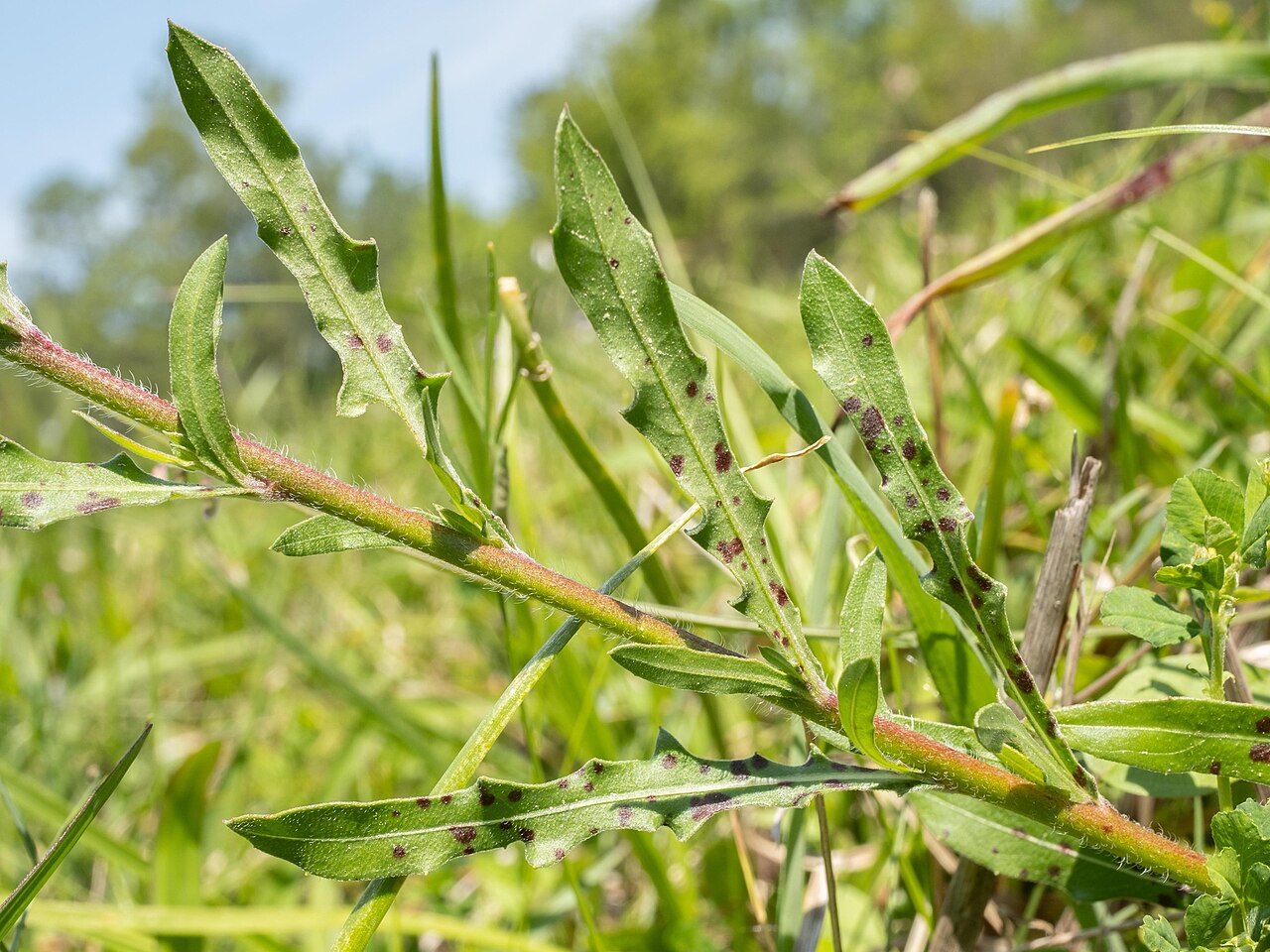
The leaves are alternate, narrowly lance-shaped to linear, about 1 to 3 inches long, with wavy or shallowly toothed edges. The rosette leaves are larger and often lobed. Leaves are green, sometimes spotted or tinged with red, and get smaller toward the top of the stem.
Flowers
The flowers grow in long, wand-like spikes at the branch tips, opening a few at a time from the bottom up. Each is about 1/2 inch across, with four spoon-shaped petals held above the center, eight long stamens that hang down, and a long style with a four-lobed stigma. They open white near sunset and turn pink as they age. In Florida it blooms mainly from spring through fall and can flower nearly year-round in the south.
Fruit
The fruit is small, hard, nut-like and four-angled, about 1/4 to 3/8 inch long, tapering at both ends. Unlike most evening primroses, the fruit does not split open when ripe.
Look-alikes
Biennial beeblossom (Oenothera gaura, formerly Gaura biennis) grows farther north and west, in the Appalachians, Midwest and Ozarks, and has broader leaves. Roadside gaura and scarlet beeblossom are western species. The garden “whirling butterflies” (Oenothera lindheimeri) is a larger, showier perennial from Texas and Louisiana.
Quick Facts
| Scientific Name | Oenothera simulans (syn. Gaura angustifolia) |
| Family | Onagraceae (evening primrose family) |
| Plant Type | Annual or biennial wildflower (sometimes short-lived perennial) |
| Mature Height | 1–5 ft |
| Mature Spread | 1–2 ft |
| Growth Rate | Fast |
| Sun Exposure | Full sun |
| Water Needs | Low; drought tolerant |
| Soil Type | Dry to moist sandy soils; sandhills, dunes, fields, roadsides |
| Soil pH | Acidic to neutral (about 5.0–7.5) |
| Bloom Time | Spring through fall; nearly year-round in South Florida |
| Flower Color | White, turning pink |
| Fall Color | Rosette leaves often redden |
| Fruit | Small, hard, four-angled nutlike fruit |
| Deer Resistant | Moderately |
| USDA Hardiness Zones | 8–11 |
Native Range
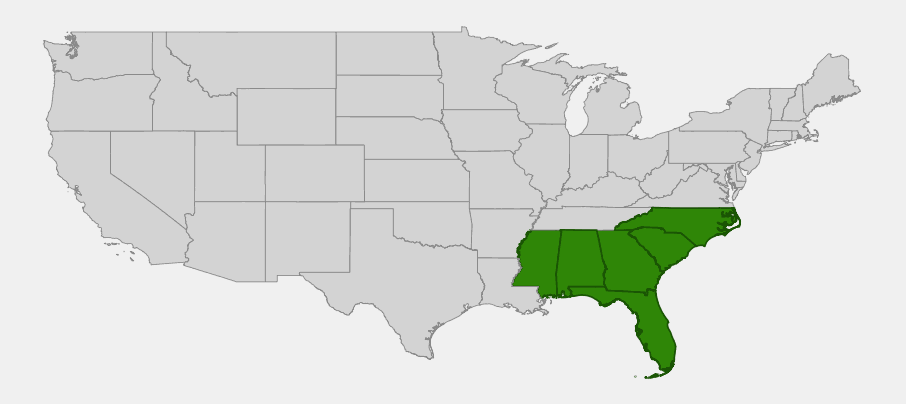
Southern beeblossom is native to the southeastern Coastal Plain. USDA PLANTS lists it as native in Alabama, Florida, Georgia, Mississippi, North Carolina and South Carolina, and Lady Bird Johnson Wildflower Center describes its range as North Carolina south to Florida and west to Mississippi. It is most common in Florida, where the Atlas of Florida Plants records it from most of the state, including the Everglades region.
It reaches its northern limit in the coastal plain of southeastern North Carolina, where it is uncommon, and its western limit in southern Mississippi. In Georgia, Alabama and the Carolinas it is mostly found on the outer coastal plain and along the coast.
Its habitat is open, sunny, sandy ground: sandhills and scrub, coastal dunes and maritime grasslands, pine flatwoods and open pine woods, old fields, pastures and roadsides. It colonizes disturbed sandy soil readily and is often common along road shoulders and in fields after mowing or fire.
📋 Regional plant lists featuring Southern Beeblossom: Alabama, Georgia & Mississippi · North & South Florida · North & South Carolina
Growing & Care Guide
Southern beeblossom is an easygoing plant for hot, sunny, sandy gardens on the Coastal Plain. Because it is usually an annual or biennial, it is best treated as a self-sowing wildflower in a meadow or natural area rather than a permanent border perennial.
Light
Full sun. In shade it becomes weak and floppy and flowers poorly.
Soil & Water
Plant it in well-drained, sandy soil. It is very drought tolerant once established and does well in poor, dry soils, including beach and dune sand. It also tolerates moister sandy soils for part of the year. Avoid rich, heavy, wet soils.
Planting Tips
Sow seed in fall or early spring on bare, sandy soil, or plant seedlings in spring. Combine it with other sandhill and dune wildflowers and grasses, such as blanket flower, goldenasters, silkgrass and little bluestem. Its airy form looks best in groups or drifts.
Pruning & Maintenance
Little care is needed. Leave some flowering stems to set seed so plants return the next year. Cut or mow old stems after seed has dropped. It can spread by seed into nearby bare soil; pull extra seedlings if needed.
Propagation
Grow it from seed, which germinates readily on bare, sunny soil. Collect the hard, ripe fruits in late summer or fall and sow them where you want plants.
Landscape Uses
- Sandy meadows: a tall, airy wildflower for Coastal Plain meadow plantings
- Coastal and dune gardens: tolerates salt spray, wind and sand
- Pollinator gardens: evening-opening flowers feed moths, and bees visit in the morning
- Roadside and restoration plantings: colonizes open, disturbed sandy ground
- Naturalistic gardens: adds a light, see-through texture among grasses
Wildlife & Ecological Value
Southern beeblossom flowers for months and supports a range of insects in the sandy habitats of the Southeast.
For Pollinators
Its flowers open near sunset and are visited by moths, including sphinx moths, which are important pollinators of beeblossoms. Bees also visit the flowers in the morning, which helps explain the name beeblossom.
For Birds
Seed-eating birds such as sparrows, doves and quail eat the small fruits that fall to the ground.
For Mammals
Deer and rabbits occasionally browse the young growth. Its value for mammals is mostly as part of the diverse herb layer of sandhills and fields.
Ecosystem Role
It is a pioneer of open, disturbed sandy soils, among the first plants to grow after fire, mowing or soil disturbance. Its deep taproot helps it survive drought, and its long flowering season adds to the nectar supply in habitats that can be harsh for plants.
Cultural & Historical Uses
The old genus name Gaura comes from a Greek word meaning “superb” or “proud,” probably for the stately look of some species. The genus name Oenothera is an old Greek name of uncertain meaning, often explained as referring to wine. The species name simulans means “imitating” or “resembling,” and it reflects how closely this plant resembles other beeblossoms.
In 2007, botanists Warren Wagner, Peter Hoch and Peter Raven merged Gaura into Oenothera based on DNA studies. Because the name Oenothera angustifolia was not available, Gaura angustifolia was given the new name Oenothera simulans.
The beeblossoms include the popular garden plant “whirling butterflies,” Oenothera lindheimeri, and southern beeblossom shares its graceful, butterfly-like flowers on a smaller scale. It is a familiar roadside wildflower across much of Florida.
Frequently Asked Questions
Is southern beeblossom the same as Gaura angustifolia?
Yes. Gaura angustifolia is the older name for the same plant. The beeblossoms were moved into the evening primrose genus Oenothera.
Is southern beeblossom a perennial?
It is usually an annual or biennial, though some plants live a few years. It reseeds readily in open, sandy ground.
When do the flowers open?
They open near sunset, white at first, then turn pink and fade by the next day.
What pollinates southern beeblossom?
Mainly night-flying moths, including sphinx moths, plus bees that visit early in the morning.
Does southern beeblossom tolerate salt and drought?
Yes. It grows on coastal dunes and dry sandhills and is very drought tolerant once established.

Looking for a nursery that carries Southern Beeblossom?
Browse our native plant nursery directory: Alabama · Florida & Georgia · Mississippi · North Carolina · South Carolina

