
Largeflower Rose Gentian (Sabatia grandiflora)
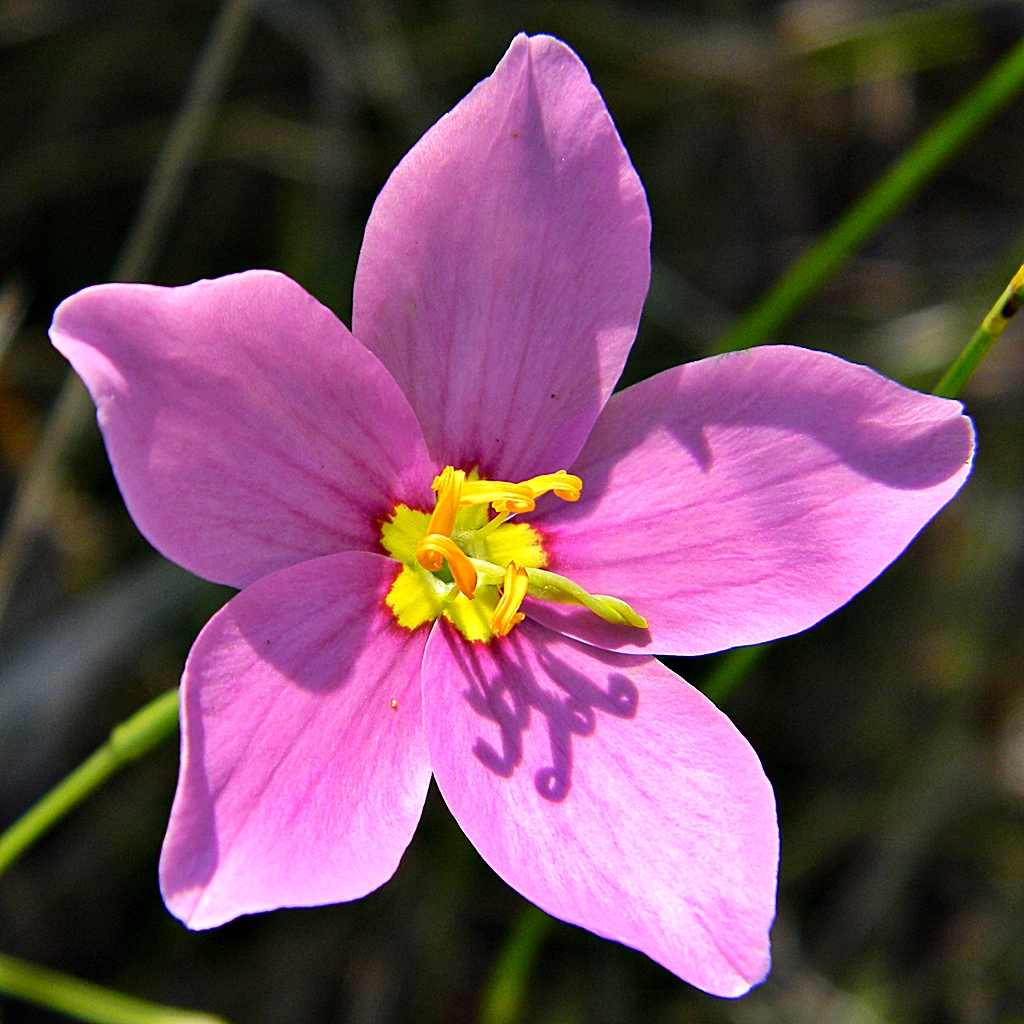
Sabatia grandiflora, known as Largeflower Rose Gentian or large-flowered marsh pink, is a slender annual wildflower of Florida’s wet flatwoods, prairies and marsh edges. From spring into late summer, thin, wiry stems 1 to 2 feet tall carry a few showy flowers up to 2 inches across, with five rose-pink (rarely white) petals around a bright yellow eye edged in red. They seem to float above the grasses and are among the most eye-catching wildflowers of open, damp Florida landscapes.
It belongs to the gentian family (Gentianaceae). Its range is centered on peninsular Florida, with a few populations reaching the Florida Panhandle and southern Alabama. Like most rose gentians, it lives a short life: plants germinate in moist ground, flower and set seed, and the next generation comes from seed in the soil.
Largeflower rose gentian is not a standard nursery plant, but it is a natural part of many wet-prairie and flatwoods restorations, and it can appear on its own in sunny, seasonally wet parts of Florida properties when mowing is relaxed. This guide covers how to recognize it, where it grows, and how to encourage it.
Identification
Florida has several pink-flowered rose gentians, and largeflower rose gentian is best told apart by its five-parted, unusually large flowers and its very narrow, grass-like upper leaves on a thin, few-branched stem.
Growth Habit
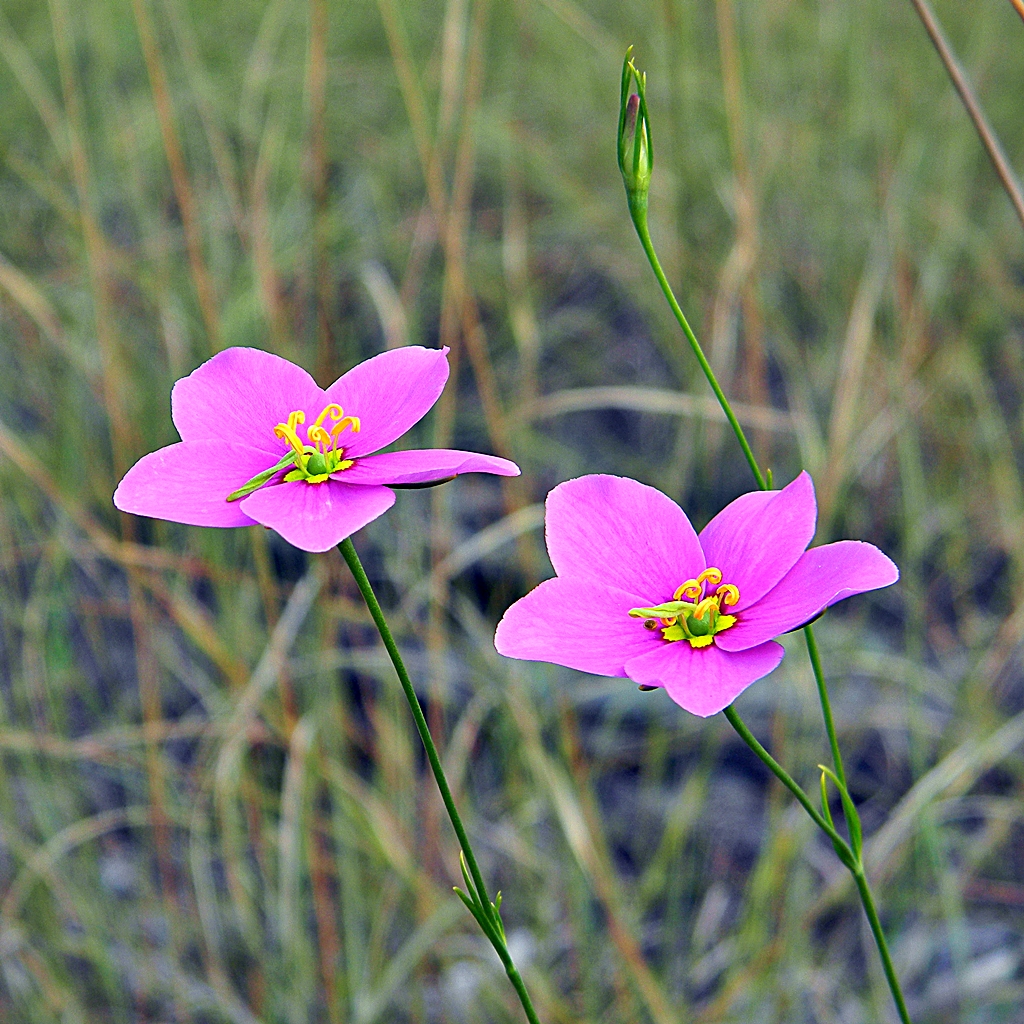
An annual or short-lived biennial with one main stem 1 to 2 feet tall (occasionally taller) that branches sparingly near the top. The stem is smooth, slender and wiry, with few leaves, so the plant is easy to miss until it flowers.
Leaves
Leaves are opposite and stalkless. The lower ones are narrowly lance-shaped, about 1 to 1½ inches long, and the upper leaves become very narrow, almost thread-like. Basal leaves are often gone by flowering time.
Flowers
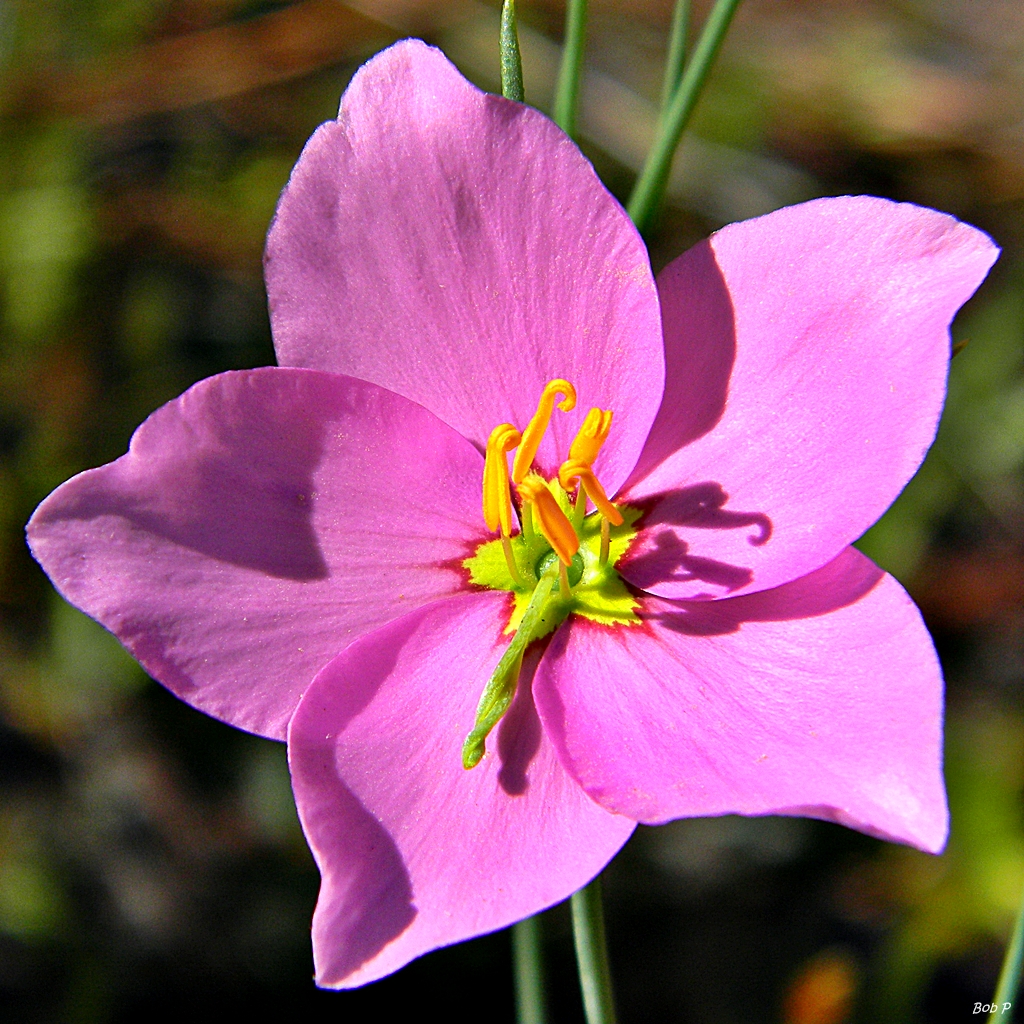
Flowers are borne singly at the ends of long, slender stalks, usually only a few per plant. Each is about 1½ to 2 inches across, with five (occasionally six) broad, pointed, rose-pink petals joined only at the base. The center is a yellow star edged with a thin red line. Five yellow anthers curl as they age, and the style splits into two twisted branches. White-flowered plants occur occasionally. Flowering runs mainly from April through August, with scattered blooms later in the year in South Florida.
Bartram’s rose gentian (S. bartramii) and marsh pink (S. stellaris) are similar, but Bartram’s rose gentian has 8 to 13 petals, and marsh pink has smaller flowers about 1 inch across on a more branched plant. Shortleaf rose gentian (S. brevifolia) has white flowers.
Fruit & Seeds
The fruit is a small, oval capsule that splits to release many tiny seeds. The seeds fall close to the parent and build up in the soil, which is why plants often reappear in the same damp spots year after year.
Quick Facts
| Scientific Name | Sabatia grandiflora (A. Gray) Small |
| Family | Gentianaceae (gentian family) |
| Plant Type | Annual or short-lived biennial wildflower |
| Mature Height | 1–2 ft (occasionally to 3 ft) |
| Mature Spread | 4–8 in |
| Growth Rate | Fast (completes life cycle in one season) |
| Sun Exposure | Full sun to light shade |
| Water Needs | Moist to seasonally wet |
| Soil Type | Sandy or peaty, acidic soils of flatwoods and wet prairies |
| Soil pH | Acidic to near neutral (about 4.5–7.0) |
| Bloom Time | April–August (sporadically later in South Florida) |
| Flower Color | Rose-pink with a yellow, red-edged eye; rarely white |
| Fall Color | None; annual |
| Fruit | Small oval capsule with many tiny seeds |
| Deer Resistant | Moderate; bitter like other gentians |
| USDA Hardiness Zones | 8–11 (grown as an annual) |
Native Range
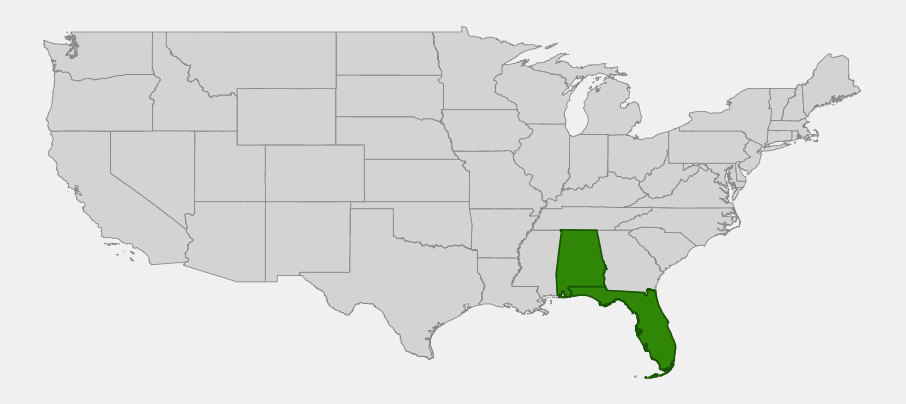
Largeflower rose gentian is a Southeastern Coastal Plain species. USDA PLANTS lists it as native in Florida and Alabama. Most of its populations are in peninsular Florida, from the central peninsula south into the Everglades region, and it is more scattered in the Florida Panhandle. In Alabama it is rare and limited to the southern edge of the state.
Within Florida it is common and widespread in suitable habitat, especially in South and Central Florida, where it brightens wet prairies and roadside ditches from spring through summer. It is a characteristic plant of the open, fire-maintained wetlands that once covered much of the peninsula.
Typical habitats include wet pine flatwoods, wet prairies, marl prairies, the edges of marshes and cypress domes, seepage slopes, and moist, mowed roadsides and ditches. It needs open, sunny ground with little competition, which periodic fire or occasional mowing provides.
📋 Regional plant lists featuring Largeflower Rose Gentian: North & South Florida · Alabama, Georgia & Mississippi
Growing & Care Guide
Largeflower rose gentian is an annual that grows best where it can reseed in sunny, damp, open ground. It is seldom sold as plants, but seed from native seed suppliers or reseeding from existing populations can establish it in wet meadows, rain gardens and restored flatwoods in Florida and the Gulf Coast.
Light
Full sun gives the strongest plants and most flowers. It tolerates light shade at the edge of pines, but it fades out where taller grasses and shrubs close in.
Soil & Water
Use acidic, sandy or peaty soil that stays moist through the growing season and may be briefly flooded. It does not need rich soil or fertilizer. Avoid drying, heavily mulched beds.
Planting Tips
Sow seed on the surface of bare, moist soil in fall or late winter; the tiny seeds need light and should not be buried. Keep the area damp until seedlings are established. A low, open groundcover of grasses and small wildflowers suits it better than dense planting. Never dig plants from the wild; they rarely survive moving.
Pruning & Maintenance
Let plants set and drop seed before mowing. In meadow areas, mow or burn (where permitted) in winter to keep competition down and create bare soil for the next year’s seedlings. Avoid herbicides and fertilizer in wet areas where it grows.
Propagation
By seed only. Collect ripe capsules when they turn brown and sow fresh seed onto moist soil. Seedlings first form a small rosette, then bolt and flower, usually within the same year in Florida.
Landscape Uses
- Wet meadows and wet prairie restoration: reseeds in damp, sunny openings
- Rain gardens and swales: on the moist edges rather than in standing water
- Pine flatwoods landscapes: under open slash or longleaf pine with wiregrass
- Pollinator gardens: showy pink flowers for bees in summer
- Relaxed-mowing roadsides and lawns: appears in damp, infrequently mowed areas
Wildlife & Ecological Value
Largeflower rose gentian is a bright and useful part of Florida’s open wetland flora, offering pollen to native bees through the warm months.
For Pollinators
The open, bowl-shaped flowers are visited by bees, including bumble bees, sweat bees and small carpenter bees, which collect pollen from the yellow anthers. Butterflies and flower flies also stop by. Rose gentians are well known for drawing ambush predators: green lynx spiders and crab spiders often sit on the flowers to catch visiting insects.
For Birds
The seeds are tiny and of little value to birds directly, but the insects drawn to the flowers feed wrens, warblers and other insect-eating birds in wet flatwoods and prairies.
For Mammals
Like other gentians, the plant contains bitter compounds and is seldom browsed heavily by deer or rabbits.
Ecosystem Role
Largeflower rose gentian is a characteristic species of fire-maintained, seasonally wet pinelands and prairies. Its abundance in a wet prairie or flatwoods is a good sign that the site is open, sunny and naturally managed. It declines where fire is excluded and shrubs take over.
Cultural & Historical Uses
The genus Sabatia honors Liberato Sabbati, an 18th-century Italian botanist and gardener in Rome. The species name grandiflora means large-flowered, and the species was first described by Asa Gray as a variety of another rose gentian before John Kunkel Small raised it to species rank.
Rose gentians, sometimes called marsh pinks or sabatias, were used in folk medicine like their relatives the gentians, mainly as bitter tonics. These traditional uses are historical, and wild plants should not be harvested.
For many Floridians, largeflower rose gentian is one of the signs of spring and summer in the flatwoods and Everglades. Nature photographers know it well, and it often appears in photos of wet prairies with sunrise mist or with a green lynx spider waiting on a petal.
Frequently Asked Questions
Is largeflower rose gentian an annual or a perennial?
It is an annual or short-lived biennial. Individual plants die after flowering and setting seed, but populations persist by reseeding in the same damp, open spots.
How do I tell it from other rose gentians?
Look for five petals and very large flowers (about 1½ to 2 inches across) on a thin stem with narrow, almost grass-like upper leaves. Bartram’s rose gentian has 8 or more petals, and marsh pink has smaller flowers on a more branched plant.
Where does largeflower rose gentian grow?
Mainly in peninsular Florida, with some populations in the Panhandle and southern Alabama, in wet pine flatwoods, wet prairies, marsh edges and moist ditches.
Can I grow it in my garden?
Yes, in a sunny, damp, acidic site where it can reseed, such as a wet meadow or the edge of a rain garden. Sow seed on bare, moist soil and leave plants to drop seed before mowing.
When does it bloom?
Mostly from April through August, with occasional flowers later in the year in South Florida.


