
Panicled Hawkweed (Hieracium paniculatum)
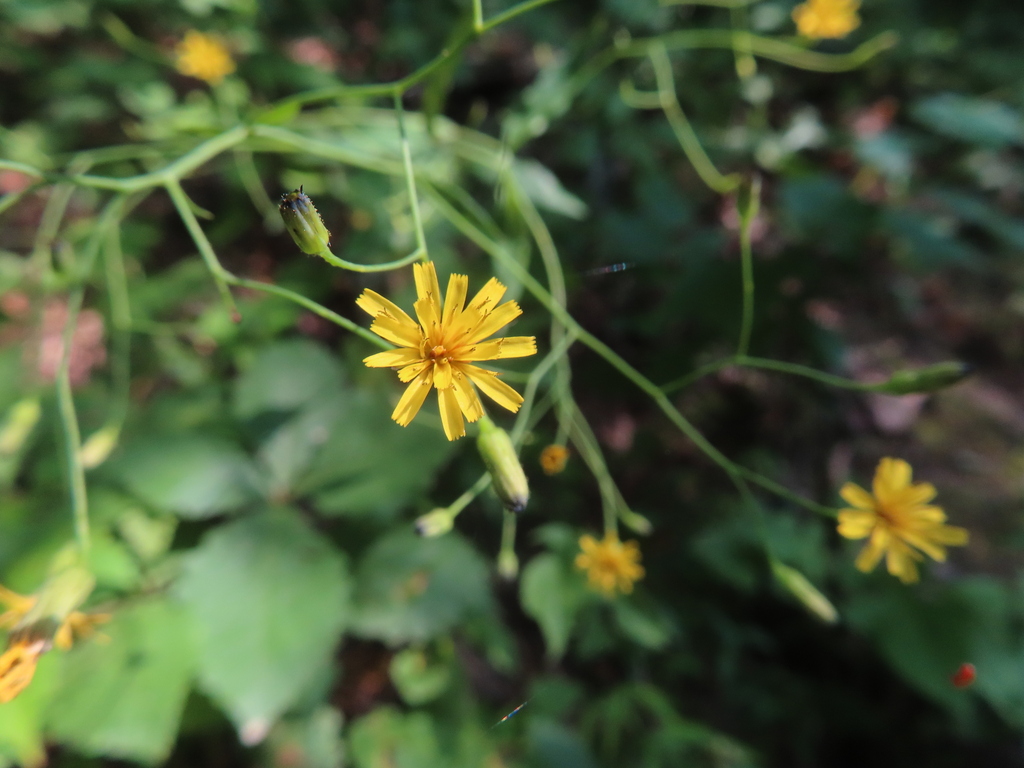
Hieracium paniculatum, known as Panicled Hawkweed and listed by USDA PLANTS as Allegheny hawkweed, is a slender native wildflower of dry and open woods in eastern North America. In late summer and fall it holds dozens of small, bright yellow, dandelion-like flower heads on a wide, airy branching cluster, each head dangling on a stalk as fine as thread. It is a member of the aster family (Asteraceae) and, like its relatives, has milky sap.
Hawkweeds have a poor reputation because several European species, such as orange hawkweed and meadow hawkweed, have become aggressive weeds of pastures and roadsides. Panicled hawkweed is different. It is a native woodland plant that grows singly or in small, scattered groups, never forms mats, and spreads only by seed. It has no basal rosette of hairy leaves and no runners.
It is rarely sold, but it is worth knowing and conserving in oak and pine woods, and it can be added to dry shade or woodland-edge plantings from locally collected seed. It brings a late-season sprinkle of yellow to the forest floor, when goldenrods and asters are the only other flowers in bloom.
Identification
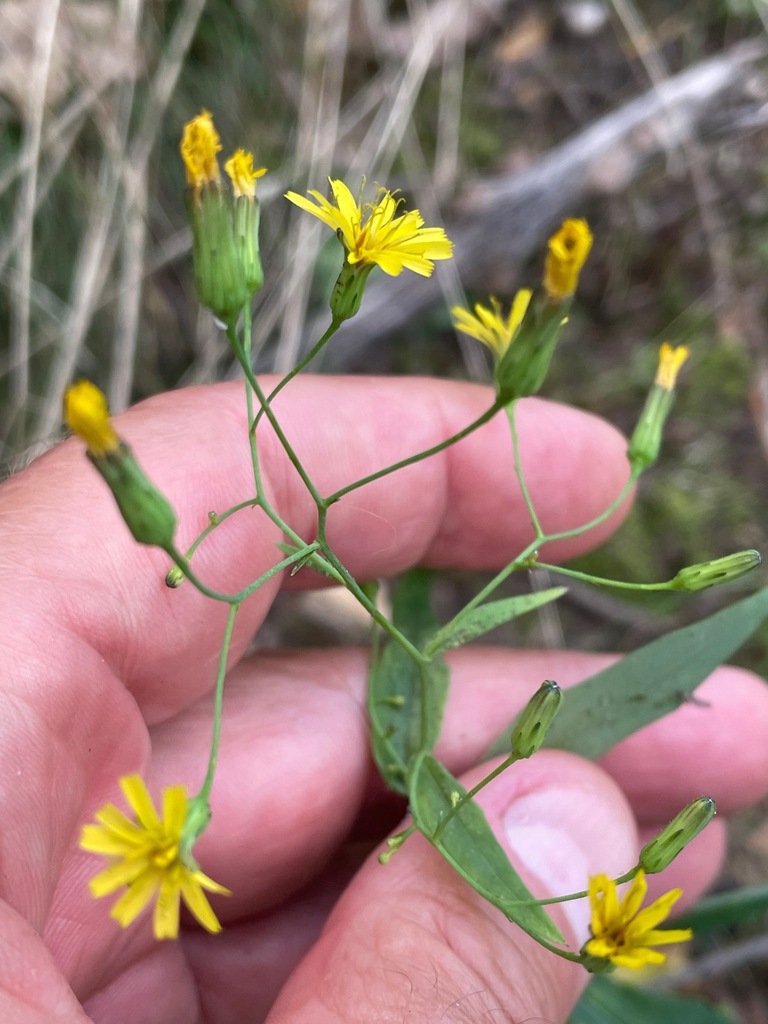
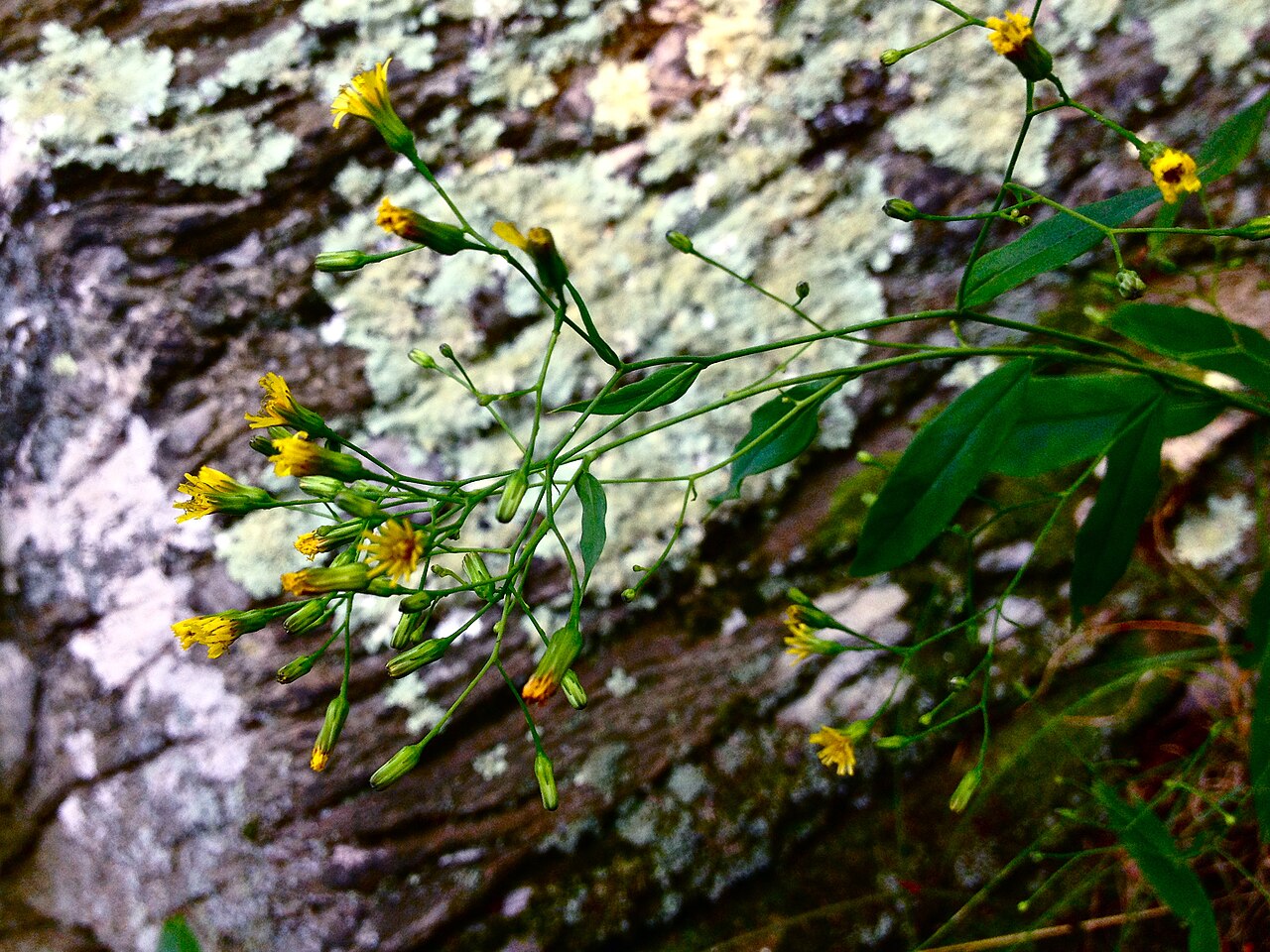
Look in late summer for a tall, thin, leafy stem in dry woods, topped by a very open, widely branched cluster of many small yellow heads on hair-thin stalks.
Growth Habit
Panicled hawkweed is an upright perennial, usually 1 to 3 feet tall and occasionally taller, with a single slender stem from a short underground crown. The stem is smooth above and often has a few long, soft hairs near the base. It branches only near the top, where it opens into a broad, loose flower cluster. Plants often lean or arch under the weight of the inflorescence.
Leaves
Most of the leaves are on the stem rather than at the base; basal leaves are usually gone by flowering time. The 4 to 20 stem leaves are alternate, elliptic to lance-shaped, about 1 1/2 to 6 inches long, thin and soft, smooth or with a few scattered hairs, and have smooth or faintly toothed edges. They get gradually smaller up the stem and the lower ones narrow to a short stalk.
Flowers
The flower heads are about 1/2 inch across and contain 15 to 30 bright yellow, strap-shaped (ligulate) florets, with no separate disk. They are carried in a wide, open panicle that can hold dozens of heads, each on a very slender, spreading or drooping stalk that may have a few tiny dark gland-tipped hairs. The green bracts around each head (the involucre) are narrow and smooth or nearly so. Flowering runs from about July to October.
Fruit
Each floret produces a small, ribbed, brown achene about 1/8 inch long, tipped with a tuft of whitish to tan bristles that helps it drift on the wind.
Look-alikes
Rattlesnakeweed (Hieracium venosum) has a basal rosette of purple-veined leaves and an almost leafless flower stalk. Hairy hawkweed (H. gronovii) and rough hawkweed (H. scabrum) have densely hairy stems and leaves and a narrower, more compact flower cluster. Non-native orange hawkweed (Pilosella aurantiaca) and meadow hawkweed (P. caespitosa) grow in sunny fields and lawns, have hairy basal rosettes, spread by runners, and carry their heads in tight clusters on leafless stalks.
Quick Facts
| Scientific Name | Hieracium paniculatum |
| Family | Asteraceae (aster family) |
| Plant Type | Herbaceous perennial wildflower |
| Mature Height | 1–3 ft (occasionally to 4 ft) |
| Mature Spread | 6–18 in |
| Growth Rate | Moderate |
| Sun Exposure | Part shade to light shade |
| Water Needs | Low to medium; dry to moist |
| Soil Type | Dry to moist sandy, rocky or loamy woodland soil |
| Soil pH | Acidic (about 4.5–6.5) |
| Bloom Time | July–October |
| Flower Color | Bright yellow |
| Fall Color | None notable |
| Fruit | Small achenes with whitish to tan bristles |
| Deer Resistant | Moderate; occasionally browsed |
| USDA Hardiness Zones | 4–8 |
Native Range
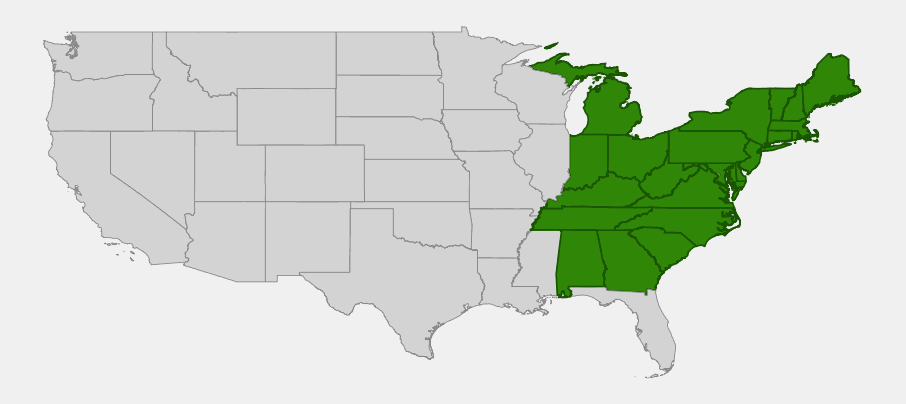
Panicled hawkweed is native to eastern North America. USDA PLANTS records it from 22 states, from Maine, New Hampshire and Vermont south through New England, New York, New Jersey and Pennsylvania to Maryland, Delaware, Virginia and West Virginia, and on along the Appalachians to North Carolina, South Carolina, Georgia, Tennessee and Alabama. To the west it reaches Kentucky, Ohio, Indiana and Michigan. In Canada it grows in Ontario, Quebec, New Brunswick and Nova Scotia.
It is most common in the Appalachian Mountains and their foothills and in New England, and becomes scattered toward the Coastal Plain and the western edge of its range in Indiana and Michigan.
Its habitats are dry to moderately moist deciduous and mixed forests, especially oak, oak-hickory, oak-pine and hemlock woods, as well as woodland edges, rocky slopes, trailsides and old logging roads. It usually grows on acidic, well-drained soils in light to moderate shade.
📋 Regional plant lists featuring Panicled Hawkweed: New York, Pennsylvania & Northern New Jersey · Ohio & Indiana · Michigan, Wisconsin & Eastern Minnesota · Kentucky & Tennessee · Connecticut, Massachusetts & Rhode Island · New Hampshire, Maine & Vermont · Maryland, Virginia & West Virginia · Delaware, Southern New Jersey & Long Island · Alabama, Georgia & Mississippi · North & South Carolina
Growing & Care Guide
Panicled hawkweed is a modest, easygoing plant for dry shade and woodland edges. It is rarely sold in nurseries, so most gardeners grow it from seed collected (with permission and in small amounts) from local plants, or simply protect plants that appear on their own.
Light
Part shade to light shade, such as under high oaks and pines or along a woodland edge. It tolerates a few hours of direct sun if the soil is not too rich and moist. In deep shade it flowers sparsely.
Soil & Water
Give it lean, well-drained, acidic soil: sandy, gravelly or rocky loam with some leaf litter. It handles dry spells well once established. Avoid heavy fertilizing and rich, constantly moist garden soil, where it becomes floppy and short-lived.
Planting Tips
Sow fresh seed in fall on the soil surface or barely covered, and let winter conditions break dormancy. Seedlings form small leafy plants the first year and usually flower in the second. Plant it in groups among sedges, ferns and low woodland plants, where its fine stems can lean on neighbors.
Pruning & Maintenance
Leave stems standing into fall so the seed can ripen and disperse. Cut them back in late winter if you wish. Individual plants can be short-lived, but they reseed lightly in suitable spots without becoming weedy.
Propagation
Propagate from seed. Collect the fluffy seed heads in fall when the bristles turn tan, and sow outdoors or give 30 to 60 days of cold, moist stratification before sowing in spring. It does not spread by runners, so division is not practical.
Landscape Uses
- Dry shade gardens: late color under oaks and pines where few perennials thrive
- Woodland edges: pairs with asters, goldenrods and sedges
- Native meadow-to-woods transitions: a light, airy filler with a long fall bloom
- Habitat restoration: a characteristic plant of dry oak and oak-pine forests
- Wildlife gardens: late-season nectar for small bees and flies
Wildlife & Ecological Value
Panicled hawkweed flowers late in the season, when food for insects in shaded woods is scarce.
For Pollinators
Small bees, including sweat bees and other short-tongued native bees, and hover flies visit the flowers for pollen and nectar. Like other hawkweeds, it is most visited on sunny afternoons when the heads are fully open.
For Birds
Small seed-eating birds such as goldfinches, juncos and sparrows may pick at the ripe seed heads in fall.
For Mammals
Deer and rabbits occasionally browse the leaves and flower stalks. It is not considered a major forage plant.
Ecosystem Role
It is part of the native ground layer of dry oak and oak-pine forests, together with sedges, grasses, asters and goldenrods. A healthy ground layer like this holds soil on slopes, feeds insects late in the year and is a good sign of a forest that is not dominated by invasive plants.
Cultural & Historical Uses
The genus name Hieracium comes from the Greek hierax, meaning hawk. In ancient times people believed that hawks ate or used the plants to sharpen their eyesight, which also explains the English name hawkweed.
The species name paniculatum refers to the panicle, the loose, branched flower cluster that is the plant’s most distinctive feature. The name Allegheny hawkweed, used by USDA PLANTS, reflects how common it is in the Appalachian region.
Hawkweeds are a famously difficult group for botanists. Many Eurasian species reproduce by seed without fertilization, producing huge numbers of slightly different forms. The native eastern American species, including panicled hawkweed, are much easier to tell apart, and are best recognized by their leaves, hairs and the shape of their flower clusters.
Frequently Asked Questions
Is panicled hawkweed invasive?
No. It is a native woodland wildflower that grows singly or in small groups and spreads only by seed. The invasive hawkweeds in North America, such as orange and meadow hawkweed, are European species that form dense mats in sunny fields.
How can I tell panicled hawkweed from other hawkweeds?
Look for a leafy stem with thin, smooth leaves, no basal rosette at flowering, and a very open flower cluster with small heads on thread-thin stalks. Rattlesnakeweed has a basal rosette of purple-veined leaves, and hairy hawkweed has very hairy leaves and stems.
When does panicled hawkweed bloom?
From about July to October, with the peak in late summer.
Can I grow panicled hawkweed in my garden?
Yes, in dry to moderately moist, acidic soil in part shade. It is rarely sold, so start it from local seed sown in fall.
Is it the same plant as Allegheny hawkweed?
Yes. USDA PLANTS uses the name Allegheny hawkweed for Hieracium paniculatum; panicled hawkweed is another common name for the same species.

Looking for a nursery that carries Panicled Hawkweed?
Browse our native plant nursery directory: Alabama · Connecticut, Delaware & Georgia · Indiana · Kentucky, Maine, Maryland, Massachusetts & Michigan · New Hampshire, New Jersey, New York, North Carolina & Ohio · Pennsylvania, Rhode Island, South Carolina, Tennessee, Vermont & Virginia · West Virginia

