
Oak Mistletoe (Phoradendron villosum)
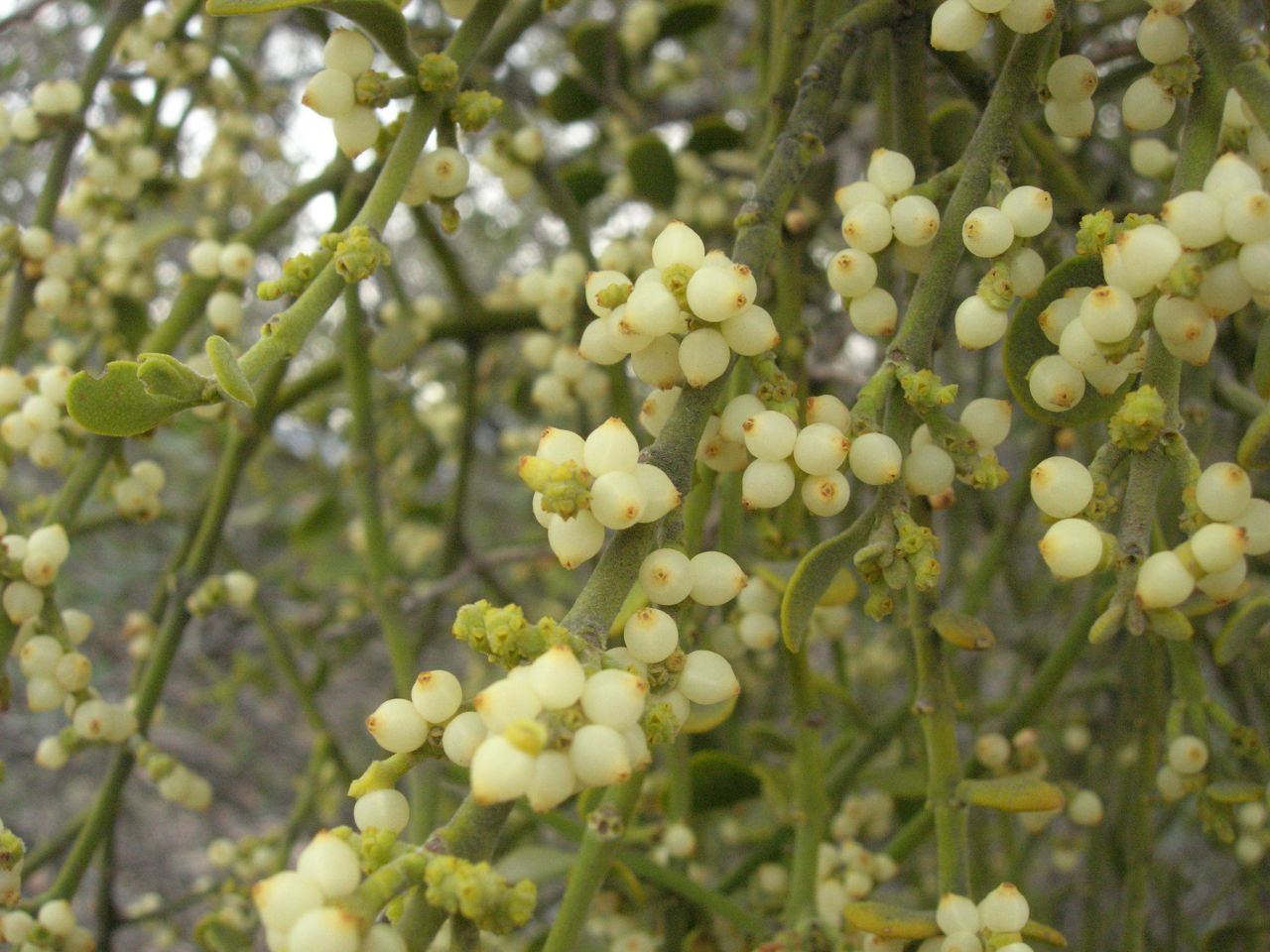
Phoradendron villosum, known as Oak Mistletoe and listed by USDA PLANTS as Pacific mistletoe, is an evergreen, parasitic shrub that grows in the branches of oaks and other trees in California and western Oregon, south into Baja California. It forms dense, rounded clumps of olive-green, fuzzy-leaved stems, and female plants carry clusters of pinkish-white berries from fall into winter.
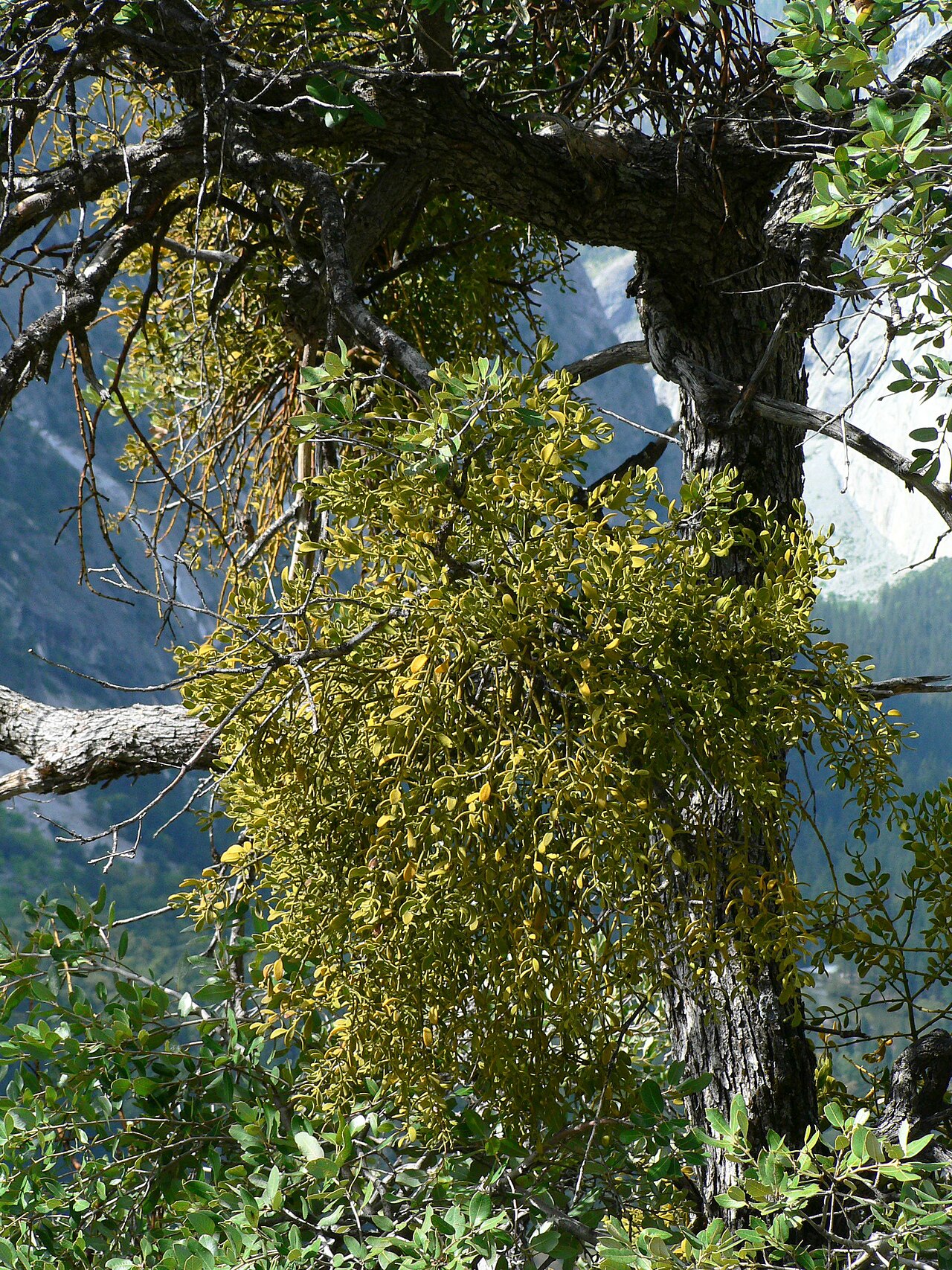
Oak mistletoe is a hemiparasite. Its green leaves make food by photosynthesis, but it has no roots in the soil. Instead, it grows a specialized absorbing structure (a haustorium) into the host’s branch and takes water and minerals from the tree. In winter, when deciduous oaks such as valley oak, blue oak and Oregon white oak drop their leaves, its evergreen clumps are easy to spot in the bare crowns.
It is not a plant you can plant or buy, but it is a native part of the oak woodlands of the Pacific states, and its berries feed many birds through the winter. Like other Phoradendron mistletoes, it is toxic if eaten. This guide covers how to identify it, where it grows, how it affects oaks, and its role for wildlife.
Identification
Oak mistletoe is the leafy, fuzzy mistletoe of western oaks. Look for evergreen clumps with thick, hairy, oval leaves in the crowns of oaks, especially in winter.
Growth Habit
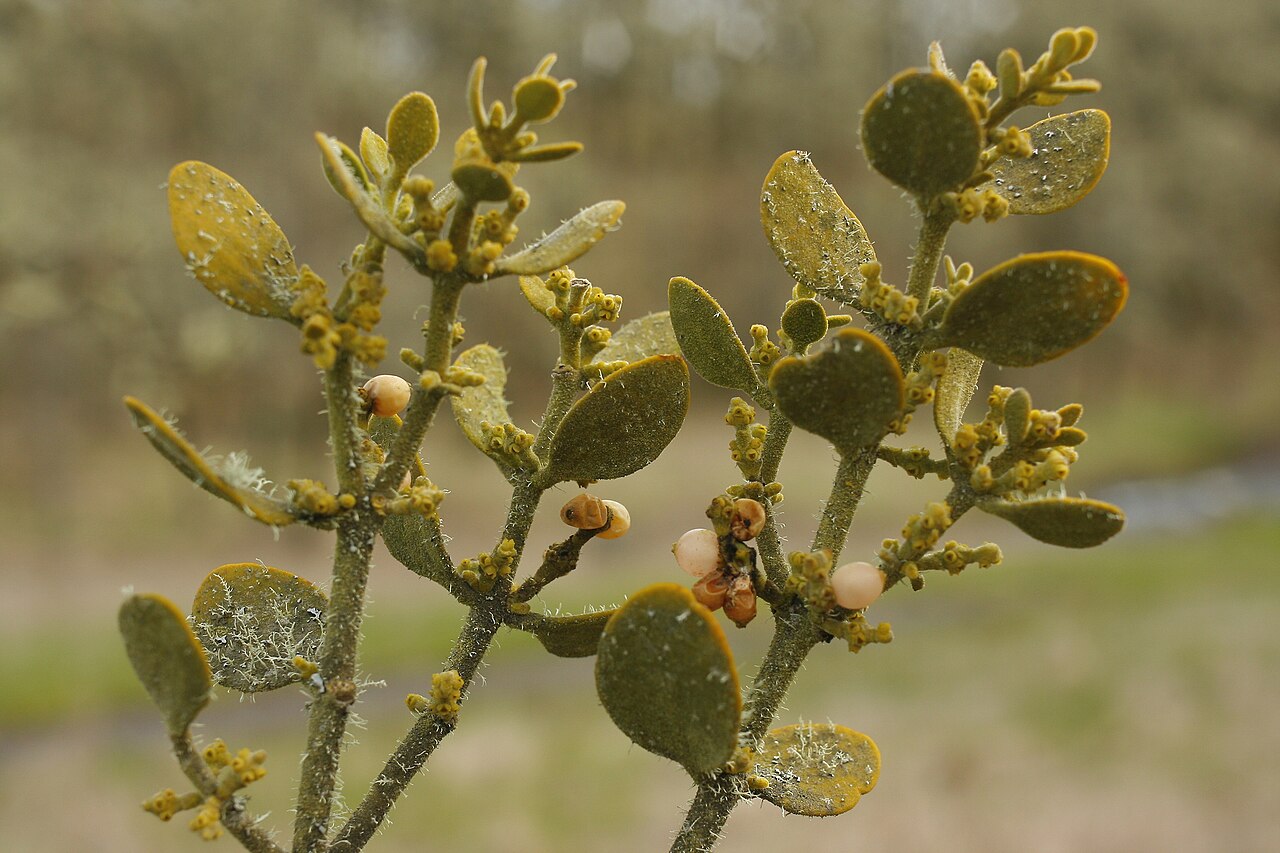
Plants form rounded to hanging clumps attached to the branches of their host, usually 1 to 3 feet across and sometimes much larger on old infections. The stems are stout, jointed, brittle and densely hairy, and the base of old plants becomes woody where it joins the host branch, often with a swollen area on the host wood.
Leaves
The leaves are opposite, thick and leathery, oval to oblong or broadly spoon-shaped, about 1 to 2 inches long, with rounded tips. They are covered in short, soft hairs, which gives them a dull, olive or yellowish-green look and a velvety feel. The species name villosum, meaning “hairy,” refers to this coating.
Flowers
Oak mistletoe is dioecious: male and female flowers are on separate plants. The flowers are tiny, greenish-yellow and without petals, set in short spikes at the stem joints. They bloom mainly from mid-summer into fall, though timing varies across its range, and are easy to overlook.
Berries
Female plants produce round berries, about 1/8 to 3/16 inch across, in short clusters at the stem joints. They ripen in late fall and winter to white or pinkish-white, sometimes slightly translucent, and each contains a single seed in very sticky pulp. Male plants never produce berries.
Look-alikes
American mistletoe (P. leucarpum) of the eastern and southern U.S. has broader, smooth or only sparsely hairy leaves; some botanists treat oak mistletoe as a western subspecies of it. Juniper mistletoe and dense mistletoe on junipers and cypresses are leafless or nearly so, and mesquite mistletoe of the deserts is leafless and reddish-berried. Dwarf mistletoes (Arceuthobium) grow only on conifers and have small, scaly shoots.
Quick Facts
| Scientific Name | Phoradendron villosum (Nutt.) Nutt. |
| Family | Viscaceae (Christmas mistletoe family; included in Santalaceae by some botanists) |
| Plant Type | Evergreen parasitic shrub (hemiparasite), mainly on oaks |
| Mature Height | Clumps 1–3 ft (sometimes larger) |
| Mature Spread | 1–3 ft |
| Growth Rate | Slow |
| Sun Exposure | Sun to part shade (in the crown of its host) |
| Water Needs | Takes water from its host tree |
| Soil Type | None; grows on tree branches |
| Soil pH | Not applicable |
| Bloom Time | Mainly summer to fall |
| Flower Color | Tiny, greenish-yellow and inconspicuous |
| Fall Color | None; evergreen |
| Fruit | Small white to pinkish berries in winter (toxic) |
| Deer Resistant | Browsed where it falls or hangs within reach |
| USDA Hardiness Zones | Follows its oak hosts, roughly 7–10 |
Native Range
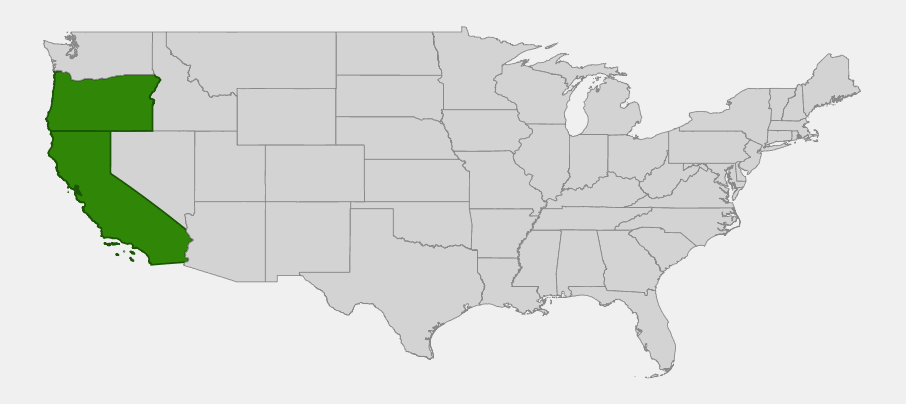
Oak mistletoe is native to the Pacific coast states and northwestern Mexico. USDA PLANTS lists it in California and Oregon, and it extends south into Baja California. It does not occur in Washington or east of the Cascades and Sierra Nevada, where its main oak hosts are absent.
In Oregon it grows west of the Cascades, in the Willamette, Umpqua and Rogue valleys and the foothills of southwestern Oregon, mainly on Oregon white oak. In California it is widespread in the Coast Ranges, the Sacramento and San Joaquin valleys, the Sierra Nevada and Cascade foothills, and the mountains and valleys of southern California, wherever oak woodland and oak savanna are found.
Typical habitats are oak woodland, oak savanna, foothill woodland, riparian woodland and the edges of chaparral, mostly from near sea level to the lower mountains. Its main hosts are oaks, including valley oak, blue oak, Oregon white oak, coast live oak and California black oak. It is also recorded on other trees and shrubs, including manzanita, buckeye and cottonwood.
📋 Regional plant lists featuring Oak Mistletoe: Western Oregon & Western Washington · California & Nevada
Can You Grow It?
Oak mistletoe is not grown in gardens or sold by nurseries. It can only live on a living host tree, and it arrives on its own, carried by birds. If you have native oaks, it may already be growing in your trees, and the real questions are how to live with it and when to manage it.
Living With Mistletoe
A few clumps of mistletoe on a large, healthy oak usually do little harm, and many valley oaks and blue oaks have carried mistletoe for decades. Heavy infections, with many clumps through the crown, can reduce growth, cause branch dieback and add stress during drought. In wild oak woodlands, mistletoe is a natural part of the ecosystem and is best left alone.
Pruning Infected Branches
If an infection is weakening a valued landscape tree, prune out infected branches at least 12 inches below the mistletoe clump, because the haustorium spreads inside the branch beyond the visible plant. Simply breaking off the clump does not kill the plant, and it will resprout from the same spot. Do not remove so much of the crown that the pruning harms the tree more than the mistletoe. Large oaks are best left to a certified arborist.
Safety Note
All parts of oak mistletoe, especially the berries and leaves, are toxic. Mistletoes in the genus Phoradendron contain toxic proteins (phoratoxins) and other compounds that can cause vomiting, diarrhea and other symptoms in people, dogs, cats and livestock. Wear gloves when pruning, keep clippings and fallen clumps away from children and pets, and never use wild mistletoe as tea or medicine. If someone swallows berries or leaves, call Poison Control (1-800-222-1222 in the U.S.) or a veterinarian.
Holiday Decorations
Sprigs of oak mistletoe are sometimes cut for Christmas decorations in the West. If you use it, hang it well out of reach of children and pets, and discard it, with any fallen berries, after the holidays. Many people use artificial mistletoe to avoid the risk entirely.
How It Spreads
Oak mistletoe spreads by birds. They eat the berries and either pass the sticky seeds or wipe them off their beaks onto branches, where the seeds stick and germinate. It takes several years for a new plant to grow a visible clump and berries. It cannot be grown in a pot or garden bed without a living host tree.
Where to See It
- Valley oak savannas of the Central Valley: easy to see in winter, when the deciduous oaks are bare
- Blue oak woodlands of the Sierra Nevada foothills: evergreen clumps against gray winter branches
- Willamette Valley oak savannas: on Oregon white oak in parks and preserves
- Coast Range oak woodlands: on valley, blue and black oaks from Mendocino to Santa Barbara
- Southern California foothills: on coast live oak and other trees in canyons and valleys
Wildlife & Ecological Value
Oak mistletoe is a parasite, but it is also a winter food source, nesting site and butterfly host in western oak woodlands.
For Birds
Its berries ripen in late fall and winter, when other food is scarce, and are eaten by phainopeplas, western bluebirds, American robins, cedar waxwings, Townsend’s solitaires and other fruit-eating birds. Birds spread the seeds as they move between trees. The dense evergreen clumps also provide cover, roosting spots and nesting sites for birds and other animals.
For Pollinators & Insects
The tiny flowers are visited by small flies, bees and other insects. Mistletoes in the genus Phoradendron are the larval host plants of the great purple hairstreak (Atlides halesus), a striking iridescent blue butterfly whose caterpillars feed on the leaves.
For Mammals
Deer browse mistletoe that falls to the ground or hangs within reach, and it can be an important winter food for them in oak woodlands. Squirrels, wood rats and other small mammals use the clumps for cover.
Ecosystem Role
Mistletoes are often called keystone resources in woodlands, because their winter berries and dense evergreen cover support a wide range of animals. Oak mistletoe is a natural part of the oak woodlands of California and Oregon, tied to the birds that eat its fruit and the oaks that host it.
Cultural & Historical Uses
The genus name Phoradendron comes from Greek words meaning “tree thief,” a fitting name for a plant that takes water and minerals from its host. The species name villosum means “hairy,” for its fuzzy leaves and stems. It was first described by the naturalist Thomas Nuttall in the 19th century, from western collections.
Its classification has changed over time. USDA PLANTS treats it as the separate species Phoradendron villosum. Some botanists, including the authors of the Jepson Manual for California, treat it as a western subspecies of American mistletoe, Phoradendron leucarpum subsp. tomentosum. Either way, it is the native, leafy mistletoe of oaks in California and western Oregon.
Several Native peoples of California used mistletoe in traditional medicine. Because Phoradendron species are toxic, these uses should never be tried at home. The tradition of kissing under mistletoe came from Europe, where it referred to the unrelated European mistletoe (Viscum album), but North American Phoradendron species have long taken its place in holiday decorations.
Frequently Asked Questions
Will oak mistletoe kill my oak tree?
Usually not. A few clumps rarely cause serious harm to a healthy oak. Heavy infections can weaken trees and cause branch dieback, especially during drought, and pruning infected branches can help in those cases.
Is oak mistletoe poisonous?
Yes. All parts, especially the berries and leaves, contain toxic compounds. Keep it away from children and pets, wear gloves when handling it, and call Poison Control or a veterinarian if any is swallowed.
Is oak mistletoe the same as Pacific mistletoe?
Yes. USDA PLANTS lists Phoradendron villosum as Pacific mistletoe, and it is also widely called oak mistletoe. Some botanists treat it as a subspecies of American mistletoe.
How does oak mistletoe spread?
Birds eat the sticky berries and leave the seeds on branches, where they germinate and grow into the wood of the host.
Can I grow oak mistletoe?
No. It can only live on a living host tree and is spread by birds. It is best appreciated in the wild oak woodlands of California and Oregon.

Looking for a nursery that carries Oak Mistletoe?
Browse our native plant nursery directory: California · Oregon

