
Texas Nightshade (Solanum triquetrum)
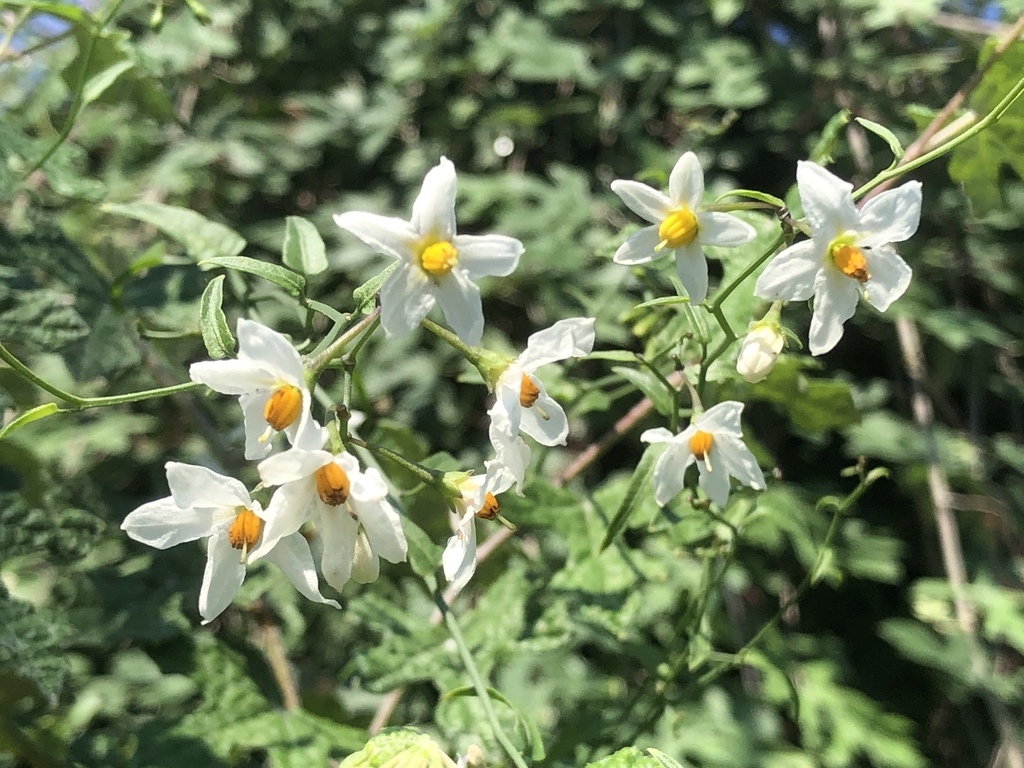
Solanum triquetrum, known as Texas Nightshade, is a native perennial of Central and South Texas and northeastern Mexico. It is a slender, somewhat woody plant that grows 1 to 2 feet tall on its own but scrambles through shrubs and up fences to as much as 7 feet when it has support. Clusters of starry white to lavender flowers with a bright yellow center appear nearly year-round, followed by round, glossy, bright red berries.
It belongs to the nightshade family (Solanaceae), with tomatoes, potatoes and peppers, and like many of its relatives it is poisonous. The leaves and especially the unripe berries contain toxic alkaloids. It should not be planted where small children or pets might eat the berries, and no part of it should be eaten.
Texas nightshade is common in brushy areas, woodland edges, fencerows and urban lots across the Edwards Plateau, the Blackland Prairie, the Coastal Bend and the South Texas brush country. With its delicate flowers and red fruit, it is an easy, drought-tolerant native for informal wildlife gardens and fence lines in Texas.
Identification
Texas nightshade can be recognized by its climbing, thin, nearly hairless stems, its three-cornered, arrowhead-shaped leaves, its small white to lavender star-shaped flowers, and its shiny red berries.
Growth Habit
A perennial with slender, branching, green stems that become woody at the base. It can form a small, upright shrubby clump 1 to 2 feet tall or clamber through shrubs, cactus and fences up to 6 or 7 feet. The stems are smooth or only slightly hairy and lack prickles, unlike many other nightshades.
Leaves
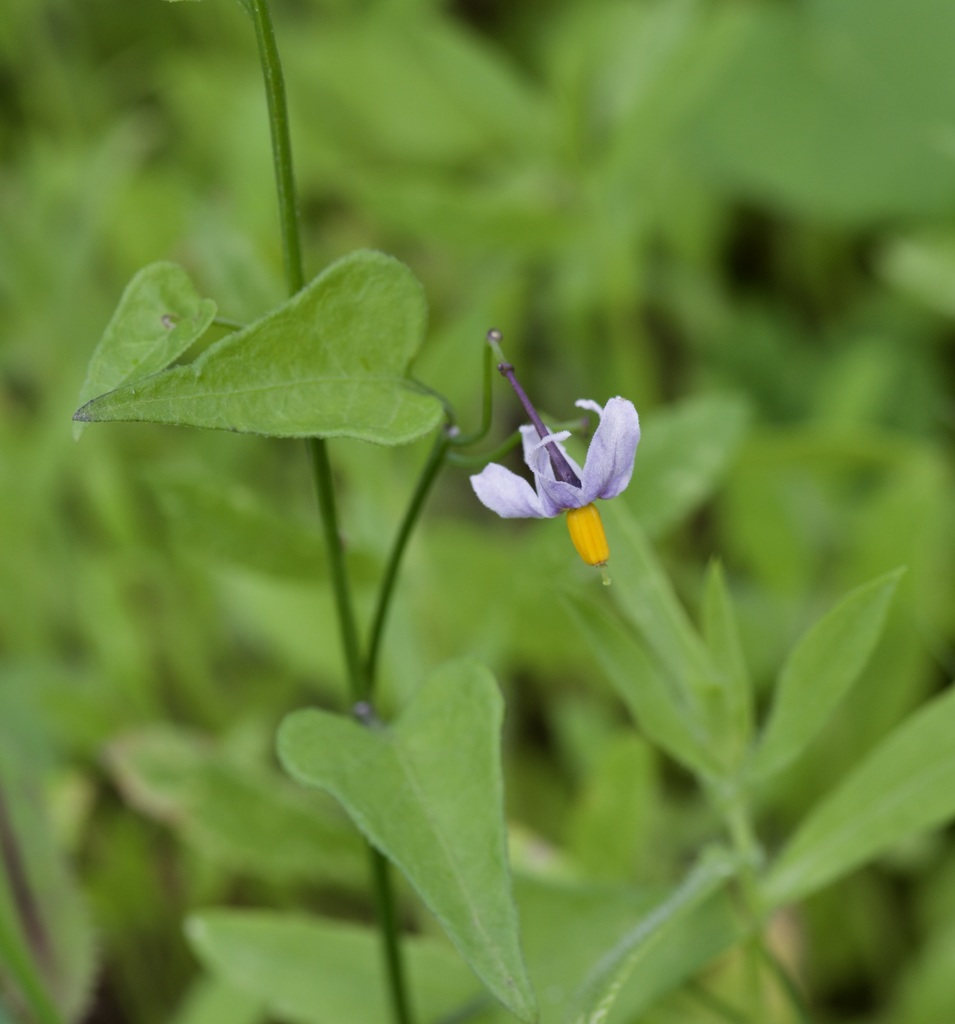
Leaves are alternate, 1 to 3 inches long, and highly variable. Many are triangular or arrowhead-shaped, with two short lobes at the base, while others are narrowly lance-shaped or nearly linear, especially on upper stems. The leaves are thin, smooth and bright to dark green.
Flowers
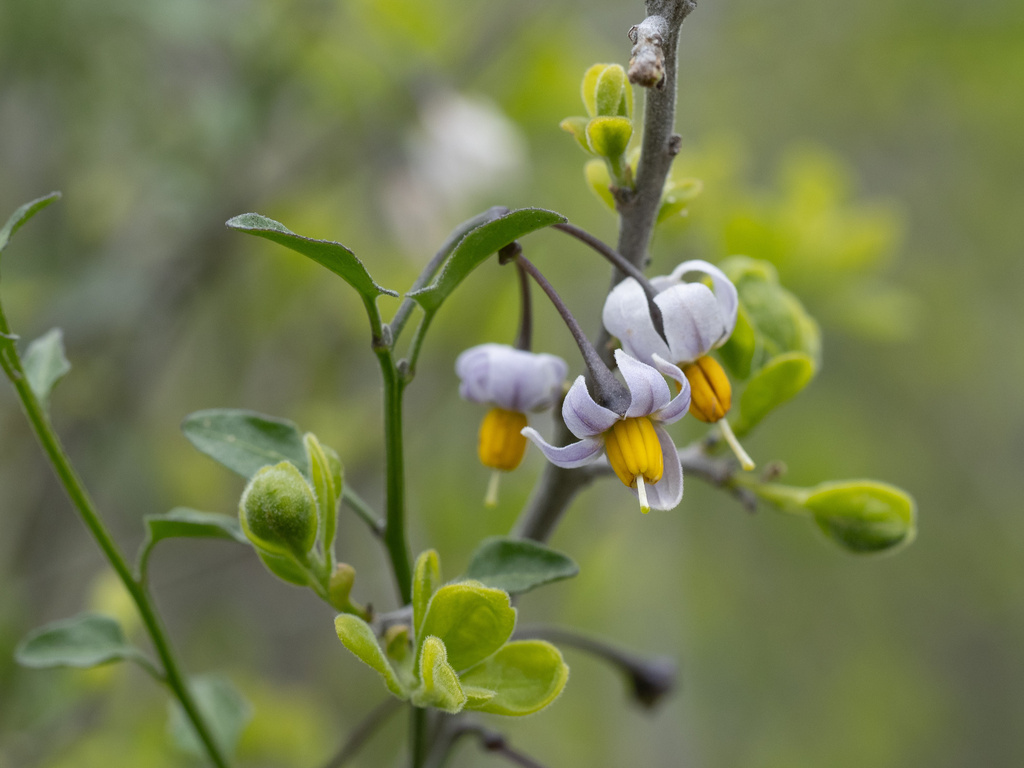
Flowers grow in small, loose clusters of two to several on slender stalks. Each is about ½ to ¾ inch across, star-shaped, with five narrow, pointed, often reflexed petals that are white or tinged lavender to violet, around a prominent cone of five bright yellow anthers. Flowering can occur in any month in mild weather, with peaks in spring and fall.
Silverleaf nightshade (Solanum elaeagnifolium) has silvery, hairy leaves with prickles and violet flowers, and produces yellow berries. The non-native black nightshade group has small white flowers but black berries.
Fruit & Seeds
The fruit is a round, glossy berry about ⅜ inch across that ripens from green to bright red. Each contains many small, flat seeds. Berries are poisonous to people and livestock, especially when unripe, but birds eat the ripe fruit and spread the seeds.
Quick Facts
| Scientific Name | Solanum triquetrum Cav. |
| Family | Solanaceae (nightshade family) |
| Plant Type | Perennial subshrub or scrambling vine |
| Mature Height | 1–2 ft; climbs to 6–7 ft with support |
| Mature Spread | 1–3 ft |
| Growth Rate | Moderate to fast |
| Sun Exposure | Full sun to partial shade |
| Water Needs | Low; drought tolerant once established |
| Soil Type | Limestone, caliche, clay, loam or sandy soils |
| Soil pH | Neutral to alkaline (about 6.5–8.5) |
| Bloom Time | Year-round in mild weather; peaks in spring and fall |
| Flower Color | White to lavender or violet with yellow center |
| Fall Color | None notable; evergreen in mild winters |
| Fruit | Glossy bright red berry (poisonous to people) |
| Deer Resistant | Yes; foliage is toxic |
| USDA Hardiness Zones | 8–10 |
Native Range
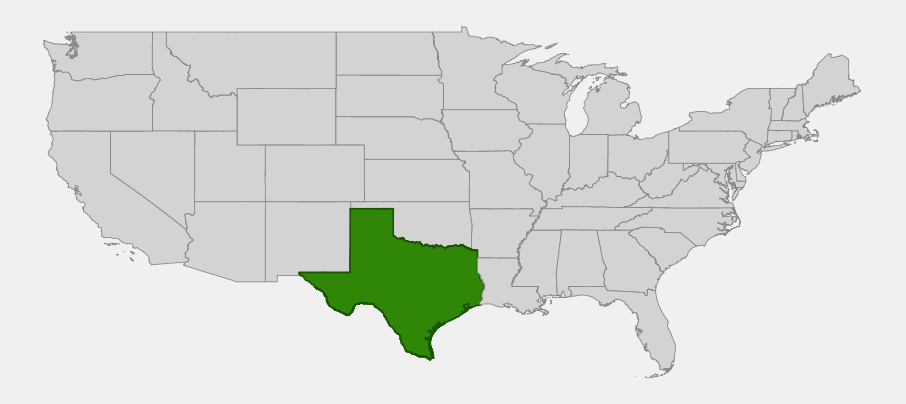
Texas nightshade is native to Texas and northeastern Mexico. USDA PLANTS lists Texas as its only U.S. state, and in Mexico it grows in Coahuila, Nuevo León and Tamaulipas. It is a characteristic plant of the brushlands and woodland edges of Central and South Texas.
Within Texas it is most common on the Edwards Plateau, in the Blackland Prairie and Cross Timbers of Central Texas, on the Coastal Bend and in the South Texas brush country and Rio Grande Valley. It reaches its northern and eastern limits in North Central Texas and along the upper Gulf Coast, and it is not a plant of the East Texas Piney Woods.
Typical habitats include thickets, brush, oak and juniper woodland edges, rocky limestone slopes, stream terraces, fencerows, roadsides and vacant lots. It often grows tangled in shrubs such as hackberry, cenizo and Mexican buckeye.
📋 Regional plant lists featuring Texas Nightshade: South & West Texas · Arkansas, Louisiana, Eastern Oklahoma & Eastern Texas
Growing & Care Guide
Texas nightshade is easy to grow in Central and South Texas and needs almost no care. It is occasionally sold by Texas native plant nurseries and often appears on its own where birds drop the seeds. Safety note: all parts are poisonous, especially the unripe berries. Do not plant it where small children or pets could eat the berries.
Light
Full sun to partial shade. It blooms more in sun but does well under the edges of trees, where it often grows wild.
Soil & Water
Grows in thin limestone soils, caliche, clay, loam or sand as long as drainage is reasonable. Once established it is drought tolerant and needs only occasional water in extended dry spells.
Planting Tips
Plant it at the base of a fence, trellis or open shrub where it can scramble upward, or let it form a loose clump in a dry, informal bed. It mixes well with other Texas natives in wildlife gardens. Wear gloves when handling it, and keep it away from play areas.
Pruning & Maintenance
Trim back straggly stems in late winter to keep it tidy. Frost may kill the top growth in colder winters, but it usually resprouts from the woody base. It can self-seed; pull unwanted seedlings while small.
Propagation
Grows easily from seed cleaned from ripe red berries and sown in spring; wear gloves when handling the fruit. Softwood cuttings also root in warm weather.
Landscape Uses
- Fence lines and trellises: a delicate, flowering native vine
- Wildlife gardens: berries for birds and flowers for bees
- Dry, shady edges under trees: tolerates root competition and drought
- Habitat restoration: native component of brushland and woodland edges in Central and South Texas
- Xeriscapes: very low water needs once established
Wildlife & Ecological Value
Texas nightshade is a useful native for wildlife in Central and South Texas, providing flowers almost all year and fruit for birds.
For Pollinators
Like other nightshades, the flowers release pollen through small pores at the tips of the anthers, and bumble bees and other native bees shake it out by vibrating (buzz pollination). The long blooming season offers pollen when few other plants are flowering.
For Birds
Birds such as mockingbirds, thrashers and other fruit eaters sometimes eat the red berries and spread the seeds, which is why the plant appears under trees and along fences.
For Mammals
Deer and livestock usually avoid it because the foliage is toxic. Nightshades are known to poison cattle that eat them in quantity.
Ecosystem Role
Texas nightshade is a common understory and edge plant of Texas brush and woodland. Its scrambling stems add structure to thickets, and its year-round flowers and fruit support bees and birds in otherwise lean seasons.
Cultural & Historical Uses
The species was described by the Spanish botanist Antonio José Cavanilles in the late 18th century. The name triquetrum means three-cornered, a reference to the triangular shape of many of its leaves.
The genus Solanum is one of the largest plant genera in the world, with more than 1,000 species, including potato, tomato and eggplant. Many wild species, including Texas nightshade, contain glycoalkaloids such as solanine that make their leaves and unripe fruits poisonous.
Texas nightshade is a familiar plant for Central Texas naturalists. It often turns up uninvited in Austin and San Antonio yards, where many gardeners decide to keep it for its delicate flowers and bright red berries, as long as children and pets are not around.
Frequently Asked Questions
Is Texas nightshade poisonous?
Yes. All parts, and especially the unripe berries, contain toxic alkaloids. Do not eat any part of the plant, and do not plant it where small children or pets might eat the berries. It is also known to be poisonous to cattle.
Where does Texas nightshade grow?
In Central and South Texas, including the Edwards Plateau, Blackland Prairie, Coastal Bend and South Texas brush country, and in northeastern Mexico.
Is Texas nightshade a vine?
It can be either a small, upright, shrubby plant 1 to 2 feet tall or a scrambling vine up to about 7 feet when it can climb on fences or shrubs.
How is it different from silverleaf nightshade?
Silverleaf nightshade has silvery, hairy, prickly leaves, violet flowers and yellow berries, and it spreads aggressively. Texas nightshade has smooth green, often triangular leaves, white to lavender flowers and red berries.
When does Texas nightshade bloom?
It can bloom in any month when the weather is mild, with the most flowers in spring and fall.

Looking for a nursery that carries Texas Nightshade?
Browse our native plant nursery directory: Texas

