
Mountain Spleenwort (Asplenium montanum)
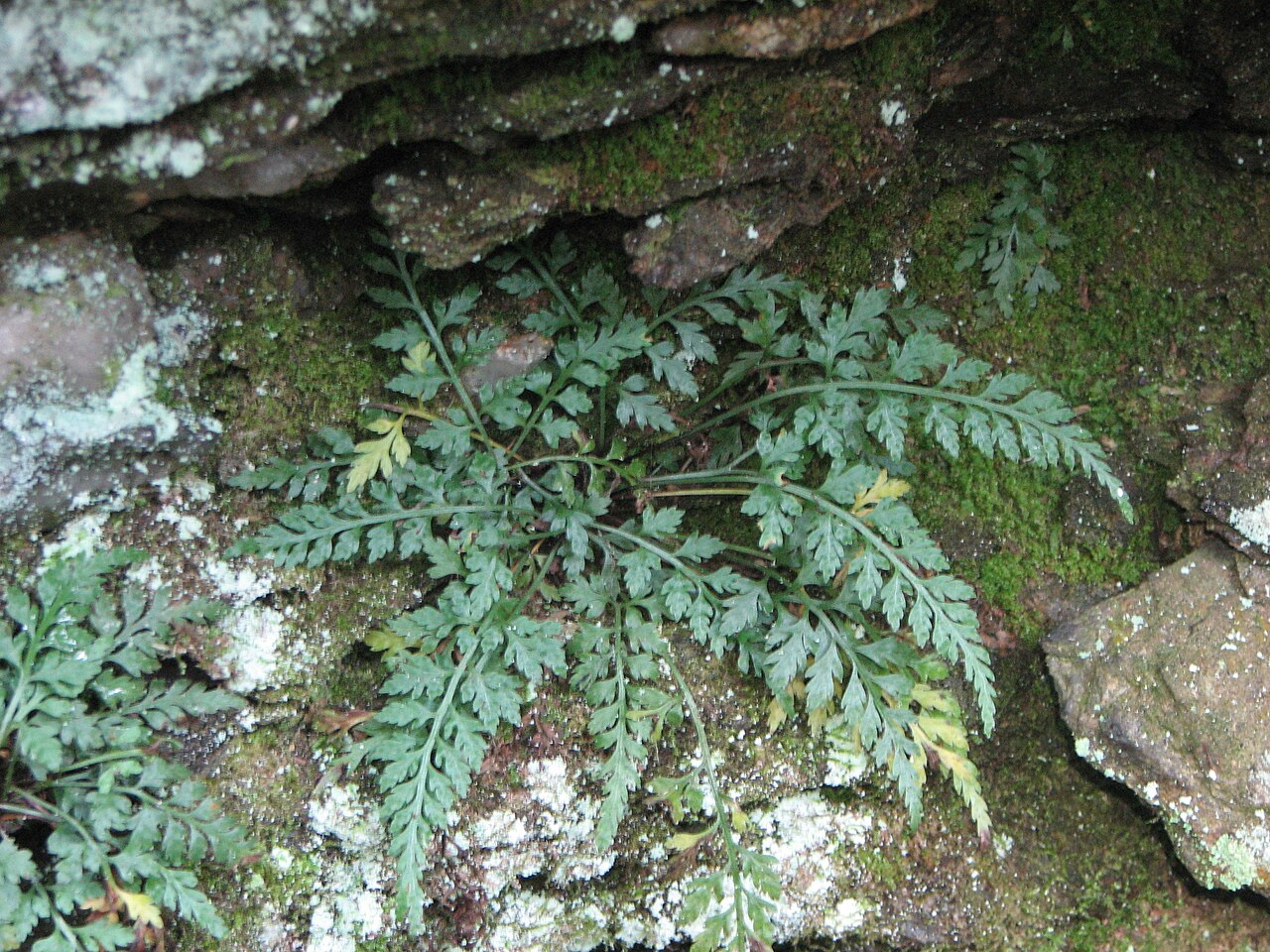
Asplenium montanum, known as Mountain Spleenwort, is a small, evergreen rock fern of the Appalachian Mountains and nearby uplands of the eastern United States. It grows in tight tufts only 2 to 8 inches long, with lacy, bluish-green fronds that sprout directly from cracks in shaded cliffs and ledges of sandstone, granite, gneiss and schist.
It is a specialist of acidic, non-limestone rock, and it is one of the most important ferns in the story of the Appalachian spleenworts: by crossing with ebony spleenwort and walking fern, it gave rise to several other rock ferns, such as Bradley’s spleenwort and lobed spleenwort. In much of its range it is easy to overlook, tucked into narrow, moist crevices on cliffs above streams and gorges.
Mountain spleenwort is a plant to admire in the wild. It is very rarely sold, it does poorly away from its rock crevices, and wild plants should never be pried off cliffs. This guide covers how to identify it, where it grows, how it can be grown by fern enthusiasts, and its place in the rock-face community.
Identification
Mountain spleenwort is a small, tufted fern. Its bluish color, finely cut fronds and acid-rock habitat separate it from the other small spleenworts of eastern cliffs.
Growth Habit
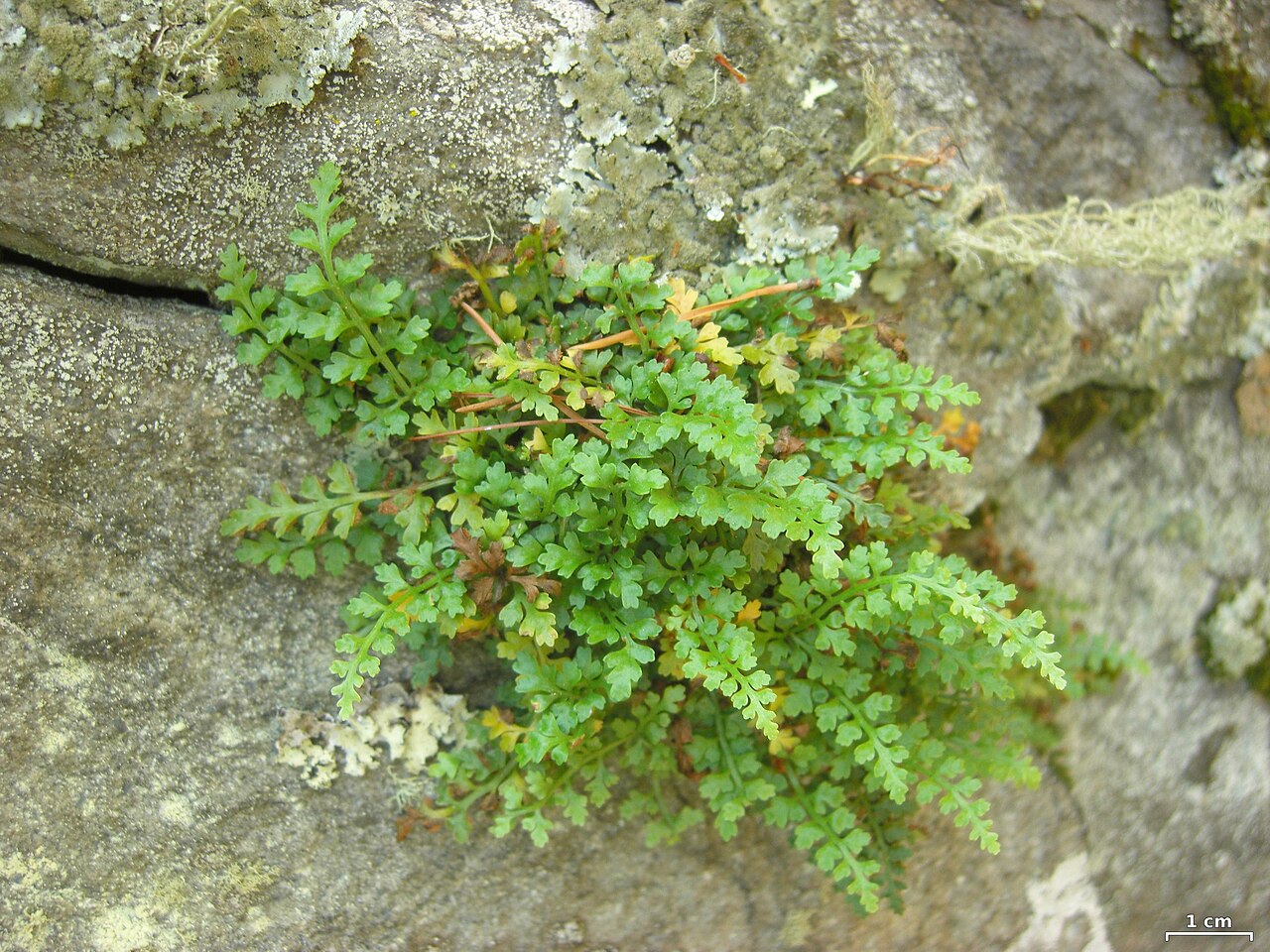
An evergreen fern that forms small, dense tufts from a short, creeping rhizome wedged into rock crevices. Fronds are usually 2 to 8 inches long and spreading or drooping. Old fronds persist at the base of the tuft.
Leaves
The fronds are lance-shaped to narrowly triangular, once- to twice-divided into small, toothed or lobed segments, giving a lacy look. They are a distinctive dull bluish-green, somewhat thick and smooth. The stalk (stipe) is dark brown and shiny near the base and turns green above, and is about as long as the leafy blade or a bit shorter.
Flowers
Like all ferns, it has no flowers. It reproduces by spores.
Fruit & Seeds
Spores are produced in short, narrow sori along the veins on the undersides of the segments, each covered at first by a thin flap (indusium). The sori turn brown when ripe in summer and fall.
Look-alikes
Maidenhair spleenwort has narrow, once-divided fronds with tiny round leaflets and a dark stem throughout. Ebony spleenwort is taller and once-divided, with a dark stem and earlike lobes on the leaflets. Wall-rue (A. ruta-muraria) grows on limestone and has fan-shaped segments. Bradley’s spleenwort (A. bradleyi), a hybrid-derived species with mountain spleenwort as a parent, has a dark stem running into the blade and once-divided fronds with lobed leaflets.
Quick Facts
| Scientific Name | Asplenium montanum Willd. |
| Family | Aspleniaceae (spleenwort family) |
| Plant Type | Small evergreen rock fern |
| Mature Height | 2–8 in |
| Mature Spread | 4–8 in |
| Growth Rate | Slow |
| Sun Exposure | Part shade to full shade |
| Water Needs | Medium; moist crevices that never stay waterlogged |
| Soil Type | Crevices in acidic sandstone, granite, gneiss and schist |
| Soil pH | Acidic (about 4.5–6.0) |
| Bloom Time | None (fern); spores in summer and fall |
| Flower Color | None |
| Fall Color | Evergreen |
| Fruit | None; spores in linear sori |
| Deer Resistant | Yes; rarely browsed and usually out of reach |
| USDA Hardiness Zones | 4–8 |
Native Range
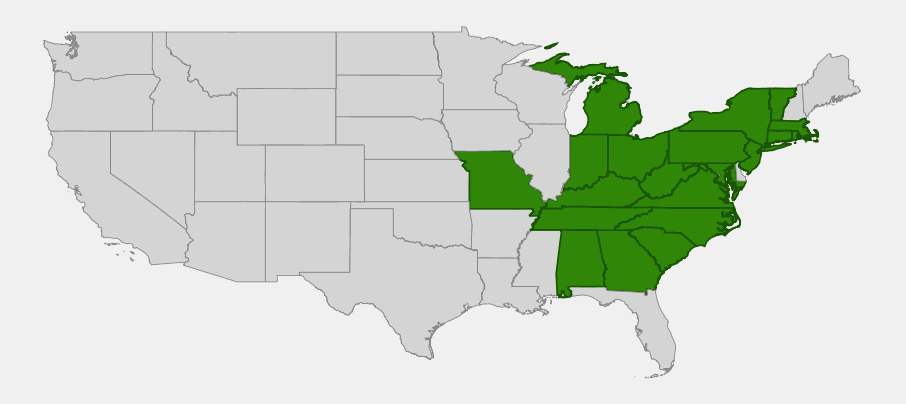
Mountain spleenwort is native to the eastern United States, and its range follows the Appalachian Mountains and nearby uplands. USDA PLANTS lists it in 20 states. It is most common in the southern and central Appalachians, from Georgia, Alabama, South Carolina and North Carolina north through Tennessee, Kentucky, Virginia, West Virginia, Maryland and Pennsylvania, and on the sandstone cliffs of the Cumberland Plateau and southern Ohio.
Farther north it is scattered on acidic cliffs in New Jersey, New York and southern New England (Connecticut, Rhode Island, Massachusetts and southern Vermont), and to the west it reaches southern Indiana. Missouri has a small, isolated set of records from sandstone bluffs, and the Michigan record is a single 19th-century collection, so both are best regarded as outlying records. It is considered rare in several states at the edges of its range.
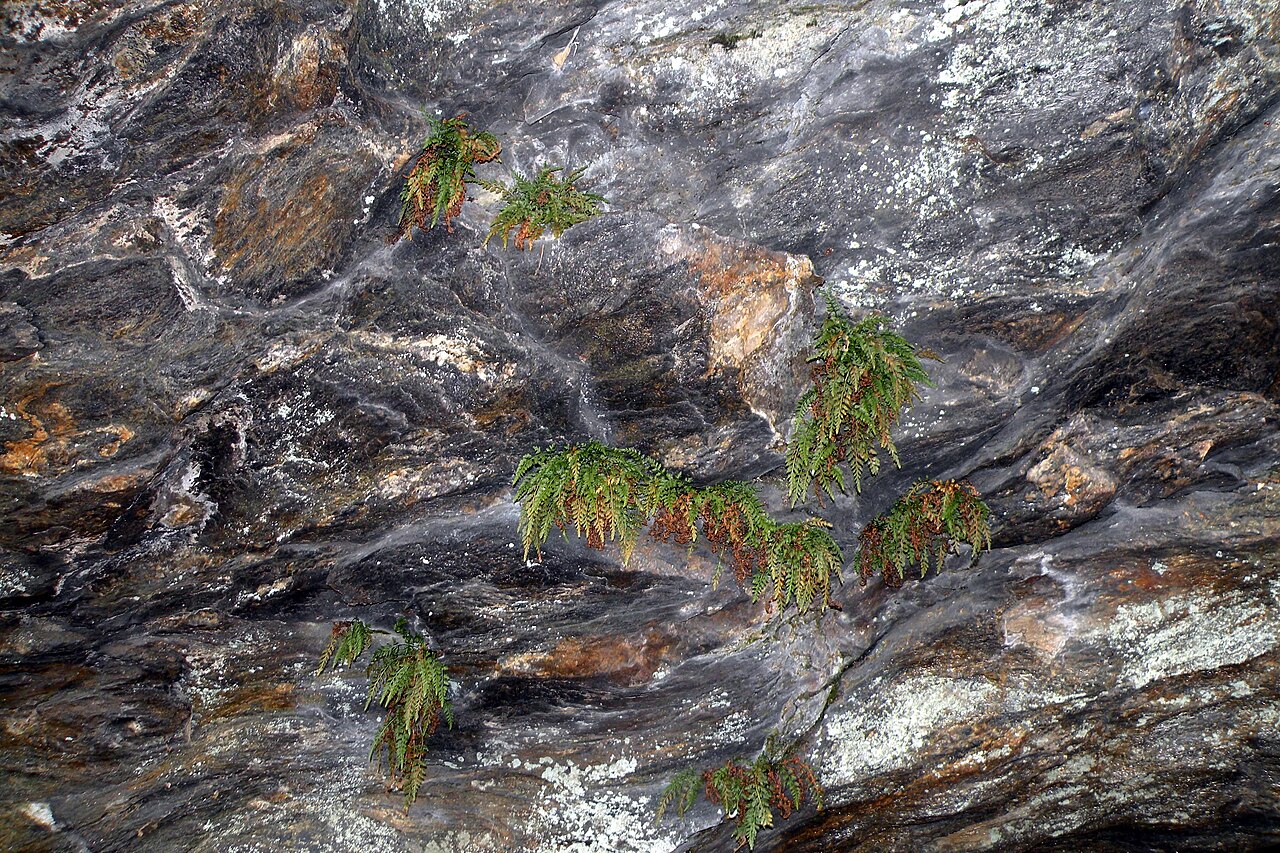
Its habitat is always rock: shaded, moist crevices in cliffs, ledges, rock outcrops and boulders, often in gorges and along streams. It nearly always grows on acidic, non-calcareous rock, unlike limestone ferns such as wall-rue.
📋 Regional plant lists featuring Mountain Spleenwort: Alabama, Georgia & Mississippi · Connecticut, Massachusetts & Rhode Island · New Hampshire, Maine & Vermont · Ohio & Indiana · Kentucky & Tennessee · Illinois, Iowa & Missouri · North & South Carolina · New York, Pennsylvania & Northern New Jersey · Delaware, Southern New Jersey & Long Island · Maryland, Virginia & West Virginia
Growing & Care Guide
Mountain spleenwort is a challenging fern for gardeners and is seldom sold. It can be grown by fern enthusiasts in a shaded crevice garden, a stone wall or a trough built with acidic rock, using spore-grown or nursery-propagated plants only. Never pry plants from cliffs: they rarely survive, and cliff communities recover very slowly.
Light
Part to full shade. A spot with bright indirect light or morning sun and shade in the afternoon works best. Hot sun scorches the fronds.
Soil & Water
Plant it in a narrow crevice between acidic stones such as sandstone or granite, packed with a gritty, acidic mix of coarse sand, fine gravel and a little leaf mold. The roots should stay cool and slightly moist but never soggy. Avoid lime, concrete and limestone, which it does not tolerate.
Planting Tips
Wedge a small plant into a vertical or steep crevice so water drains away from the crown, and firm the gritty mix around the roots. A north-facing stone wall or a rock garden with tight joints imitates its native cliffs.
Pruning & Maintenance
Little care is needed. Remove dead fronds gently in spring. Keep leaves and debris from smothering the small tufts, and water in long dry spells.
Propagation
Ferns like this one are propagated from spores, which are sown on a sterile, gritty medium and kept humid until the tiny gametophytes and young ferns develop, a process that takes many months. Small clumps of nursery plants can sometimes be divided carefully.
Landscape Uses
- Crevice and rock gardens: a tiny evergreen fern for shaded crevices in acidic stone
- Stone walls: tucked into the joints of a shaded dry-stone wall
- Fern collections: an Appalachian specialist for enthusiasts
- Troughs: a miniature fern for shaded alpine troughs with acidic rock
- Wild cliff communities: best admired on shaded cliffs and gorges in the Appalachians
Wildlife & Ecological Value
Mountain spleenwort is a small but important member of the plant community that lives on shaded Appalachian cliffs.
For Pollinators
As a fern, it has no flowers and does not feed pollinators.
For Birds
It has little direct value to birds, but cliff habitats with ferns and mosses are used by birds such as eastern phoebes, which nest on rock ledges.
For Mammals
It is rarely eaten. Small mammals such as the Allegheny woodrat use the rocky crevices and ledges where it grows.
Ecosystem Role
Mountain spleenwort helps colonize bare acidic rock, building small pockets of organic matter in crevices. It is also a key parent species in the Appalachian spleenwort complex: crosses with ebony spleenwort and walking fern produced Bradley’s spleenwort, lobed spleenwort and several sterile hybrids, which botanists have studied for over a century.
Cultural & Historical Uses
Carl Ludwig Willdenow described mountain spleenwort in 1810. The species name montanum means “of mountains”, and the genus name Asplenium comes from the Greek for “without spleen”, from an old belief that spleenworts could cure ailments of the spleen.
In the 20th century, the American botanists Warren H. Wagner Jr. and others used the Appalachian spleenworts to show how new fern species can arise from hybrids that double their chromosomes. Mountain spleenwort, ebony spleenwort and walking fern are the three “parent” species of this famous complex, sometimes called the Appalachian Asplenium complex.
Because it lives on cliffs, mountain spleenwort is vulnerable to rock climbing, quarrying and trampling at popular overlooks. Staying on trails and keeping climbing routes off fern-rich ledges helps protect it.
Frequently Asked Questions
Where does mountain spleenwort grow?
On shaded, moist crevices in acidic rock cliffs and ledges, mostly in the Appalachian Mountains and nearby uplands from Georgia and Alabama to southern New England.
Can I grow mountain spleenwort in my garden?
It is possible but challenging. Use a nursery-propagated or spore-grown plant, wedge it into a shaded crevice of acidic stone with a gritty mix, and keep it slightly moist. Never collect it from the wild.
Is mountain spleenwort evergreen?
Yes. Its small, bluish-green fronds stay green through the winter.
How do I tell it from maidenhair spleenwort?
Maidenhair spleenwort has narrow fronds with tiny round leaflets and a dark stem throughout. Mountain spleenwort has lacy, more divided, bluish-green fronds and a stem that is dark only near the base.
Does it grow on limestone?
Almost never. Mountain spleenwort is a specialist of acidic rock such as sandstone, granite and schist.

Looking for a nursery that carries Mountain Spleenwort?
Browse our native plant nursery directory: Alabama · Connecticut & Georgia · Indiana · Kentucky, Maryland, Massachusetts, Michigan & Missouri · New Jersey, New York, North Carolina & Ohio · Pennsylvania, Rhode Island, South Carolina, Tennessee, Vermont & Virginia · West Virginia

