
White Fiesta Flower (Pholistoma membranaceum)
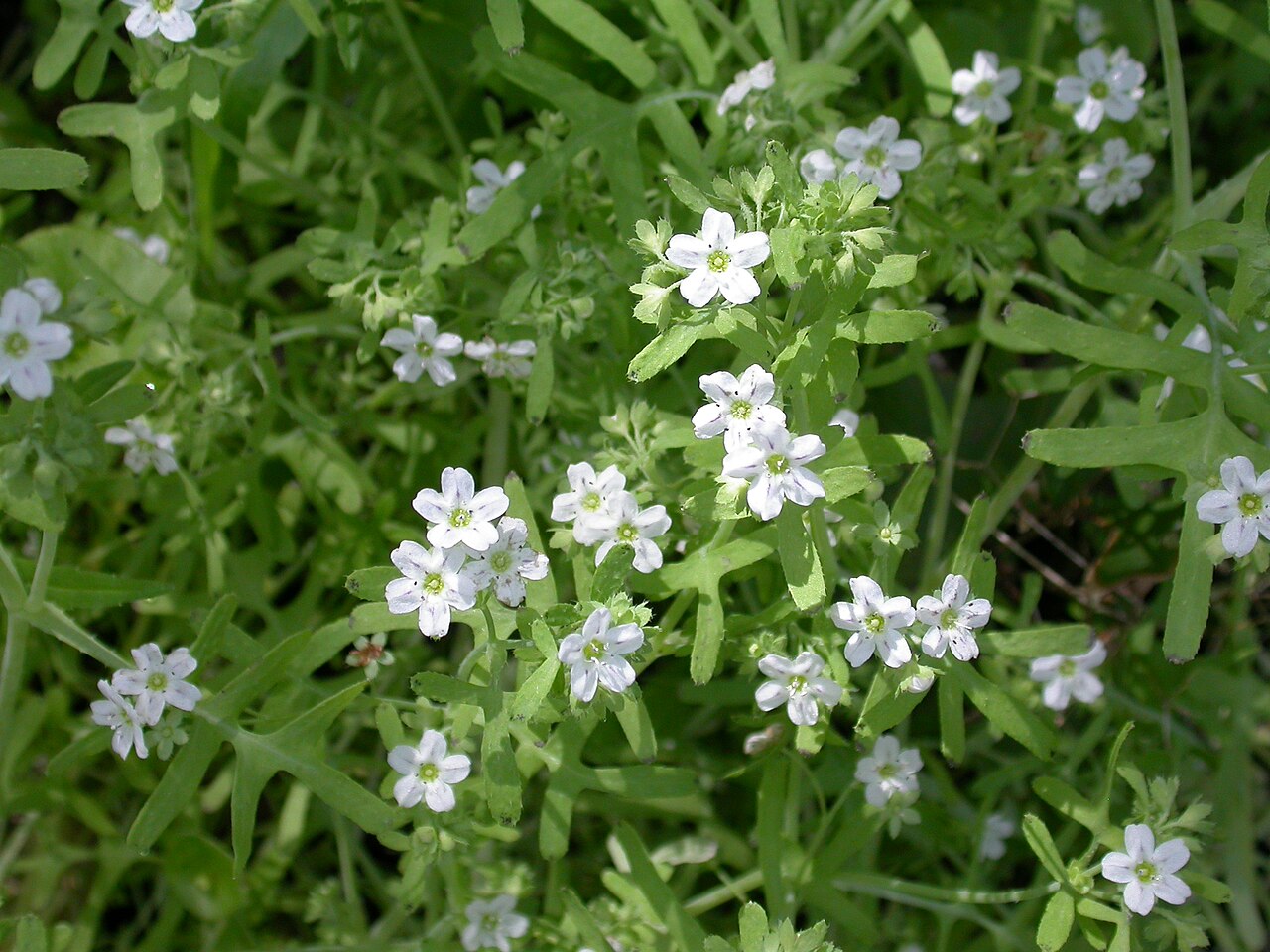
Pholistoma membranaceum, known as White Fiesta Flower (USDA: white fiestaflower), is a sprawling spring annual of California and the Mojave Desert edge. It belongs to the borage family (Boraginaceae; formerly the waterleaf family, Hydrophyllaceae) and is a close relative of baby blue eyes. It was once placed in Nemophila, as Nemophila membranacea.
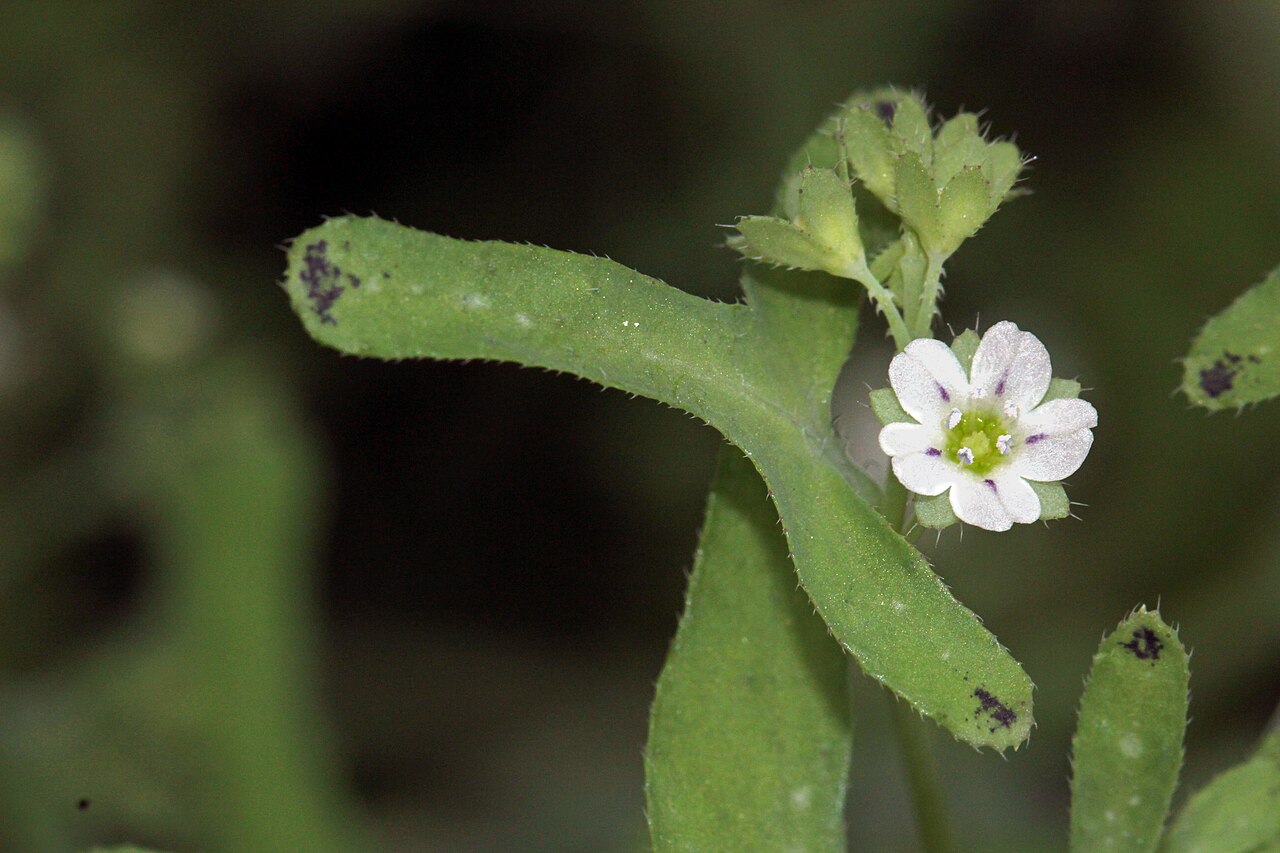
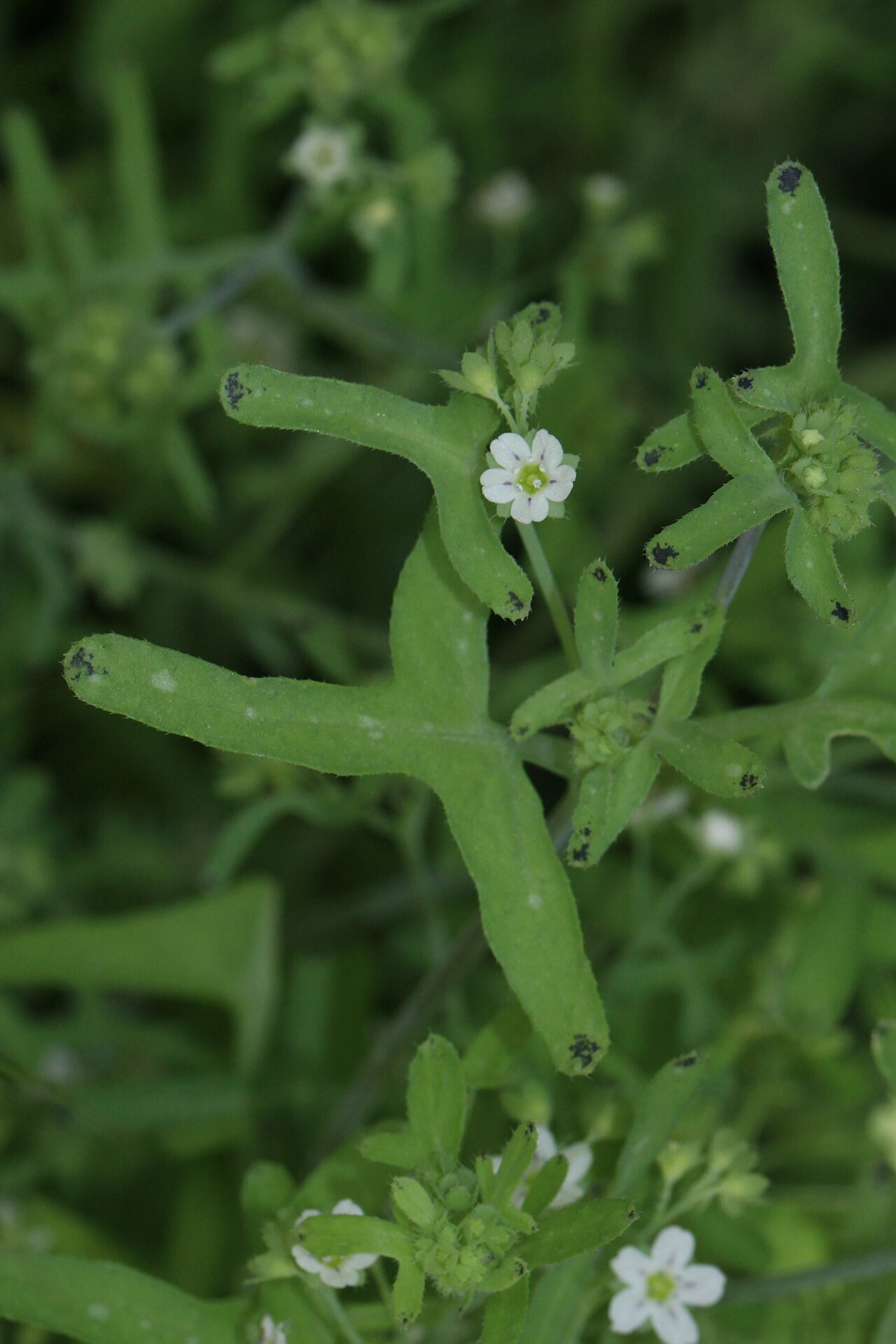
Its brittle, somewhat fleshy stems are lined with tiny backward-pointing prickles that let it scramble over other plants and shrubs, sometimes forming tangles up to 3 feet across. The leaves are deeply cut into lobes and have winged stalks. From February to May it is covered with small, white, bowl-shaped flowers less than 1/2 inch wide, usually with a small purple spot or streak on each of the five lobes.
White fiesta flower is a plant of shaded canyons, washes, coastal bluffs and the shelter of shrubs. It is not common in gardens, but seed is occasionally available, and it is a lovely addition to a wild, shady corner or under native shrubs in a dry California garden. Its larger cousin, fiesta flower (Pholistoma auritum), has larger, lavender to blue-violet flowers.
Identification
Look for a sprawling, prickly-stemmed annual in late winter and spring, with deeply lobed, slightly fleshy leaves and many small white flowers with purple spots on the lobes, usually under shrubs or in shaded washes and canyons.
Growth Habit
White fiesta flower is a winter annual that germinates after fall or winter rains, grows quickly and dies by late spring or early summer. Its stems are succulent, brittle, angled and up to about 3 feet long, branching freely. Small, hooked prickles on the stem angles help it clamber over and through other plants.
Leaves
The leaves are 1 to 4 inches long and deeply cut (pinnately lobed) into 5 to 13 narrow to oblong segments. The leaf stalks are winged and often clasp the stem. The leaves are somewhat fleshy and covered with bristly hairs.
Flowers
Flowers appear from about February to May in loose clusters of 2 to 10. Each flower is bowl-shaped, about 1/4 to 3/8 inch across, white, usually with a purple spot or streak near the tip of each of the five lobes and a greenish center. The sepals are short, with small reflexed appendages between them, a feature of the genus.
Fruit
The fruit is a small, round capsule about 1/4 inch across, usually with one or two seeds. The seeds are pitted and lie dormant in the soil until the next rainy season.
Look-alikes
Fiesta flower (Pholistoma auritum) has the same scrambling, prickly stems but much larger (1/2 to 1 inch), lavender to blue-violet flowers. White nemophila and other small white Nemophila species lack the hooked prickles and winged leaf stalks. Bedstraws (Galium) also cling with hooked prickles, but have whorled leaves and tiny four-lobed flowers.
Quick Facts
| Scientific Name | Pholistoma membranaceum (syn. Nemophila membranacea) |
| Family | Boraginaceae (borage family; formerly Hydrophyllaceae) |
| Plant Type | Sprawling winter annual |
| Mature Height | 6–18 in (stems sprawl to 3 ft) |
| Mature Spread | 1–3 ft |
| Growth Rate | Fast |
| Sun Exposure | Part shade; tolerates sun in cool coastal areas |
| Water Needs | Low; relies on winter and spring rain |
| Soil Type | Sandy, gravelly or loamy soils, often under shrubs |
| Soil pH | Neutral to slightly alkaline (about 6.5–8.0) |
| Bloom Time | February–May |
| Flower Color | White with purple spots |
| Fall Color | None; dies in late spring |
| Fruit | Small round capsule with 1–2 seeds |
| Deer Resistant | Moderate; prickly stems deter some browsing |
| USDA Hardiness Zones | Annual (grows in zones 8–11 climates) |
Native Range
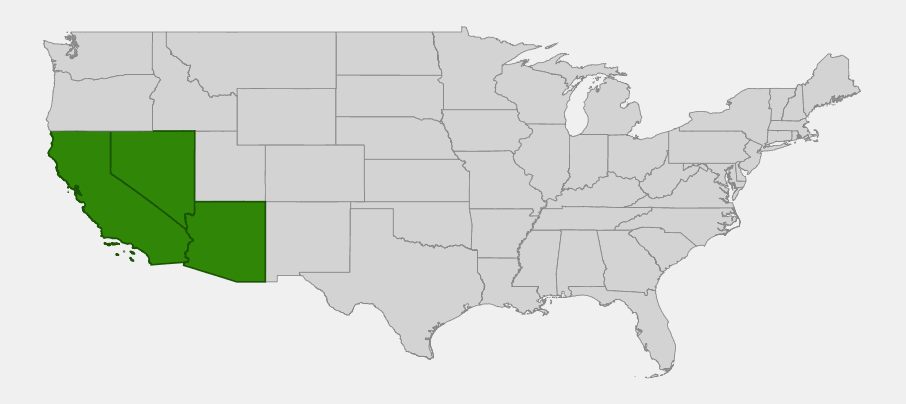
White fiesta flower grows from central California south into Baja California, Mexico, and east to the edges of the Mojave Desert. USDA PLANTS lists it as native in California, Nevada and Arizona. USDA also records it from Oregon, based on a single 1936 herbarium specimen from Coos County with no locality given, far outside its known range; this page follows the regional floras and treats its native range as California, southern Nevada and northwestern Arizona.
In California it is widespread in the Coast Ranges from about the San Francisco Bay Area south, in the Transverse and Peninsular Ranges, the southern Sierra Nevada foothills, the Channel Islands and the western and southern deserts, including Anza-Borrego. In Nevada and Arizona it is found in the Mojave Desert near Lake Mead and in the Black Mountains and Wilson Ridge of Mohave County.
It grows from near sea level to about 4,500 feet in many habitats: shaded canyons and ravines, coastal bluffs and dunes, coastal sage scrub, chaparral, oak woodland and desert washes. In dry areas it is usually found in the shade of shrubs and rocks, where soil stays moist longer.
📋 Regional plant lists featuring White Fiesta Flower: Arizona & New Mexico · California & Nevada
Growing & Care Guide
White fiesta flower is an easy annual to grow from seed in mild-winter climates. Sow it once, and it often returns from seed in later years where it is happy.
Light
Part shade is best, such as under oaks or native shrubs or on the north side of a wall. In cool coastal gardens it tolerates more sun.
Soil & Water
It grows in most well-drained soils, from sand to loam. Rely on winter rain; in a dry winter, water occasionally to keep seedlings growing. Stop watering once it sets seed in late spring.
Planting Tips
Scatter seed in fall, just before or with the first rains, and rake it lightly into the soil. Let it scramble through low shrubs and other annuals, as it does in the wild. It is best in winter-rain climates such as coastal and southern California.
Pruning & Maintenance
No pruning is needed. Leave the dead plants until seeds have dropped to allow reseeding, then pull them out. Handle with gloves, since the hooked prickles cling to skin and clothing.
Propagation
Grow only from seed, sown in fall where it is to grow. It does not transplant well.
Landscape Uses
- Shady native gardens: spring flowers under oaks and shrubs
- Wildflower plantings: pairs with other native annuals
- Habitat gardens: early nectar for small native bees
- Canyon and slope restoration: fills gaps after fire or disturbance
- Educational gardens: a desert and coastal annual with a short, showy life cycle
Wildlife & Ecological Value
Like many California annuals, white fiesta flower provides early-season flowers in years with good rain.
For Pollinators
Small native bees, flies and other small insects visit the flowers for nectar and pollen. The purple spots may act as guides to the center of the flower.
For Birds
Seed-eating birds such as sparrows may eat the seeds, though they are few and small.
For Mammals
Small mammals may eat the seeds, and the plants offer cover under shrubs. The prickly stems are not a favored food for deer.
Ecosystem Role
As a winter annual, it grows during the rainy season, adds organic matter to the soil when it dies, and leaves a seed bank that keeps it in the plant community through dry years.
Cultural & Historical Uses
The genus name Pholistoma comes from the Greek for “scaly mouth,” referring to small scales inside the flower tube. The species name membranaceum means “thin, like a membrane,” perhaps a reference to the thin petals.
Fiesta flowers were once included in the genus Nemophila, with baby blue eyes. The genus Pholistoma was named in the 19th century, but for many years botanists kept these plants in Nemophila. Today they are treated as a separate genus, recognized by their prickly, scrambling stems and the scales inside the flower.
The cheerful name “fiesta flower” is a modern common name for this genus. The two California species are favorites of wildflower watchers in spring, especially in canyons and parks such as Anza-Borrego Desert State Park and Pinnacles National Park.
Frequently Asked Questions
Is white fiesta flower an annual?
Yes. It germinates after winter rains, blooms from February to May and dies by early summer, surviving the dry season as seed.
How is it different from fiesta flower?
Fiesta flower (Pholistoma auritum) has much larger, lavender to blue-violet flowers. White fiesta flower has smaller, white flowers with purple spots.
Is white fiesta flower prickly?
Its stems and leaf stalks carry small, hooked prickles that cling to skin and clothing, but they are not dangerous.
Can I grow white fiesta flower in my garden?
Yes, in mild-winter climates. Sow seed in fall in part shade, under shrubs or trees, and let it reseed.
Where does white fiesta flower grow?
In California, southern Nevada, northwestern Arizona and Baja California, in canyons, washes, coastal scrub and desert scrub, usually in the shade of shrubs.

Looking for a nursery that carries White Fiesta Flower?
Browse our native plant nursery directory: Arizona · California · Nevada

