
Fendler’s Ceanothus (Ceanothus fendleri)
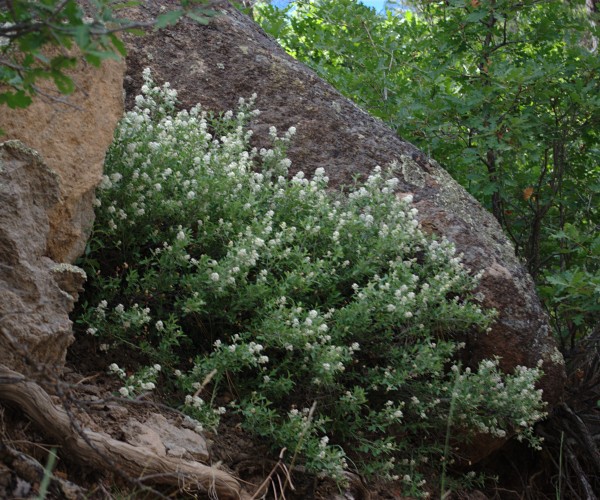
Ceanothus fendleri, known as Fendler’s Ceanothus, Fendler’s buckbrush or mountain lilac, is a low, spreading, thorny shrub of the buckthorn family (Rhamnaceae) native to the mountains of the American Southwest and the southern Rocky Mountains. It usually grows 1 to 3 feet tall, with stiff, gray-green branches ending in sharp spines, small gray-green leaves, and from late spring into summer, fluffy clusters of tiny white flowers that perfume the pine forests where it grows.
It is one of the most common shrubs of the ponderosa pine and pinyon-juniper forests of Arizona, New Mexico and Colorado, and reaches north into Utah and Wyoming and south into the mountains of West Texas and northern Mexico. Like other ceanothus, it has root nodules with nitrogen-fixing bacteria, so it enriches poor, rocky soils and is often one of the first shrubs to return after fire.
Fendler’s ceanothus is a hardy, drought-tolerant native shrub for dry mountain and high-desert gardens, slopes and wildlife plantings. It is a favorite food of deer and elk, and its flowers attract many pollinators. Its spiny twigs make it useful as a low barrier, but plant it away from paths.
Identification
Look for a low, mounding, thorny shrub with small, three-veined, gray-green leaves and clusters of tiny white flowers at the branch tips in open pine or pinyon-juniper forest.
Growth Habit
It is a low, much-branched, spreading shrub, usually 1 to 3 feet tall (occasionally to 6 feet) and 2 to 5 feet wide. The young branches are grayish and finely hairy, and many short side twigs end in a stiff, sharp spine. Plants are semi-evergreen: some leaves persist through mild winters.
Leaves
The leaves are alternate, small, about 1/2 to 1 inch long, elliptic to oblong, with smooth edges and three prominent veins running from the base. They are gray-green above and paler and silky-hairy beneath.
Flowers
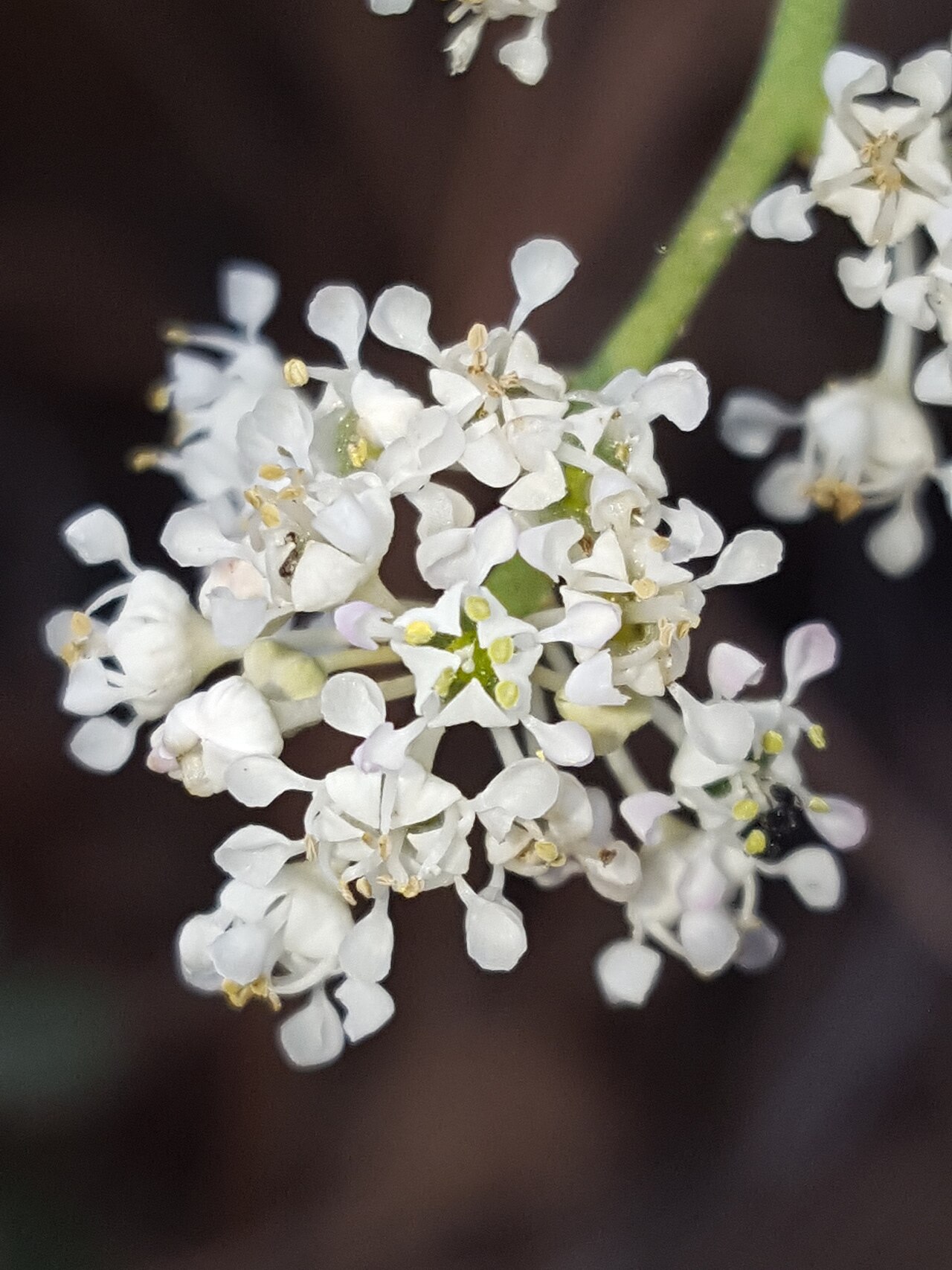
The flowers are tiny, about 1/8 inch across, white or rarely tinged pink, in small, rounded clusters 1 to 2 inches long at the ends of short side branches. Each flower has five hooded petals on slender stalks. They bloom from about May to August, depending on elevation, and have a sweet fragrance.
Fruit
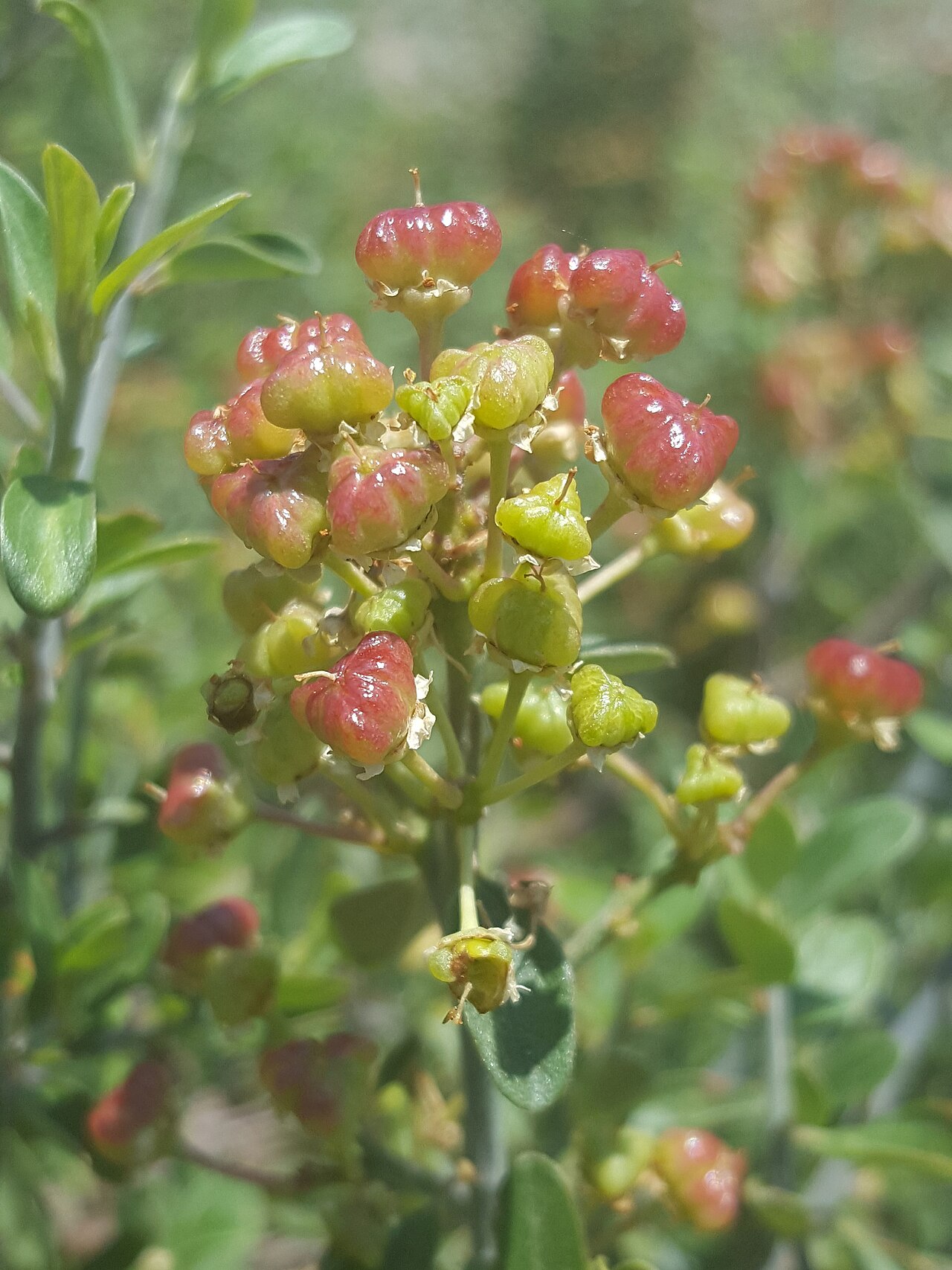
The fruit is a small, rounded, three-lobed capsule about 1/4 inch across that ripens from green to reddish and then brown in late summer. When dry, it splits open forcefully and throws its three seeds away from the plant.
Look-alikes
New Jersey tea (Ceanothus americanus) of the East and Great Plains has no thorns and larger, toothed leaves. Snowbrush ceanothus (C. velutinus) of the northern Rockies has large, glossy, sticky, evergreen leaves. Desert ceanothus (C. greggii) has opposite, thick, toothed leaves. Creeping Oregon grape grows in the same forests but has holly-like leaflets and yellow flowers.
Quick Facts
| Scientific Name | Ceanothus fendleri |
| Family | Rhamnaceae (buckthorn family) |
| Plant Type | Low, thorny, semi-evergreen shrub |
| Mature Height | 1–3 ft (occasionally to 6 ft) |
| Mature Spread | 2–5 ft |
| Growth Rate | Moderate |
| Sun Exposure | Full sun to part shade |
| Water Needs | Low; drought tolerant |
| Soil Type | Rocky, gravelly or sandy, well-drained |
| Soil pH | Slightly acidic to alkaline (about 6.0–8.0) |
| Bloom Time | May–August |
| Flower Color | White, rarely pinkish |
| Fall Color | None; semi-evergreen |
| Fruit | Small three-lobed capsule, green to red |
| Deer Resistant | No; heavily browsed by deer and elk |
| USDA Hardiness Zones | 4–8 |
Native Range
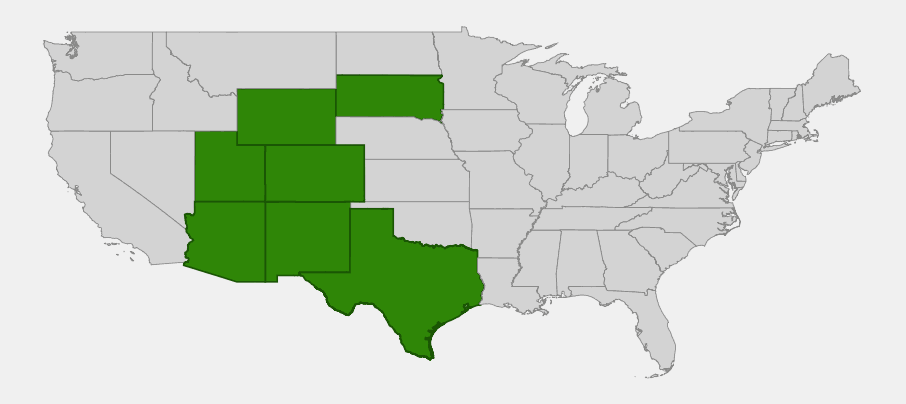
Fendler’s ceanothus is native to the southwestern United States and northern Mexico. USDA PLANTS lists it as native in Arizona, Colorado, New Mexico, South Dakota, Texas, Utah and Wyoming. It is most common in the mountains and high plateaus of Arizona, New Mexico and Colorado, including the Mogollon Rim, the Colorado Plateau, the Sangre de Cristo and San Juan Mountains and the Colorado Front Range foothills.
In Texas it grows in the Guadalupe and Davis Mountains of the Trans-Pecos. In Utah it occurs mainly in the southern and eastern parts of the state. Records from southern Wyoming and the Black Hills of South Dakota are few and lie at the northern edge of its range. It also grows in the Sierra Madre Occidental of northern Mexico.
It grows in open ponderosa pine forests, pinyon-juniper and Gambel oak woodlands, mixed conifer forests, forest openings, rocky slopes and roadsides, mostly from about 5,000 to 10,000 feet. It thrives after fire and other disturbances that open the canopy.
📋 Regional plant lists featuring Fendler’s Ceanothus: Montana & Wyoming · Utah & Western Colorado · Arizona & New Mexico · South & West Texas · North Dakota, South Dakota & Western Minnesota
Growing & Care Guide
Fendler’s ceanothus is a tough, low-maintenance shrub for dry, sunny gardens at mid to high elevations in the Southwest and Rockies. Its main needs are sharp drainage and protection from browsing while it establishes.
Light
Full sun to part shade. It flowers most in sun and grows well in the dappled shade of open pines.
Soil & Water
Plant in well-drained rocky, gravelly or sandy soil. It tolerates poor, low-nitrogen soils because it fixes its own nitrogen. Water regularly the first summer, then only during long droughts. Heavy, wet soil and frequent summer watering in hot, low-elevation gardens can cause root rot.
Planting Tips
Plant container-grown shrubs in spring or early fall, 3 to 4 feet apart. Protect young plants from deer, elk and rabbits with cages until they are established. It combines well with native grasses, penstemons and other dry-woodland shrubs.
Pruning & Maintenance
Little pruning is needed. Remove dead branches in early spring, and wear gloves because of the spiny twigs. Old plants can be rejuvenated by cutting them back hard; they resprout from the base, as they do after fire.
Propagation
Seeds have a hard coat and need heat or scarification, followed by cold, moist stratification for about 1 to 3 months. Pour hot water over seeds and let them soak overnight before stratifying. Plants can also be grown from semi-hardwood cuttings in summer.
Landscape Uses
- Dry mountain gardens: a low, flowering shrub for pine and pinyon country
- Slopes and erosion control: spreading roots hold rocky soil
- Wildlife gardens: browse for deer and food for butterflies and bees
- Restoration: recolonizes burned and disturbed forest sites and adds nitrogen
- Low barriers: spiny branches discourage foot traffic
Wildlife & Ecological Value
Fendler’s ceanothus is an important wildlife plant in Southwestern and Rocky Mountain forests, providing browse, nectar, seeds and cover.
For Pollinators
The fragrant flowers attract many native bees, flies, beetles and butterflies. Ceanothus species are host plants for the caterpillars of several butterflies, including azures, the hedgerow hairstreak and the Pacuvius duskywing.
For Birds
Quail, wild turkeys and other birds eat the seeds, and small birds nest and shelter in the dense, spiny branches.
For Mammals
It is an important browse plant for mule deer and elk, especially in spring and winter, and is also eaten by bighorn sheep, rabbits and livestock. Small mammals eat the seeds.
Ecosystem Role
Its roots host nitrogen-fixing Frankia bacteria, which add nitrogen to forest soils. After fire, it resprouts from the root crown and seeds stored in the soil germinate in large numbers, helping forests recover.
Cultural & Historical Uses
The species is named for Augustus Fendler, a German-born plant collector who explored New Mexico in 1846 and 1847 and sent his specimens to Asa Gray at Harvard. Gray described the species, and many other Southwestern plants bear Fendler’s name.
The flowers of many ceanothus species contain saponins and lather when crushed in water, so they were used as soap by Indigenous peoples and settlers, which led to the name soap bush for some species. The leaves of some ceanothus, such as New Jersey tea, were used as a tea substitute.
Fendler’s ceanothus is not toxic, but it has no common modern culinary use. It is valued today mainly by land managers for wildlife browse and post-fire recovery, and by gardeners in the Southwest as a hardy native flowering shrub.
Frequently Asked Questions
Is Fendler’s ceanothus deer resistant?
No. It is a favorite browse plant for deer and elk. Protect young plants until they are well established.
Does Fendler’s ceanothus have thorns?
Yes. Many of its short side twigs end in sharp spines.
How tall does Fendler’s ceanothus grow?
Usually 1 to 3 feet tall and 2 to 5 feet wide, occasionally to 6 feet.
Does Fendler’s ceanothus fix nitrogen?
Yes. Its roots form nodules with Frankia bacteria, which fix nitrogen from the air.
Where does Fendler’s ceanothus grow?
Mainly in the mountains of Arizona, New Mexico and Colorado, with smaller populations in Utah, West Texas, Wyoming, the Black Hills of South Dakota and northern Mexico.

Looking for a nursery that carries Fendler’s Ceanothus?
Browse our native plant nursery directory: Arizona · Colorado · New Mexico · South Dakota, Texas & Utah · Wyoming

