
Swamp Onion (Allium validum)
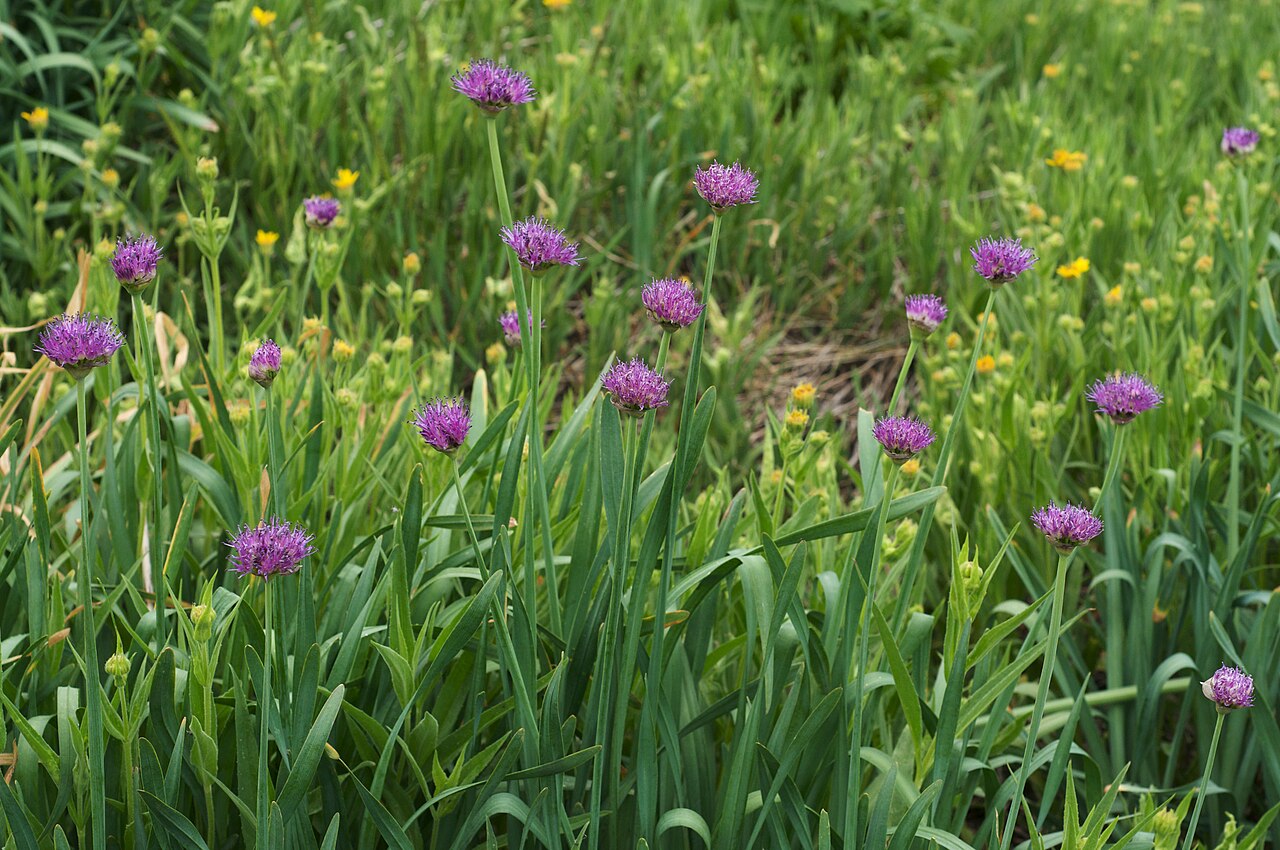
Allium validum, known as Swamp Onion or Pacific onion, is a robust wild onion of wet mountain meadows in the western United States and southern British Columbia. It is one of the tallest native onions in North America, sending up stout flowering stems 1 to 3 feet tall from clumps of long, flat leaves, each stem topped with a rounded head of rose-pink to purplish, occasionally white, flowers in summer.
Unlike most western wild onions, which favor dry, rocky ground, swamp onion grows with its feet wet: in boggy meadows, along streams, around lakeshores and at seeps, often in large colonies at middle to high elevations. The species name validum means “strong” or “robust”, a fitting name for a plant that can stand waist high in a subalpine meadow. Like other onions, every part of the plant smells of onion when crushed.
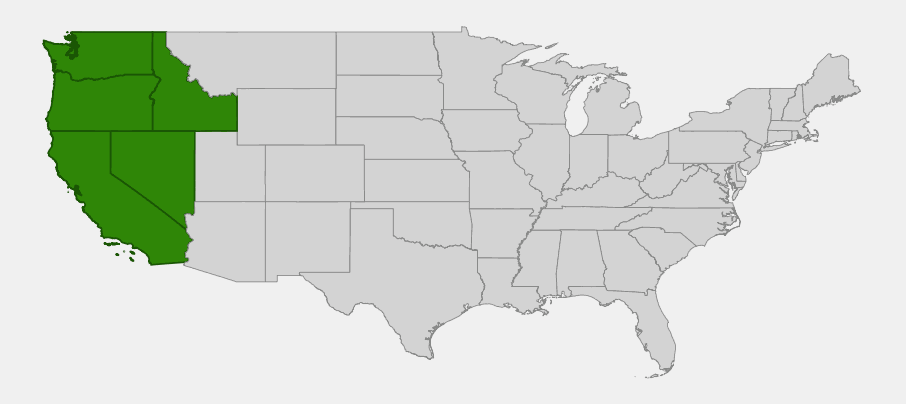
It ranges from the Sierra Nevada, Cascades and Klamath Mountains of California north through the mountains of Oregon and Washington to southern British Columbia, and east to central Idaho and northern Nevada. This guide covers how to identify swamp onion, where it grows, how to grow it in a wet garden, and its value to wildlife.
Identification
Swamp onion is easy to recognize in its wet mountain habitat: look for tall clumps of flat, grass-like leaves that smell of onion, and stout stems with spiky, rose-pink flower heads standing above the meadow grasses and sedges.
Growth Habit
It is a clump-forming perennial that grows from several elongated bulbs attached to a short, thick rhizome, so plants spread slowly into dense patches. Flowering stems are usually 1 to 3 feet tall, stout, and somewhat angled or flattened toward the top.
Leaves
Each stem has several (usually three to six) flat, long, grass-like leaves, often a foot or more long and about 1/4 to 1/2 inch wide, with a keel along the underside. The leaves stay green through flowering, unlike many dry-country onions whose leaves wither before bloom.
Flowers
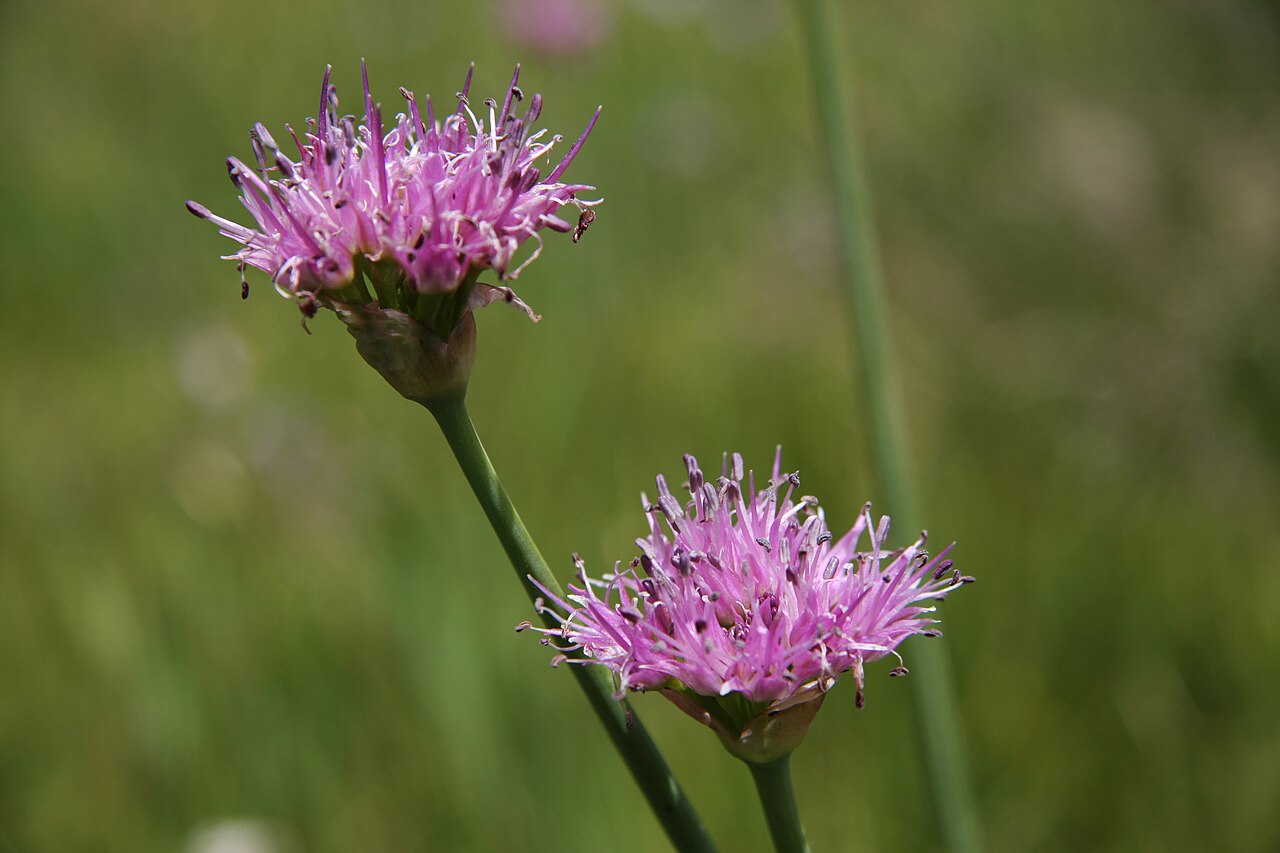
The flowers are borne in an upright, rounded umbel of roughly 15 to 40 flowers at the top of the stem. Each flower has six narrow, pointed tepals, rose pink to purplish or sometimes white, about 1/3 inch long. The stamens and style stick out well past the tepals, which gives the head a fuzzy, spiky look. Bloom time is summer, mainly July and August, depending on elevation and snowmelt.
Fruit & Seeds
After flowering, each flower forms a small, three-lobed capsule that splits open to release shiny black seeds in late summer and fall.
Smell
Crush a leaf or stem: a strong onion or garlic smell confirms you have an Allium. This is the single most useful test, because some poisonous plants of the same meadows look similar but have no onion smell.
Look-alikes
Meadow death camas (Toxicoscordion venenosum) also grows in wet mountain meadows and has grass-like leaves, but it has creamy white flowers in an elongated cluster and no onion smell; it is highly poisonous. Other western onions, such as Allium acuminatum, are much shorter, grow in dry, open ground and have leaves that wither by flowering time. Nodding onion has a drooping flower head rather than an upright one.
Quick Facts
| Scientific Name | Allium validum S. Watson |
| Family | Amaryllidaceae (onion subfamily; formerly placed in Liliaceae or Alliaceae) |
| Plant Type | Clump-forming perennial herb from rhizomatous bulbs |
| Mature Height | 1–3 ft in flower |
| Mature Spread | 6–12 in per clump; slowly forms colonies |
| Growth Rate | Moderate |
| Sun Exposure | Full sun to part shade |
| Water Needs | High; constantly moist to wet soil |
| Soil Type | Wet, organic or gravelly soils in meadows, stream banks and seeps |
| Soil pH | About 5.5–7.0 |
| Bloom Time | June–August (into September at high elevations) |
| Flower Color | Rose pink to purplish, occasionally white |
| Fall Color | Leaves turn yellow and die back in fall |
| Fruit | Small three-lobed capsule with black seeds |
| Deer Resistant | Generally avoided by deer because of its onion scent |
| USDA Hardiness Zones | 4–8 |
Native Range
Swamp onion is native to the mountains of western North America. USDA PLANTS lists it in California, Oregon, Washington, Idaho and Nevada, and in British Columbia in Canada. It is a plant of the high country: almost all populations are in mountain ranges, where snowmelt keeps meadows wet well into summer.
In California it grows through the Sierra Nevada, the southern Cascades and the Klamath and northern Coast Ranges. In Oregon it occurs in both the Cascades and Siskiyous and in the eastern mountains, including the Blue and Wallowa Mountains and the ranges of the southeastern high desert. In Washington it is known from the Olympic Mountains and the Cascades, and in Idaho from the central mountains. In Nevada it reaches the Carson Range near Lake Tahoe and the higher mountains of the north and center of the state.
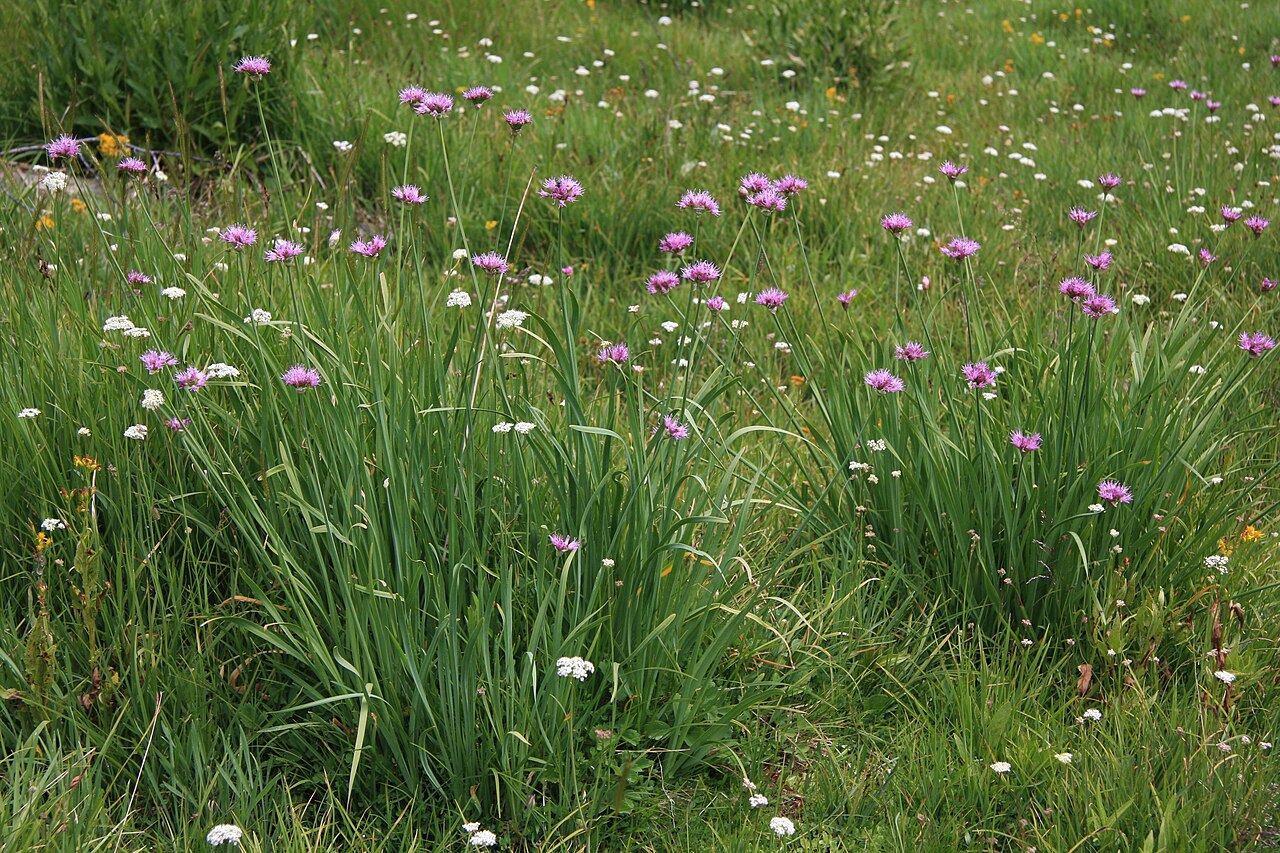
It grows in wet meadows, along streams and lakeshores, in bogs and at springs and seeps, from about 3,000 feet in the north to above 11,000 feet in the Sierra Nevada. It often forms large colonies among sedges, grasses and other meadow wildflowers in montane and subalpine zones.
📋 Regional plant lists featuring Swamp Onion: Idaho, Eastern Oregon & Eastern Washington · Western Oregon & Western Washington · California & Nevada
Growing & Care Guide
Swamp onion is a good choice for a wet spot in a mountain or cool-summer garden, such as a rain garden, pond edge or bog garden, where few other onions would survive. It is offered only occasionally by native plant nurseries and seed suppliers in the West, and it does best in regions with cool nights and reliable moisture.
Light
Give it full sun in cool, mountain or coastal climates. In hotter, lower-elevation gardens it appreciates afternoon shade.
Soil & Water
It needs soil that stays moist to wet through the growing season: the edge of a pond or stream, a low spot, or a lined bog bed. It tolerates seasonal saturation and gravelly or organic soils. It will not thrive in dry, summer-baked ground, so water regularly in summer if the soil dries out.
Planting Tips
Plant bulbs or container plants in fall or early spring, setting bulbs a few inches deep. Group several together for a show of flowers, and combine them with camas, monkeyflowers, marsh marigolds, sedges and rushes in a meadow-style planting.
Pruning & Maintenance
Little care is needed. Leave the seed heads standing if you want plants to self-sow, or cut them off to prevent spreading. Cut back the yellowed foliage in fall. Divide crowded clumps every few years in early spring or fall.
Propagation
Grow it from seed sown outdoors in fall, or cold-moist stratified for several weeks before spring sowing; seedlings take a few years to reach flowering size. Established clumps can be divided. Collect seed only in small amounts and only where permitted, and never dig plants from wild meadows.
Landscape Uses
- Rain gardens and pond edges: one of the few native onions that thrives in wet soil
- Wet meadow and bog gardens: tall summer color among sedges, camas and monkeyflowers
- Pollinator gardens: its nectar-rich flowers attract bees and butterflies
- Mountain meadow restoration: a native perennial for montane and subalpine wetland projects
- Edible native garden: leaves and bulbs have a strong onion flavor (harvest only from cultivated plants)
Wildlife & Ecological Value
Swamp onion adds abundant summer nectar to the mountain meadows where it grows, and its colonies are part of the dense, wet-meadow vegetation that shelters insects and other small wildlife.
For Pollinators
The open, nectar-rich flowers are visited by bumble bees and other native bees, as well as butterflies, flies and moths. In high meadows where the season is short, its midsummer bloom is an important food source.
For Birds
Meadow birds forage for insects among the clumps, and seed-eating birds may take some of the small black seeds in late summer.
For Mammals
The strong onion scent discourages most browsing, though bulbs and leaves may be eaten occasionally by rodents and other mammals.
Ecosystem Role
Its clumps help bind wet meadow and streambank soils, and its colonies indicate healthy, saturated meadow conditions. Meadow drying from erosion, channel incision or heavy grazing can reduce populations.
Cultural & Historical Uses
Wild onions were widely gathered as food by Indigenous peoples throughout the West, and swamp onion, with its large clumps and strong flavor, was among the wild onions eaten raw or cooked where it grew. The leaves and bulbs are edible and taste like a pungent green onion. Safety note: never eat a wild “onion” without crushing it to check for the onion smell, because poisonous death camas grows in the same meadows. Onions are also toxic to dogs and cats, and wild plants in protected areas should be left in place.
The species was described by Sereno Watson in the nineteenth century, from plants collected in the mountains of the West. The name validum is Latin for “strong” or “robust”, referring to its tall, stout stems compared with other western onions.
For hikers in the Sierra Nevada and Cascades, a meadow full of swamp onion in July is a familiar sight, and the onion smell of trampled plants along a wet trail often announces the plant before it is seen.
Frequently Asked Questions
Is swamp onion edible?
Yes, its leaves and bulbs are edible and taste strongly of onion. Be sure of the identification by the onion smell, since poisonous death camas grows in the same meadows, and harvest only from cultivated plants or where it is allowed.
Where does swamp onion grow?
It grows in wet mountain meadows, stream banks, lakeshores and seeps in California, Oregon, Washington, Idaho, Nevada and southern British Columbia, mostly from about 3,000 to over 11,000 feet.
How tall does swamp onion get?
Flowering stems usually reach 1 to 3 feet, making it one of the tallest wild onions in North America.
Can I grow swamp onion in my garden?
Yes, if you have a spot that stays moist to wet, such as a pond edge or rain garden, ideally in a cool-summer climate. It does poorly in dry soil.
When does swamp onion bloom?
It blooms in summer, mostly July and August, with the timing depending on elevation and when the snow melts.

Looking for a nursery that carries Swamp Onion?
Browse our native plant nursery directory: California · Idaho · Nevada · Oregon · Washington

