
Desert Unicorn-plant (Proboscidea althaeifolia)
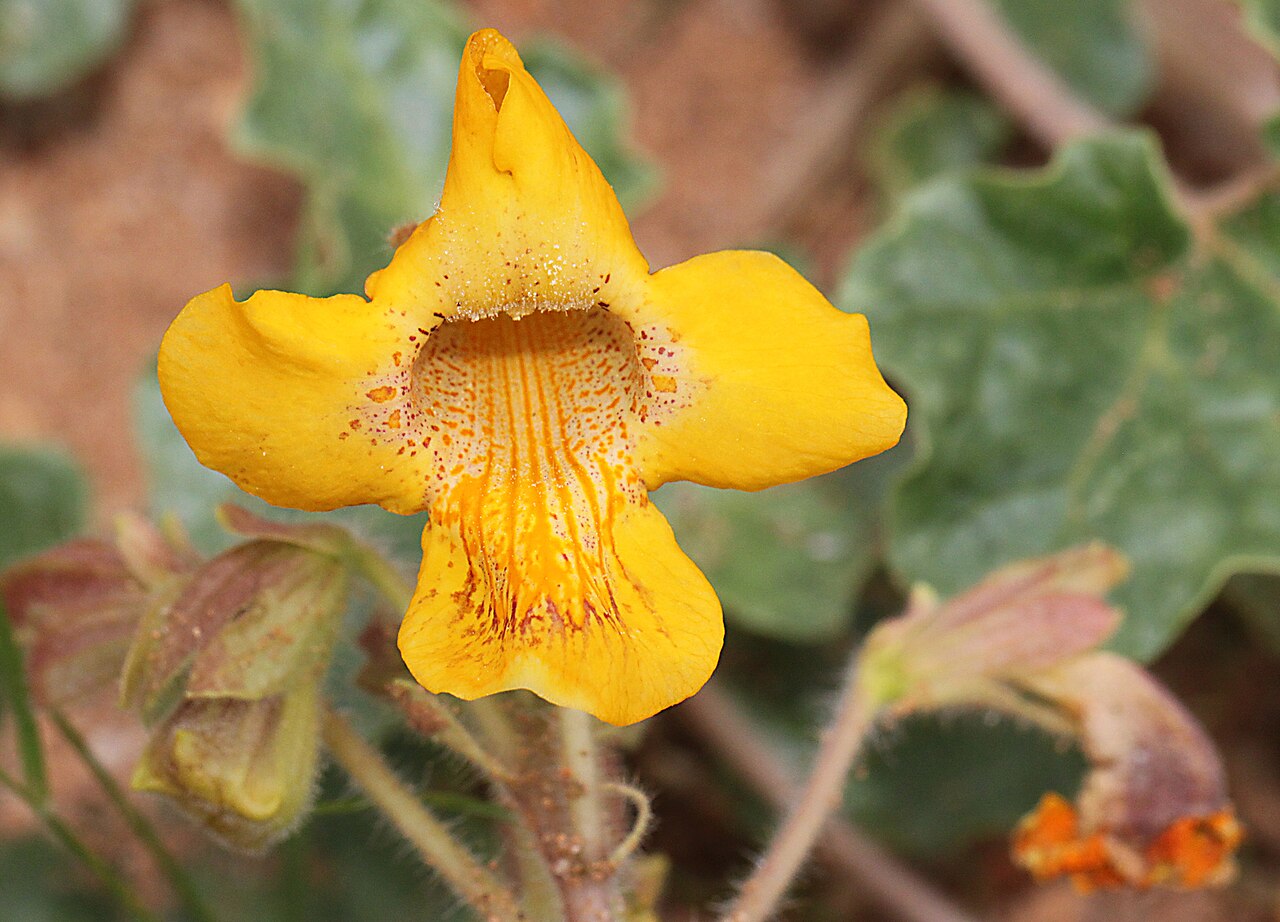
Proboscidea althaeifolia, known as Desert Unicorn-plant, yellow devil’s claw or yellow-flowered devil’s claw, is a low, sprawling wildflower of the sandy deserts of the Southwest. It grows from a thick, tuber-like root and comes to life with the summer monsoon rains, spreading its rounded, wavy leaves across the sand and opening large, fragrant yellow flowers marked with orange speckles and stripes. It is native from southern California east through Arizona and New Mexico to West Texas and south into Mexico.
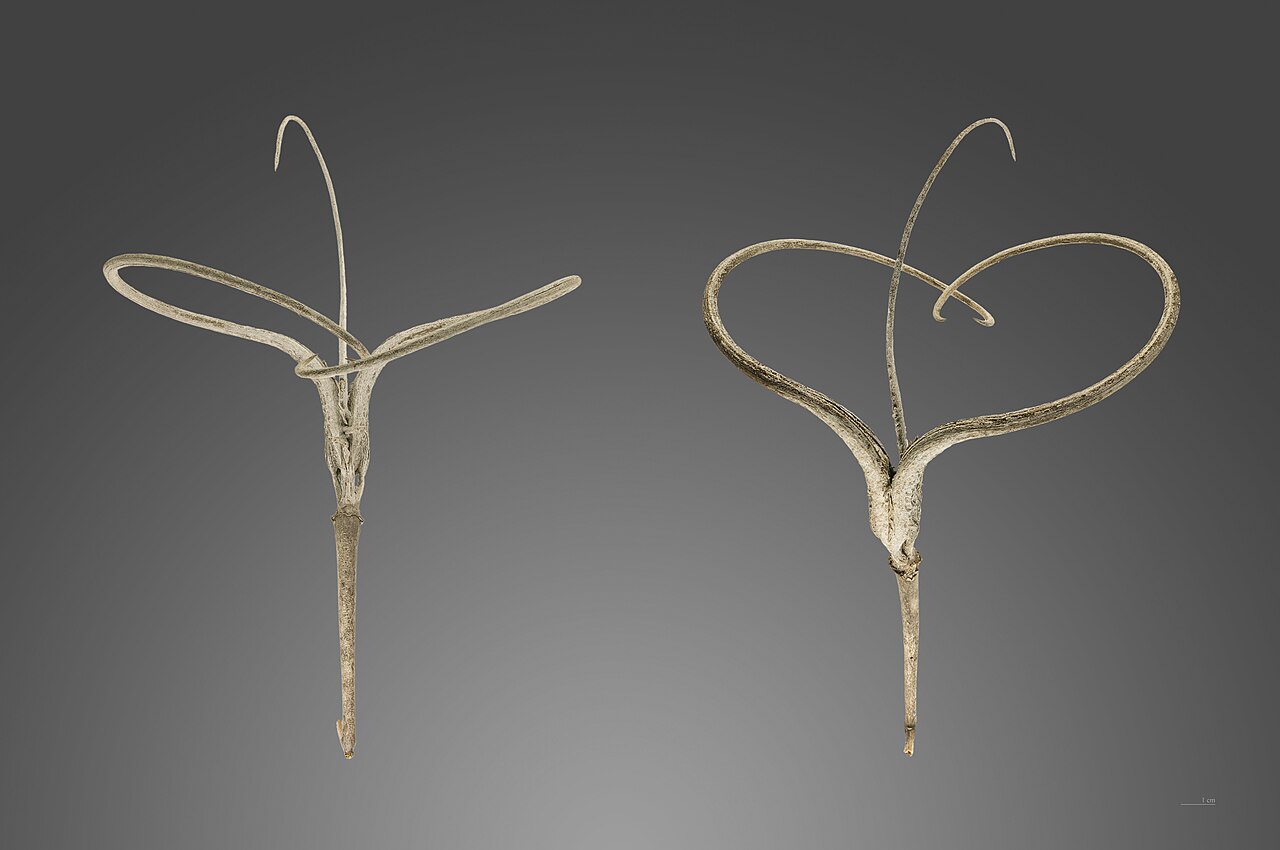
The plant is best known for its fruit. Each flower can produce a fat, green pod tipped with a long, curved beak, the “horn” behind the name unicorn-plant. As the pod dries, its green outer skin peels away and the woody inner part splits into two sharp, curving hooks. These “devil’s claws” grab the hooves and legs of passing animals, which carry the seeds away.
Desert unicorn-plant belongs to the small unicorn-plant family (Martyniaceae), and it is the only yellow-flowered devil’s claw native to the United States. It is a curious and handsome plant for desert gardens and for anyone interested in the native plants and traditional crafts of the Southwest. This guide covers how to identify it, where it grows and how to grow it.
Identification
Several devil’s claws grow wild in the Southwest. Desert unicorn-plant is the one with yellow to orange flowers and a tuberous root. The others have pink, purple or whitish flowers, and most are annuals.
Roots & Stems
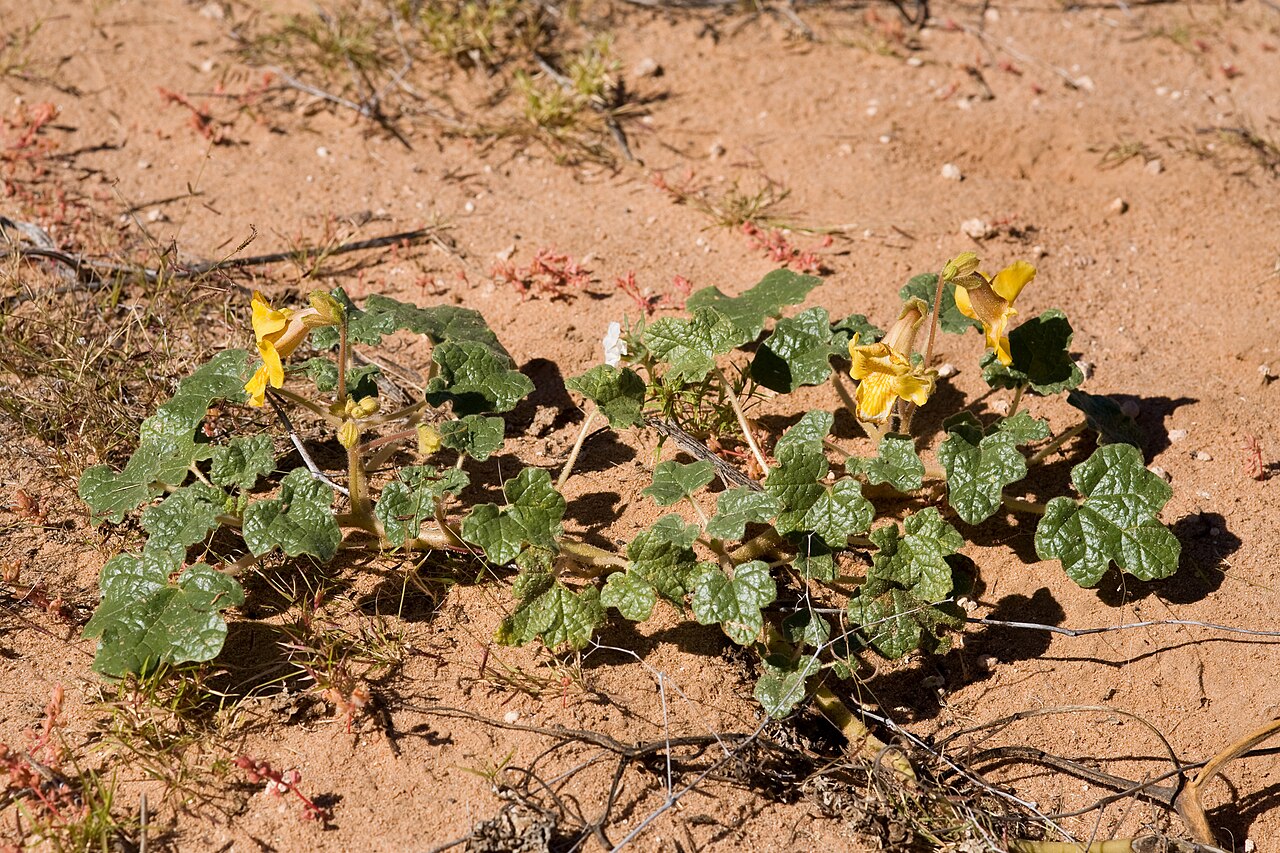
A thick, fleshy, yellowish root, like a small tuber, lets the plant survive the dry months underground. When rains arrive, it sends out stems that lie on the ground or rise only slightly, spreading 1 to 3 feet across. The stems and leaves are covered in sticky, glandular hairs that trap sand and give the plant a slightly musky smell.
Leaves
The leaves are thick and somewhat fleshy, rounded to kidney-shaped or broadly triangular, up to about 3 inches (7 cm) long, with wavy, shallowly lobed edges. The genus and species names refer to them: althaeifolia means “with leaves like Althaea,” the marsh mallow, and the plants do look a little like a low mallow before they flower.
Flowers
The flowers are held in short clusters above the leaves. Each is a broad, bell-shaped tube about 1 to 1½ inches long, opening into five rounded lobes. They are bright yellow to orange or apricot, with orange or reddish speckles and lines in the throat and a yellow nectar guide on the lower lobe. They are fragrant and appear mainly from July to September after summer rains.
Fruit
The fruit is a capsule with a plump body 2 to 3 inches long and a curved beak about as long or longer. When ripe, the fleshy outer layer falls away, leaving a hard, black, woody, crested inner pod. The beak splits lengthwise into two claws that curve outward, and the pod opens to release dark, rough seeds. Dried pods can persist for months on the ground.
Quick Facts
| Scientific Name | Proboscidea althaeifolia (Benth.) Decne. |
| Family | Martyniaceae (unicorn-plant family) |
| Plant Type | Herbaceous perennial from a tuberous root |
| Mature Height | 4–12 in |
| Mature Spread | 1–3 ft |
| Growth Rate | Fast after summer rains |
| Sun Exposure | Full sun |
| Water Needs | Low; drought tolerant, dormant in dry seasons |
| Soil Type | Sandy, gravelly or loose, well-drained soil |
| Soil pH | About 6.5–8.5 |
| Bloom Time | July–September (mainly after monsoon rains) |
| Flower Color | Yellow to orange with reddish speckles |
| Fall Color | None; dies back to the root in dry or cold weather |
| Fruit | Beaked capsule splitting into two curved “devil’s claws” |
| Deer Resistant | Mostly; sticky, strong-smelling foliage is rarely browsed |
| USDA Hardiness Zones | 8–11 |
Native Range
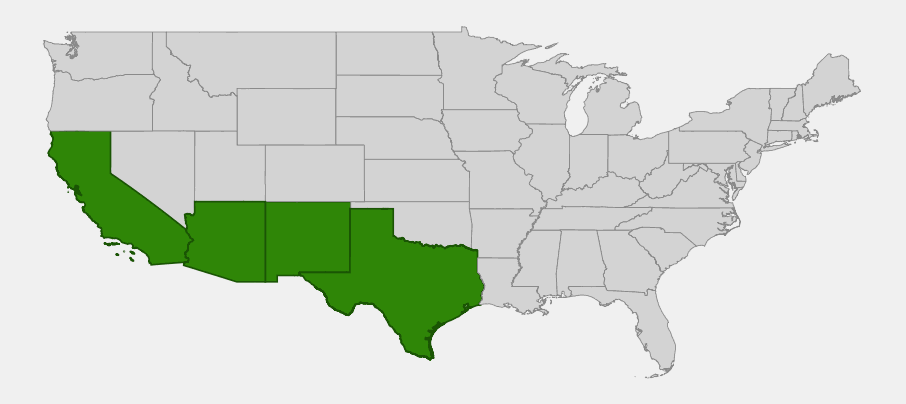
Desert unicorn-plant is a plant of the warm deserts. USDA PLANTS and the Lady Bird Johnson Wildflower Center list it as native in four states: California, Arizona, New Mexico and Texas. In California it grows in the Sonoran and Mojave deserts of the southeastern part of the state; it is widespread in southern and western Arizona; in New Mexico it occurs in the southern counties; and in Texas it reaches the Trans-Pecos. Its range continues south through Baja California, Sonora and Chihuahua in Mexico.
It grows on sandy flats, dunes, sandy washes and bajadas, in desert scrub with creosote bush, mesquite and saltbush, and in desert grasslands. It often turns up along sandy roadsides and in disturbed ground, where runoff collects and competition is light.
Most of its range lies below about 4,500 feet. Because it appears only after summer rains, it can seem absent from a site for years and then show up in quantity after a wet monsoon.
📋 Regional plant lists featuring Desert Unicorn-plant: Arizona & New Mexico · California & Nevada · South & West Texas
Growing & Care Guide
Desert unicorn-plant is easy to grow in hot, dry gardens within its natural range, as long as it has loose, sandy soil and full sun. It is seldom sold as a plant, but seed is sometimes offered by southwestern native seed suppliers and seed banks. Because it disappears for much of the year, mark its location so it is not dug up while dormant.
Light
Plant it in full sun. It thrives in the hottest, most open spots in the garden, where many other plants struggle.
Soil & Water
It needs deep, sandy or gravelly soil that drains quickly; heavy clay or constantly moist soil will rot the tuberous root. In the low desert, natural summer rains are usually enough. In a dry monsoon, a few deep waterings in July and August will wake the plant and bring on flowers. Keep it dry in winter while it is dormant.
Planting Tips
Sow seed in late spring or early summer, just before the monsoon, about ½ inch deep. Seed germination improves if you nick or soak the hard seed coat, or pick seeds from older pods that have weathered outdoors. Give each plant room to sprawl, and keep it away from paths and play areas, because the dry claws can catch on shoes and pets.
Pruning & Maintenance
No pruning is needed. Remove dried pods if they are a nuisance, or leave a few for wildlife and for natural reseeding. The top growth dies back in fall; leave the root undisturbed in the ground.
Propagation
Grow it from seed. Collect ripe, black pods in fall, let them dry, and shake out or pry loose the seeds. The perennial root is hard to transplant once established, so start plants where you want them or move them when small.
Landscape Uses
- Desert and xeric gardens: a summer-blooming groundcover for sandy, sunny beds in the low desert
- Pollinator gardens: large, fragrant flowers for native bees during the monsoon season
- Children’s and educational gardens: its strange horned pods are a memorable example of seed dispersal by animals (keep away from walkways)
- Ethnobotanical gardens: a relative of the devil’s claw used for black designs in Southwest basketry
- Dried arrangements: the woody, clawed pods are popular in dried crafts and arrangements
Wildlife & Ecological Value
Desert unicorn-plant is a short-season plant, but in the late summer bloom it offers food to insects and, later, seeds to small wildlife.
For Pollinators
Its large, fragrant flowers with bright nectar guides are visited mainly by bees, especially larger native bees that can push into the wide throat. The sticky hairs on the stems and leaves trap many small insects, which may help protect the plant from small herbivores.
For Birds
The plant is not an important bird food. Some seed-eating birds and quail may feed on seeds that fall from opened pods, and birds forage for insects among the sprawling stems.
For Mammals
The pods are designed to hitch rides on mammals. The hooks clamp around the legs and hooves of deer, pronghorn and livestock, which carry the pods and scatter the seeds as they walk. Rodents eat the oily seeds. The sticky, strong-smelling foliage is seldom browsed.
Ecosystem Role
Like other devil’s claws, it is a classic example of animal dispersal of seeds (zoochory). Its tuberous root lets it persist through long droughts, and it quickly covers open sand after summer storms, helping hold loose soil.
Cultural & Historical Uses
George Bentham first described this plant in the genus Martynia in the 1840s, and Joseph Decaisne later moved it to Proboscidea. The genus name comes from the Latin word for an elephant’s trunk, after the long beak of the fruit.
Devil’s claws have a long history in the Southwest. Pods of the related annual devil’s claw (Proboscidea parviflora), including a cultivated form with extra-long claws, supply the black fiber that Tohono O’odham, Akimel O’odham and other basket makers use for designs. Native peoples of the region also ate the young green pods and the seeds of devil’s claws, and the dried pods of desert unicorn-plant were used as simple tools.
Ranchers have long regarded devil’s claws with mixed feelings, because the dried pods can clamp painfully onto the legs of livestock and the feet of hikers. To gardeners and naturalists, though, desert unicorn-plant is one of the most striking signs of summer in the Sonoran and Chihuahuan deserts.
Frequently Asked Questions
Why is it called unicorn-plant?
The green fruit has a single long, curved beak, like a unicorn’s horn. When the pod dries, that beak splits into two hooked “claws,” which is why the same plants are also called devil’s claws.
Is desert unicorn-plant the same as the devil’s claw used in baskets?
Not exactly. Basket makers mainly use the long claws of annual devil’s claw (Proboscidea parviflora), especially a cultivated variety. Desert unicorn-plant is a perennial relative with yellow flowers.
Is desert unicorn-plant poisonous?
It is not known to be poisonous. The young pods and seeds of devil’s claws were traditionally eaten in the Southwest. The main hazard is the sharp dried claws, which can catch on shoes, paws and hooves.
When does desert unicorn-plant bloom?
Mostly from July to September, after summer monsoon rains. In years with little summer rain it may stay dormant and not appear at all.
How do I grow desert unicorn-plant from seed?
Sow seed outdoors in late spring or early summer in sandy soil in full sun, about ½ inch deep. Nicking or soaking the hard seed coat helps, and watering during the monsoon season triggers germination.

Looking for a nursery that carries Desert Unicorn-plant?
Browse our native plant nursery directory: Arizona · California · New Mexico · Texas

