
Spring Coralroot (Corallorhiza wisteriana)
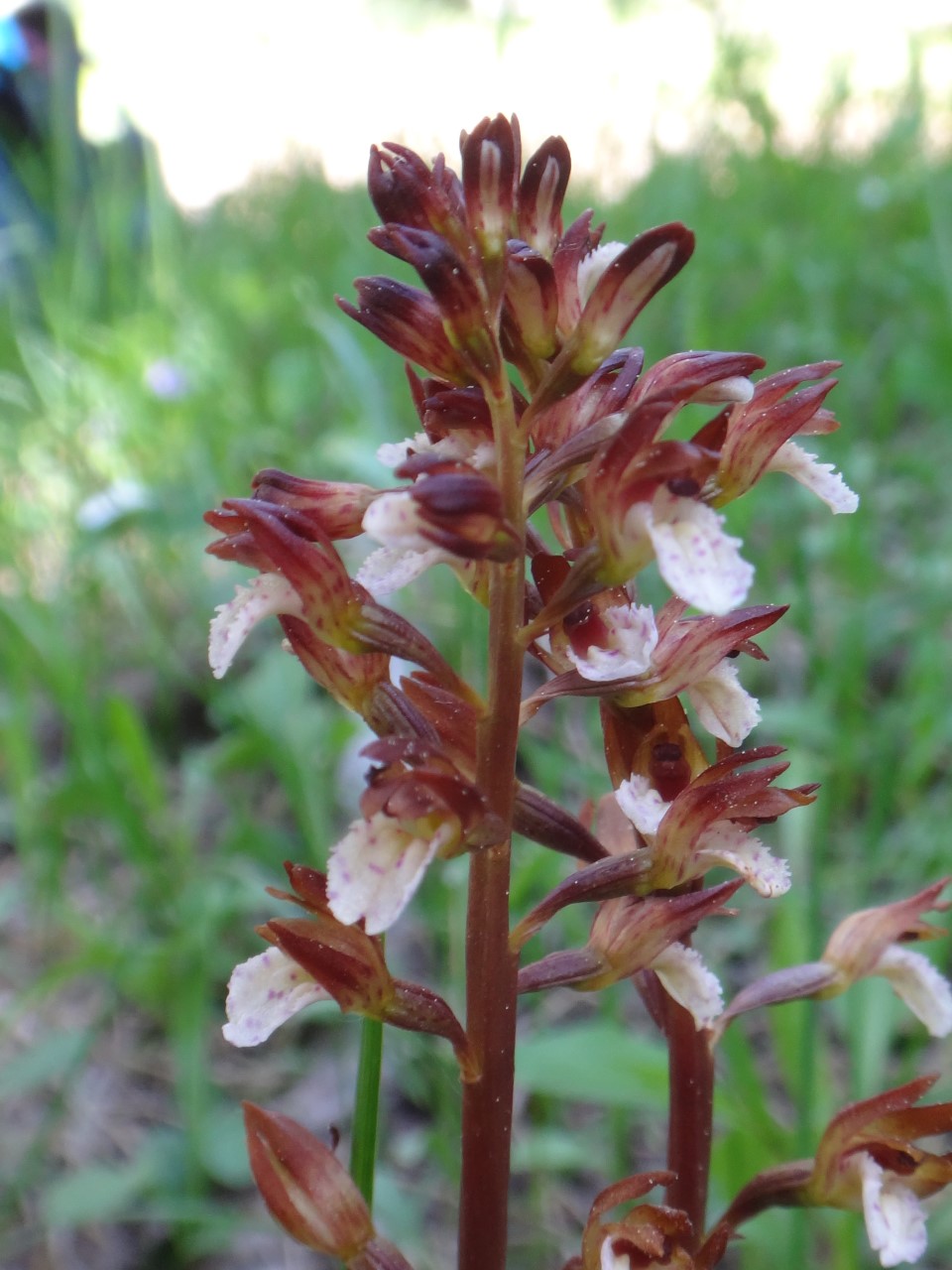
Corallorhiza wisteriana, known as Spring Coralroot or Wister’s coralroot, is a small, leafless native orchid of shady woodlands across much of the southern and central United States, with scattered populations in the Rocky Mountain and Southwestern states. It has no green leaves at all. Instead, slender reddish-brown to yellowish stems, usually 4 to 16 inches tall, rise from the leaf litter carrying a loose spike of small brownish flowers, each with a white lip dotted with purple.
Like other coralroots, it is a mycoheterotroph: it makes little or no food by photosynthesis and gets nearly all of its carbon and nutrients from fungi in the soil, which in turn are connected to the roots of trees. Its underground stem is a branched, coral-like rhizome, which gives the genus its name, from the Greek korallion, coral, and rhiza, root. As its common name says, it is the earliest coralroot to bloom, flowering from late winter in Florida and Texas to spring and early summer farther north and in the mountains.
Because it depends completely on its fungal partners, spring coralroot cannot be grown in gardens and should never be dug up. This page is a guide to identifying and appreciating it: how to recognize it, where it grows, how it lives, and where to look for it in early spring.
Identification
Spring coralroot is easy to overlook: a thin, brownish stalk among dead leaves, flowering at a time when little else is up. Look for leafless stems in moist woods in late winter and spring, then check the lip of the flowers for the key features below.
Growth Habit
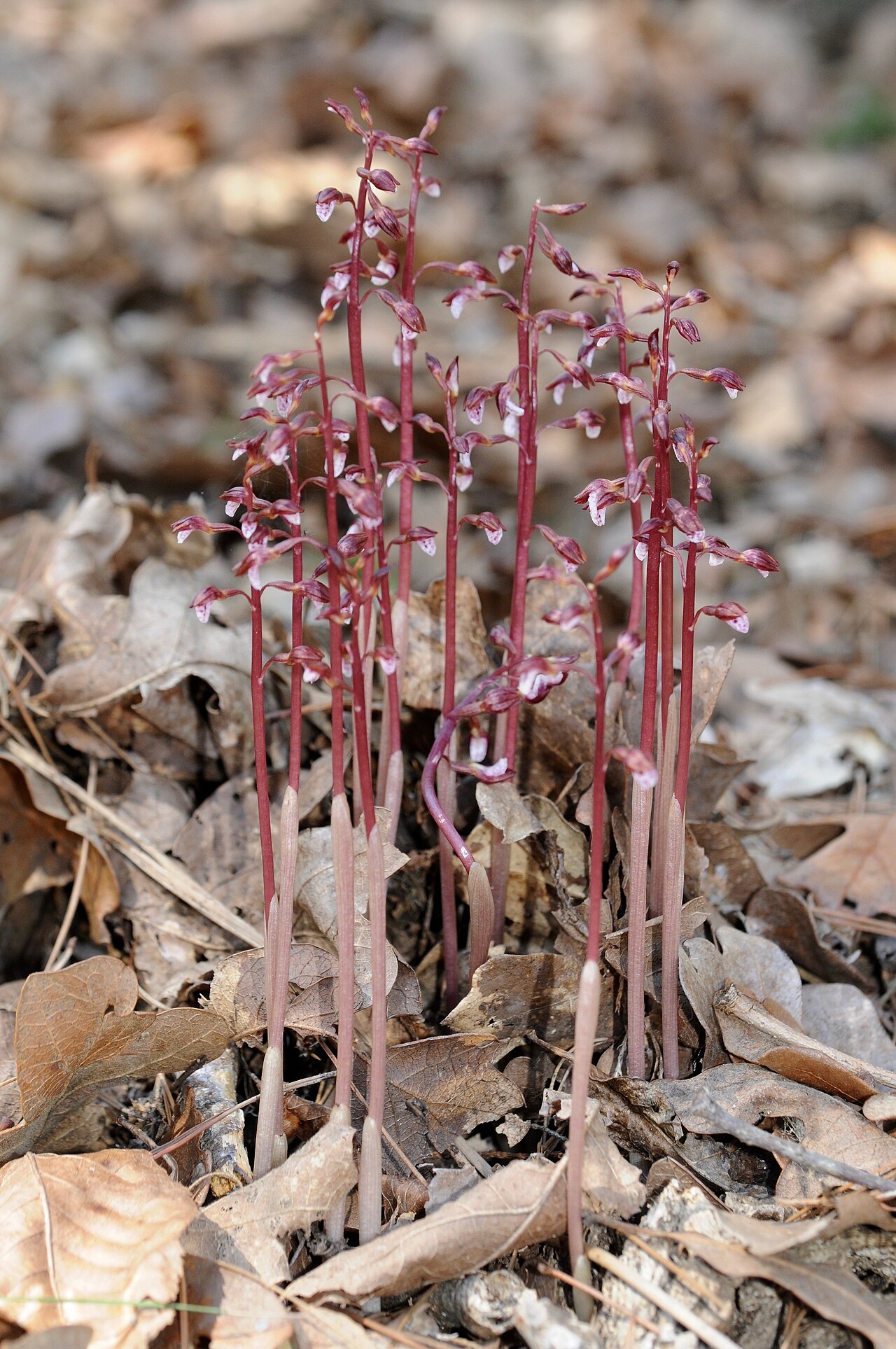
It is a leafless perennial orchid, growing from a branched, coral-like underground rhizome. Flowering stems appear singly or in clusters, usually 4 to 16 inches tall, and are purplish brown, reddish or sometimes yellowish. The only leaves are a few thin, sheathing scales at the base of the stem.
Flowers
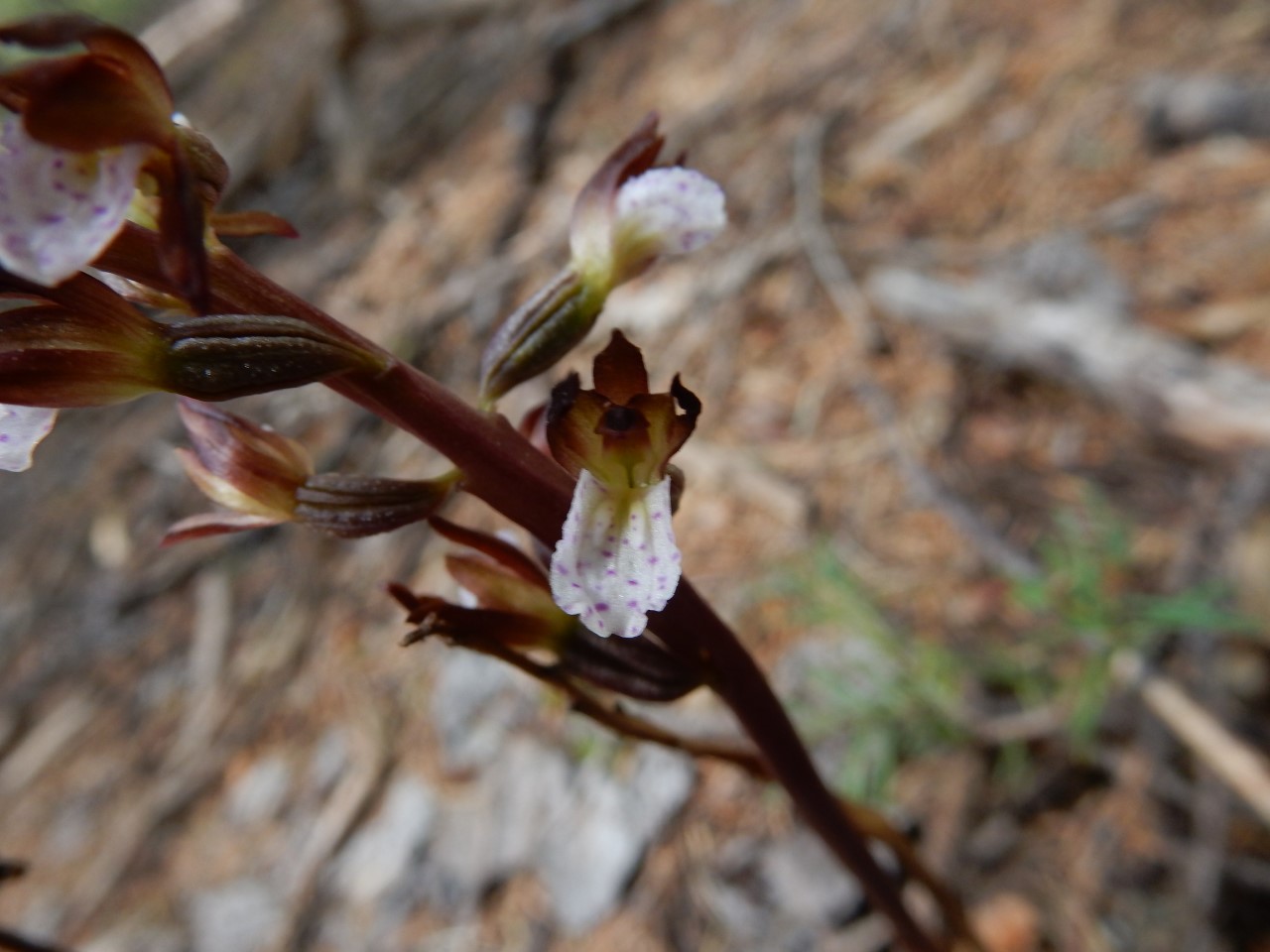
Each stem carries roughly 5 to 25 small flowers in a loose spike. The sepals and petals are narrow, about 1/4 inch long, brownish purple to greenish yellow, and form a hood over the column. The lip is white, broad and spotted with purple or magenta, and is essentially unlobed, with a slightly wavy or scalloped edge.
Bloom Time
This is the first coralroot of the year. It blooms from about December or January along the Gulf Coast and in Florida, February to April through most of the South, April and May in the Midwest and East, and May into June in the Rocky Mountains and Southwest.
Fruit & Seeds
The flowers are followed by drooping, oval seed capsules, about 1/2 inch long, that release thousands of dust-like seeds. Dry stems with empty capsules often stand into early summer.
Underground Parts
There are no true roots. The plant lives as a brittle, branched rhizome in the leaf litter and humus, packed with fungal threads that supply its food. Plants can remain underground for years without sending up flowering stems.
Look-alikes
Spotted coralroot (C. maculata) is very similar but blooms later, in summer, and its white lip has two small side lobes near the base. Autumn coralroot (C. odontorhiza) blooms in late summer and fall and has tiny, often closed flowers. Striped coralroot has larger flowers with bold purple stripes.
Quick Facts
| Scientific Name | Corallorhiza wisteriana Conrad |
| Family | Orchidaceae (orchid family) |
| Plant Type | Leafless mycoheterotrophic perennial orchid |
| Mature Height | 4–16 in (occasionally taller) |
| Mature Spread | A few inches; stems single or clustered |
| Growth Rate | Not applicable; stems appear only for flowering |
| Sun Exposure | Shade to part shade (does not depend on sunlight) |
| Water Needs | Moist forest soils; not cultivated |
| Soil Type | Humus-rich soil and leaf litter in woods, often near streams |
| Soil pH | About 5.5–7.5; often over limestone |
| Bloom Time | December–June, depending on latitude and elevation |
| Flower Color | Brownish purple to yellowish, with a white, purple-spotted lip |
| Fall Color | None; no leaves |
| Fruit | Drooping oval capsule with dust-like seeds |
| Deer Resistant | Unknown; stems are small and short-lived |
| USDA Hardiness Zones | Not cultivated (wild range about zones 4–10) |
Native Range
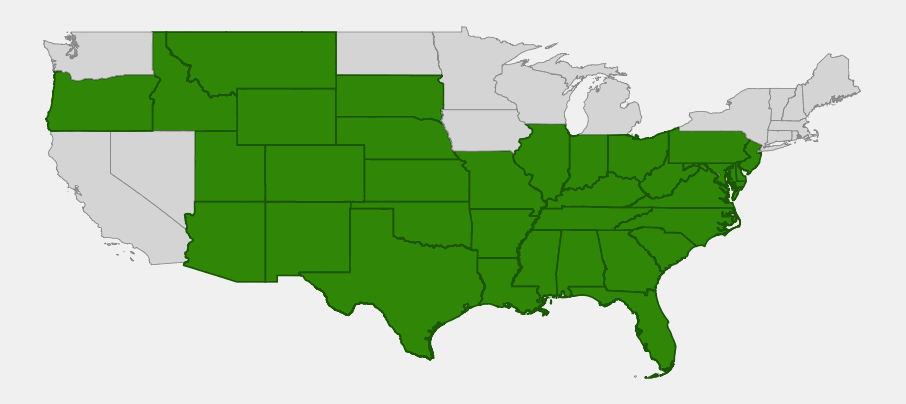
Spring coralroot is the most southern of the eastern coralroots. USDA PLANTS lists it from Pennsylvania, New Jersey, Delaware and Maryland south to Florida, west through the Ohio and Mississippi valleys to Kansas, Oklahoma and Texas, and in the Rocky Mountain and Southwestern states of South Dakota, Nebraska, Wyoming, Montana, Colorado, Utah, Arizona and New Mexico. It also reaches northern Mexico.
It is most frequent in the Southeast and the lower Midwest, from the Gulf Coast and Florida north to Missouri, Kentucky, Tennessee and Virginia. In the West it is scattered in canyons and mountains, including the Black Hills of South Dakota, the Front Range of Colorado and the mountains of Utah, Arizona and New Mexico. Isolated records from southeastern Idaho, north-central Montana and Jackson County in southwestern Oregon are outlying occurrences far from its main range. USDA also gives a state-level record for New Hampshire with no county data; it is not documented in New England floras and is not mapped here.
It grows in moist, shady deciduous and mixed woods with deep leaf litter: rich slopes and ravines, stream banks and floodplain forests, hardwood hammocks in Florida, and oak and juniper woods on limestone in Texas. In the West it is found in shaded canyons and riparian woods, often among oaks, junipers, Douglas-fir or ponderosa pine.
📋 Regional plant lists featuring Spring Coralroot: New York, Pennsylvania & Northern New Jersey · Ohio & Indiana · Montana & Wyoming · Kentucky & Tennessee · Nebraska, Kansas & Eastern Colorado · Utah & Western Colorado · Maryland, Virginia & West Virginia · Delaware, Southern New Jersey & Long Island · Arizona & New Mexico · Illinois, Iowa & Missouri · Alabama, Georgia & Mississippi · North & South Florida · North & South Carolina · Arkansas, Louisiana, Eastern Oklahoma & Eastern Texas · South & West Texas · North Dakota, South Dakota & Western Minnesota · Western Oregon & Western Washington
Can You Grow It?
No. Spring coralroot cannot be grown in gardens. No nursery propagates it, and plants that are dug up die, because they are cut off from the fungi that feed them. Never dig, transplant or buy wild-collected plants. The best way to enjoy it is to find it in the woods in early spring and protect the forest where it grows.
Light
It does not need sunlight to grow. Look for it in shady woods and ravines rather than open ground. Its brownish stems blend into the leaf litter, so walk slowly and scan the ground.
Soil & Water
It grows in moist, humus-rich soil under a layer of fallen leaves, often near streams or on limestone. Flowering is heavier after a wet winter, and plants may not flower at all in dry years. Avoid trampling or raking the forest floor where it grows.
Planting Tips
Do not try to plant, transplant or sow spring coralroot. If it appears on your land, leave the leaf litter in place and protect the surrounding trees, since its fungal partners depend on living tree roots. It sometimes turns up in shady, wooded yards where leaves are left on the ground.
Pruning & Maintenance
None is needed. Do not pick the flowering stems; each one carries the plant’s seed crop for the year.
Propagation
It reproduces by dust-like seed, which can germinate only with the right fungus, and by slow branching of its rhizome. There is no practical way to propagate it. Keeping woodlands and their soils intact is the best way to help it.
Where to See It
- Southern woodland trails: one of the first wildflowers to look for on late-winter walks in the Gulf states and Texas
- Ozark and Interior Plateau ravines: moist wooded slopes in Missouri, Arkansas, Kentucky and Tennessee in spring
- Western canyons: shaded canyons in Colorado, Utah, Arizona, New Mexico and the Black Hills in late spring
- Macro photography: the spotted white lips are best appreciated up close
- Forest ecology education: a vivid example of a plant fed by fungi linked to trees
Wildlife & Ecological Value
Spring coralroot is a visible sign of the hidden network of fungi that links trees and the forest floor.
For Pollinators
The small flowers are visited by small bees and flies, but like several other coralroots it is largely self-pollinating, so most flowers set seed even when insects are scarce early in the year.
For Birds
It has no significant value as food or cover for birds.
For Mammals
The stems are small and short-lived and are not an important food for mammals.
Ecosystem Role
It takes its carbon from mycorrhizal fungi that also form partnerships with the roots of oaks and other trees, so it indirectly draws on the trees’ photosynthesis through the shared fungal network. Its presence indicates an intact forest floor with healthy soil fungi. Logging, soil disturbance, removal of leaf litter and development can eliminate it, and it is considered rare in several states at the edges of its range.
Cultural & Historical Uses
The species was described in 1829 by the Philadelphia botanist Solomon White Conrad, who named it for Charles J. Wister, a naturalist of Germantown, Pennsylvania. Wister’s coralroot remains an alternate common name.
Coralroots are among the best-known examples of mycoheterotrophic plants, and research on Corallorhiza has helped scientists understand how leafless orchids obtain food from fungi that are themselves connected to trees. The plants still carry traces of chlorophyll in their stems but rely on fungi for almost all of their energy.
For wildflower enthusiasts in the South, finding spring coralroot in bloom is a sign that spring is on the way, often weeks before trilliums and other woodland wildflowers open. Admire it, photograph it, and leave it in place.
Frequently Asked Questions
Can I grow spring coralroot in my garden?
No. It depends entirely on specific soil fungi linked to tree roots and dies if dug up. No nursery propagates it. Protect it where it grows instead.
Why does spring coralroot have no leaves?
It gets its food from fungi in the soil rather than from photosynthesis, so it does not need green leaves. This way of life is called mycoheterotrophy.
When does spring coralroot bloom?
It is the earliest coralroot, blooming from December or January in Florida and along the Gulf Coast to May and June in the Rocky Mountains.
How is it different from spotted coralroot?
Spring coralroot blooms in late winter and spring and has an unlobed white lip; spotted coralroot blooms in summer and its lip has two small side lobes.
Where does spring coralroot grow?
It grows in moist, shady woods across the southern and central United States, from Pennsylvania and Florida west to Texas and Kansas, with scattered populations in the Rocky Mountain and Southwestern states.

Looking for a nursery that carries Spring Coralroot?
Browse our native plant nursery directory: Alabama, Arizona & Arkansas · Colorado, Delaware, Florida & Georgia · Idaho, Illinois, Indiana & Kansas · Kentucky, Louisiana, Maryland, Mississippi, Missouri & Montana · Nebraska, New Jersey, New Mexico, North Carolina, Ohio & Oklahoma · Oregon · Pennsylvania, South Carolina, South Dakota, Tennessee, Texas, Utah & Virginia · West Virginia & Wyoming

