
Texas Sage (Salvia texana)
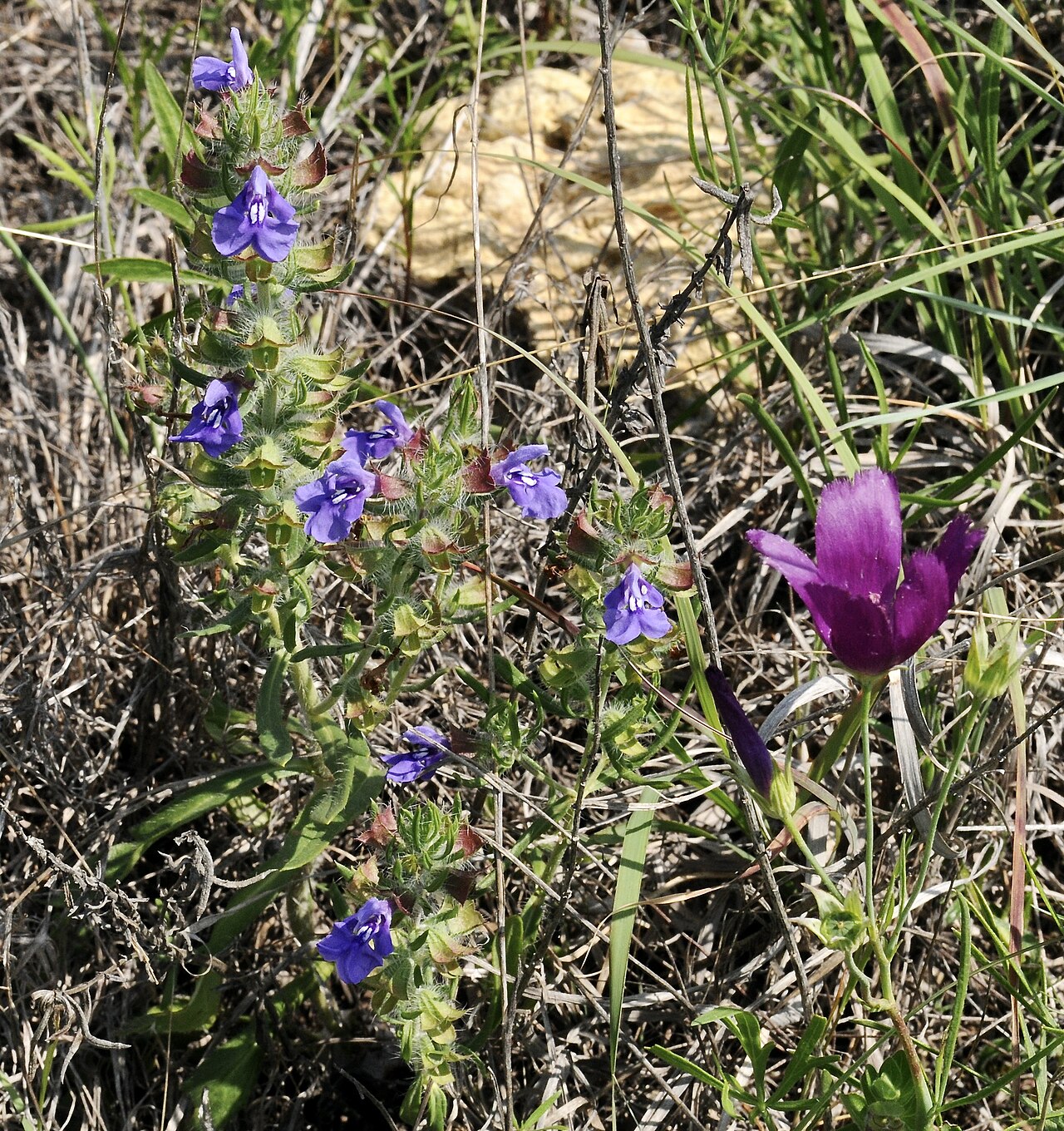
Salvia texana, known as Texas Sage or Texas blue sage, is a small native perennial sage of the limestone prairies and rocky hills of Texas and southeastern New Mexico. In spring it produces short spikes of small, intensely dark blue to purple flowers on hairy stems usually less than a foot and a half tall. It is one of the most richly colored of the native spring wildflowers of the Texas Hill Country and the north-central Texas prairies.
It belongs to the mint family (Lamiaceae), like the other true sages, and has the square stems and two-lipped flowers typical of the family. The common name Texas sage is also used for cenizo (Leucophyllum frutescens), a large silver-leaved shrub in a different family; to avoid confusion, this small blue-flowered plant is sometimes called Texas blue sage. See our separate page on cenizo for that shrub.
Texas sage is a long-lived, drought-tolerant plant for dry, alkaline soils, and its early flowers are visited by native bees. This guide covers how to identify it, where it grows, how to grow it in a dry meadow or rock garden, and its value to wildlife.
Identification
Texas sage is a low, hairy, clump-forming perennial with narrow leaves and short spikes of small, deep blue to purple, two-lipped flowers in spring. Look for it on rocky, limestone hillsides and in short-grass prairies, where it often grows among grasses and other spring wildflowers.
Growth Habit
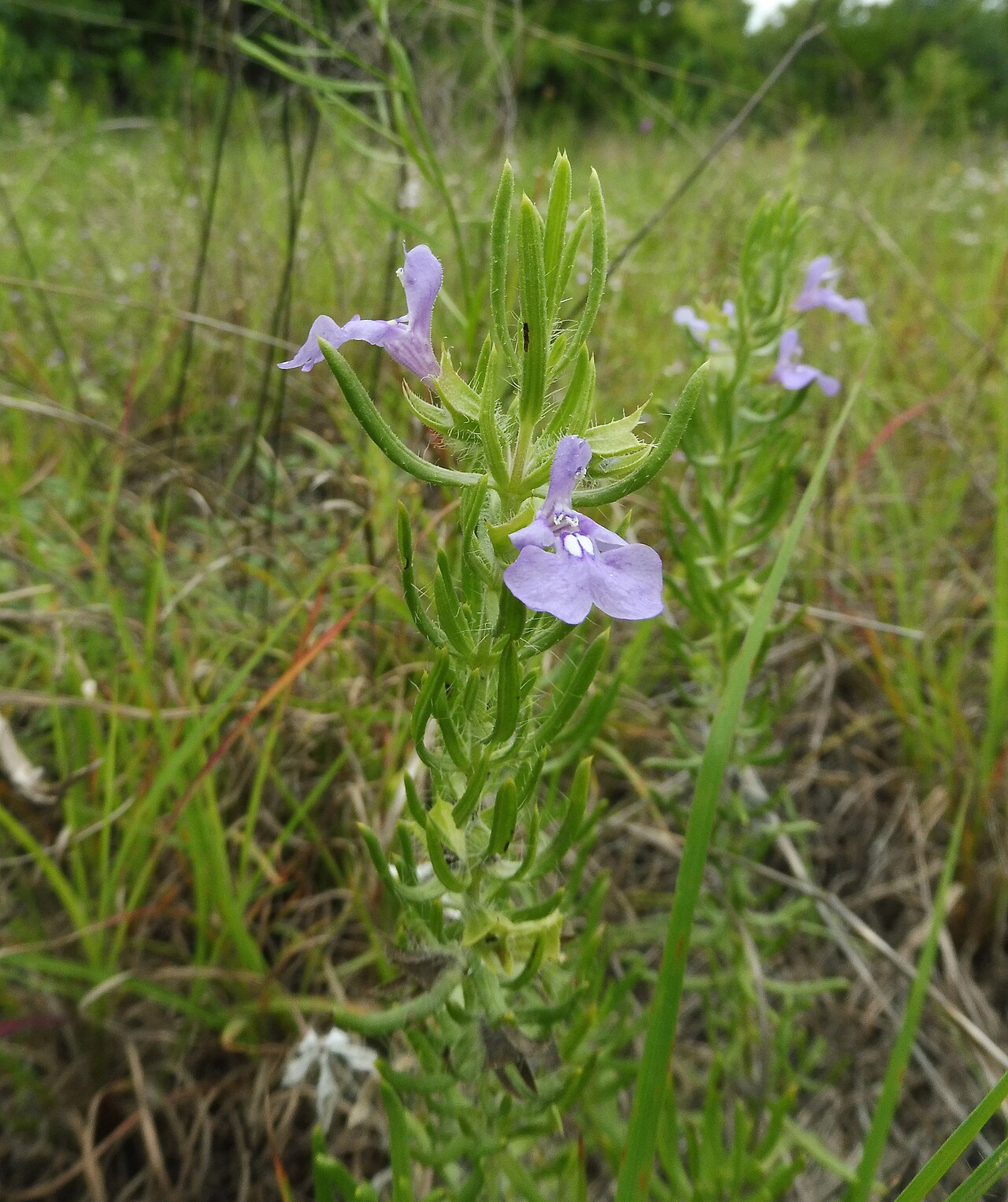
It forms a small clump of several upright or ascending stems from a woody root crown. Plants are usually 6 to 16 inches tall, occasionally up to about 18 inches. The stems are square in cross-section and covered with long, spreading hairs.
Leaves
The leaves are narrow, oblong to linear or lance-shaped, mostly 1 to 2 1/2 inches long, with a few coarse teeth or smooth edges. They are rough-hairy and medium green to grayish green. Most leaves are on the lower half of the stems, becoming smaller upward.
Flowers
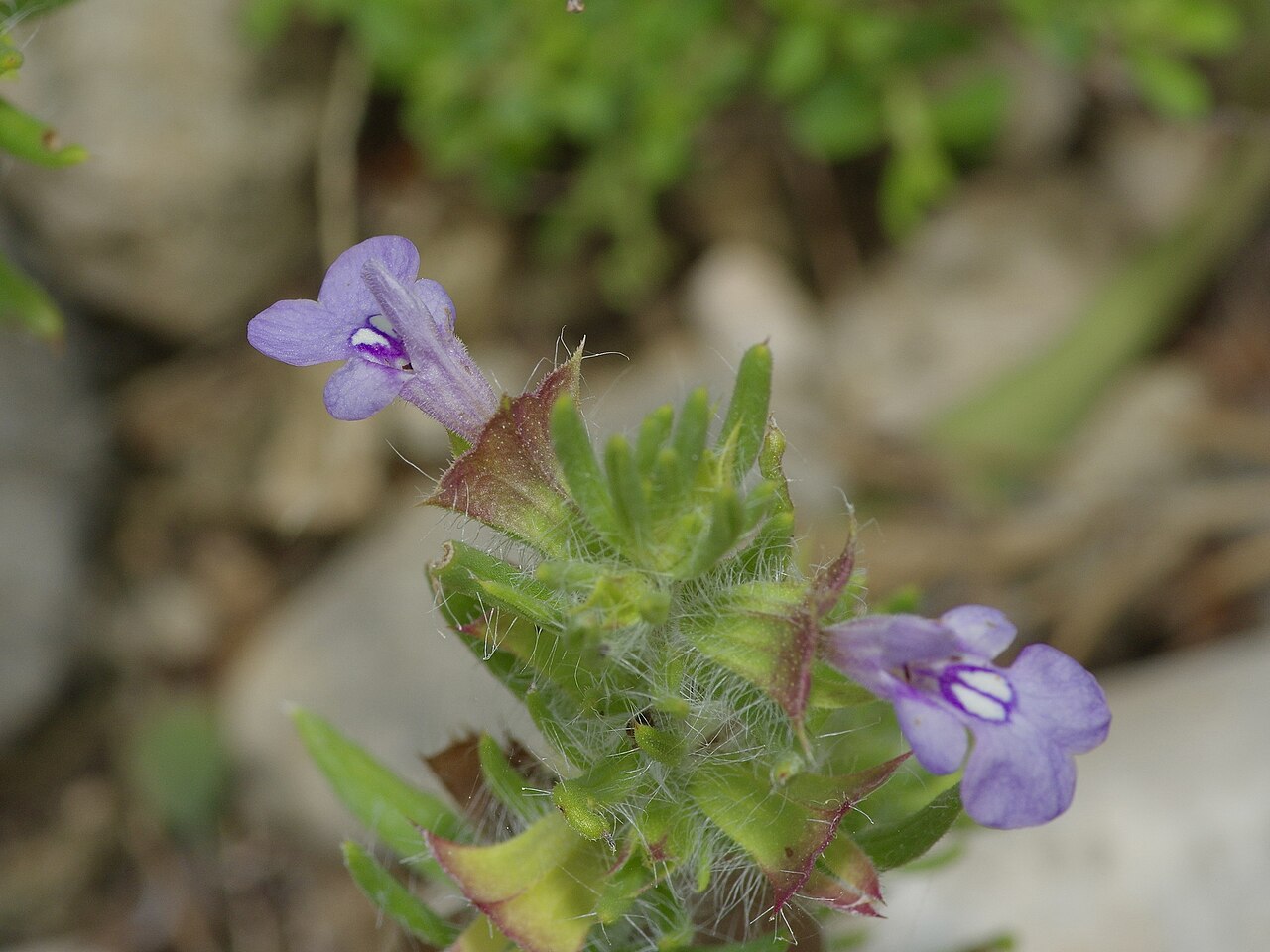
The flowers are carried in a dense, spike-like cluster at the top of each stem, in whorls above leafy, hairy green bracts. Each flower is about 1/2 inch long, deep blue-violet to purple, with a short upper lip and a broader, spreading lower lip that has white markings at its throat. Only a few flowers in each spike are open at a time, so the spike is usually topped by a cluster of green, unopened buds and bracts. Bloom time is mainly March to June, with occasional flowers later after rain.
Fruit & Seeds
Each flower produces up to four small, smooth nutlets inside the hairy, persistent calyx. The dry calyces remain on the stems after flowering, and the seeds are shaken out as the stems dry.
Look-alikes
Engelmann’s sage (Salvia engelmannii) is similar in size and habitat but has larger, paler, sky-blue to lavender flowers and lacks the conspicuous green bud cluster at the tip of the spike. Mealycup sage is taller, with long, slender spikes of blue flowers on whitish, mealy calyces, and blooms mainly from late spring through fall. Pitcher sage is a tall, late-summer and fall bloomer with sky-blue flowers. Cenizo, also called Texas sage, is a silver-leaved shrub, not a small perennial.
Quick Facts
| Scientific Name | Salvia texana (Scheele) Torr. |
| Family | Lamiaceae (mint family) |
| Plant Type | Herbaceous perennial wildflower |
| Mature Height | 6–16 in (occasionally to 18 in) |
| Mature Spread | 6–12 in |
| Growth Rate | Moderate |
| Sun Exposure | Full sun to part shade |
| Water Needs | Low; very drought tolerant |
| Soil Type | Well-drained limestone soils: rocky, gravelly, caliche, sandy or clay |
| Soil pH | Alkaline (about 7.2–8.5) |
| Bloom Time | March–June |
| Flower Color | Deep blue-violet to purple with white markings |
| Fall Color | None notable |
| Fruit | Small nutlets in a persistent hairy calyx |
| Deer Resistant | Yes; aromatic, hairy foliage is seldom browsed |
| USDA Hardiness Zones | 7–9 |
Native Range
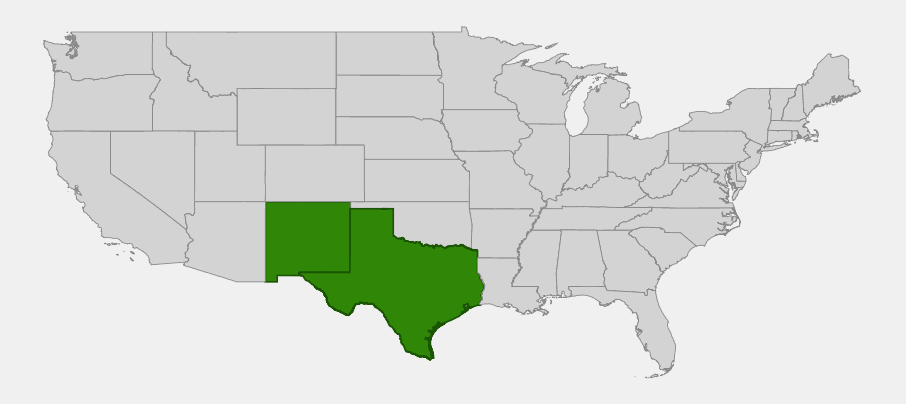
Texas sage is native to Texas, southeastern New Mexico and northern Mexico. USDA PLANTS lists it in Texas and New Mexico. In Mexico it extends into the northeastern states.
It is widespread in central and western Texas, from the north-central prairies around Denton and Wise Counties south through the Blackland Prairie, Cross Timbers and Edwards Plateau to the Rio Grande Plains, and west through the Rolling Plains and Trans-Pecos into southeastern New Mexico. It is especially common on the limestone hills of the Texas Hill Country.
It grows on prairies, rocky hillsides, slopes, ledges and road cuts, usually on thin, well-drained limestone soils, from sandy and gravelly loam to rocky caliche and clay. It often grows in short-grass and mid-grass prairie openings among junipers and live oaks.
📋 Regional plant lists featuring Texas Sage: South & West Texas · Arkansas, Louisiana, Eastern Oklahoma & Eastern Texas
Growing & Care Guide
Texas sage is a tough, compact wildflower for sunny, dry gardens in Texas and the southern Plains. It is easy in well-drained, alkaline soil, needs little water and adds deep blue color in spring, when many other natives are still getting started. It is sold by some Texas native plant nurseries and seed companies.
Light
Grow it in full sun or light part shade. In too much shade it becomes leggy and flowers poorly.
Soil & Water
It needs well-drained soil and does best in thin, rocky or gravelly limestone soils, though it tolerates clay if drainage is good. Water to establish, then only during extended drought. Rich, moist garden soil and frequent watering make it floppy and short-lived.
Planting Tips
Plant container plants in fall or early spring, about a foot apart, or sow seed in fall. Because it is small, place it at the front of a border, in a rock garden, among short grasses such as blue grama, buffalograss and Texas grama, or in a native meadow with other spring wildflowers such as Engelmann daisy, greenthread, paintbrush and blackfoot daisy.
Pruning & Maintenance
Little care is needed. Leave the stems standing after flowering so the seeds can ripen and drop, then trim back the old stems in summer or winter. Avoid fertilizer. Plants may go semi-dormant during summer heat and drought and resume growth in fall.
Propagation
Grow it from seed. Sow seed outdoors in fall so it gets natural winter moisture, or sow in spring after a few weeks of cold, moist stratification. It often self-sows lightly in open, gravelly spots. Do not dig plants from the wild.
Landscape Uses
- Rock gardens: a compact plant for thin, rocky, alkaline soils
- Native meadows: deep blue spring color among short and mid-grasses
- Pollinator gardens: early nectar for native bees
- Xeriscapes: very drought tolerant once established
- Prairie restoration: for limestone prairies and savanna openings in Texas
Wildlife & Ecological Value
Texas sage is a small plant, but its early, nectar-rich flowers make it useful to pollinators in the spring prairies of Texas.
For Pollinators
The two-lipped flowers are visited by native bees, which land on the lower lip and push into the throat to reach the nectar, picking up pollen from the stamens in the upper lip. Bumble bees and other medium to large bees are frequent visitors, and small butterflies also take nectar.
For Birds
Seed-eating birds such as sparrows and finches may eat some of the small nutlets after they drop from the dry calyces. Like many prairie wildflowers, the plant also supports insects that birds feed to their young.
For Mammals
The aromatic, hairy foliage is generally avoided by deer and other browsers, which makes it a good choice for gardens in deer country.
Ecosystem Role
Texas sage is part of the diverse wildflower flora of the limestone prairies and savannas of central Texas, many of which have been lost to development, overgrazing and the spread of woody brush. Its deep woody crown helps it survive drought, grazing and fire.
Cultural & Historical Uses
The species was first described in 1849 by the German botanist Adolf Scheele as Salviastrum texanum, in a separate genus he created for it, from plants collected in Texas at a time when German naturalists such as Ferdinand Lindheimer were sending many Texas specimens to Europe. John Torrey later transferred it to Salvia, giving the name used today.
The genus name Salvia comes from the Latin salvare, to heal or save, reflecting the long medicinal use of the European garden sage. There is little record of specific uses of Texas sage, and like any wild plant it should not be used medicinally without expert guidance.
The shared name Texas sage causes frequent confusion with cenizo, the silver-leaved shrub that blooms after rain and is widely planted in Texas landscapes. When you hear “Texas sage,” it helps to ask whether the speaker means the small blue wildflower or the shrub.
Frequently Asked Questions
Is this the same as the Texas sage shrub?
No. The shrub often called Texas sage is cenizo (Leucophyllum frutescens), a large silver-leaved shrub. Salvia texana is a small blue-flowered perennial in the mint family.
When does Texas sage bloom?
Mainly from March to June, with occasional flowers later in the year after rain.
How do I tell Texas sage from Engelmann’s sage?
Texas sage has smaller, darker blue-purple flowers, and the tip of each spike is topped by a cluster of green, unopened buds. Engelmann’s sage has larger, paler blue flowers.
What soil does Texas sage need?
Dry, well-drained, alkaline soil, ideally thin rocky or gravelly limestone soil. It does not do well in rich, wet soil.
Is Texas sage good for pollinators?
Yes. Its spring flowers provide nectar and pollen for native bees, including bumble bees, and are visited by small butterflies.

Looking for a nursery that carries Texas Sage?
Browse our native plant nursery directory: New Mexico · Texas

