
Alkali Goldenbush (Isocoma acradenia)
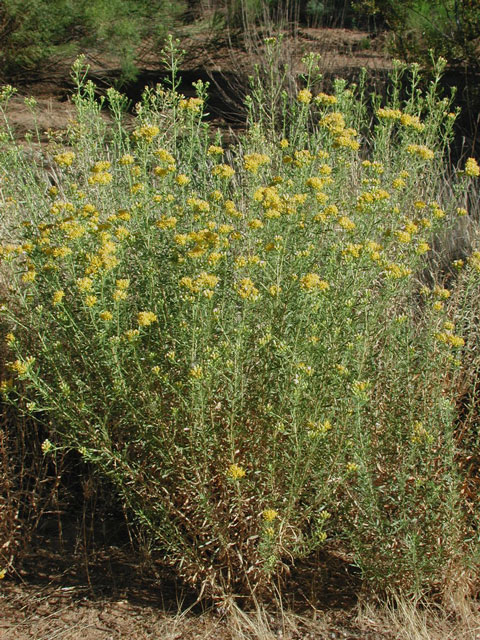
Isocoma acradenia, known as Alkali Goldenbush or alkali jimmyweed, is a small, rounded shrub of the aster family (Asteraceae) native to the deserts and dry interior valleys of California, Nevada, Arizona and southwestern Utah, and northern Mexico. It usually grows 1 to 4 feet tall, with many slender, pale stems and narrow, gland-dotted, gray-green to bright green leaves.
From late summer through fall, and sporadically at other times, it is covered with small clusters of rayless, golden-yellow flower heads, followed by fluffy, pale seed heads. As its common name suggests, it is at home on alkaline and salty soils: the margins of dry lake beds and sinks, low flats, washes and desert basins, where few other flowering shrubs can grow.
Alkali goldenbush is a close relative of coast goldenbush (Isocoma menziesii), which grows near the Pacific coast, and of burroweed (Isocoma tenuisecta) of Arizona’s grasslands. This guide covers how to identify it, where it grows, how to use it in a low-water garden or restoration on difficult soil, and what it offers wildlife.
Identification
Goldenbushes (Isocoma) are low, rounded desert shrubs with small, rayless yellow heads in tight clusters. Alkali goldenbush is identified by its narrow, mostly smooth-edged leaves, its alkaline habitat and, with a hand lens, the resin gland on the tip of each bract around the flower head.
Growth Habit & Stems
It is a low, rounded, much-branched subshrub or small shrub, typically 1 to 4 feet tall and about as wide, woody at the base with slender, upright, whitish to pale tan stems. The stems are smooth or finely hairy.
Leaves
The leaves are alternate, narrow, linear to narrowly oblanceolate, mostly 1/2 to 2 inches long, with smooth edges or a few small teeth. They are dotted with tiny resin glands and are gray-green to bright green, and may be somewhat fleshy on salty soils. Lower leaves often drop during the hottest, driest part of the year.
Flowers
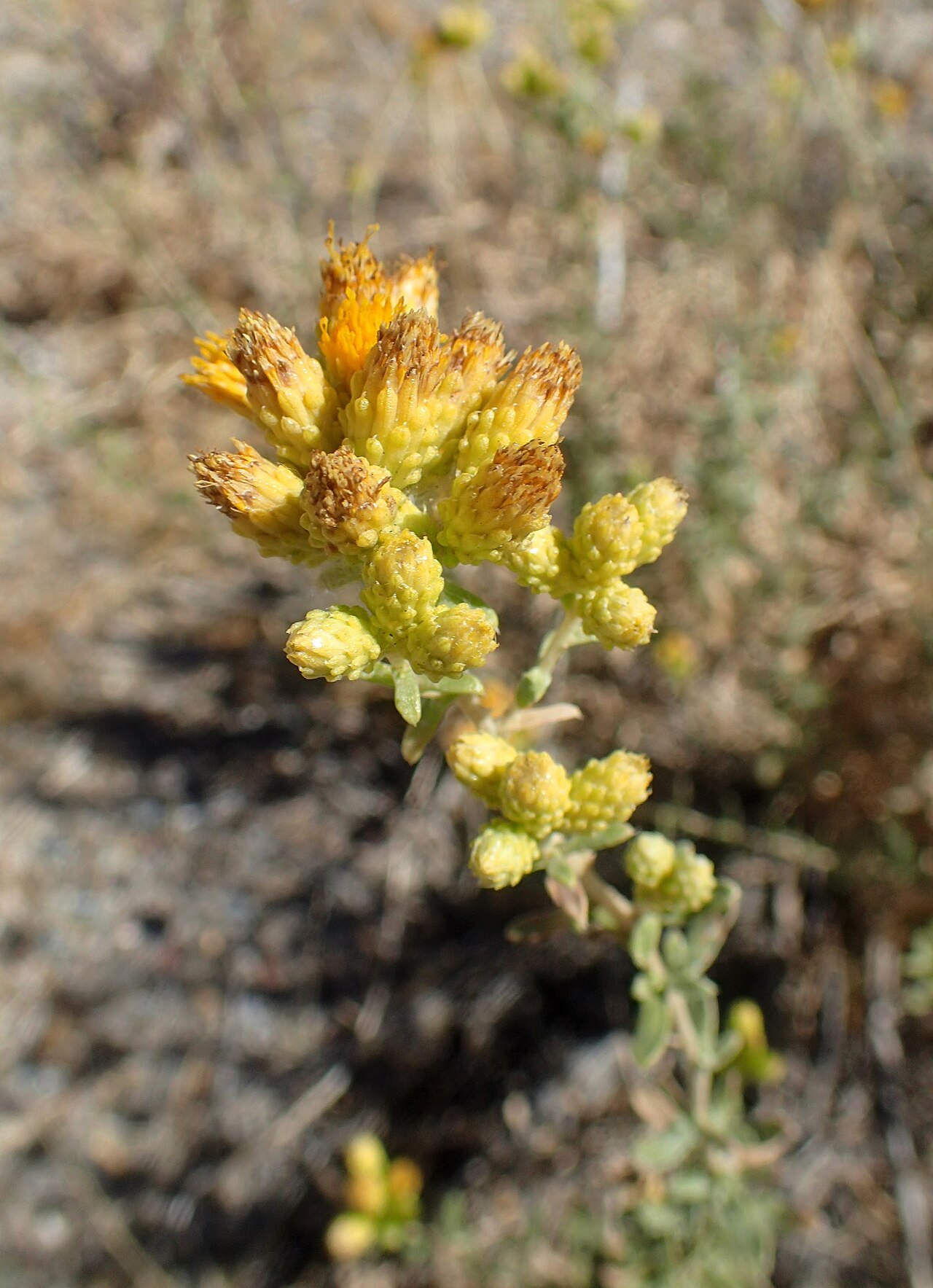
The small, cylindrical flower heads are borne in tight, flat-topped clusters at the branch tips. Each head is rayless and contains a tuft of golden-yellow, tubular disk flowers. The overlapping bracts (phyllaries) around each head are pale with a green tip, and each bract has a small, swollen, resinous gland at its tip, the feature behind the species name acradenia, meaning “gland at the tip”. The main bloom is late summer through fall, sometimes into winter, with scattered flowers in other seasons.
Fruit & Seeds
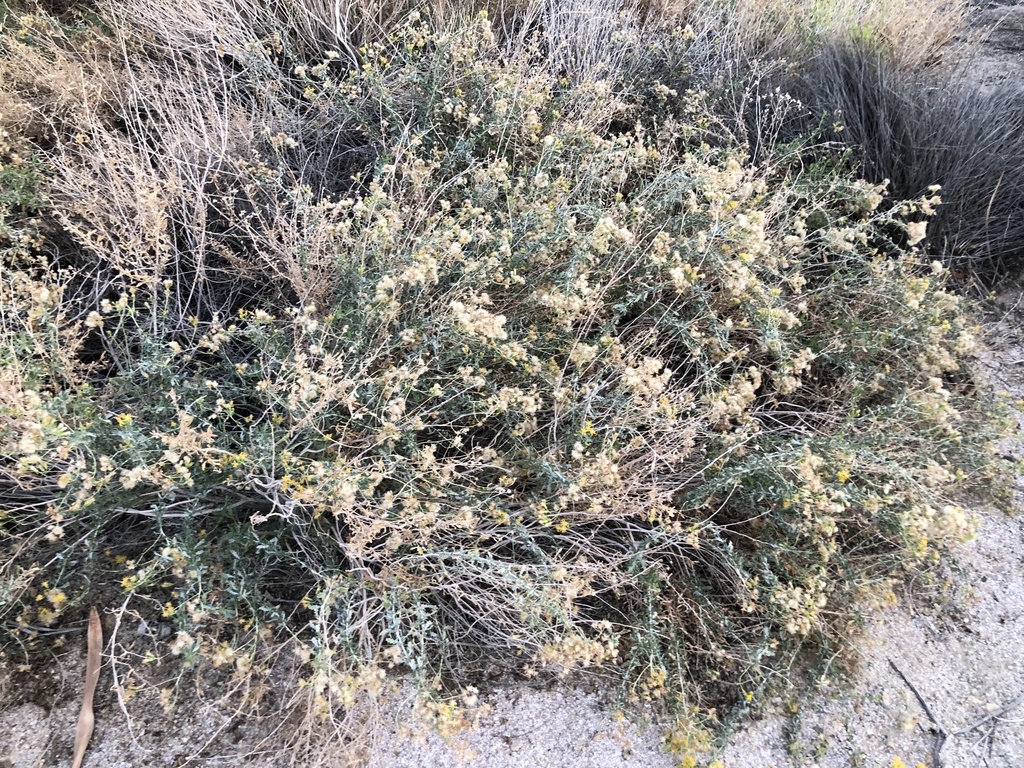
The seeds are small, hairy achenes (cypselae), each with a tuft of tan or whitish bristles that carries it on the wind. In fall and winter, the shrubs are covered with pale, fluffy seed heads.
Look-alikes & Varieties
Coast goldenbush, near the coast, has broader, often toothed leaves and lacks the conspicuous gland-tipped bracts. Burroweed has finely divided leaves. Rabbitbrushes (Ericameria) are similar from a distance but have grayer foliage and more slender heads. Three varieties are recognized: the widespread var. acradenia of the deserts, var. bracteosa of the San Joaquin Valley and southern Sierra foothills, and var. eremophila, a rare local variety of southern California that the California Native Plant Society tracks as rare.
Quick Facts
| Scientific Name | Isocoma acradenia (Greene) Greene |
| Family | Asteraceae (aster family) |
| Plant Type | Rounded, evergreen to semi-deciduous subshrub |
| Mature Height | 1–4 ft |
| Mature Spread | 1–4 ft |
| Growth Rate | Moderate |
| Sun Exposure | Full sun |
| Water Needs | Very low; tolerates periodic flooding and salty groundwater |
| Soil Type | Alkaline, saline, sandy, silty or clay soils of flats, washes and basins |
| Soil pH | About 7.0–9.0 (alkaline) |
| Bloom Time | Mainly August–December; sporadic other months |
| Flower Color | Golden yellow (rayless heads) |
| Fall Color | Covered with yellow flowers and then pale, fluffy seed heads in fall |
| Fruit | Small achenes with tan or white bristles, wind-dispersed |
| Deer Resistant | Yes; resinous foliage is seldom browsed |
| USDA Hardiness Zones | 7–10 |
Native Range
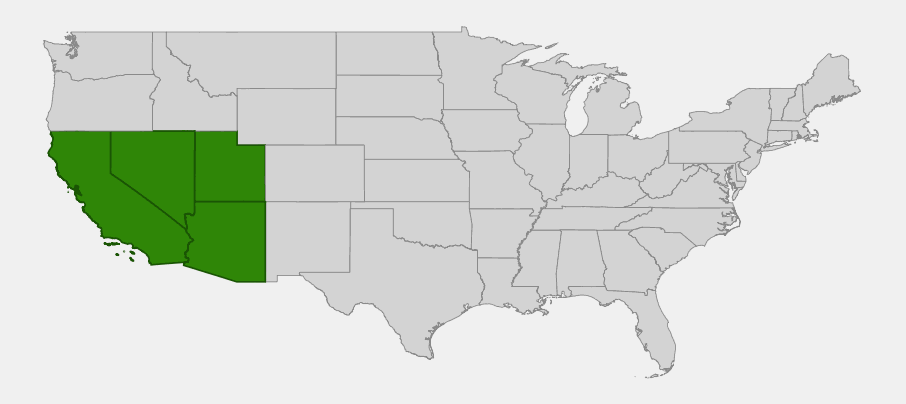
Alkali goldenbush is a plant of the arid Southwest. USDA PLANTS lists it as native to four states: Arizona, California, Nevada and Utah. It also extends into northern Mexico.
In California it is widespread in the Mojave and Colorado deserts, including the Coachella and Imperial valleys, the Salton Sea basin and Anza-Borrego, and it reaches the southern San Joaquin Valley, the Tehachapi and southern Sierra foothills (var. bracteosa) and the inland valleys of southern California. In Nevada it grows in the southern part of the state, in Arizona mainly in the western and central deserts, and in Utah it reaches the southwestern corner of the state.
Typical habitats are alkaline or saline flats, the margins of playas and dry lakes, sinks, washes, low sandy or silty basins, roadsides and old fields, from below sea level around the Salton Sea to the lower foothills of the desert mountains. It often grows where groundwater is shallow but salty, in creosote bush and saltbush scrub and around mesquite thickets.
📋 Regional plant lists featuring Alkali Goldenbush: Utah & Western Colorado · Arizona & New Mexico · California & Nevada
Growing & Care Guide
Alkali goldenbush is a tough, low-maintenance shrub for desert gardens and restoration on alkaline or salty soils, where many plants fail. It is occasionally sold by native nurseries in southern California and the desert Southwest, and seed is available from some native seed suppliers.
Light
Plant it in full sun. In shade it becomes sparse and flowers poorly.
Soil & Water
It tolerates alkaline, saline, sandy, silty and clay soils, as long as they are not permanently waterlogged. Once established it needs little or no supplemental water in desert areas; an occasional deep soak in the hottest months keeps it greener and more floriferous. It handles salty irrigation water and shallow saline groundwater better than most shrubs.
Planting Tips
Plant in fall or winter so roots establish during the cool season, spacing plants 3 to 4 feet apart. Use it in masses on difficult soil, along drainage swales or the edges of desert washes, or with quailbush, alkali sacaton and creosote bush for a low-water planting with fall color.
Pruning & Maintenance
Cut it back by about a third in late winter after the seed heads have dispersed to keep it compact and encourage new growth. Otherwise it needs little care. It reseeds modestly in open ground.
Propagation
Grow it from seed sown in fall or spring on the soil surface; fresh seed usually germinates without special treatment. Softwood cuttings taken in spring can also root.
Landscape Uses
- Desert gardens: very low water and late-season yellow color
- Saline and alkaline sites: a shrub for salty soils where many plants fail
- Habitat restoration: revegetating desert flats, playa margins and disturbed ground
- Pollinator plantings: fall nectar and pollen for bees, wasps, flies and butterflies
- Erosion control: a dense, rounded shrub that holds sandy and silty soils
Wildlife & Ecological Value
Alkali goldenbush blooms in late summer and fall, a lean season in the desert, when its flowers are a magnet for insects.
For Pollinators
The small yellow heads attract native bees, wasps, flies, beetles and butterflies. Goldenbushes are among the busiest fall-blooming shrubs in desert flats.
For Birds
Sparrows, finches and other small seed-eating birds eat the seeds, and the dense shrubs provide cover for quail and other ground-dwelling birds in open flats.
For Mammals
Its resinous foliage is rarely browsed, but desert rodents and rabbits shelter under the shrubs and eat fallen seeds.
Ecosystem Role
As one of the few flowering shrubs adapted to alkaline and saline soils, alkali goldenbush adds structure and late-season nectar to desert basins dominated by saltbushes and grasses. It often colonizes disturbed ground, helping to stabilize soil.
Cultural & Historical Uses
The genus name Isocoma comes from the Greek isos, equal, and kome, a tuft of hair, referring to the even tufts of flowers in each head. The species name acradenia combines akros, tip, and aden, gland, for the gland-tipped bracts. The species was first described by the California botanist Edward Lee Greene, originally in the genus Bigelovia, and later moved by him to Isocoma.
Goldenbushes have also been placed in Haplopappus in older floras, so alkali goldenbush may appear as Haplopappus acradenius in older books. Several goldenbushes are known as “jimmyweed” or “rayless goldenrod” in ranching country, where some species are considered toxic to livestock.
Because goldenbushes can be toxic to livestock when eaten in quantity, alkali goldenbush is not a plant for pastures, but in gardens and wildlands it is a valuable, low-water native shrub.
Frequently Asked Questions
Why is it called alkali goldenbush?
It grows on alkaline and salty soils, such as dry lake beds and desert flats, and it is covered with golden-yellow flower heads in fall.
How is it different from coast goldenbush?
Coast goldenbush (Isocoma menziesii) grows near the Pacific coast and has broader, often toothed leaves. Alkali goldenbush is a desert and interior-valley plant with narrow leaves and a resin gland at the tip of each flower-head bract.
When does alkali goldenbush bloom?
Mostly from late summer through fall and into early winter, with scattered flowers at other times of year.
Does it tolerate salty soil?
Yes. It grows naturally on alkaline and saline soils and tolerates salty groundwater and irrigation water better than most shrubs.
Is alkali goldenbush toxic?
Some goldenbushes are considered toxic to livestock when eaten in quantity, so keep it out of pastures. It is not a food plant for people.

Looking for a nursery that carries Alkali Goldenbush?
Browse our native plant nursery directory: Arizona · California · Nevada · Utah

