
Low Menodora (Menodora heterophylla)
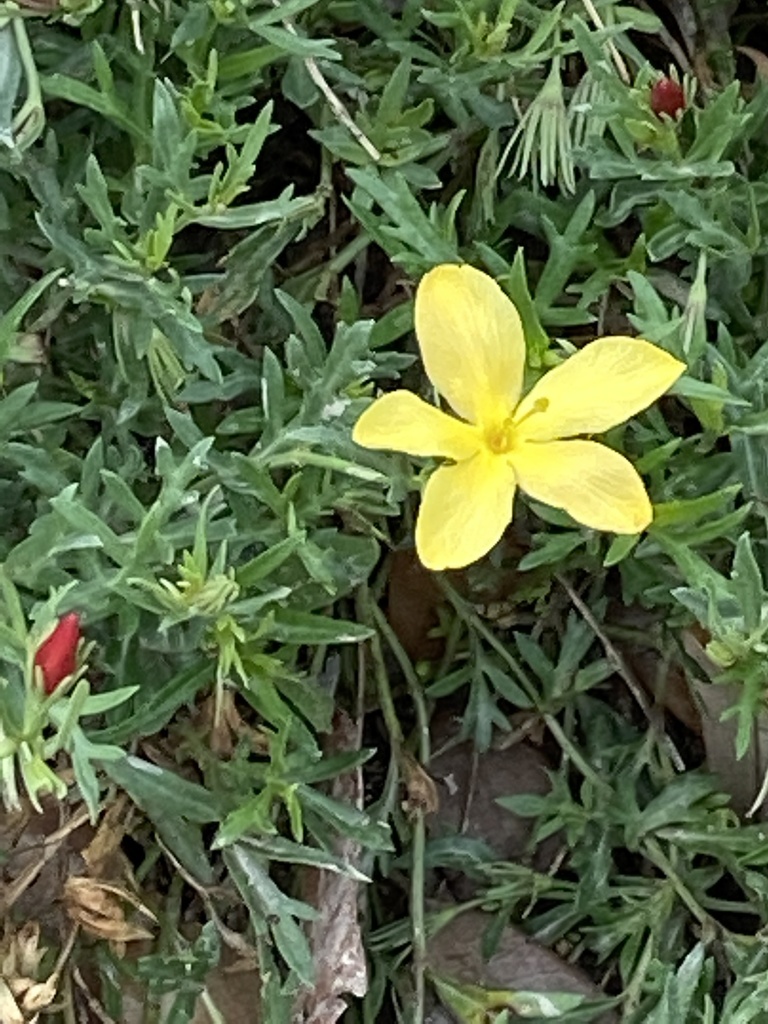
Menodora heterophylla, known as Low Menodora, is a low, spreading perennial in the olive family (Oleaceae), the same family as ash trees, privets and jasmines. It grows only 3 to 10 inches tall from a woody base, with small, variably lobed leaves and bright yellow, star-shaped flowers about an inch across. The flower buds and the outside of the petals are red, so plants in bud look dotted with red.
Low menodora is native to central and southern Texas and northeastern Mexico. It grows on caliche outcrops, rocky hills, gravelly and clay soils and in mesquite pastures, from the Edwards Plateau and the Hill Country south through the South Texas Plains to the Rio Grande. It is common in San Antonio and is often found in mowed parks, cemeteries and roadsides, where its low growth lets it escape the mower.
It blooms mainly in spring but can flower from late winter into fall after rain. It is an excellent native groundcover for dry, sunny spots, rock gardens and between stepping stones in Central and South Texas, and it needs almost no care once established.
Identification
Look for a very low, spreading plant with small, lobed leaves and flat, bright yellow flowers with red undersides, followed by paired, round seed capsules.
Growth Habit
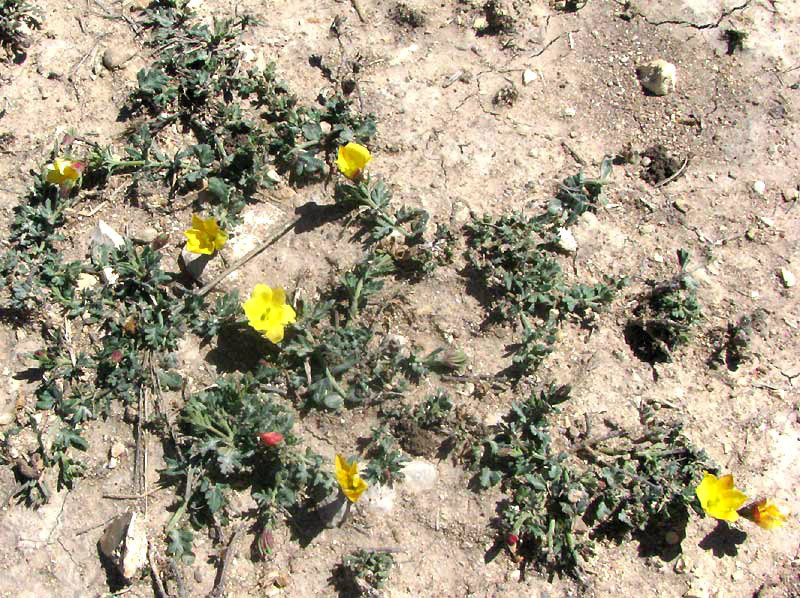
Low menodora is a perennial with a woody root crown and many slender, branching stems that lie on the ground or rise only slightly, usually 3 to 10 inches tall and spreading 1 to 2 feet. Older plants can form loose mats. It often goes dormant in summer drought and greens up again after rain.
Leaves
The species name heterophylla means “different leaves.” The lowest leaves are small and often undivided and oval, while most leaves along the stems are deeply cut into three to seven narrow lobes. The leaves are less than an inch long, gray-green and slightly rough.
Flowers
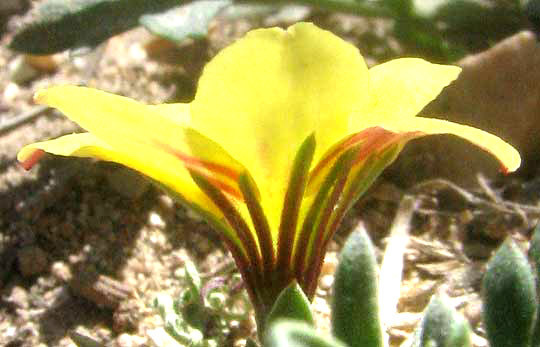
The flowers are borne singly or in small clusters at the branch tips. Each is about 3/4 to 1 1/4 inches across, with a short tube and usually five (sometimes six) broad, spreading, bright yellow lobes. The outside of the petals and the buds are red to reddish-orange. The calyx has many narrow, thread-like lobes. Flowering peaks from February to May, with more flowers through October after rain.
Fruit & Seeds
The fruit is distinctive: a pair of round, papery capsules joined at the base, like two small balls side by side. Each capsule splits around the middle, the top coming off like a lid, to release a few seeds.
Look-alikes
Its relative showy menodora (Menodora longiflora) is taller and has long, slender, trumpet-shaped yellow flowers. Rough menodora (M. scabra) is an upright plant of the Trans-Pecos and Southwest. Yellow flowers of creeping plants such as orange zexmenia and Dahlberg daisy are composite flower heads, not single five-lobed flowers, and their buds are not red.
Quick Facts
| Scientific Name | Menodora heterophylla |
| Family | Oleaceae (olive family) |
| Plant Type | Low, spreading perennial with a woody base |
| Mature Height | 3–10 in |
| Mature Spread | 1–2 ft |
| Growth Rate | Moderate |
| Sun Exposure | Full sun to part shade |
| Water Needs | Low; very drought tolerant |
| Soil Type | Clay, gravel, sandy loam, caliche and rocky limestone |
| Soil pH | Neutral to alkaline (about 7.0–8.5) |
| Bloom Time | February–May; sporadically to October |
| Flower Color | Bright yellow; red outside and in bud |
| Fall Color | None notable |
| Fruit | Paired, round, papery capsules |
| Deer Resistant | Moderately |
| USDA Hardiness Zones | 8–10 |
Native Range
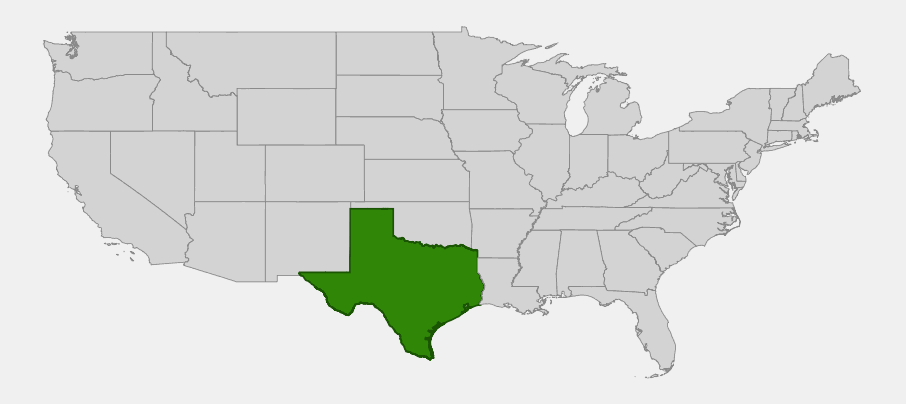
Low menodora is native to Texas and northeastern Mexico. USDA PLANTS lists it only from Texas within the United States, and the Lady Bird Johnson Wildflower Center describes its range as central and southern Texas south to central Mexico, including Coahuila, Nuevo León and Tamaulipas. It is not found in Canada.
In Texas it is most common in the San Antonio area, on the southern and eastern Edwards Plateau and Hill Country, and throughout the South Texas Plains, from Uvalde and Del Rio east to Corpus Christi and south to Zapata and the Rio Grande. It reaches north to the Austin area and Johnson City and west to San Angelo and the Colorado City area on the edge of the Rolling Plains.
It grows in dry, open places: caliche and limestone outcrops, rocky hills, gravelly and clay flats, mesquite pastures and brushland openings, and mowed areas such as parks, cemeteries, lawns and roadsides.
📋 Regional plant lists featuring Low Menodora: South & West Texas
Growing & Care Guide
Low menodora is a tough little native for hot, dry Texas gardens. It is seldom sold, but it is worth seeking out from native plant sales and specialty nurseries in Central and South Texas.
Light
Full sun to part shade. It flowers best in sun, and in part shade it stays greener in summer.
Soil & Water
It grows in almost any well-drained soil, from rocky caliche and limestone to clay and sandy loam. It needs no supplemental water once established, although a deep watering in a long drought brings it out of dormancy. Avoid soggy soil.
Planting Tips
Use it as a low groundcover in a dry, sunny bed, a rock garden or a gravel path, between flagstones, or in a native lawn of buffalograss and other low plants. Plant small plants in fall or early spring, about a foot apart.
Pruning & Maintenance
Very little care is needed. It tolerates occasional mowing at a high setting, which is why it survives in parks and roadsides. Trim back any dead stems in late winter.
Propagation
Grow it from seed collected from ripe capsules in late spring, sown in fall or spring on the surface of a gritty mix. Cuttings of the spreading stems may also root in late spring.
Landscape Uses
- Groundcover: a low, flowering mat for dry, sunny ground
- Rock gardens: fits gaps between rocks and flagstones
- Native lawns: grows with buffalograss and other low natives
- Pollinator gardens: early spring nectar for small bees
- Xeriscapes: needs no irrigation once established
Wildlife & Ecological Value
Low menodora flowers early in the year, when food for native bees is limited in Texas brushland and grassland.
For Pollinators
The flowers produce nectar and are visited by small native bees, flies and small butterflies. The Lady Bird Johnson Wildflower Center lists it as a nectar source.
For Birds
Ground-feeding birds such as doves, quail and sparrows may eat the seeds that fall from the open capsules.
For Mammals
Rabbits and other small mammals may nibble the foliage, but its low growth and tough stems help it survive browsing and grazing.
Ecosystem Role
As a low, perennial groundcover on bare caliche and gravel, low menodora helps hold thin soils in place. It is part of the low, diverse plant community that grows between grasses and shrubs in South and Central Texas.
Cultural & Historical Uses
The genus name Menodora comes from Greek words meaning “force” or “courage” and “gift,” perhaps in reference to the plant’s toughness. The species name heterophylla means “with varied leaves,” because the lower leaves are often undivided while the upper ones are lobed.
Menodoras are surprising members of the olive family, which is better known for trees and shrubs such as olives, ashes, lilacs and privets, as well as jasmines. The paired, lidded capsules are one of the features that set the genus apart.
The red flower buds and petal backs make patches of low menodora look red in the early morning, before the flowers open and turn the same plants bright yellow later in the day.
Frequently Asked Questions
Is low menodora related to olives?
Yes. It belongs to the olive family (Oleaceae), along with ashes, lilacs, privets and jasmines.
Why are the buds red when the flowers are yellow?
The outside of the petals is red to reddish-orange, while the inside is bright yellow. The buds show the red outer side until they open.
Can low menodora be used as a lawn plant?
It can be part of a native lawn mix in dry, sunny areas, and it tolerates occasional mowing at a high setting.
When does low menodora bloom?
Mainly from February to May, with more flowers through summer and fall after rain.
Where does low menodora grow?
In central and southern Texas, especially around San Antonio, on the Edwards Plateau and in the South Texas Plains, and south into northeastern Mexico.

Looking for a nursery that carries Low Menodora?
Browse our native plant nursery directory: Texas

