
Stinging Phacelia (Phacelia malvifolia)
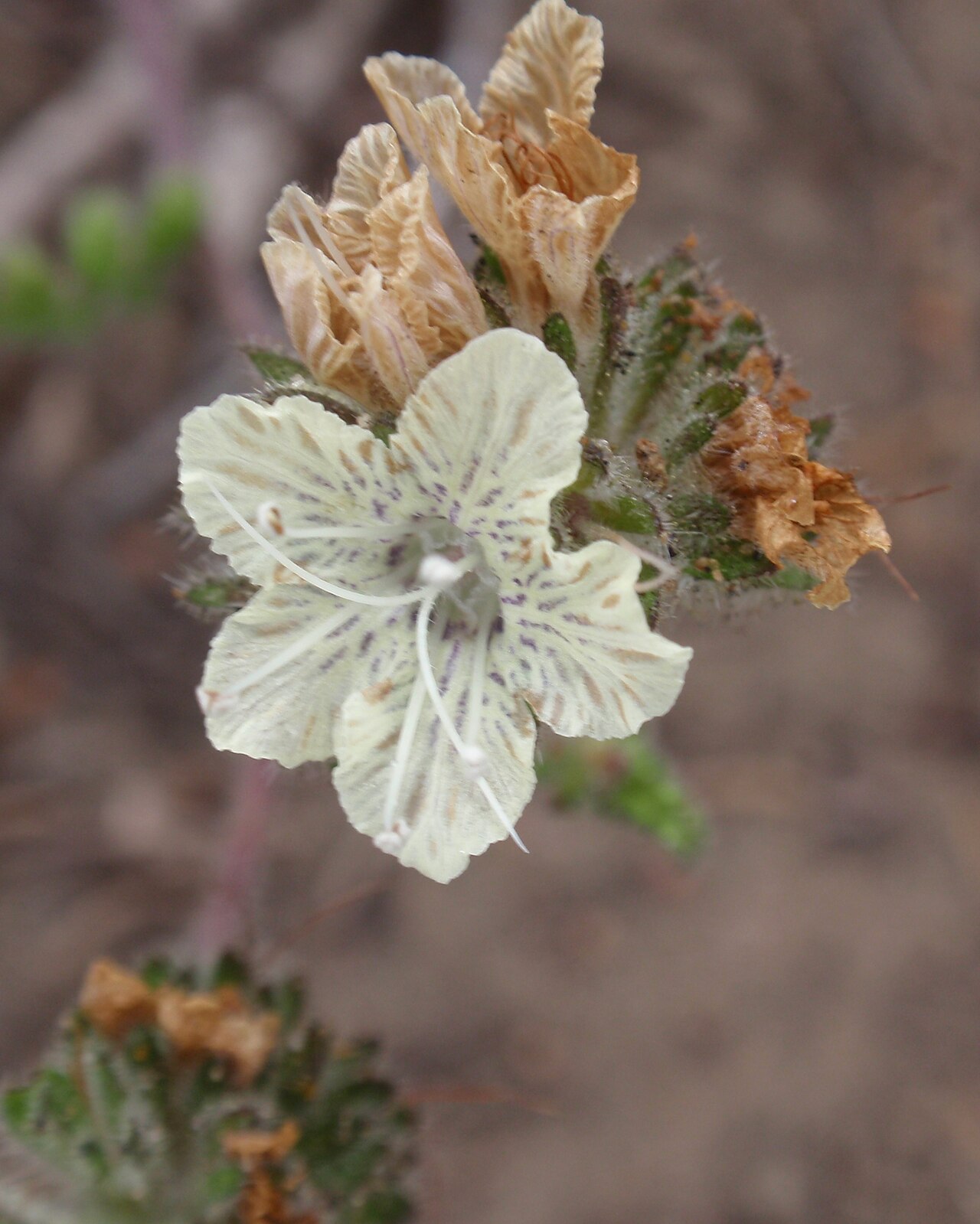
Phacelia malvifolia, known as Stinging Phacelia or mallow-leaved phacelia, is a sprawling annual wildflower of the Pacific Coast, from central California to southwestern Oregon. It has rounded, mallow-like leaves and coiled clusters of small, cream to white, bell-shaped flowers, and it is covered with stiff, bristly hairs that live up to its common name: brushing against it with bare skin can cause a stinging, itchy rash.
It grows on coastal bluffs, dunes and scrub, in forest openings and on disturbed ground, often appearing in quantity after fire, landslides or clearing. Although it is easy to overlook among showier wildflowers, it is an important source of nectar and pollen for native bees along the coast in late spring and summer. The species name malvifolia means “mallow-leaved”.
This guide covers how to identify stinging phacelia, where it grows, whether and how to grow it in a coastal wildflower garden, and how to avoid its stinging hairs.
Identification
Look for a sprawling, bristly annual with rounded, shallowly lobed, toothed leaves and coiled clusters of small, pale cream flowers, usually near the coast. If in doubt, avoid touching it: the stiff hairs sting.
Growth Habit
Stinging phacelia is an annual herb with weak, branching stems that sprawl along the ground or lean on other plants, usually 1 to 3 feet long. The whole plant is coarsely hairy, with stiff bristles mixed with shorter, often glandular hairs.
Leaves
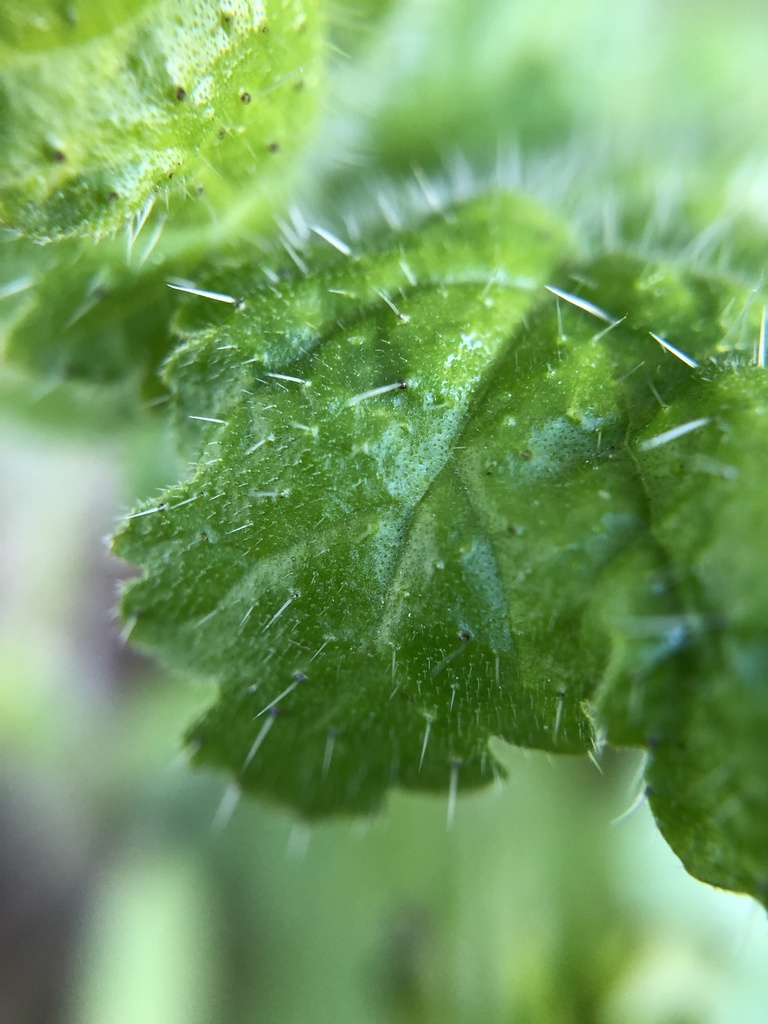
The leaves are alternate, roundish to broadly heart-shaped, about 1 to 3 inches long, with shallow lobes and toothed edges, much like the leaves of a mallow. They are long-stalked and covered with stiff, glassy bristles.
Stinging Hairs
The bristles on the stems and leaves can penetrate skin and cause stinging, itching and a rash in sensitive people, somewhat like a mild nettle. Many phacelias cause skin irritation, but this species is especially well known for it.
Flowers
The flowers are borne in coiled clusters (scorpioid cymes) that uncurl as the buds open. Each flower is small, about 1/4 inch long, bell-shaped to open, white to cream or very pale lavender, with stamens that stick out beyond the petals. Bloom time is mainly April through July.
Look-alikes
Other coastal phacelias have different leaves: California phacelia is a perennial with silvery, divided leaves and lavender flowers. Varileaf phacelia has narrow, often lobed leaves and dense spikes of whitish flowers. Mallows have similar rounded leaves but are not bristly and have larger, five-petaled flowers on separate stalks rather than coiled clusters.
Quick Facts
| Scientific Name | Phacelia malvifolia Cham. |
| Family | Boraginaceae (borage family; formerly Hydrophyllaceae) |
| Plant Type | Sprawling annual herb |
| Mature Height | 6–18 in (stems 1–3 ft long) |
| Mature Spread | 1–3 ft |
| Growth Rate | Fast |
| Sun Exposure | Full sun to part shade |
| Water Needs | Low; winter rain and coastal fog |
| Soil Type | Sandy, rocky or loamy, well-drained soils |
| Soil pH | About 5.5–7.5 |
| Bloom Time | April–July |
| Flower Color | White to cream, sometimes pale lavender |
| Fall Color | None; annual that dies after seeding |
| Fruit | Small capsule with a few pitted seeds |
| Deer Resistant | Yes; the stinging bristles discourage browsing |
| USDA Hardiness Zones | Annual; coastal climates of zones 8–10 |
Native Range
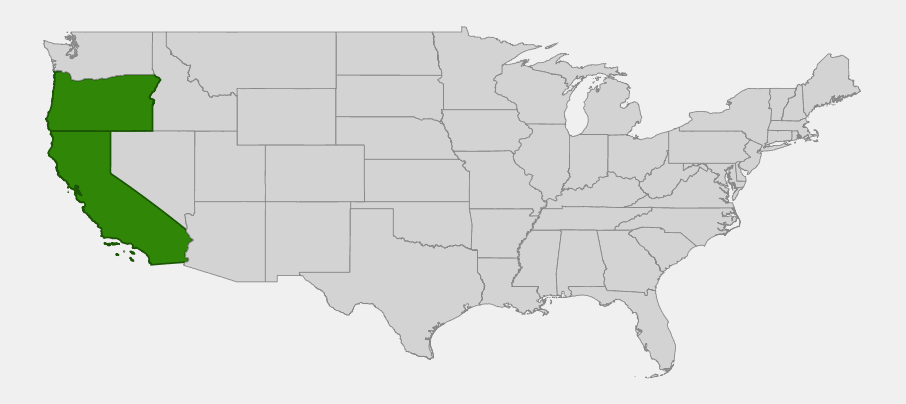
Stinging phacelia is native to the Pacific Coast of the United States. USDA PLANTS lists it in California and Oregon. It is mostly a coastal plant, growing within a few miles of the ocean and in the outer Coast Ranges.
In California it ranges along the coast from around San Luis Obispo and Monterey counties north through the San Francisco Bay Area, Marin, Sonoma and Mendocino counties to the North Coast. It continues north to the coast of southwestern Oregon, which is the northern limit of its range.
It grows on coastal bluffs, stabilized dunes, coastal scrub and grassland, and in openings and edges of coastal forests, often on sandy or rocky soils. It is quick to appear on disturbed ground, such as burned areas, landslides, road cuts and trail edges, generally from near sea level to about 1,500 feet.
📋 Regional plant lists featuring Stinging Phacelia: Western Oregon & Western Washington · California & Nevada
Growing & Care Guide
Stinging phacelia is rarely grown on purpose because of its irritating hairs, but it is a valuable native annual for wild coastal gardens, habitat plantings and restoration of disturbed coastal sites, where it feeds native bees. Seed is seldom sold; it is usually encountered as a volunteer. Plant it away from paths and play areas.
Light
Full sun to light shade. Along the foggy coast it does well in full sun.
Soil & Water
It grows in sandy, rocky or loamy, well-drained soil and needs no irrigation where winter rains and summer fog are reliable. Extra summer water is not needed and may shorten its life.
Planting Tips
Sow seed on bare soil in fall so winter rains can germinate it. Place it at the back of a wild planting or among shrubs such as coyote brush, where it can sprawl and where people will not brush against it.
Pruning & Maintenance
Wear gloves and long sleeves when handling it. Let it set seed if you want it to return, then pull or cut the dry plants in summer. Remove unwanted seedlings while they are small.
Propagation
Seed only. Collect ripe capsules with gloves on in summer and sow in fall. Like many phacelias, it often germinates best on freshly disturbed or burned soil. Collect seed only in small amounts and where permitted.
Landscape Uses
- Coastal habitat gardens: a native annual that feeds many native bees
- Restoration of disturbed coastal sites: quickly covers burned, cleared or eroding ground
- Wild, low-maintenance plantings: needs no water or care where it grows naturally
- Pollinator support: flowers through late spring and summer near the coast
- Natural history study: a local example of a plant with stinging hairs
Wildlife & Ecological Value
Despite its prickly reputation, stinging phacelia is a good wildlife plant, especially for pollinators.
For Pollinators
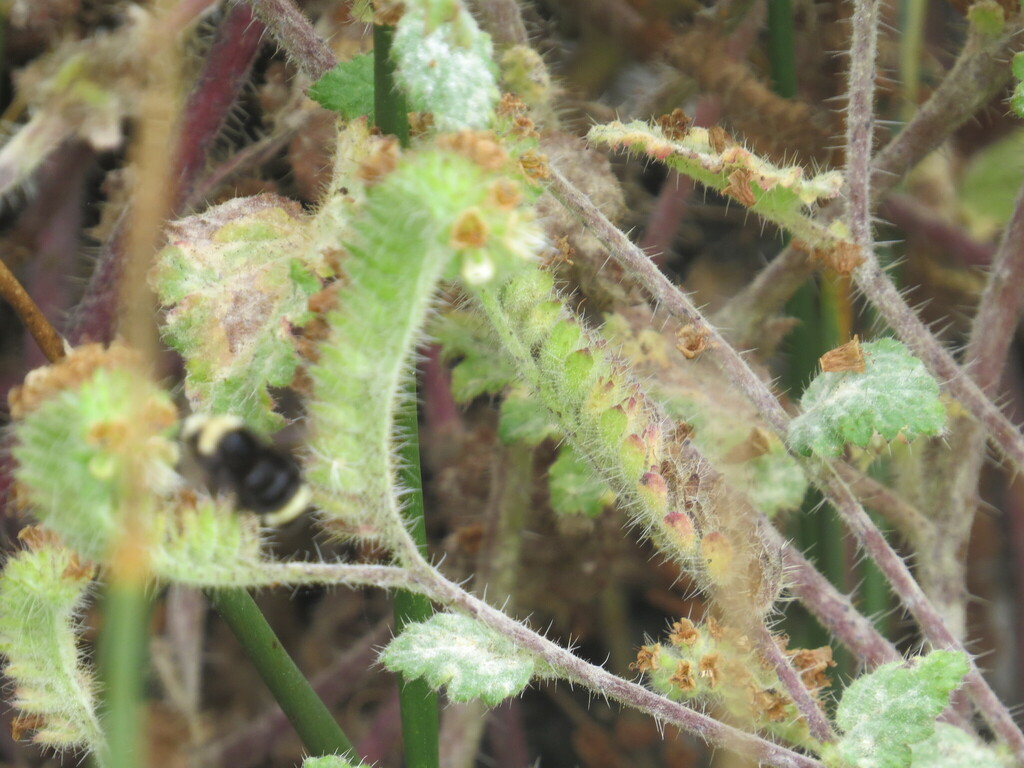
Phacelias are among the best native bee plants in the West, and stinging phacelia’s open flowers are visited by bumble bees, sweat bees, mining bees and other small native bees, as well as honey bees, flies and small butterflies.
For Birds
Finches, sparrows and other seed-eating birds forage on the small seeds after the plants dry in summer, and the sprawling stems offer cover for ground-feeding birds.
For Mammals
The stinging bristles make it unpalatable to deer and most other browsers.
Ecosystem Role
As a fast-growing annual of disturbed coastal ground, it helps cover and hold bare soil after fires and landslides, and it supports the large community of native bees that depend on early- and mid-season wildflowers.
Cultural & Historical Uses
The species was described by the German botanist Adelbert von Chamisso, who collected plants around San Francisco Bay in 1816 as naturalist on the Russian exploring ship Rurik. Many California coastal plants, including the California poppy, were first described from that voyage.
Safety note: the stiff bristles of stinging phacelia can cause stinging, itching and a rash (contact dermatitis) in many people, and some phacelias contain compounds that cause allergic skin reactions. Wear gloves and long sleeves when handling it, wash skin with soap and water after contact, and keep it away from paths. Do not eat any part of the plant.
Hikers along the California coast often learn this plant the hard way, after brushing against it on a trail. Its sting is usually short-lived, but it is a good reason to learn to recognize its rounded, bristly leaves.
Frequently Asked Questions
Does stinging phacelia really sting?
Yes. Its stiff, glassy bristles can cause stinging, itching and a rash on bare skin, somewhat like a mild nettle. Wear gloves and long sleeves around it.
Where does stinging phacelia grow?
Along the Pacific Coast from central California (around Monterey and San Luis Obispo) north to southwestern Oregon, on bluffs, dunes, coastal scrub, forest openings and disturbed ground.
Is stinging phacelia an annual?
Yes. It germinates with winter rains, blooms from about April through July, sets seed and dies.
Why would anyone grow stinging phacelia?
It is an excellent native bee plant and helps cover bare, disturbed coastal ground. It is best used in wild habitat plantings away from paths.
How do I treat a phacelia rash?
Wash the area with soap and water as soon as possible and avoid scratching. Seek medical advice if the reaction is severe or spreads.

Looking for a nursery that carries Stinging Phacelia?
Browse our native plant nursery directory: California · Oregon

