
Stiffbranch Bird’s Beak (Cordylanthus rigidus)
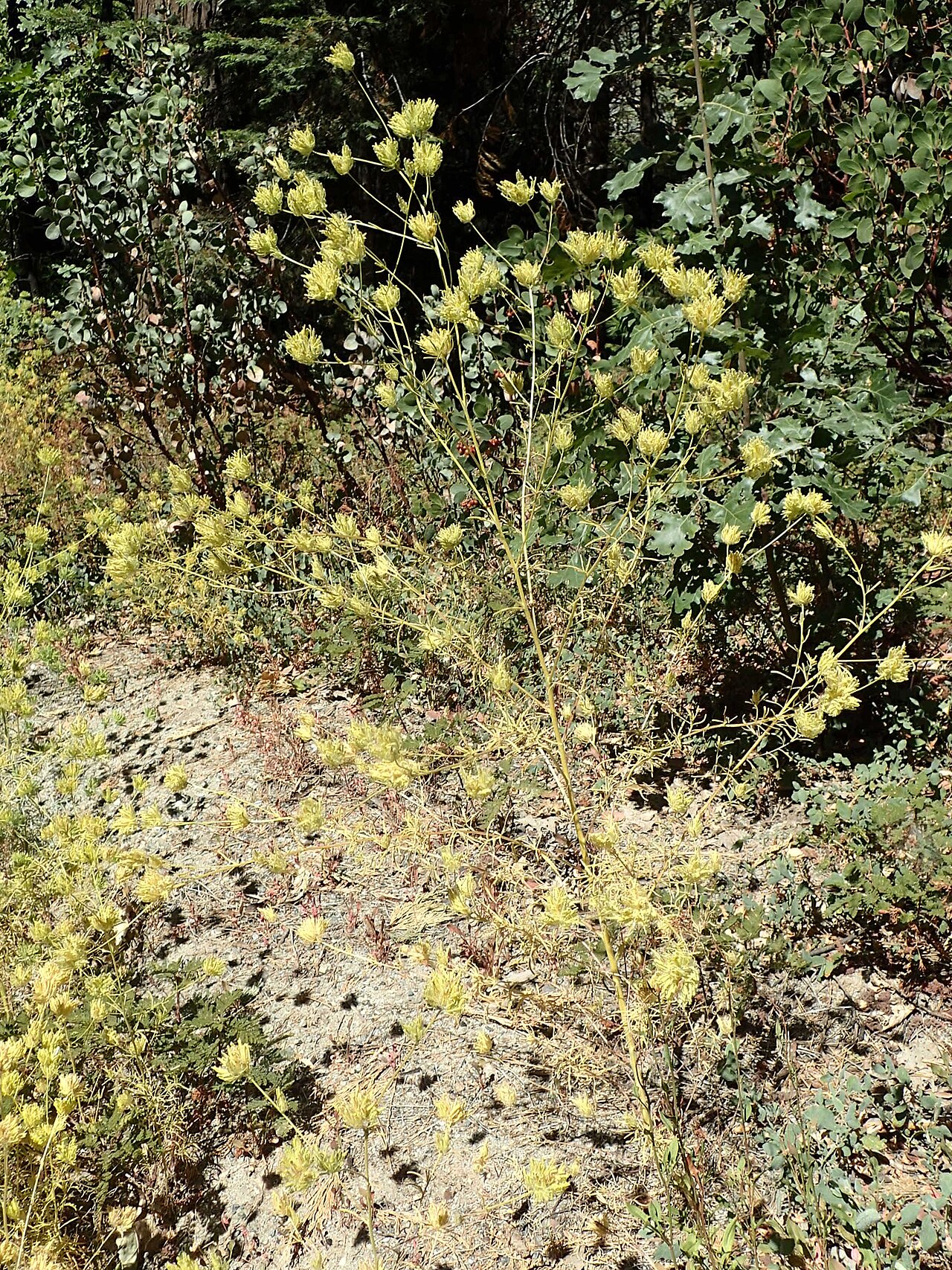
Cordylanthus rigidus, known as Stiffbranch Bird’s Beak, is a summer- and fall-blooming annual in the broomrape family (Orobanchaceae), the family that also includes paintbrushes and owl’s clovers. It grows 1 to 4 feet tall on stiff, wiry, much-branched stems with narrow leaves, and each branch ends in a small, bristly cluster of beak-shaped flowers, pale yellowish to purplish, half hidden among leafy bracts.
It is a hemiparasite: it makes its own food with green leaves, but its roots attach to the roots of nearby plants and take water and nutrients from them. It is native to California and northern Baja California, where it grows on dry, open slopes in chaparral, coastal sage scrub, oak woodland and openings in mountain conifer forests, from near the coast to about 9,000 feet.
Because it depends on host plants and grows only from seed each year, it is almost never grown in gardens. It is best appreciated in the wild, where it blooms in late summer and fall when the hills are dry and few other plants are flowering. One coastal subspecies is rare and protected.
Identification
Look for a stiff, wiry, much-branched annual on dry slopes in late summer, with narrow leaves and bristly, head-like flower clusters at the branch tips, each holding a few pale, beak-shaped flowers.
Growth Habit
Stiffbranch bird’s beak is an annual that grows from a single stem, branching widely above into stiff, upright, wiry branches, usually 1 to 4 feet tall. The stems are green to purplish and often hairy or glandular. By the time it flowers, the lower leaves have often dried, so the plant can look like a small, leafless broom with tufts at the tips.
Leaves
The leaves are alternate, narrow and linear, about 1/2 to 1 1/2 inches long, and sometimes divided into three narrow lobes. They are often finely hairy and can be grayish or yellow-green.
Flowers
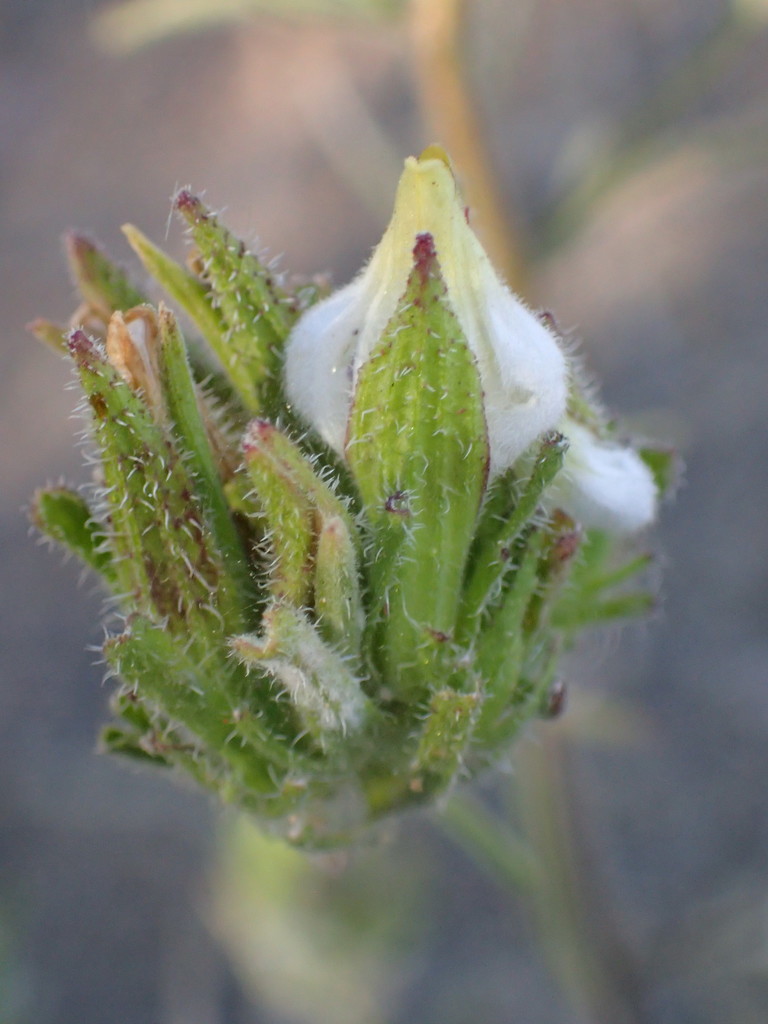
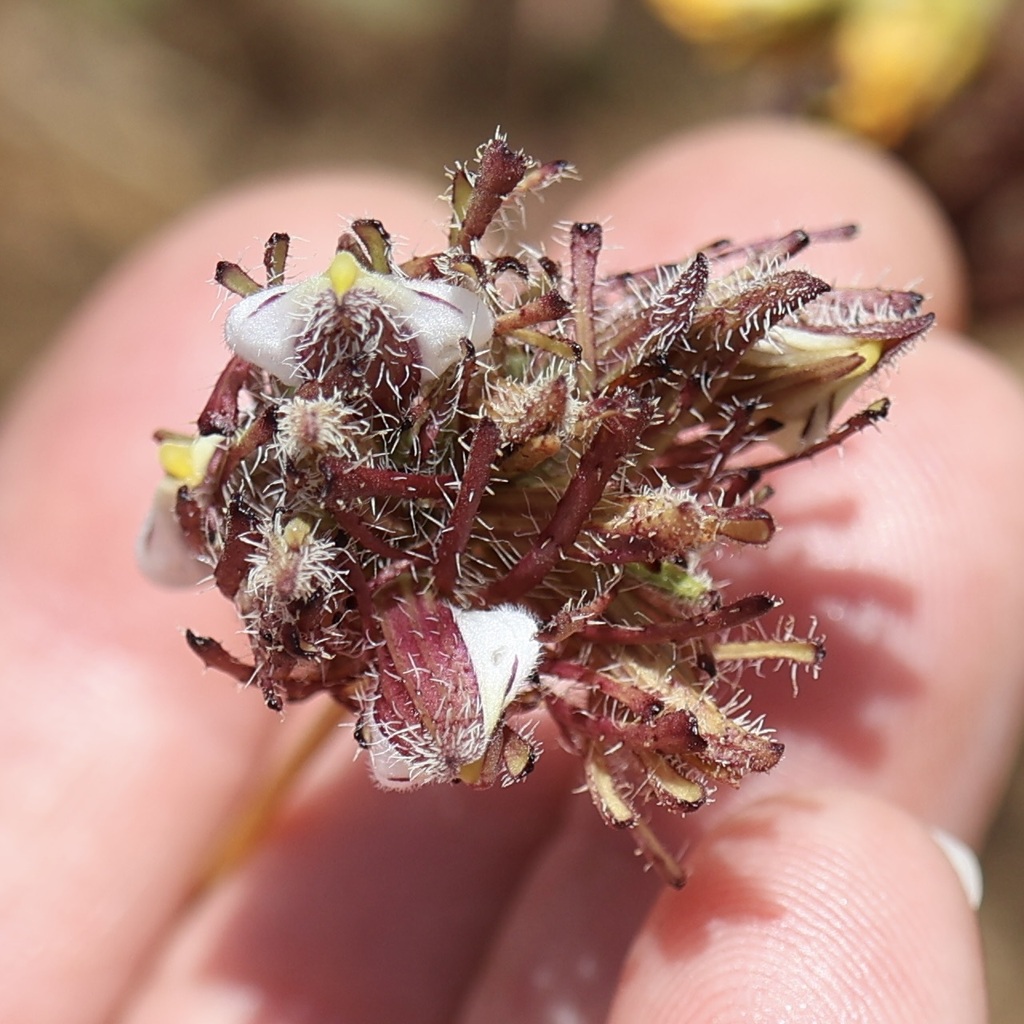
The flowers grow in dense, head-like clusters at the tips of the branches, surrounded by narrow, bristly, leaf-like bracts that are often fringed with stiff hairs and may turn red or purple. Each flower is about 1/2 to 3/4 inch long, a tube with two lips held close together so it looks like a bird’s beak. The flowers are pale yellow, white or cream to purplish, often with darker markings. It blooms from about July to October.
Fruit & Seeds
The fruit is a small, oblong capsule hidden among the bracts, containing a few relatively large, net-veined seeds. The dry, bristly clusters stay on the dead stems into winter.
Look-alikes
Other bird’s beaks (Cordylanthus and the related Chloropyron) are similar; some are rare salt-marsh or alkali-flat plants. Its relatives, the paintbrushes such as scarlet paintbrush, and owl’s clovers such as purple owl’s clover, are also root hemiparasites but have brightly colored bracts. The stiff, broom-like branching, late-season bloom and small, bristly flower clusters set stiffbranch bird’s beak apart.
Quick Facts
| Scientific Name | Cordylanthus rigidus |
| Family | Orobanchaceae (broomrape family; formerly Scrophulariaceae) |
| Plant Type | Hemiparasitic annual herb |
| Mature Height | 1–4 ft |
| Mature Spread | 1–2 ft |
| Growth Rate | Fast (completes its life in one season) |
| Sun Exposure | Full sun |
| Water Needs | Low; grows through the dry season |
| Soil Type | Dry, well-drained sandy, gravelly or rocky soil |
| Soil pH | Slightly acidic to neutral (about 5.5–7.5) |
| Bloom Time | July–October |
| Flower Color | Pale yellow, cream or white to purplish |
| Fall Color | Bracts may turn red or purple |
| Fruit | Small capsule with net-veined seeds |
| Deer Resistant | Unknown |
| USDA Hardiness Zones | Not applicable (annual); grows in zones 7–10 |
Native Range
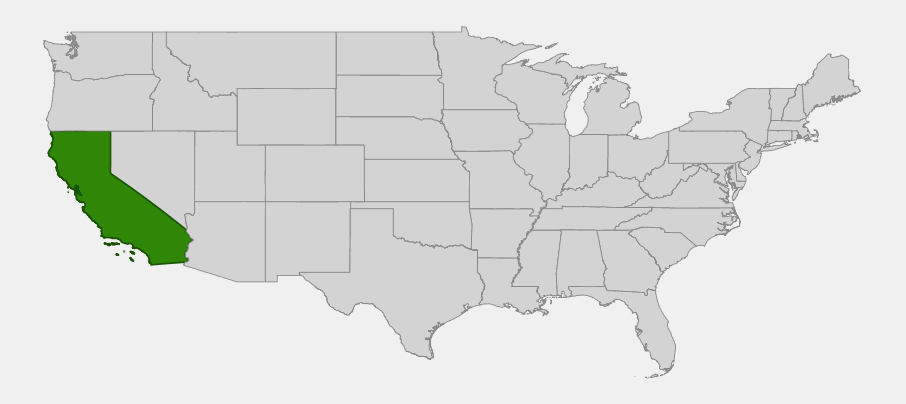
Stiffbranch bird’s beak is native to California and northern Baja California. USDA PLANTS lists it only from California within the United States. It is widespread in the state, in the Coast Ranges, the Transverse and Peninsular Ranges of Southern California and the Sierra Nevada foothills and mountains.
Several subspecies are recognized. Subspecies rigidus is the widespread form of the Coast Ranges and Sierra Nevada; subsp. setiger grows mainly in Southern California; subsp. brevibracteatus occurs mostly at higher elevations in the mountains; and subsp. littoralis, the seaside bird’s beak, grows only in coastal sandy scrub and maritime chaparral in Monterey and Santa Barbara Counties, where it is listed as endangered by the state of California.
It grows in dry, open, sunny places: chaparral and coastal sage scrub, oak woodland, openings in pine and fir forests, sandy flats, rocky slopes, road cuts and burned areas, from near sea level to about 9,000 feet.
📋 Regional plant lists featuring Stiffbranch Bird’s Beak: California & Nevada
Can You Grow It?
Realistically, no. Stiffbranch bird’s beak is not sold by nurseries and is very rarely grown, even by native plant specialists. As a hemiparasitic annual, it needs living host plants for its roots to attach to, and it has to come back from seed every year.
Light
In the wild it grows in full sun on open slopes and in forest openings. It does not persist under dense shrub cover or in shade.
Soil & Water
It grows in dry, well-drained sandy, gravelly or rocky soil and takes much of the water it needs during the dry season from the roots of its hosts. It is adapted to California’s summer drought and does not need, or tolerate, garden irrigation.
Host Plants
Its roots attach to the roots of a variety of nearby shrubs and perennials. Without suitable hosts close by, seedlings grow poorly and seldom flower. That is the main reason it cannot be grown as an ordinary garden plant.
Growing from Seed
Experienced native plant growers occasionally try it by sowing seed in fall directly on bare soil next to established native shrubs or perennials in a dry, sunny spot, and letting winter rain germinate it. Success is uncertain, and there is no dependable method. Only use seed from a legal, ethical source, and never collect from the rare seaside bird’s beak or from protected lands.
Never Dig It Up
Do not dig up wild plants. The roots are joined to those of their hosts, and transplanted plants die. The seaside bird’s beak subspecies is protected by California law.
Where to See It
- Chaparral and sage scrub trails: look on dry, sunny slopes in late summer and fall in the Coast Ranges and Southern California mountains
- Sierra Nevada forest openings: it grows in sunny gaps and along roads in pine and fir forests, for example around Badger Pass in Yosemite National Park
- Burned areas and road cuts: it often appears in open, recently disturbed ground
- Coastal reserves: the seaside bird’s beak grows in a few protected coastal scrub areas of Monterey and Santa Barbara Counties; view it only from trails
- Late-season botany walks: one of the few wildflowers blooming on dry California hills in September and October
Wildlife & Ecological Value
Stiffbranch bird’s beak blooms when California’s hills are dry and most other flowers are done, making it a late source of nectar for bees.
For Pollinators
The narrow, beak-shaped flowers are visited mainly by bees, especially bumble bees and other large native bees that can force open the closed lips to reach the nectar and pollen inside.
For Birds
Small seed-eating birds may pick seeds from the dry flower clusters in fall and winter.
For Mammals
Its effects on browsing mammals are not well documented. It is a small part of the diet of deer and other herbivores at most.
Ecosystem Role
As a root hemiparasite, it draws water and nutrients from its host plants, slightly reducing their growth. Hemiparasites like bird’s beaks can help keep dominant plants in check, and they are part of the diverse community of annuals and perennials that grow in the gaps between shrubs and after fire.
Cultural & Historical Uses
The genus name Cordylanthus comes from Greek words meaning “club flower,” referring to the shape of the flowers. The species name rigidus means “stiff,” for its stiff, wiry branches. The common name bird’s beak describes the closed, beak-like flower.
Bird’s beaks were long placed in the snapdragon family, Scrophulariaceae. DNA studies moved them, with other root hemiparasites such as paintbrushes, owl’s clovers and louseworts, into the broomrape family, Orobanchaceae, which also contains fully parasitic plants without green leaves.
Several bird’s beaks in California are rare, including the seaside bird’s beak and the salt-marsh bird’s beaks of the related genus Chloropyron. They are reminders that even inconspicuous annuals can be important for conservation.
Frequently Asked Questions
Can I grow stiffbranch bird’s beak in my garden?
Realistically, no. It is a hemiparasitic annual that needs host plants and is not sold by nurseries. It is best enjoyed in the wild.
What is a hemiparasite?
A hemiparasite has green leaves and makes its own food but also attaches its roots to other plants to take water and nutrients. Paintbrushes and owl’s clovers are other examples.
Why is it called bird’s beak?
The two lips of each flower are held closely together, forming a narrow, pointed tube that looks like a bird’s beak.
Is stiffbranch bird’s beak rare?
The species as a whole is fairly common in California, but the seaside bird’s beak subspecies is rare and listed as endangered by the state.
When does stiffbranch bird’s beak bloom?
From about July to October, late in California’s dry season.

Looking for a nursery that carries Stiffbranch Bird’s Beak?
Browse our native plant nursery directory: California

