
Tropical Speedwell (Evolvulus alsinoides)
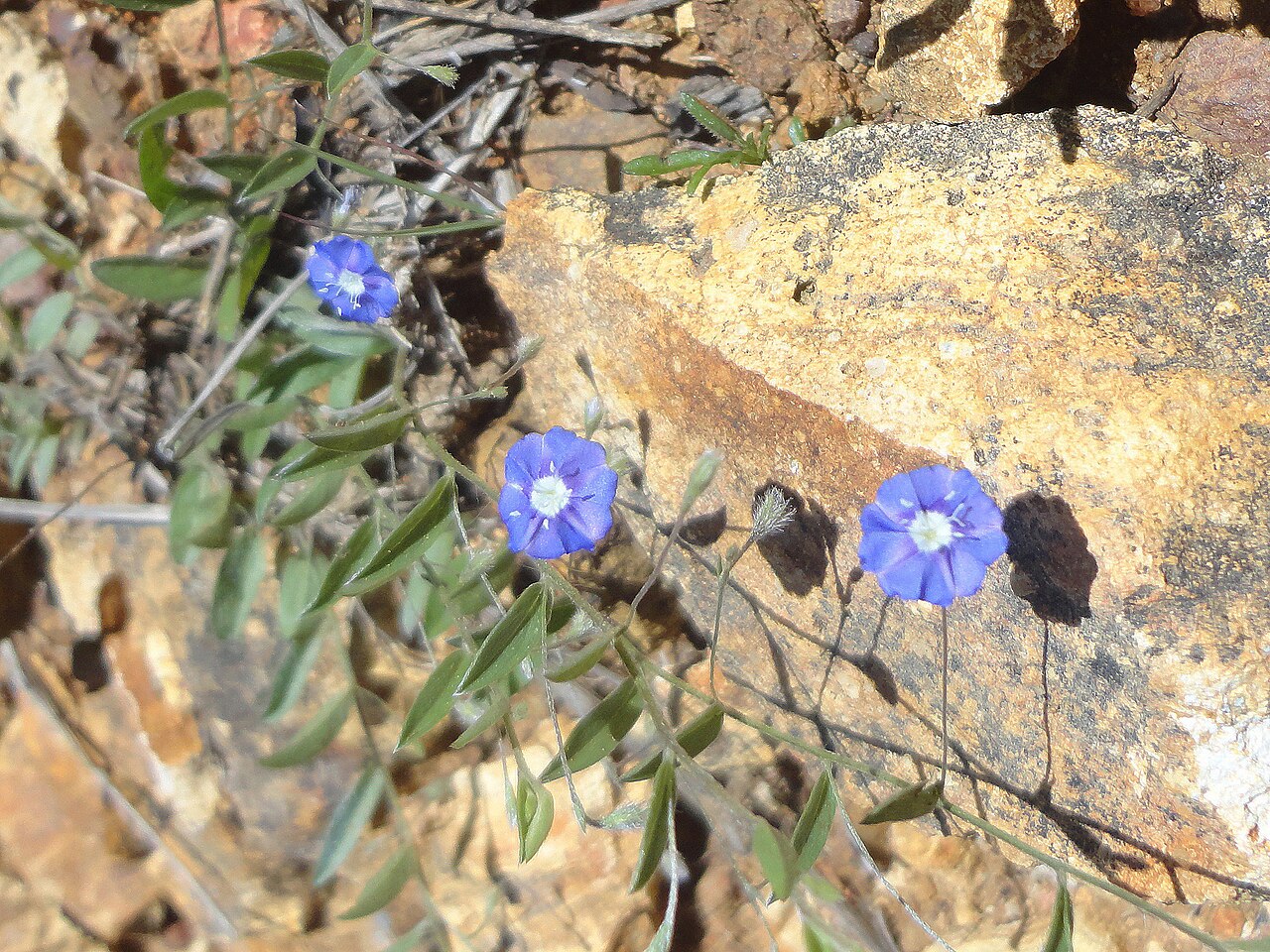
Evolvulus alsinoides, listed by USDA as Slender Dwarf Morning-glory and also called Tropical Speedwell, dwarf morning-glory or ojitos azules (“little blue eyes”), is a tiny wildflower with outsized charm. From a low tuft of wiry, hairy stems it opens sky-blue flowers about half an inch across, each with a pale center, that look up from dry grassland and rocky ground on summer mornings.
Despite the name “speedwell,” it is not related to the true speedwells (Veronica); it belongs to the morning-glory family, Convolvulaceae. Unlike its twining cousins, though, it never climbs. It is one of the most widespread wildflowers in the world, native across the tropics and subtropics of the Americas, Africa, Asia and Australia.
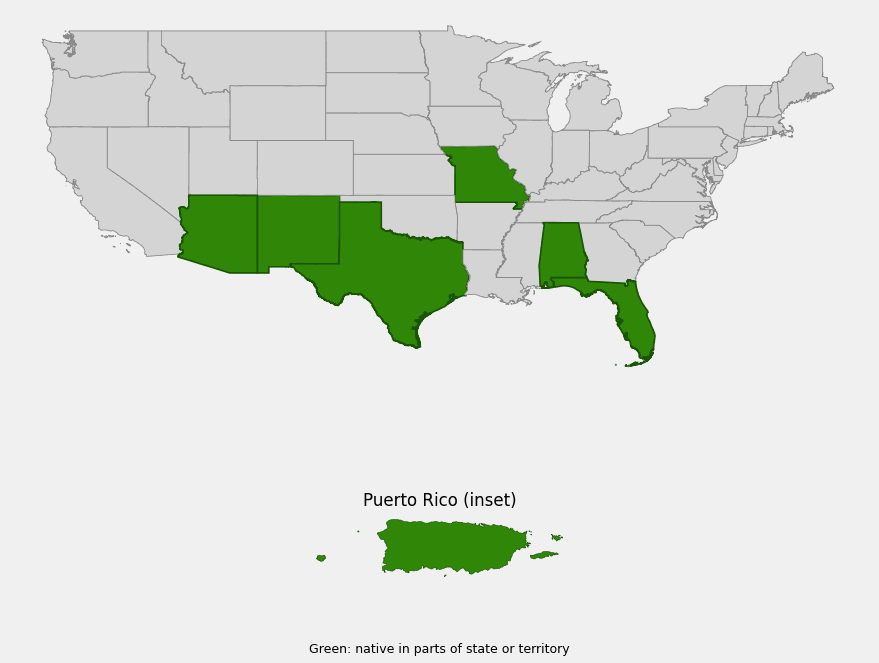
In the United States, USDA PLANTS lists it as native in Arizona, New Mexico, Texas, Florida, Alabama and Missouri, plus Puerto Rico and the Virgin Islands. Our plants in the Southwest belong mainly to var. angustifolius. This guide covers how to recognize it, where it grows, how to add it to a dry, sunny garden, and its long history as a medicinal herb in India.
Identification
Slender dwarf morning-glory is small and easy to miss. Look for wiry, hairy stems and a few half-inch blue flowers with a white throat, held on threadlike stalks, in dry, open ground.
Growth Form
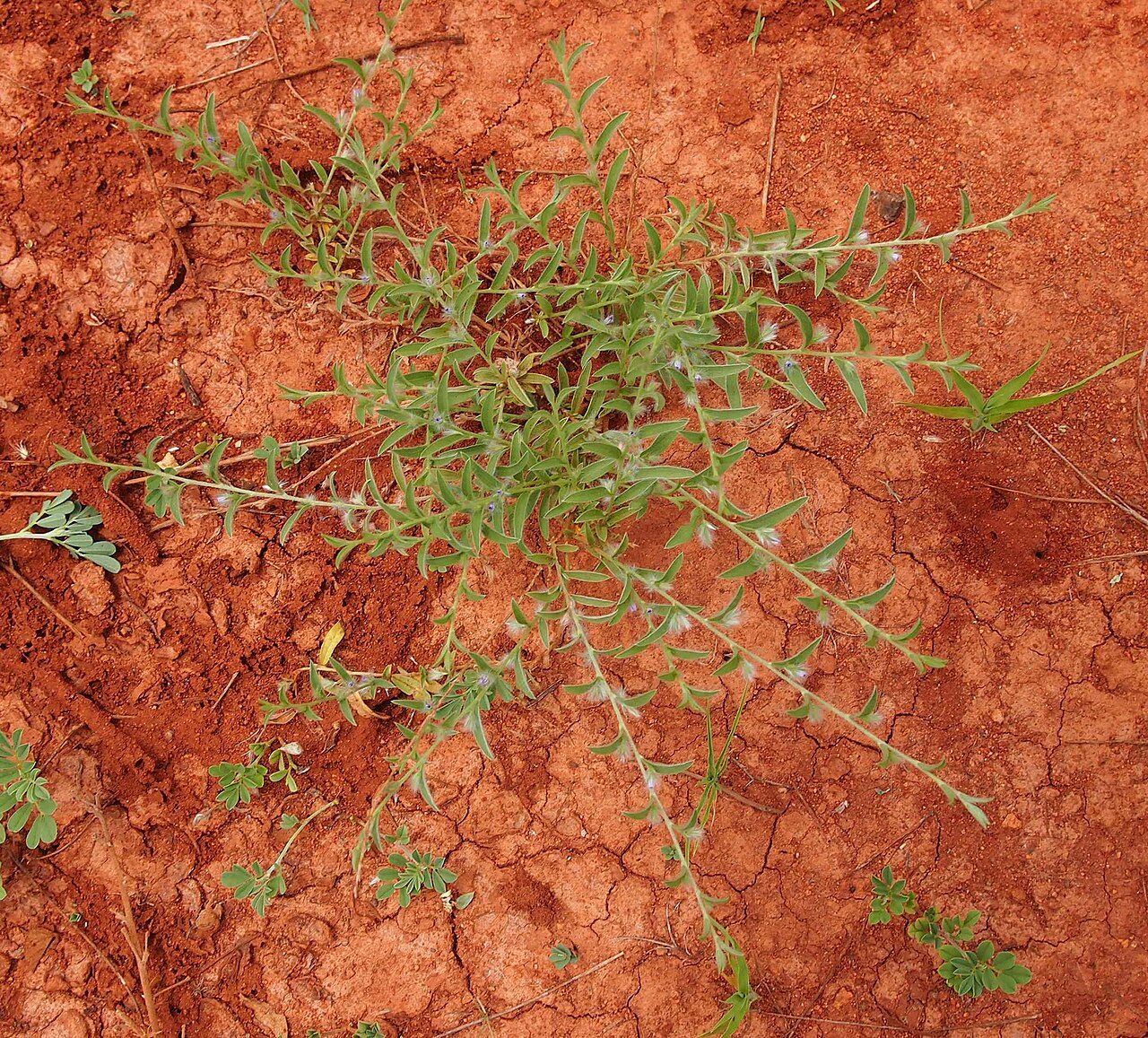
It is a perennial herb with a woody base and a slender taproot. Several to many thin stems, 4 to 12 inches long, sprawl along the ground or lean upward, forming a loose tuft. The stems are covered in soft, silky or spreading hairs, giving the plant a grayish look.
Leaves
The leaves are small, alternate, untoothed and nearly stalkless, usually narrowly oblong to lance-shaped and a quarter inch to an inch long, with hairs on both surfaces. In the Southwest var. angustifolius has especially narrow leaves.
Flowers
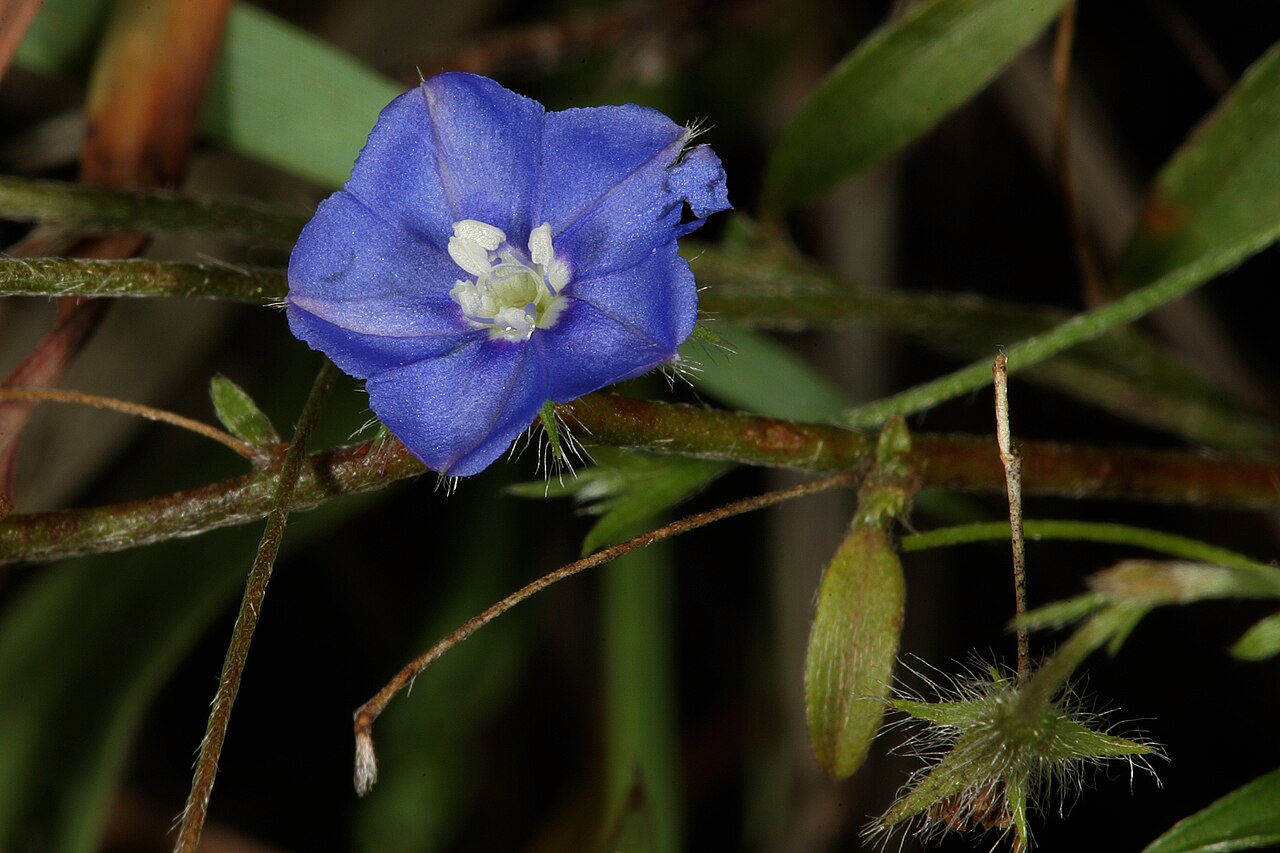
The flowers grow singly or in small groups on long, thread-thin stalks from the leaf axils. Each corolla is shallowly bowl-shaped to nearly flat, about a third to half an inch across, with five shallow lobes, pale to bright sky blue (rarely white) with a whitish center. The flowers open in the morning and close by afternoon. In Texas and the Southwest it blooms mostly from spring to fall, and in frost-free places nearly year-round.
Fruit & Similar Species
The fruit is a small, round capsule with up to four seeds. Silky Evolvulus (E. sericeus) has silvery-silky leaves and white to pale lavender flowers on very short stalks. Shaggy dwarf morning-glory (E. nuttallianus) of the Great Plains has lavender flowers nearly hidden among densely hairy leaves. The garden plant sold as blue daze is a different species, Evolvulus glomeratus, from Brazil.
Quick Facts
| Scientific Name | Evolvulus alsinoides (L.) L.; Southwest plants mostly var. angustifolius Torr. |
| Family | Convolvulaceae (morning-glory family) |
| Plant Type | Low perennial herb (wildflower) |
| Mature Height | 2–12 in |
| Mature Spread | 6–12 in |
| Growth Rate | Moderate |
| Sun Exposure | Full sun to light shade |
| Water Needs | Low; drought tolerant |
| Soil Type | Sandy, gravelly or rocky well-drained soil, including limestone and igneous soils |
| Soil pH | About 6.0–8.5 |
| Bloom Time | Spring to fall; nearly year-round where frost-free |
| Flower Color | Sky blue to pale blue with a white center (rarely white) |
| Fall Color | None |
| Fruit | Small round capsule with 1–4 seeds |
| Deer Resistant | Not reliably; too small to matter to most browsers |
| USDA Hardiness Zones | 7–11 |
Native Range
Slender dwarf morning-glory is native throughout the warm regions of the world: from the southern United States through Mexico, Central America, the Caribbean and South America, and across tropical Africa, Madagascar, India, Southeast Asia and northern Australia. Few wildflowers have such a large natural range.
In the United States it is most common in the Southwest. In Arizona, New Mexico and Texas it grows on rocky slopes, desert grasslands, oak and juniper woodlands and limestone hills, mostly as var. angustifolius. In Florida, where the Atlas of Florida Plants lists it as native, it grows in dry, sunny pinelands and sandy openings. Puerto Rico and the Virgin Islands have the typical tropical form in dry pastures and coastal scrub.
The Alabama and Missouri records are outlying ones. Alabama has a few records from the Gulf Coast region, and Missouri has a small number of records from rocky glades in the southwestern Ozarks. We include them on the map because USDA lists the species as native there, but it is rare in both states.
📋 Regional plant lists featuring Tropical Speedwell: Arizona & New Mexico · South & West Texas · North & South Florida · Alabama, Georgia & Mississippi · Illinois, Iowa & Missouri · Puerto Rico
Growing & Care Guide
Slender dwarf morning-glory is rarely sold, but it is a charming addition to a rock garden, a dry meadow or the gaps in a native lawn. Grow it from seed, give it sun and sharp drainage, and do not overwater.
Light
Full sun gives the most flowers. It tolerates light shade from open trees, as in oak and juniper woodland, but in deep shade it becomes sparse.
Soil & Water
Plant in lean, well-drained soil: sand, gravel, rocky loam or limestone soil. Rich, moist garden soil leads to weak, floppy plants and rot. Water seedlings until they are established, then only during long dry spells. In the desert, summer rains trigger its main flush of growth and flowers.
Planting Tips
Sow seed in spring or early summer on the surface of a gritty seed mix or directly into a prepared rock garden, pressing it in lightly. Scratching (scarifying) the hard seed coat can speed germination. Space small plants about 6 to 12 inches apart, between rocks or along the edge of a path where their tiny flowers can be seen up close.
Pruning & Maintenance
No pruning is needed. Keep taller plants from shading it out, and avoid heavy mulch, which holds moisture against the crown. In a native lawn or meadow, mow high and infrequently so the plants can flower and set seed.
Propagation
Collect the small round capsules as they turn tan and dry, and sow the seed fresh or store it cool and dry. Established plants can also be divided carefully in spring, though the deep taproot makes transplanting difficult. Do not dig plants from the wild, especially in Alabama and Missouri where it is rare.
Landscape Uses
- Rock gardens: a tiny blue accent between stones in hot, dry sites
- Native meadows and lawns: a low wildflower among short grasses such as grama and buffalograss
- Desert and Hill Country gardens: pairs with other small, drought-tolerant natives
- Containers and troughs: a delicate plant for a gritty mix in a sunny spot
- Pollinator plantings: morning flowers for small native bees
Wildlife & Ecological Value
Slender dwarf morning-glory is small, but it adds a steady supply of flowers to dry grasslands and rocky slopes over a long season.
For Pollinators
Small native bees, including sweat bees, visit the blue flowers in the morning for pollen and nectar. Small butterflies and flies also stop at them.
For Birds
Ground-feeding birds such as quail and sparrows may eat the small seeds, and the plants are part of the low ground cover that shelters insects birds feed on.
For Mammals
Rabbits and other small grazers may nibble it, but it is too small and scattered to be an important food plant.
Ecosystem Role
As a deep-rooted, low perennial it helps hold thin soils on rocky slopes and in open grasslands, and it fills the spaces between bunchgrasses, adding to the diversity of native ground cover.
Cultural & Historical Uses
In India, Evolvulus alsinoides is known as Vishnukranti and is one of the plants called shankhpushpi in Ayurveda, a traditional remedy used for memory, nerves and fever. It has been the subject of laboratory studies on its plant compounds, but there is no reliable clinical evidence for these uses, and it should not be taken as medicine without professional advice.
The genus name Evolvulus means “not twining” or “untwisted,” from the Latin evolvere, “to unroll,” a reference to the fact that, unlike most of its morning-glory relatives, it does not climb. The species name alsinoides means “like Alsine,” an old name for chickweed, describing its small leaves and sprawling habit.
The common name “tropical speedwell” came from its blue, speedwell-like flowers and its tropical range. In Spanish-speaking regions it has many names, such as ojitos azules, pico de pájaro and hierba de sabana.
Frequently Asked Questions
Is tropical speedwell a real speedwell?
No. True speedwells are Veronica species in the plantain family. Tropical speedwell (Evolvulus alsinoides) is in the morning-glory family; the name refers only to its small blue flowers.
Is Evolvulus alsinoides native to the United States?
Yes. USDA PLANTS lists it as native in Arizona, New Mexico, Texas, Florida, Alabama and Missouri, and in Puerto Rico and the Virgin Islands. It is most common in the Southwest.
Is it the same as blue daze?
No. Blue daze, the popular bedding plant, is Evolvulus glomeratus, a Brazilian relative with larger, brighter flowers. Slender dwarf morning-glory is a smaller, more delicate native wildflower.
Why do the flowers close in the afternoon?
Each flower lasts only one morning, opening early and closing by afternoon heat. New flowers open on following days over a long season.
Can I grow slender dwarf morning-glory in my garden?
Yes, in a sunny, very well-drained spot such as a rock garden or dry meadow. Grow it from seed, since nursery plants are rarely available, and avoid rich soil and overwatering.

Looking for a nursery that carries Tropical Speedwell?
Browse our native plant nursery directory: Alabama & Arizona · Florida · Missouri · New Mexico · Texas

