
Night-Blooming Cereus (Peniocereus greggii)
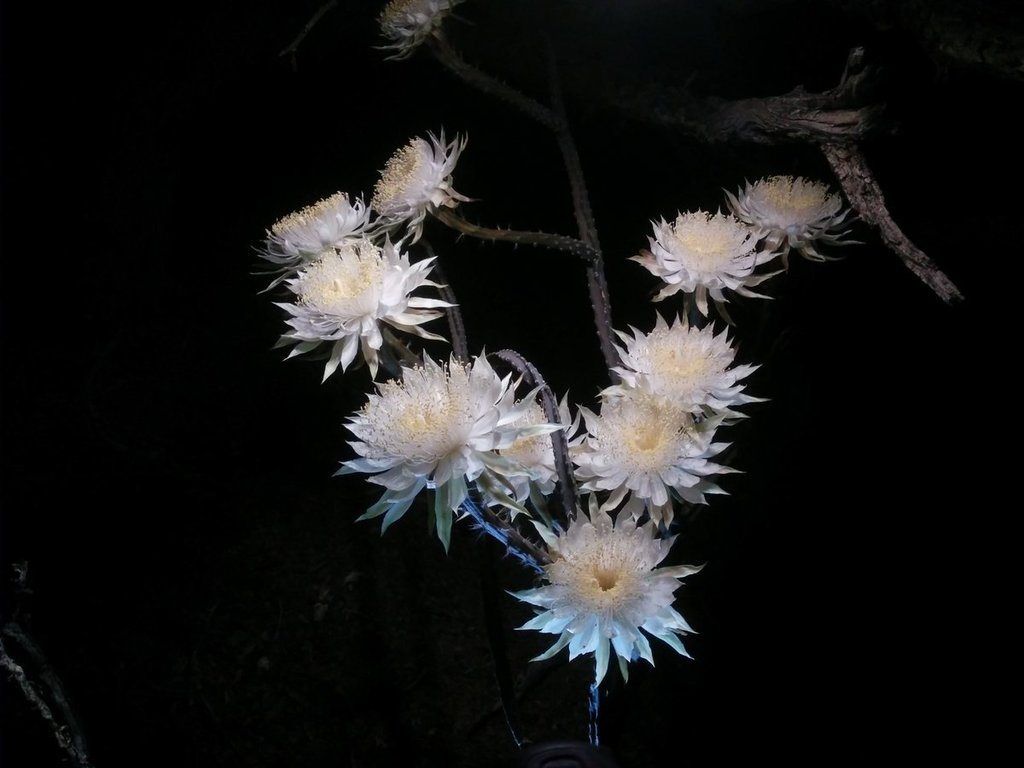
Peniocereus greggii, known as Night-Blooming Cereus, Arizona queen of the night, desert night-blooming cereus or Gregg’s nightblooming cereus, is one of the most extraordinary cacti of the American Southwest. For most of the year it looks like a handful of dead gray sticks hidden inside a creosote bush or mesquite. Beneath the ground, though, it has a huge, turnip-like tuberous root, and on a few nights each summer it opens large, pure white, intensely fragrant flowers that last only one night.
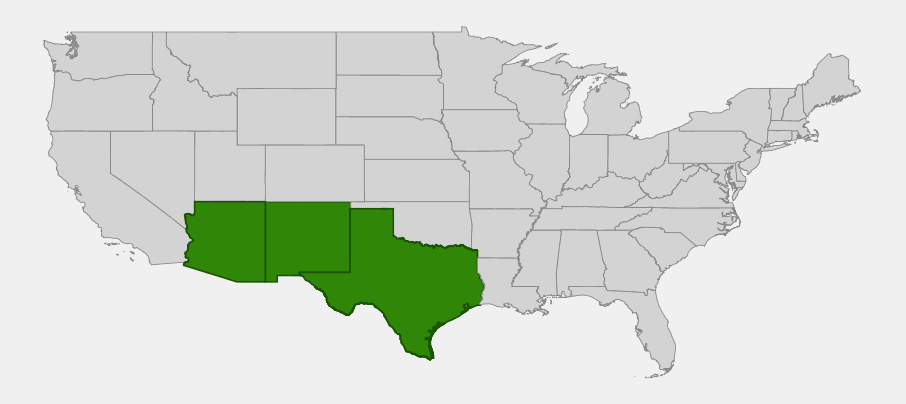
It is native to the Chihuahuan and Sonoran Deserts, from southern Arizona east through southern New Mexico to western Texas and south into northern Mexico. Many plants in a local area tend to bloom on the same night or within a few nights, usually in June or early July, and the mass bloom has become a famous event at desert gardens such as Tohono Chul in Tucson, where visitors gather after dark to see it.
This guide covers how to find and identify it, where it grows, and how to grow nursery-propagated plants in a desert garden or a container. It is protected under the Arizona Native Plant Law and is uncommon in much of its range, so never dig plants or roots from the wild.
Identification
Out of flower, night-blooming cereus is famously hard to spot. Look for slender, dark gray-green, ribbed stems with tiny spines, leaning on or tangled within the branches of a desert shrub. Its stems look like dead twigs, and that camouflage is part of its survival strategy.
Stems
A plant has one to a few thin, stiff stems usually 1 to 3 feet long (occasionally longer), and only about ½ to 1 inch thick. They are dull gray-green to purplish brown and nearly leafless, with 4 to 6 low ribs. Small areoles along the ribs carry tiny, dark, pressed-flat spines just a few millimeters long. The stems are weak and lean on a host shrub for support, and they often die back and are replaced by new shoots from the root.
Root
The most remarkable part of the plant is underground: a large, fleshy, turnip-shaped tuberous root that stores water and food. On mature plants it is commonly several pounds and can be much larger, out of all proportion to the slender stems. The root lets the plant survive long droughts and regrow after its stems are eaten or frozen.
Flowers
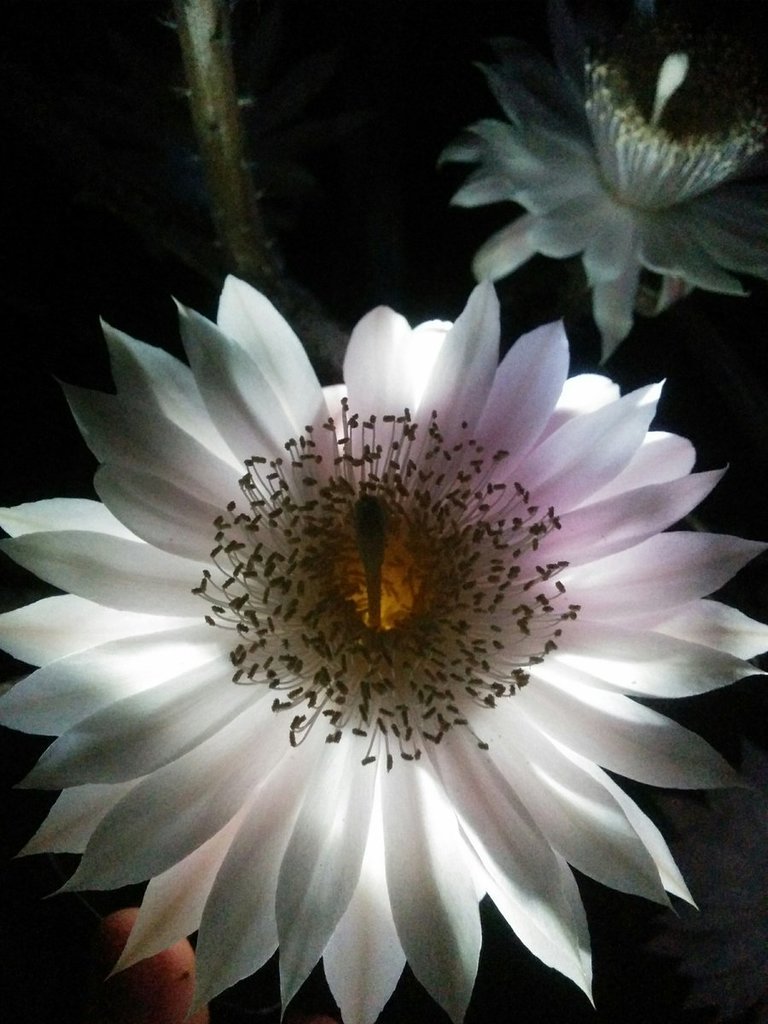
The flowers are borne along the upper stems, mostly in June and early July. They are white, 2 to 3 inches across and 6 to 8 inches long, with a slender, scaly, brownish tube and many narrow, pointed petals and outer tepals that are pinkish to brown on the back. They open after sunset, release a strong, sweet vanilla-like scent that can carry a long way, and close by mid-morning the next day. Many plants in an area bloom on the same few nights.
Fruit & Seeds
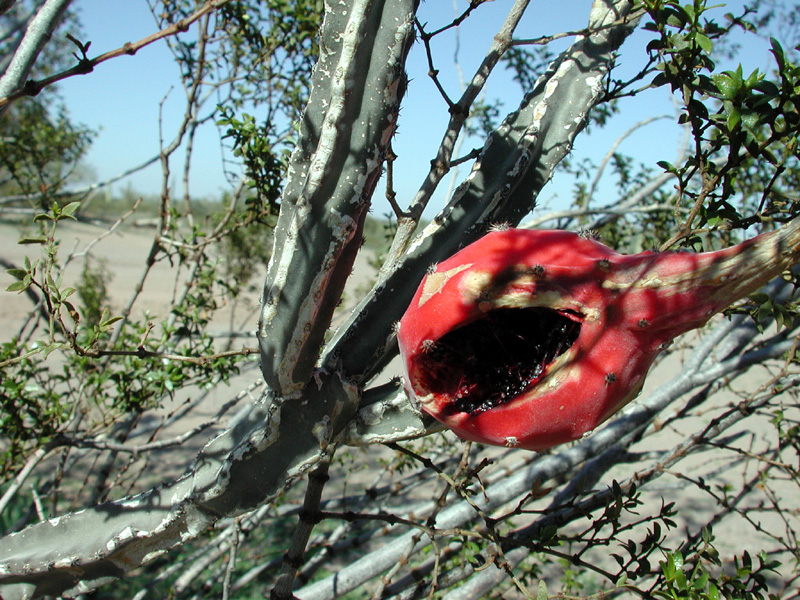
Pollinated flowers ripen into egg-shaped, bright red fruits about 2 to 3 inches long, covered with small spines that fall away as they ripen. In late summer they split to expose sweet, red pulp packed with shiny black seeds, which are eaten and spread by birds and other animals.
Quick Facts
| Scientific Name | Peniocereus greggii (Engelm.) Britton & Rose (syn. Cereus greggii Engelm.) |
| Family | Cactaceae (cactus family) |
| Plant Type | Slender-stemmed cactus with a large tuberous root |
| Mature Height | 1–3 ft (occasionally taller when supported by a shrub) |
| Mature Spread | Under 1 ft; stems lean through a host shrub |
| Growth Rate | Slow |
| Sun Exposure | Filtered sun to part shade (under a nurse shrub) |
| Water Needs | Very low; dry winters |
| Soil Type | Sandy, gravelly or silty desert soil with excellent drainage |
| Soil pH | About 7.0–8.5 |
| Bloom Time | June–July (opens at night, for one night) |
| Flower Color | White (pinkish-brown outer tepals) |
| Fall Color | None |
| Fruit | Egg-shaped, bright red fruit with black seeds |
| Deer Resistant | Partly; stems are inconspicuous, but rodents and rabbits eat them |
| USDA Hardiness Zones | 8–11 (dry soil is essential in cold weather) |
Native Range
Night-blooming cereus ranges across the northern Chihuahuan and Sonoran Deserts. USDA PLANTS and the Lady Bird Johnson Wildflower Center record it from Arizona, New Mexico and Texas, and its range continues into the Mexican states of Sonora and Chihuahua. The Arizona populations, from about Tucson and the Gila Bend Mountains westward and south to the border, are usually separated as var. transmontanus. Plants in southern New Mexico, west Texas and Chihuahua are var. greggii.
It grows on desert flats, bajadas and along washes, usually at about 1,000 to 5,000 feet, almost always inside or beneath a shrub such as creosote bush, mesquite, catclaw acacia or whitethorn acacia. The host shrub shades the plant, hides it from animals, and supports its weak stems. Because it is so inconspicuous, its true abundance is hard to judge, and many people live for years near wild plants without noticing them.
Its numbers have declined in places where desert has been cleared for development and agriculture, and plants are sometimes illegally dug for their roots or for gardens. In Arizona it is protected under the Arizona Native Plant Law, and the eastern variety is considered rare in parts of New Mexico and Texas. Anyone who finds a plant on land slated for clearing should contact local native plant salvage programs rather than digging it themselves.
📋 Regional plant lists featuring Night-Blooming Cereus: Arizona & New Mexico · South & West Texas
Growing & Care Guide
Nursery-grown night-blooming cereus is easy to grow in the Southwest if you copy how it lives in the wild: plant it at the base of a shrub, in very well-drained soil, and keep it dry. It also grows well in a deep container. Buy plants only from nurseries that propagate them from seed or cuttings, or from legal salvage programs, never from wild-dug sources.
Light
In the desert, give it filtered sun or partial shade, as it would get under a creosote bush or mesquite. Full, unprotected afternoon sun in the low desert can bleach and scorch the stems. In a container, a spot with morning sun and afternoon shade, or bright light filtered through a tree, works well. Indoors, it needs a very bright window or grow light, and it rarely blooms without a hot, sunny summer outdoors.
Soil & Water
Use a fast-draining, gritty soil: native desert soil, or a cactus mix with plenty of pumice or coarse sand. The tuberous root rots easily in wet soil, especially in cool weather. In the ground in the desert, established plants usually need only occasional deep watering during long summer droughts. In containers, water thoroughly every two to three weeks in summer and keep almost completely dry from late fall to early spring.
Planting Tips
Plant it on the north or east side of a desert shrub, such as creosote bush or a small mesquite, so the stems can lean into its branches. Set the root so that its top is just below the soil surface. In a container, choose a pot deep enough for the root to enlarge, and provide a small trellis or support for the stems. Mark the location in the garden, because the plant is easy to lose track of, especially when stems die back.
Pruning & Maintenance
No pruning is needed beyond removing dead stems. Protect young plants from rabbits and packrats with wire mesh if needed. If the stems are eaten or freeze back, do not give up: new shoots often appear from the root the following season. Fertilize lightly, if at all, with a low-nitrogen cactus fertilizer in early summer.
Propagation
Stem cuttings are the easiest method. Let a 6- to 12-inch stem piece dry for a week or two until the cut end calluses, then plant it in dry, gritty mix and water lightly after a couple of weeks; it will slowly form a new tuberous root. Seed from ripe fruits germinates in warm, well-drained mix, and seedlings start forming their storage roots within the first year.
Landscape Uses
- Desert and wildlife gardens: plant beneath creosote or mesquite for a natural look
- Night gardens: huge, fragrant white flowers for summer evening gatherings
- Containers: deep pots with a support, kept dry in winter
- Botanical and educational gardens: a striking example of desert adaptation and moth pollination
- Habitat restoration: salvaged and propagated plants in Sonoran and Chihuahuan desert restorations
Wildlife & Ecological Value
Night-blooming cereus is a quiet member of the desert community for most of the year, but its brief flowering links it to night-flying moths, and its fruit feeds birds and mammals.
For Pollinators
Its night-opening, white, sweetly scented flowers are classic moth flowers, pollinated mainly by hawkmoths (sphinx moths), which hover in front of the long tube to sip nectar. The synchronized bloom across many plants on the same nights is thought to improve cross-pollination.
For Birds
Birds such as thrashers, cactus wrens and doves eat the ripe red fruits and disperse the seeds, often dropping them beneath shrubs where new plants can start.
For Mammals
Packrats, rabbits and other rodents eat the stems and fruits, and javelinas may dig for the roots. Its habit of growing inside spiny shrubs helps protect it.
Ecosystem Role
It is a typical “nurse plant” cactus, depending on desert shrubs for shade, support and protection. Its large storage root helps it survive drought and grazing, and its fruit adds to the summer food supply for desert wildlife.
Cultural & Historical Uses
The German-American botanist George Engelmann described this cactus in 1848 as Cereus greggii, honoring Josiah Gregg, the trader, explorer and author of Commerce of the Prairies, who collected plants in northern Mexico. Nathaniel Lord Britton and Joseph Nelson Rose later placed it in their new genus Peniocereus.
The Tohono Oʼodham and other peoples of the Sonoran Desert knew the plant well and used its large root as food and medicine. Today the synchronized “Bloom Night” at Tohono Chul in Tucson, where staff monitor buds and announce the bloom on short notice, draws large crowds and has made the queen of the night a symbol of the desert summer.
Protected plant: never dig wild night-blooming cereus or harvest its roots. In Arizona, native cacti are protected under the Arizona Native Plant Law, and removing them requires landowner permission and state permits. Buy nursery-propagated plants from reputable sources, and do not eat any part of the plant.
Frequently Asked Questions
When does night-blooming cereus bloom?
Usually in June or early July. Each flower opens after dark for a single night, and many plants in an area often bloom on the same night or within a few nights.
Is Peniocereus greggii the same as the houseplant “night-blooming cereus”?
No. The name is shared by several cacti. Houseplants sold under that name are usually tropical Epiphyllum or Selenicereus species. Peniocereus greggii is a desert cactus native to Arizona, New Mexico and Texas.
Why does my night-blooming cereus look dead?
Its thin gray stems normally look like dead sticks, and they may die back in drought or cold. As long as the tuberous root is healthy, new stems will grow. Avoid overwatering while it is dormant.
Can I dig up a night-blooming cereus from the desert?
No. It is protected in Arizona and uncommon in much of its range, and wild-dug roots often rot. Buy nursery-propagated plants or obtain one through a legal salvage program.
Where can I see it bloom?
Desert botanical gardens such as Tohono Chul in Tucson hold public bloom-night events, and plants can be found in the wild in creosote and mesquite scrub across southern Arizona, southern New Mexico and west Texas.

Looking for a nursery that carries Night-Blooming Cereus?
Browse our native plant nursery directory: Arizona · New Mexico · Texas

