
Rough Avens (Geum laciniatum)
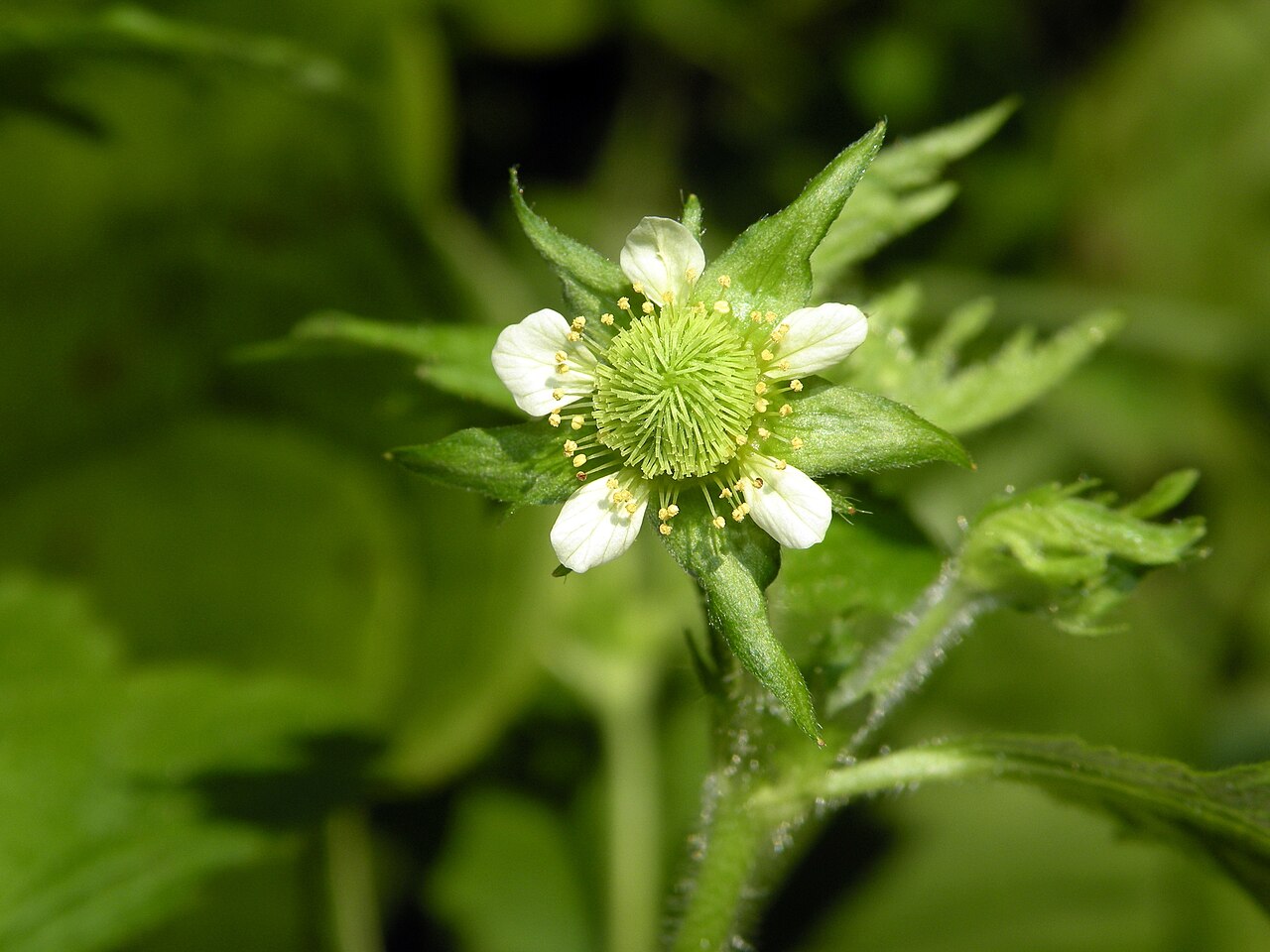
Geum laciniatum, called Rough Avens, floodplain avens or hairy herb-bennet, is a native perennial wildflower of wet meadows, floodplain woods and swampy thickets across eastern North America. It is a coarse, branching plant 1½ to 3 feet tall, with bristly-hairy stems, deeply cut leaves and small white flowers in early summer. It belongs to the rose family (Rosaceae), the same family as strawberries and cinquefoils.
Rough avens is not a showy garden plant. Its petals are small and are often outdone by the green sepals behind them. What it offers is a reliable native groundcover for wet, partly shaded ground, early summer flowers for small bees and flies, and round, burr-like seed heads that hitch rides on fur and clothing. The species name laciniatum means “torn” or “deeply cut,” describing its jagged leaves.
This guide explains how to tell rough avens from its look-alikes, especially white avens, where it grows across its range from New England to Kansas, and how to use it in rain gardens and naturalized plantings.
Identification
Several white- and pale-flowered avens grow in eastern North America, and they can be hard to separate. Rough avens is best recognized by its combination of long, stiff hairs on the stems, small petals that are shorter than the sepals, and a preference for wet ground.
Stems
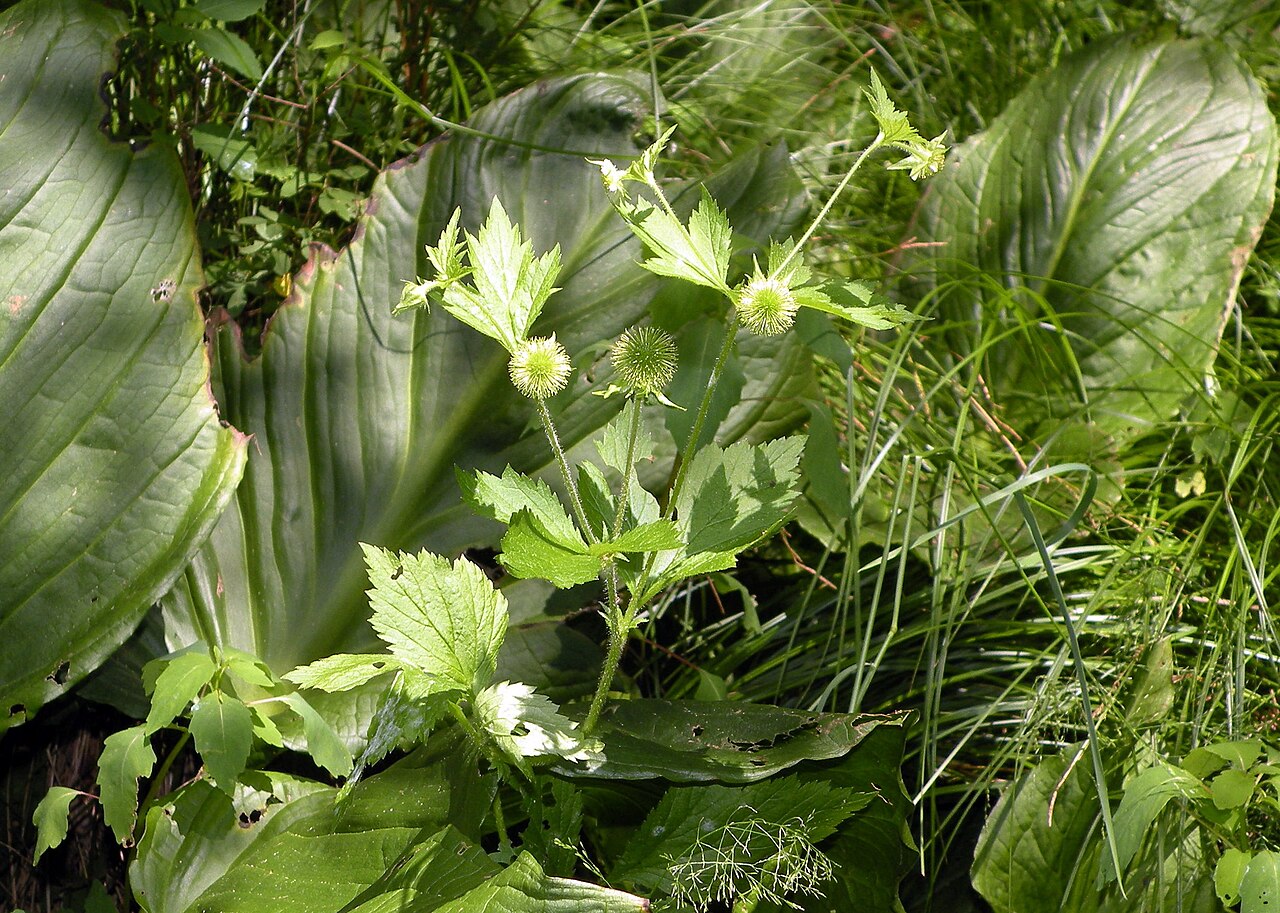
The stems are stout, erect and branched in the upper part, usually 1½ to 3 feet tall. The lower stem is covered with long, stiff, spreading hairs that make it feel rough or bristly, the source of the common name. This is one of the most useful field marks, because white avens (Geum canadense) has finer, shorter hairs.
Leaves
Basal leaves are long-stalked and pinnately divided, with a large terminal leaflet and smaller side leaflets. They are often withered by flowering time. Stem leaves are alternate and usually divided into three toothed and deeply cut segments. At the base of each stem leaf is a pair of large, leafy, toothed stipules, which help distinguish it from similar avens.
Flowers
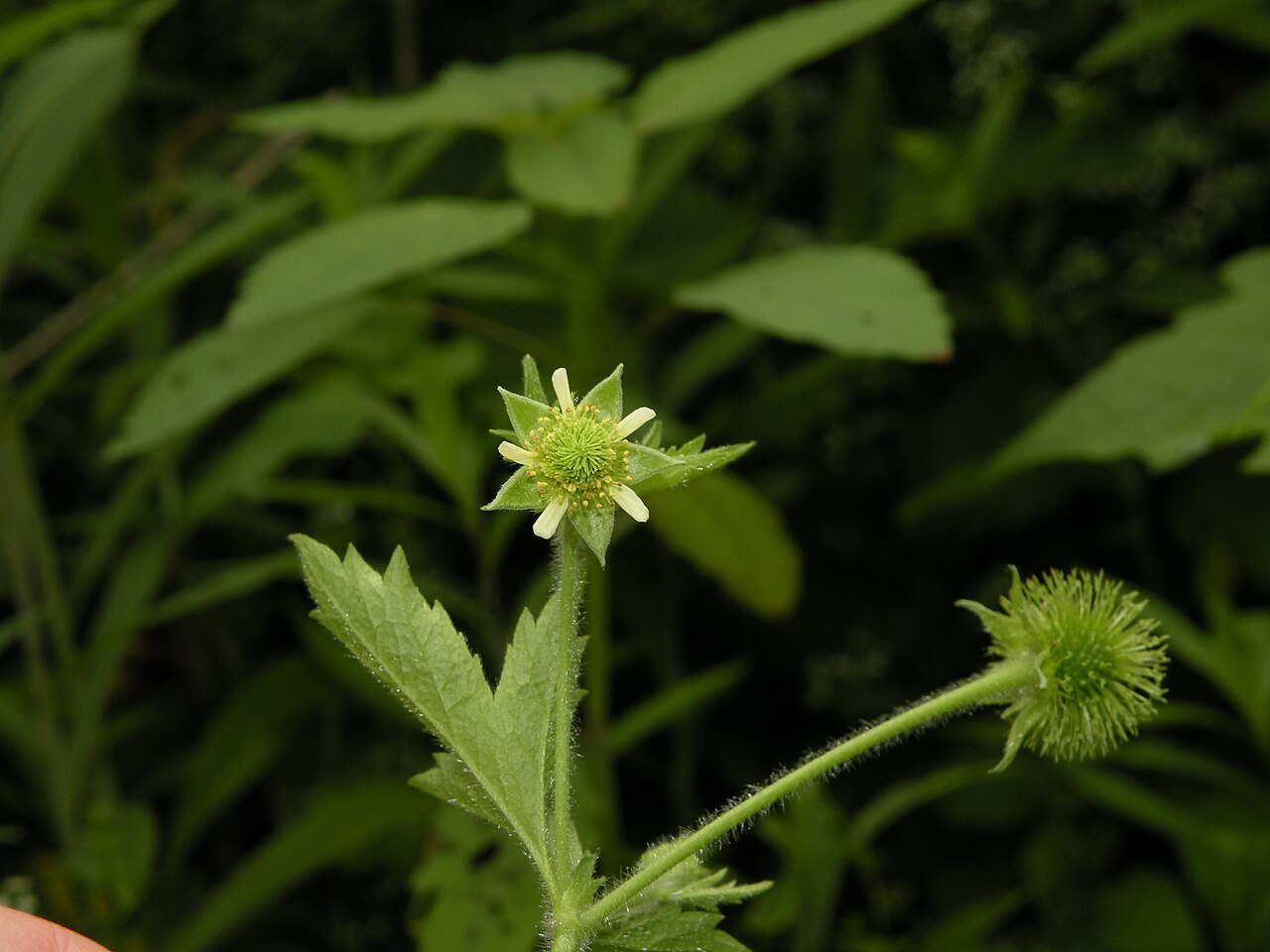
Flowers appear from late spring through midsummer, mostly June and July, singly at the tips of branching stalks. Each is about ½ inch across, with five white to cream petals that are shorter than (or about as long as) the five pointed green sepals between them. The center is a green, dome-shaped cluster of pistils surrounded by many yellowish stamens. The flowers have no noticeable fragrance.
Fruit & Seeds
After flowering, the center enlarges into a round, bristly seed head about ½ to ¾ inch across, made of many achenes. Each achene carries a persistent style with a tiny hook at the tip. The hooks catch in fur, feathers and clothing, carrying the seeds to new sites along streams and trails.
Quick Facts
| Scientific Name | Geum laciniatum |
| Family | Rosaceae (rose family) |
| Plant Type | Herbaceous perennial wildflower |
| Mature Height | 1½–3 ft |
| Mature Spread | 1–2 ft |
| Growth Rate | Moderate |
| Sun Exposure | Part shade to full sun |
| Water Needs | Medium to high; moist to wet soil |
| Soil Type | Loam, silt or clay; tolerates periodic flooding |
| Soil pH | About 5.5–7.5 |
| Bloom Time | Late May–July |
| Flower Color | White to cream |
| Fall Color | None of note; basal leaves often stay green into winter |
| Fruit | Round, bristly head of hooked achenes |
| Deer Resistant | Moderately; foliage is rarely browsed heavily |
| USDA Hardiness Zones | 3–8 |
Native Range
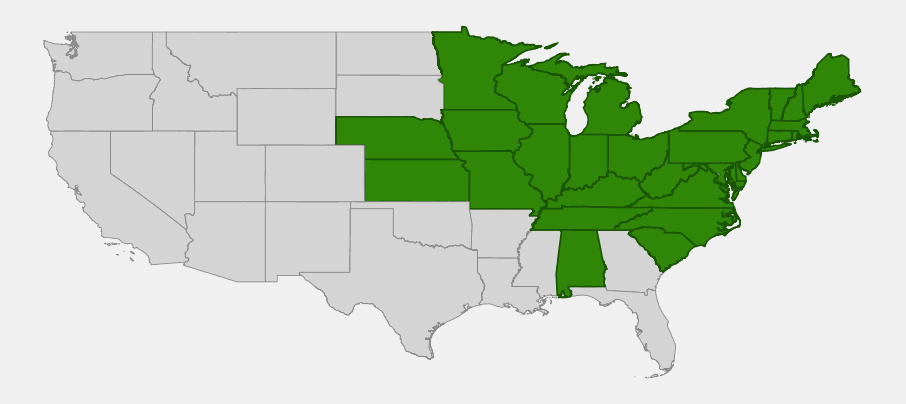
Rough avens grows across much of eastern North America. USDA PLANTS records it from 28 states and the District of Columbia, from Maine and Vermont west through the Great Lakes states to Minnesota, Iowa, Nebraska and Kansas, and south to Kentucky, Tennessee, the Carolinas and Alabama. In Canada it occurs in southern Ontario, Quebec, New Brunswick, Nova Scotia and Prince Edward Island.
It is most frequent in the Northeast and the Ohio Valley and becomes scarce at the edges of its range. In the southern states and on the western prairie edge in Kansas and Nebraska, it is known from scattered floodplain sites. It is a facultative wetland plant, usually found where the soil stays moist through the growing season.
Two varieties are often recognized. Var. laciniatum has hairless achenes, while var. trichocarpum has hairy achenes. Most gardeners and field guides simply call both rough avens.
📋 Regional plant lists featuring Rough Avens: Alabama, Georgia & Mississippi · North & South Carolina · Maryland, Virginia & West Virginia · Kentucky & Tennessee · Illinois, Iowa & Missouri · Ohio & Indiana · Nebraska, Kansas & Eastern Colorado · Michigan, Wisconsin & Eastern Minnesota · New York, Pennsylvania & Northern New Jersey · Delaware, Southern New Jersey & Long Island · Connecticut, Massachusetts & Rhode Island · New Hampshire, Maine & Vermont
Growing & Care Guide
Rough avens is easy to grow in moist to wet soil and needs almost no care. It is a plant for naturalized areas, rain gardens and woodland edges rather than formal beds, where its coarse habit and burr-like seeds may be less welcome.
Light
Grow it in part shade to full sun. It flowers best with a few hours of direct sun but tolerates fairly heavy shade along streams and in floodplain woods. In full sun the soil must stay moist.
Soil & Water
It prefers moist to wet loam, silt or clay and tolerates short periods of flooding. It does poorly in dry, sandy soil. Average garden fertility is fine; no fertilizer is needed.
Planting Tips
Set out plants in spring or fall about 12 to 18 inches apart. Combine it with taller wetland plants such as joe-pye weed, blue flag iris and sedges, which hide its somewhat untidy look after flowering.
Pruning & Maintenance
Cut flowering stems back after bloom if you want to prevent the hooked seeds from sticking to pets and clothing, or leave them to self-sow in a naturalized area. Plants are short-lived to moderately long-lived and maintain themselves by reseeding.
Propagation
Sow fresh seed outdoors in fall, or give it about 60 days of cold, moist stratification before spring sowing. Seed germinates readily. Established clumps can also be divided in early spring.
Landscape Uses
- Rain gardens: tolerates both wet spells and moist shade
- Floodplain and wetland restoration: a native forb for wet meadows and stream corridors
- Woodland edges: fills moist, partly shaded ground under trees
- Naturalized plantings: self-sows to form loose colonies with sedges and ferns
Wildlife & Ecological Value
Rough avens is a modest but useful member of wet-meadow and floodplain plant communities.
For Pollinators
The open, bowl-shaped flowers offer easy access to pollen and a little nectar. They are visited mainly by small bees, such as sweat bees, and by syrphid flies and other small flies. Avens foliage is eaten by the larvae of some sawflies and moths.
For Birds
The seeds are not a major bird food, but the dense, leafy cover of wet meadows and floodplain edges where rough avens grows shelters ground-foraging birds such as sparrows, wrens and thrushes.
For Mammals
Deer, rabbits and other mammals graze the foliage lightly. More important, mammals spread the seeds: the hooked achenes cling to fur and are carried along trails and stream banks.
Ecosystem Role
As a perennial of wet ground, rough avens helps hold soil on stream banks and floodplains. Its burr-like fruits are a textbook example of animal-assisted seed dispersal, allowing the plant to recolonize floodplains after floods scour them.
Cultural & Historical Uses
The genus name Geum was used by the Roman naturalist Pliny for an avens with aromatic roots. In Europe, the related herb-bennet (Geum urbanum) was a valued medicinal plant whose clove-scented roots were used to flavor ale and repel moths. That is the origin of the alternate common name “hairy herb-bennet” for rough avens.
Native American peoples used several eastern avens medicinally, mainly as astringent root teas, but little is recorded specifically for rough avens. The species was formally described in the late eighteenth century by Johan Andreas Murray, a Swedish botanist working in Göttingen and a student of Linnaeus.
Today rough avens is valued mostly by botanists, wetland restorers and native plant gardeners. In several states at the edges of its range it is uncommon, and it is a useful indicator of intact, seasonally wet floodplain habitat.
Frequently Asked Questions
How do I tell rough avens from white avens?
Rough avens (Geum laciniatum) has long, stiff, spreading hairs on the lower stem, petals shorter than the sepals and large leafy stipules, and it grows in wet places. White avens (Geum canadense) has finer hairs, petals about as long as or longer than the sepals, and grows in drier woods. See our white avens guide.
Is rough avens a good garden plant?
It is best in naturalized areas, rain gardens and wet woodland edges. Its flowers are small and its burr-like seeds stick to clothing, so it is less suited to neat borders.
Does rough avens need wet soil?
It prefers consistently moist to wet soil and tolerates flooding. It can grow in average garden soil that does not dry out, but it struggles in dry or sandy soil.
When does rough avens bloom?
Mostly in June and July, starting in late May in the southern part of its range.
What other native avens can I grow?
For drier woodland shade, try white avens. For a wet meadow with showier flowers, consider water avens, which has nodding, purple-tinged flowers.

Looking for a nursery that carries Rough Avens?
Browse our native plant nursery directory: Alabama · Connecticut & Delaware · Illinois, Indiana, Iowa & Kansas · Kentucky, Maine, Maryland, Massachusetts, Michigan, Minnesota & Missouri · Nebraska, New Hampshire, New Jersey, New York, North Carolina & Ohio · Pennsylvania, Rhode Island, South Carolina, Tennessee, Vermont & Virginia · West Virginia & Wisconsin

