
Christmas Vine (Turbina corymbosa)
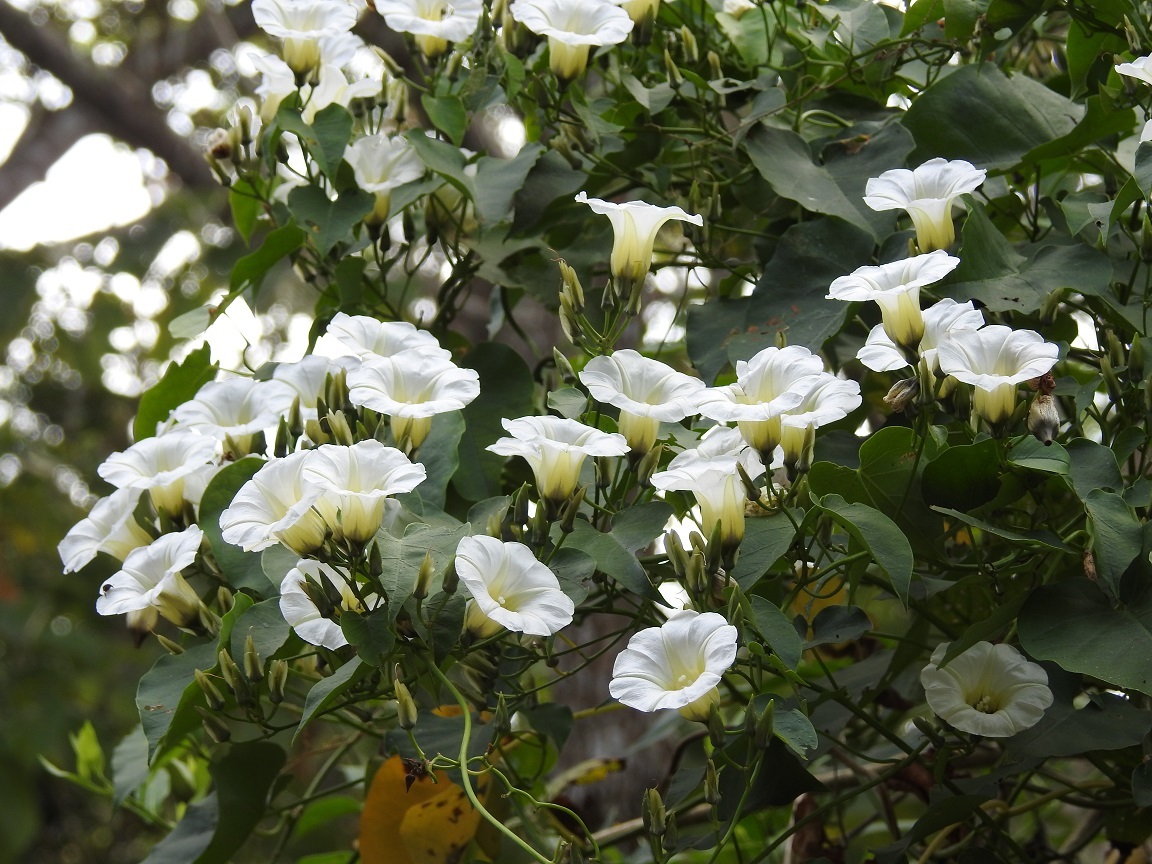
Turbina corymbosa, known as Christmas Vine, ololiuhqui or, in Spanish, aguinaldo blanco, is a vigorous, woody-based twining vine in the morning glory family (Convolvulaceae). In early winter it smothers trees, fences and thickets with thousands of small, pure white, fragrant, funnel-shaped flowers, which is how it earned its common names. Many botanists now place it in Ipomoea as Ipomoea corymbosa, and older books call it Rivea corymbosa.
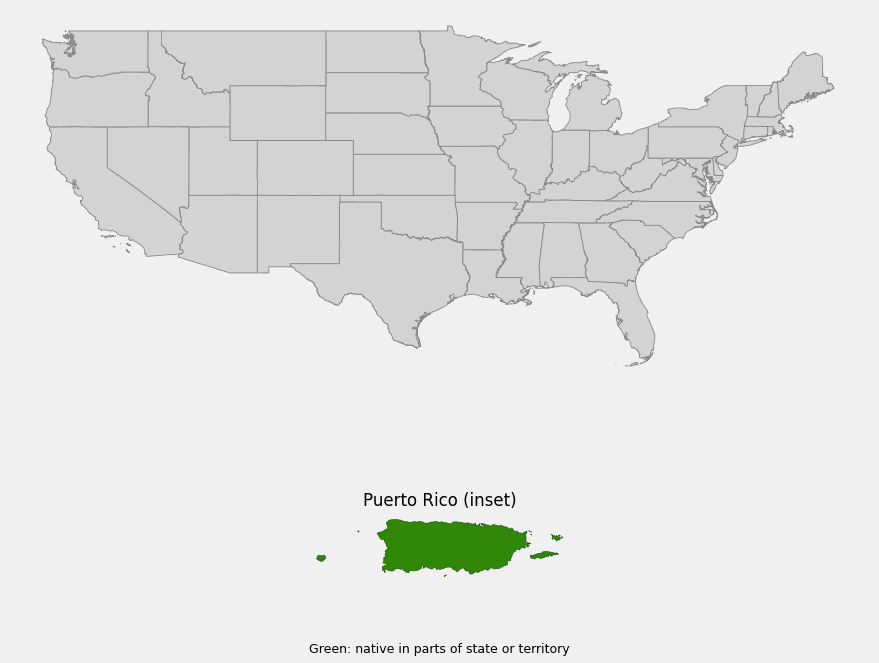
Within the United States it is native to Puerto Rico. Its wider native range extends from Mexico through Central America and the Caribbean to northern South America. USDA PLANTS also lists Florida, Louisiana and Texas, but the Atlas of Florida Plants treats Florida plants as non-native, and the few Texas specimens were noted as probable garden escapes, so this guide maps it as native only in Puerto Rico.
Safety note: Christmas vine is the plant the Aztecs called ololiuhqui. Its seeds contain ergine and related ergoline alkaloids, chemical relatives of LSD. They are poisonous and can cause vomiting, confusion, hallucinations and other serious effects. Never eat the seeds, and keep them away from children and pets. This guide covers how to identify it, where it grows, how to grow it safely as an ornamental, and its value to bees and other wildlife.
Identification
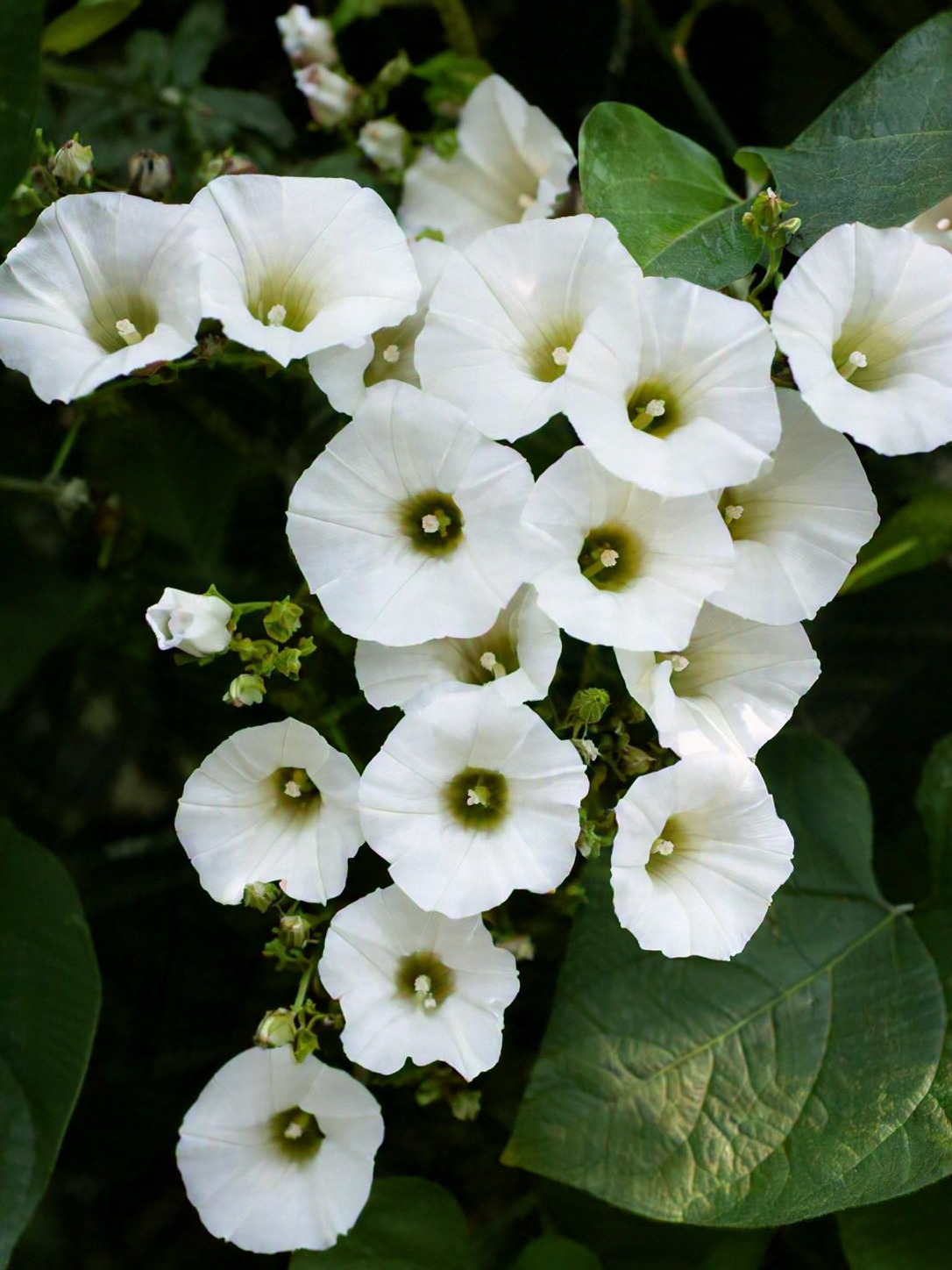
Christmas vine is easy to recognize in bloom by its timing and its flowers: dense, branched clusters of small, white, bell- to funnel-shaped flowers about an inch across, appearing in late fall and winter, when few other morning glories are blooming. Most white-flowered morning glories have larger, solitary flowers, and moonflower (Ipomoea alba) has huge white flowers that open at night.
Stems & Growth Habit
A large, perennial, twining vine that becomes woody at the base, climbing 20 to 30 feet or more over trees, fences and shrubs. Stems are slender, green to brownish and smooth. Like many morning glories, it can have milky sap. In the tropics it can form dense curtains over forest edges.
Leaves
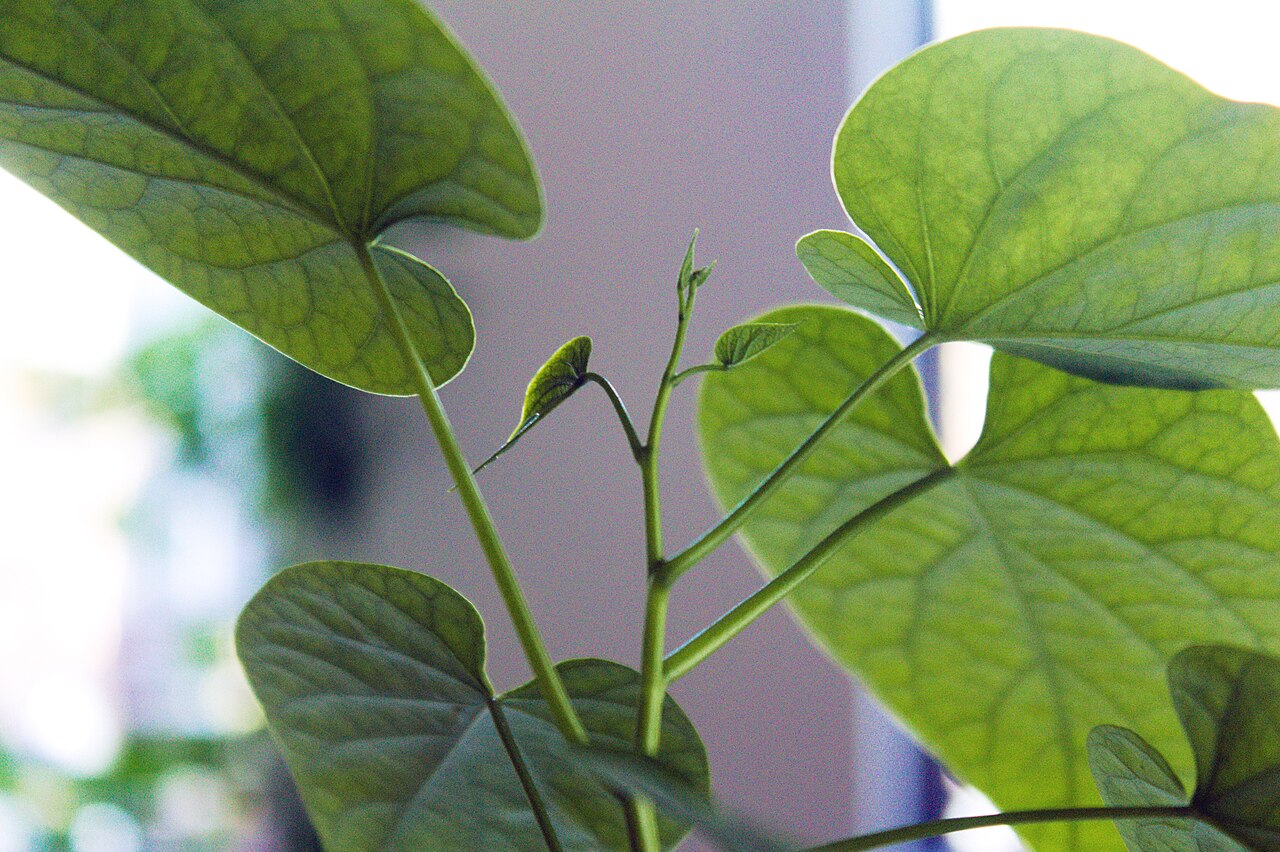
Leaves are alternate, simple and heart-shaped with a long, pointed tip, usually 2 to 5 inches long, on long stalks. They are smooth, bright to medium green, with a deep notch at the base.
Flowers
The flowers are borne in branched, flat-topped to rounded clusters (corymbs, as the species name says) from the leaf axils. Each is white, bell- to funnel-shaped, about ¾ to 1¼ inches long, with a greenish or cream throat, and lightly fragrant. Bloom peaks from about November to January, the Christmas season in the Caribbean and Mexico.
Fruit
The fruit is a small, dry, one-seeded capsule that does not split open. It is surrounded by enlarged, papery, tan sepals that act like wings and help it blow in the wind. The single seed is small, hard, brown and poisonous.
Quick Facts
| Scientific Name | Turbina corymbosa (L.) Raf. (syn. Ipomoea corymbosa, Rivea corymbosa) |
| Family | Convolvulaceae (morning glory family) |
| Plant Type | Woody-based perennial twining vine |
| Mature Height | Climbs 20–30 ft or more |
| Mature Spread | 10–20 ft |
| Growth Rate | Fast |
| Sun Exposure | Full sun to part shade |
| Water Needs | Moderate; tolerates a dry season |
| Soil Type | Most well-drained soils, including rocky and limestone soils |
| Soil pH | About 6.0–8.0 |
| Bloom Time | November–January (late fall to winter) |
| Flower Color | White with a greenish-cream throat |
| Fall Color | None; evergreen in the tropics |
| Fruit | Small one-seeded capsule with papery, wing-like sepals; seeds poisonous |
| Deer Resistant | Moderate; toxic alkaloids deter many browsers |
| USDA Hardiness Zones | 10–13; frost kills the top growth |
Native Range
USDA PLANTS lists Turbina corymbosa as native in Puerto Rico. Outside the United States it grows wild from Mexico through Central America and the West Indies, including Cuba and Hispaniola, to northern South America. In Puerto Rico herbarium collections come from much of the island, including the karst country around Arecibo and Utuado, the central mountains near Aibonito and Barranquitas, the dry south near Salinas and Guayama, and the east near Naguabo.
It grows on forest edges, in thickets and secondary forest, along roadsides, fence lines and stream banks, and on open slopes and dry river beds. It favors sunny edges where it can climb into trees.
USDA also lists Florida, Louisiana and Texas. In Florida, where it grows mainly in Miami-Dade, Monroe and Collier counties, the Atlas of Florida Plants classifies it as non-native, and the rare Texas records were noted as probable escapes from cultivation. Outside Puerto Rico, avoid planting it near natural areas, where it can climb over and shade native plants.
📋 Regional plant lists featuring Christmas Vine: Puerto Rico
Growing & Care Guide
Christmas vine is a fast, easy vine for covering large fences, pergolas and dead trees in frost-free gardens, and it is prized for its winter flowers and as a bee plant. Because of its vigor and poisonous seeds, plant it where you can manage it and where children will not handle the seeds.
Light
It blooms best in full sun, and tolerates part shade, where it will climb toward the light. Flowering is triggered by the short days of late fall, so avoid sites lit by bright outdoor lights at night.
Soil & Water
It grows in almost any well-drained soil, including rocky and limestone soils. Water young plants regularly. Established vines tolerate a dry season, but regular water through fall gives the heaviest bloom.
Planting Tips
Give it a strong, large support: a chain-link fence, a sturdy pergola or a dead tree. It is too vigorous for small trellises. In zones 9b–10a it may be cut back by frost and regrow from the base. In cooler climates it can be grown as a fast summer annual, but it usually will not bloom before frost because it flowers only as the days shorten.
Pruning & Maintenance
Cut it back hard after flowering, in late winter or early spring, to keep it in bounds and away from trees you want to protect. Remove seedlings that come up nearby. Wear gloves when handling seeds and pods, and dispose of seed heads where children and pets cannot reach them.
Propagation
It grows readily from seed: nick the hard seed coat and soak it overnight before sowing, and wash your hands afterwards. It can also be propagated from stem cuttings. Do not buy or use seed for anything other than growing the plant.
Landscape Uses
- Winter-flowering screen: covers fences, walls and pergolas with white flowers around the holidays
- Bee and honey plant: a major winter nectar source for honey bees in the Caribbean
- Covering dead trees and old structures: fast, heavy growth in frost-free gardens
- Native edge plantings in Puerto Rico: sunny forest edges and fence rows within its native range
- Cut flowers: sprays of small white flowers for holiday arrangements, though they last only a day or two
Wildlife & Ecological Value
Blooming when little else flowers in the tropical dry season, Christmas vine is an important food source for bees and other insects in its native range.
For Pollinators
Its fragrant white flowers produce abundant nectar and pollen and are visited heavily by honey bees, native bees, butterflies and moths. In Cuba, where it is called campanilla blanca, it is famous as one of the island’s most important winter honey plants, and beekeepers elsewhere in the Caribbean and Mexico value it too.
For Birds
The dense tangles of vines provide cover and nesting sites for small birds, and insect-eating birds hunt among the flowers.
For Mammals
Its toxic seeds and foliage are generally avoided by mammals. Livestock poisoning has been reported from related morning glories, so keep it out of pastures.
Ecosystem Role
As a fast-growing edge vine, it helps close gaps in disturbed forest and binds soil on slopes. Its winged fruits are spread by wind, which lets it colonize new openings quickly.
Cultural & Historical Uses
Linnaeus described the plant as Convolvulus corymbosus, and Constantine Samuel Rafinesque later placed it in his genus Turbina. Some botanists have used Rivea corymbosa, and recent DNA studies support including it in Ipomoea as Ipomoea corymbosa.
The Aztecs and other peoples of Mexico used its seeds, called ololiuhqui, in religious and healing rituals, and Spanish chroniclers of the 16th century described them. In the 1950s and 1960s, researchers identified ergine (lysergic acid amide) and related alkaloids in the seeds, linking ololiuhqui to the ergot alkaloids and to LSD. These compounds are toxic, and eating the seeds is dangerous.
In Cuba, Puerto Rico and Mexico, Christmas vine’s winter bloom has long been a sign of the holiday season, and names such as aguinaldo and Christmas vine reflect that tradition.
Frequently Asked Questions
Is Christmas vine poisonous?
Yes. The seeds contain ergine and related ergoline alkaloids, which can cause vomiting, confusion, hallucinations, high blood pressure and other serious effects. Never eat the seeds, and keep seeds and seed pods away from children and pets. If someone swallows them, contact Poison Control (1-800-222-1222 in the U.S.) or a veterinarian.
Is Christmas vine native to the United States?
Yes, in Puerto Rico. USDA also lists Florida, Louisiana and Texas, but the Atlas of Florida Plants treats Florida plants as non-native, and Texas records appear to be garden escapes.
Why is it called Christmas vine?
Because it blooms from about November to January, covering trees and fences with white flowers during the Christmas season. In Spanish it is often called aguinaldo, a word linked to Christmas gifts and carols.
Why won’t my Christmas vine bloom?
It flowers in response to short days, so it blooms only from late fall into winter. Night lighting can delay bloom, and in cool climates frost usually kills it before the days are short enough. Young plants may also need a season or two to reach flowering size.
Is Christmas vine invasive?
It is a vigorous vine that can smother trees, and it has escaped in South Florida, where it is not native. Within its native range in Puerto Rico it is a natural part of forest edges. Elsewhere, keep it pruned and away from natural areas.

Looking for a nursery that carries Christmas Vine?
Our nursery directory does not yet include Puerto Rico. Browse the native plant nursery directory by state: Alabama–Arkansas · California · Colorado–Hawaii · Idaho–Kansas · Kentucky–Montana · Nebraska–Oklahoma · Oregon · Pennsylvania–Virginia · Washington · West Virginia–Wyoming

