
Rio Grande Globe Amaranth (Gomphrena haageana)
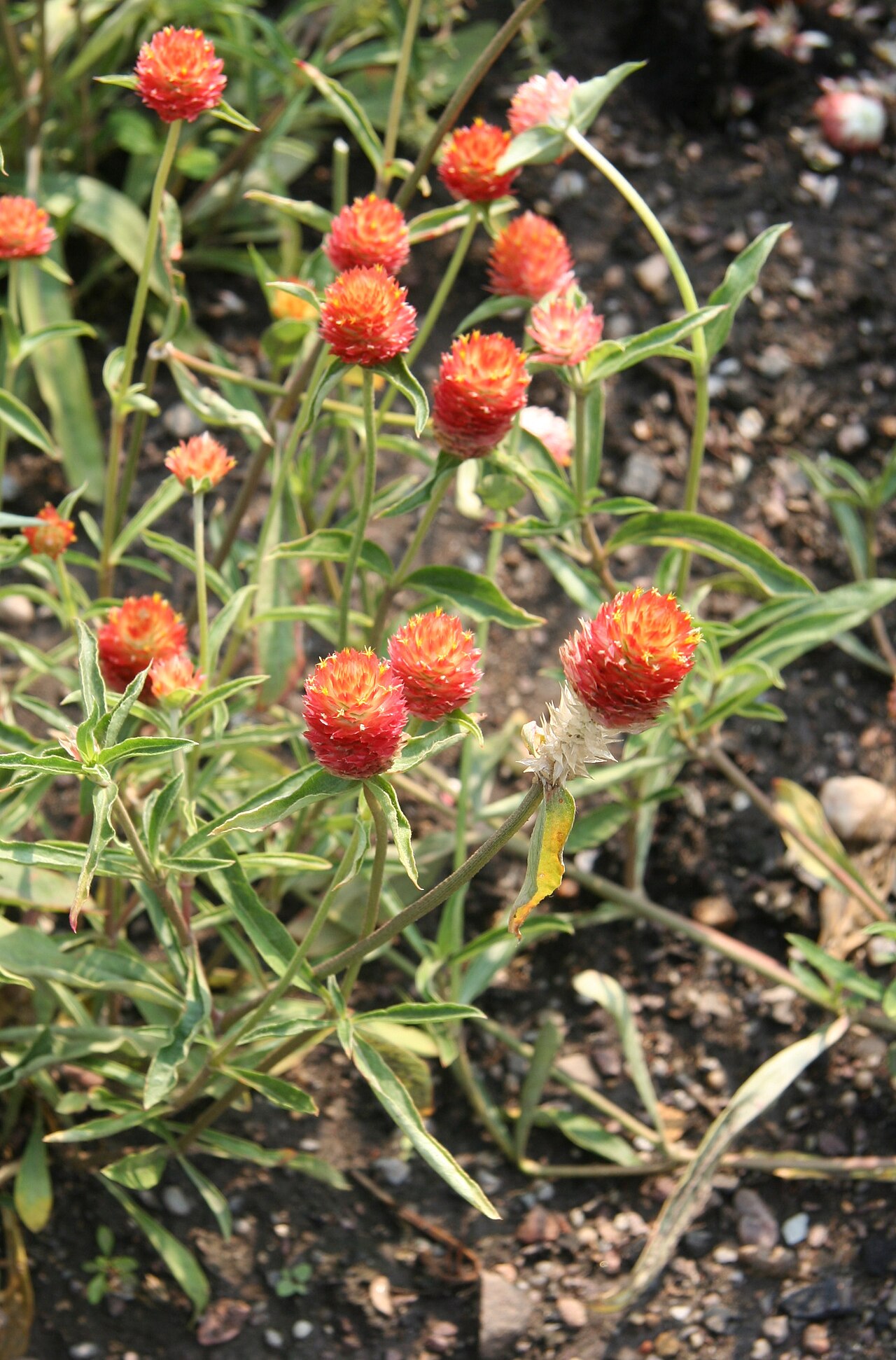
Gomphrena haageana, known as Rio Grande Globe Amaranth, Haage’s globe amaranth or orange globe amaranth, is a heat-loving perennial wildflower of the amaranth family (Amaranthaceae). From summer into fall it carries round, papery, clover-like heads of brilliant orange-red to scarlet on wiry stems above narrow, gray-green leaves. The color comes from stiff, papery bracts, not petals, so the heads keep their color for weeks and dry beautifully.
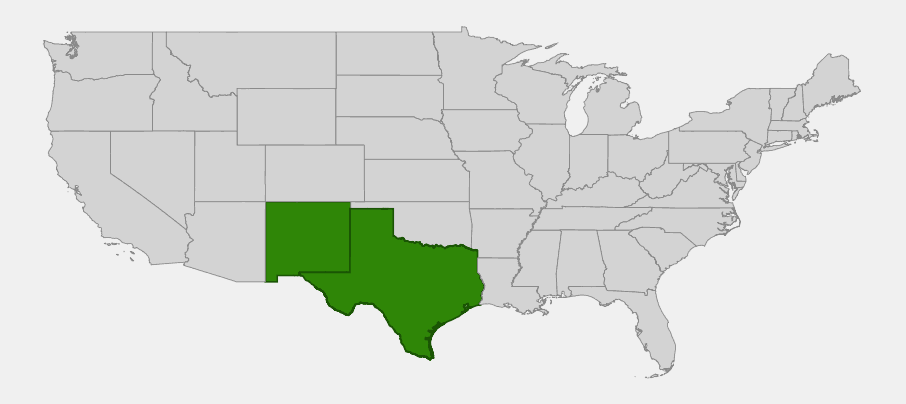
In the United States it is native to West Texas and southern New Mexico, where it grows on rocky limestone slopes, in grasslands and along roadsides, especially near the Rio Grande and its tributaries such as the Devils and Pecos rivers. Its range continues into northern Mexico.
It is the wild parent of popular bedding plants such as ‘Strawberry Fields’, which many gardeners grow without knowing it is a Texas native. This guide covers how to recognize it, where it grows wild, how to grow it as a perennial or annual, and its value to butterflies and bees.
Identification
Rio Grande globe amaranth looks much like the common garden globe amaranth (Gomphrena globosa), a tropical annual of uncertain origin. The native species has narrower, linear to lance-shaped leaves, a perennial woody root, and orange-red to scarlet heads with tiny, conspicuous yellow flowers peeking out between the bracts. Garden globe amaranth has broader leaves and usually purple, pink or white heads.
Stems & Growth Habit
A clump-forming perennial, 8 to 24 inches tall, with several upright to sprawling, slender, hairy stems from a deep, woody taproot. In its native range it dies back in winter and resprouts in spring. In the garden it is often grown as an annual.
Leaves
Leaves are opposite, narrow, linear to lance-shaped, 1 to 3 inches long, and covered with fine, flat-lying hairs that give them a gray-green look. Most are on the lower half of the stems.
Flowers
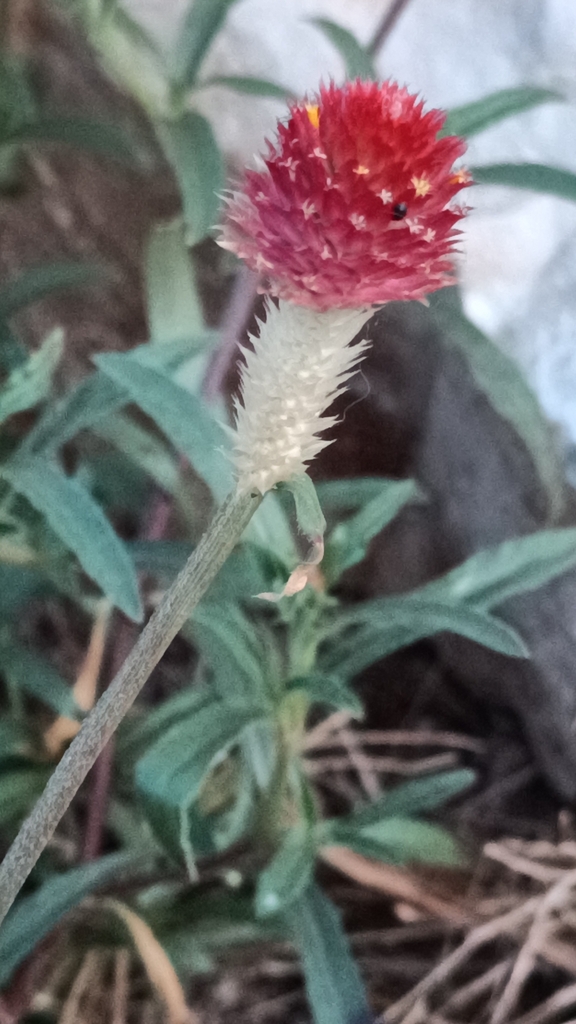
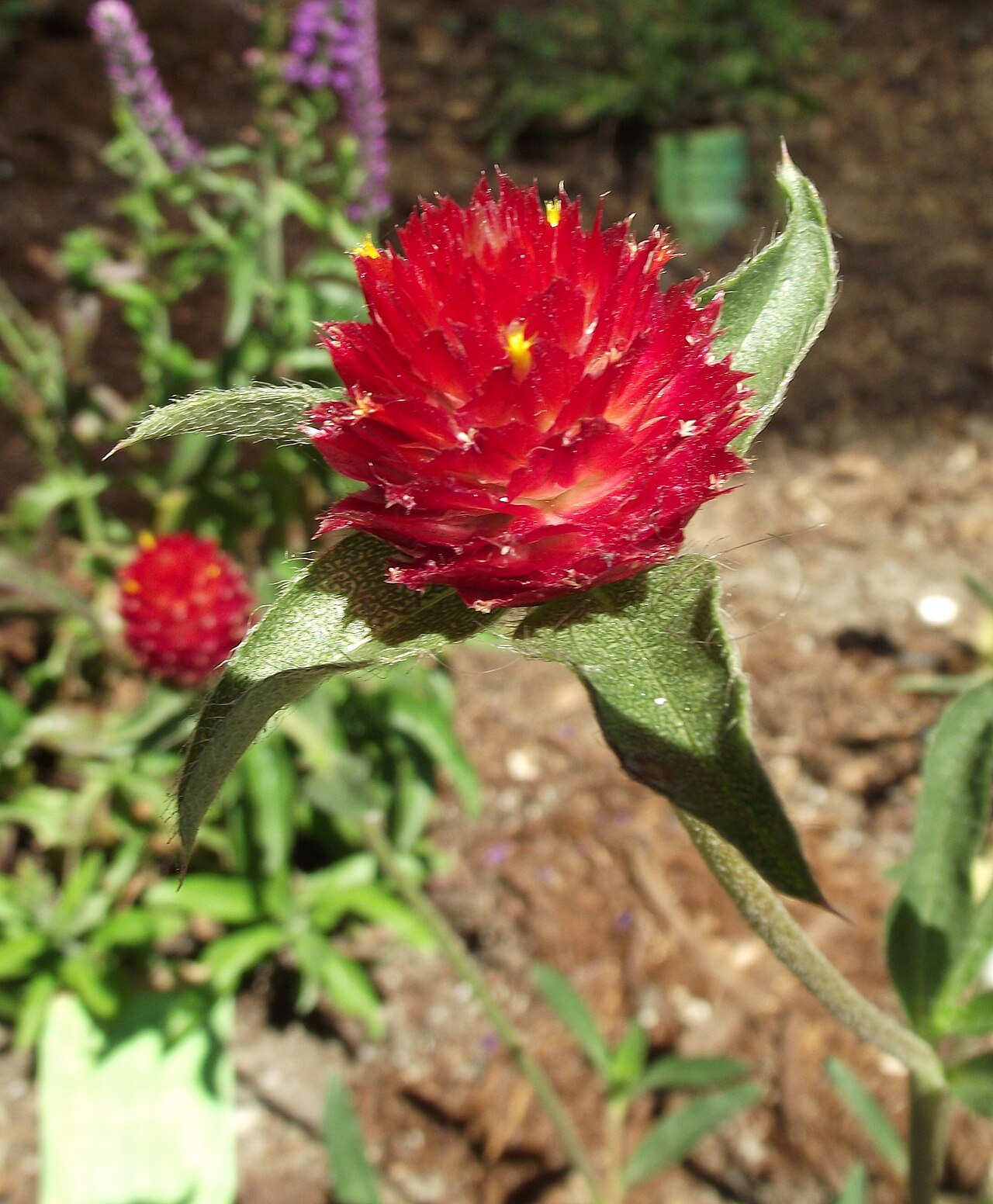
The flower heads are round at first, ¾ to 1¼ inches across, and lengthen into short cylinders as they age. Each sits on a long, wiry stalk just above two small leaf-like bracts. The head is made of many stiff, papery, crested bracteoles in orange-red, scarlet or coral, with tiny yellow flowers between them. It blooms from early summer through fall.
Fruit
The fruit is a tiny, one-seeded utricle hidden within the papery bracts. The whole head eventually dries and breaks apart, and the light, chaffy seed units are spread by wind.
Quick Facts
| Scientific Name | Gomphrena haageana Klotzsch |
| Family | Amaranthaceae (amaranth family) |
| Plant Type | Herbaceous perennial wildflower; often grown as an annual |
| Mature Height | 8–24 in |
| Mature Spread | 12–18 in |
| Growth Rate | Moderate to fast |
| Sun Exposure | Full sun |
| Water Needs | Low; drought tolerant once established |
| Soil Type | Rocky, gravelly or sandy, well-drained soil, including limestone |
| Soil pH | About 6.5–8.5 |
| Bloom Time | June–November |
| Flower Color | Orange-red to scarlet bracts with tiny yellow flowers |
| Fall Color | None; flowers persist into fall |
| Fruit | Tiny utricle hidden in papery bracts |
| Deer Resistant | Yes, generally |
| USDA Hardiness Zones | 7–10 as a perennial; annual elsewhere |
Native Range
USDA PLANTS lists Gomphrena haageana as native in Texas and New Mexico. In Texas, most herbarium collections come from Val Verde County, around the Devils and Pecos rivers and Lake Amistad on the western edge of the Edwards Plateau, with others from the Trans-Pecos, including Brewster County. In New Mexico it reaches the southern part of the state. It extends south into northern Mexico.
It grows on rocky limestone slopes, ledges and gravelly flats, in desert and shortgrass grasslands, and along roadsides and arroyos, at roughly 1,000 to 5,000 feet. It thrives in heat, full sun and thin, alkaline soils.
Garden plants and seed strains are now widespread, and plants found far from this region, such as occasional roadside plants in central Texas cities, are probably garden escapes. Within its native range, collect seed only with permission and leave most seed for the wild population.
📋 Regional plant lists featuring Rio Grande Globe Amaranth: South & West Texas
Growing & Care Guide
Rio Grande globe amaranth is an easy, long-blooming plant for hot, sunny, dry gardens, and it is one of the best native choices for months of bright color with little water. Look for it at Texas and Southwest native plant nurseries, or grow it from seed.
Light
Plant it in full sun. In shade it flops and blooms poorly. It thrives in reflected heat along walls, driveways and rock gardens.
Soil & Water
Give it lean, fast-draining soil: rocky, gravelly or sandy soil, including alkaline limestone soils. Water seedlings and transplants until they are established, then only during long dry spells. Rich soil and overwatering make it leggy and can rot the root, especially in winter.
Planting Tips
Plant after the last frost, 12 to 15 inches apart. In zones 7–10 it usually returns from the root each spring if drainage is good; in colder or wetter areas, grow it as an annual. It also does well in containers with a gritty mix.
Pruning & Maintenance
It needs little care. Cut flowering stems for fresh or dried arrangements, which encourages more blooms. Cut the dead stems back to the ground in late winter. Avoid fertilizing.
Propagation
Grow it from seed sown in warm soil in spring, either directly outdoors or indoors 6 to 8 weeks before the last frost. Soaking the chaffy seed heads overnight or removing the fluff can speed germination, which needs warmth. Seedlings often bloom the first year.
Landscape Uses
- Xeriscapes and rock gardens: months of bright color with very little water
- Butterfly and pollinator gardens: long-lasting nectar source from summer to frost
- Cut and dried flowers: papery heads keep their color when dried
- Containers and bedding: heat-proof color for sunny patios; the parent of ‘Strawberry Fields’
- Native roadside and meadow plantings: in West Texas and southern New Mexico
Wildlife & Ecological Value
In the hot, dry months when few wildflowers bloom, Rio Grande globe amaranth provides steady nectar for butterflies and bees across the Chihuahuan Desert and the western Edwards Plateau.
For Pollinators
Butterflies, including sulphurs, skippers, hairstreaks and other small species, visit the tiny yellow flowers for nectar, along with native bees. Its long bloom season makes it valuable from summer into fall.
For Birds
Seed-eating birds forage on the ripe heads in fall and winter, and the low clumps shelter quail and ground-foraging birds.
For Mammals
It is seldom browsed by deer, which makes it useful in deer country.
Ecosystem Role
Its deep taproot helps it survive drought and hold thin, rocky soils on slopes and roadsides. Like other native wildflowers in desert grasslands, it supports insects that in turn feed birds and lizards.
Cultural & Historical Uses
Johann Friedrich Klotzsch described the species in the mid-19th century and named it for the Haage family of seed growers in Erfurt, Germany, whose nursery introduced many Mexican and Southwestern plants to European gardens. It has also been called Gomphrena coccinea, “scarlet,” in old garden books.
The genus name Gomphrena is an old Latin name for an amaranth-like plant. Globe amaranths have long been grown as “everlasting” flowers because their papery heads keep their color when dried.
Modern seed strains such as ‘Strawberry Fields’ come from this species, sometimes crossed with garden globe amaranth. They are among the most heat- and drought-tolerant bedding plants available, a legacy of the plant’s home in the Chihuahuan Desert.
Frequently Asked Questions
Is Rio Grande globe amaranth native to Texas?
Yes. USDA PLANTS lists it as native in Texas and New Mexico. It grows wild mainly in West Texas, especially around the Devils and Pecos rivers and the Trans-Pecos, and in southern New Mexico.
Is ‘Strawberry Fields’ globe amaranth a native plant?
‘Strawberry Fields’ is a garden selection derived from Gomphrena haageana, possibly with some garden globe amaranth in its background. The wild species, with its narrower leaves and orange-red heads, is the native form.
Is Gomphrena haageana a perennial or an annual?
It is a perennial with a woody taproot in its native range and in zones 7–10 with good drainage. In colder or wetter climates it is usually grown as an annual.
Do butterflies like globe amaranth?
Yes. Butterflies and native bees visit the tiny yellow flowers between the colorful bracts, and the plant blooms from early summer until frost.
How do I dry globe amaranth flowers?
Cut the stems when the heads are fully colored, tie them in small bunches and hang them upside down in a dark, airy place for one to two weeks. The heads keep their color for months.

Looking for a nursery that carries Rio Grande Globe Amaranth?
Browse our native plant nursery directory: New Mexico · Texas

