
Dragon’s Mouth (Arethusa bulbosa)
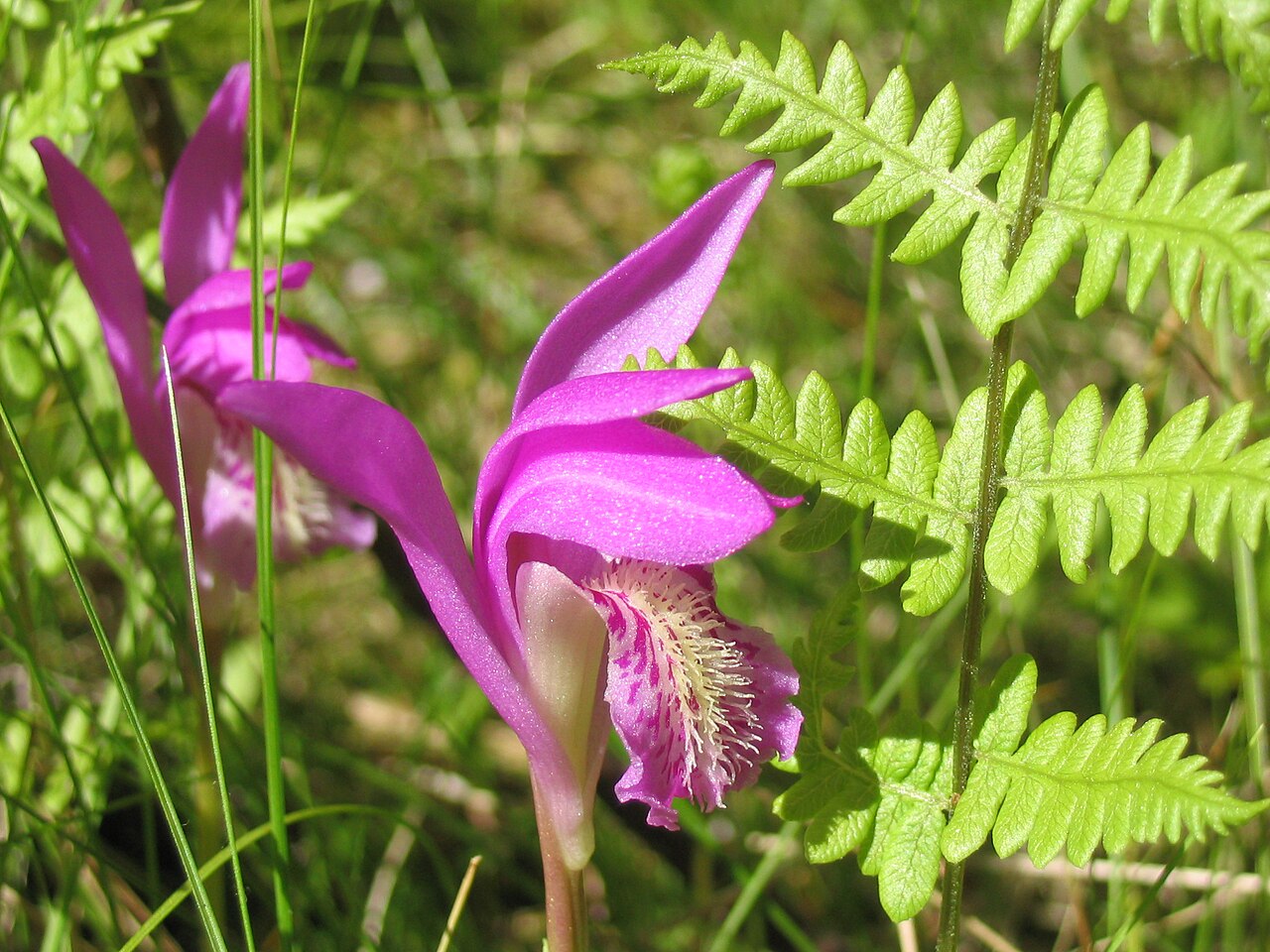
Arethusa bulbosa, Dragon’s Mouth, also called swamp pink or bog-rose, is one of the most striking native orchids of northern bogs and fens. In late spring and early summer a single slender stalk, usually 4 to 12 inches tall, rises from the sphagnum moss and carries one large, vivid magenta-pink flower about 1½ to 2 inches long. Three sepals and two petals arch upward like a hood, and below them a broad, ruffled lip, spotted and streaked with purple and crested with yellow, hangs open like the gaping jaw that gives the plant its common name.
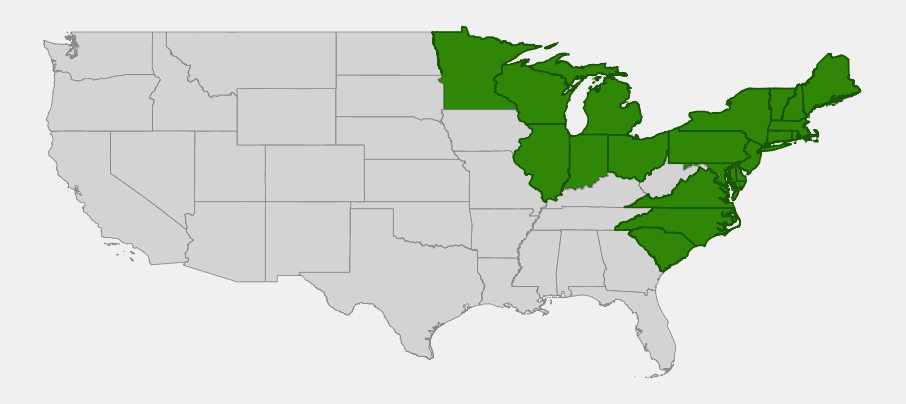
Dragon’s mouth is the only species in its genus. Linnaeus named it in 1753 after Arethusa, a nymph of Greek mythology who was turned into a spring. It ranges across Canada and the northern United States, from Minnesota and the Great Lakes to New England and the Maritimes, with scattered, mostly rare populations south along the Atlantic Coast and in the mountains to the Carolinas.
Dragon’s mouth is declining across much of its range and is listed as endangered, threatened or of special concern in many states, especially in the Midwest and the Mid-Atlantic. It should never be dug or picked: wild plants almost never survive transplanting, and taking them harms populations that are already small. This page is an identification and appreciation guide, with honest advice about whether it can be grown.
Identification
In bloom, dragon’s mouth is unmistakable. Out of bloom, it is nearly invisible: a single grass-like leaf hidden among sphagnum and sedges.
Corm & Stem
Each plant grows from a small, rounded corm (the “bulb” of bulbosa) buried in wet sphagnum or peat. The flowering stem is smooth and slender, 4 to 12 inches tall (occasionally taller), and wrapped at the base by one to three loose, papery sheaths.
Leaf
A single narrow, grass-like leaf appears after flowering, growing from the sheath near the base of the stem and eventually reaching 3 to 9 inches long. It is easy to overlook among sedges and grasses, and it withers in late summer.
Flower
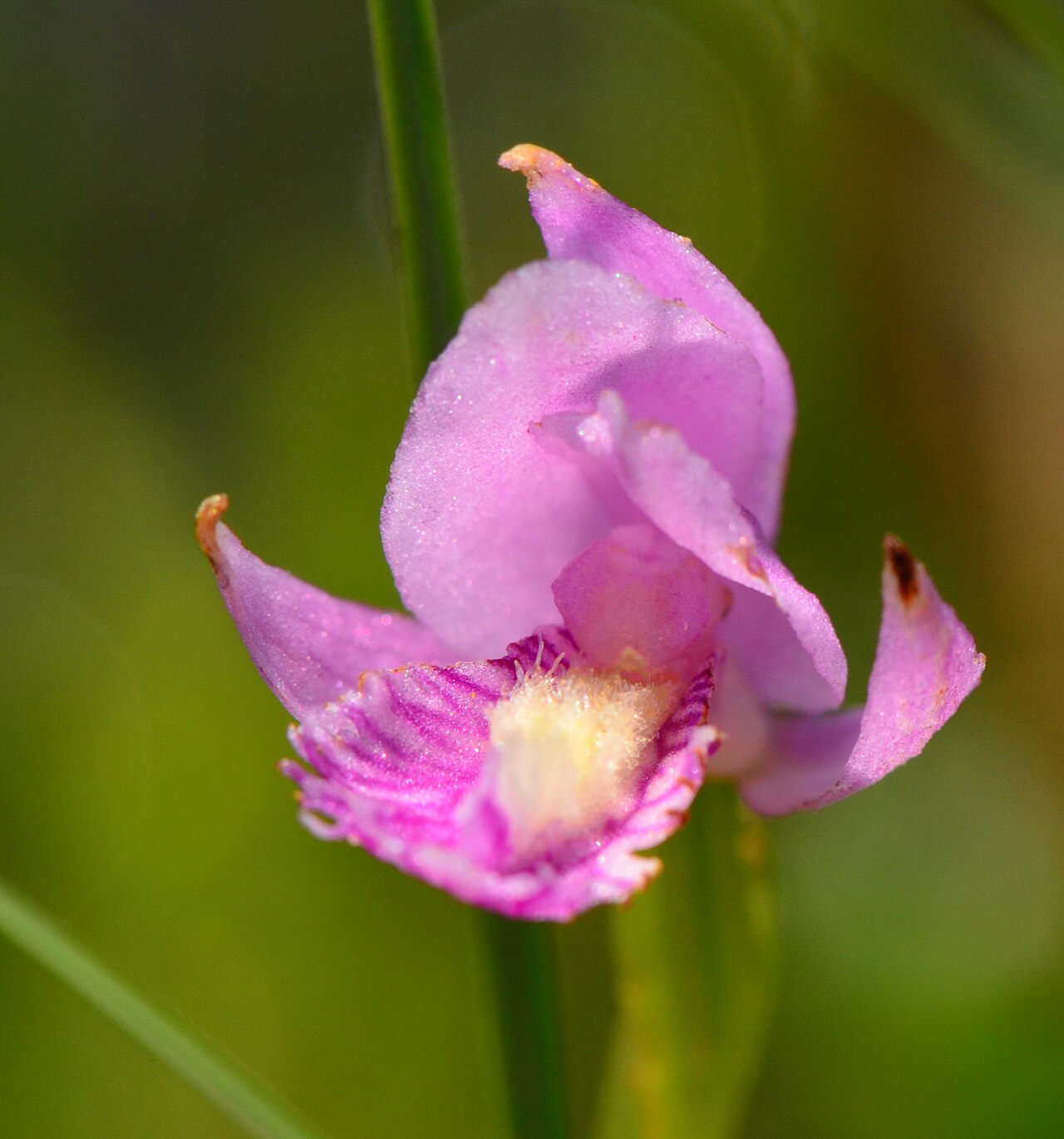
Usually there is just one flower per stem, rarely two. It is magenta-pink, occasionally pale pink or white, about 1½ to 2 inches long. The three sepals and two petals are narrow and stand upright, arching over the column. The lip is broad and drooping, with a wavy, fringed margin, white to pink with purple-magenta spots and streaks, and three rows of fleshy, yellow-tipped crests down the middle. The flowers are mildly fragrant. Bloom time is roughly May in the south and June to July in the north.
Similar Species
Rose Pogonia and Grass Pink share the same bogs and bloom soon after. Rose pogonia has a paler pink flower with spreading sepals and a single leaf partway up the stem at flowering time. Grass pink has several flowers per stem, with the bearded lip on top.
Quick Facts
| Scientific Name | Arethusa bulbosa |
| Family | Orchidaceae (orchid family) |
| Plant Type | Terrestrial orchid; herbaceous perennial from a corm |
| Mature Height | 4–12 in in flower |
| Mature Spread | Single stems; slowly forms small groups |
| Growth Rate | Slow |
| Sun Exposure | Full sun to light shade |
| Water Needs | High; constantly wet, saturated peat |
| Soil Type | Living sphagnum moss and peat; marl in some fens |
| Soil pH | About 4.0–7.0 (acid bogs to calcareous fens) |
| Bloom Time | May–July |
| Flower Color | Magenta-pink; rarely pale pink or white |
| Fall Color | None; leaf withers in late summer |
| Fruit | Upright ribbed capsule with dust-fine seeds |
| Deer Resistant | No; deer and other browsers sometimes eat the flowers |
| USDA Hardiness Zones | 3–7 |
Native Range
Dragon’s mouth is a northern orchid. USDA PLANTS records it from 20 states and the District of Columbia: across the Great Lakes states from Minnesota and Wisconsin to Michigan, Illinois, Indiana and Ohio, through New York, Pennsylvania and New Jersey, throughout New England, and south along the Atlantic states to Delaware, Maryland and Virginia, with outlying southern records in the mountains and Coastal Plain of North and South Carolina. In Canada it ranges from Saskatchewan and Manitoba east through Ontario and Quebec to the Maritime provinces, Newfoundland and Labrador, and it also grows on Saint Pierre and Miquelon.
It is still locally common in the bogs and fens of the northern Great Lakes, northern New England and eastern Canada. Southward and westward it becomes increasingly rare, and many historical populations in the Midwest and Mid-Atlantic have disappeared with drainage, development, peat mining and the gradual overgrowth of open wetlands by shrubs and trees. In several southern states it is known from only a few sites or only from historical records.
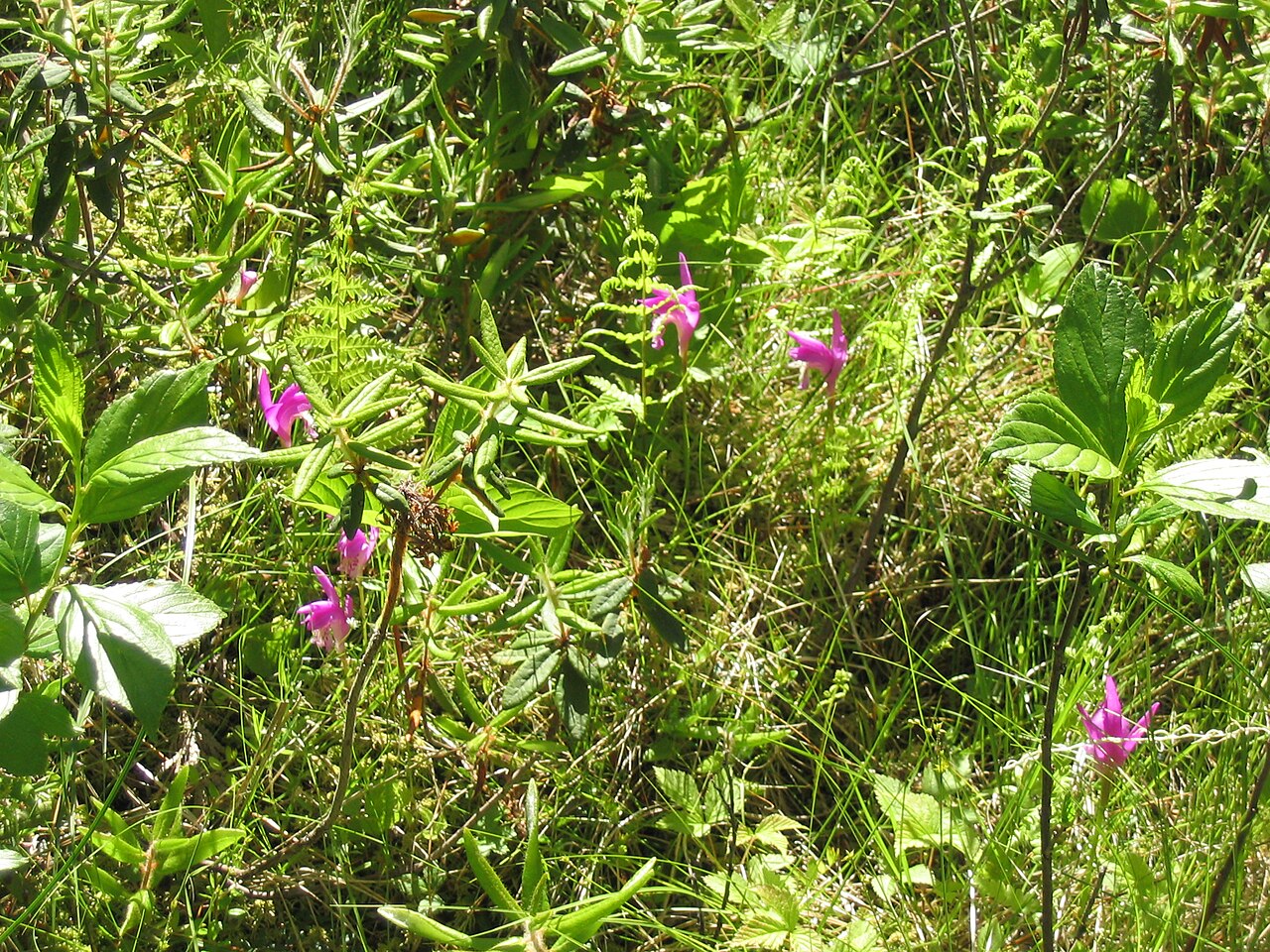
It grows in open, sunny, wet places with constantly saturated, nutrient-poor peat: sphagnum bogs and floating mats around lakes, fens, wet meadows, tamarack and black spruce bogs, and sometimes wet, mossy shorelines. It often grows with pitcher plants, sundews, cranberries and other orchids.
📋 Regional plant lists featuring Dragon’s Mouth: Michigan, Wisconsin & Eastern Minnesota · Illinois, Iowa & Missouri · Ohio & Indiana · New York, Pennsylvania & Northern New Jersey · Delaware, Southern New Jersey & Long Island · Maryland, Virginia & West Virginia · North & South Carolina · Connecticut, Massachusetts & Rhode Island · New Hampshire, Maine & Vermont
Can It Be Grown?
Honestly, it is very difficult. Dragon’s mouth is one of the hardest native bog orchids to keep alive in cultivation, and plants are rarely offered for sale. Never dig it from the wild: collected plants almost always die within a few years, and in many states taking it is illegal. A few specialist native orchid nurseries occasionally offer laboratory-propagated plants; those are the only plants anyone should buy.
Light
In the wild it needs full sun or very light shade. Plants in bogs that are being overgrown by shrubs and trees gradually stop flowering and disappear.
Soil & Water
It needs living sphagnum moss over acidic peat (or, in fens, marl), constantly saturated with clean, cold, mineral-poor water. It does not tolerate fertilizer, tap water high in minerals, warm summer soil temperatures or drying out. Experienced growers have had limited success in carefully managed bog gardens in cool northern climates.
Planting Tips
If you obtain legally propagated plants, set dormant corms just below the surface of living sphagnum in a lined bog garden or a large container kept wet with rainwater, in a sunny spot in a cool climate. Mark their locations, because the plant disappears after the leaf withers.
Pruning & Maintenance
Keep the bog open and sunny, pull out encroaching shrubs and aggressive sedges, and keep the moss growing. Mulch is unnecessary; living sphagnum is the ideal cover.
Propagation
Like other orchids, it produces dust-fine seeds that can only germinate with a compatible soil fungus or in sterile laboratory culture. This is specialist work and is the basis of the few propagated plants available. Established plants increase slowly by producing new corms.
Where to See It
- Bog boardwalks and nature preserves: many state parks, natural areas and nature centers in the Great Lakes and Northeast have boardwalks through bogs where dragon’s mouth blooms in June
- Northern national forests: such as the Superior and Chequamegon-Nicolet National Forests, where it grows in fens and bog mats
- Native orchid society field trips: a good way to see it with experienced guides who know how to protect fragile bog mats
- Photography: stay on boardwalks and trails; trampling peat mats damages the orchid and its habitat
Wildlife & Ecological Value
Dragon’s mouth is a classic indicator of high-quality, undisturbed peatland. Where it blooms in numbers, the bog or fen still has natural water levels, low nutrients and open, sunny conditions.
For Pollinators
Like grass pink and rose pogonia, dragon’s mouth relies on deception. The bright flower and yellow crests suggest a reward, but the flower offers little or no nectar. Young, inexperienced bumblebee workers and queens push into the gap between the lip and the column, and as they back out, the pollen masses stick to their backs. Because bees soon learn the trick, seed set is often low.
For Birds
It has no direct food value for birds, but it grows in peatlands used by nesting palm warblers, Lincoln’s sparrows, sedge wrens and other northern wetland birds.
For Mammals
Deer and other browsers sometimes eat the flowers and stems. The plant is otherwise of little importance to mammals.
Ecosystem Role
Like all orchids, it depends on soil fungi for germination and early growth. It is an indicator of healthy open peatlands, and its decline across the southern part of its range reflects the drainage and overgrowth of these wetlands.
Cultural & Historical Uses
Linnaeus named the genus Arethusa in 1753 for the nymph of Greek myth who, fleeing the river god Alpheus, was transformed by the goddess Artemis into a spring. The choice fits a plant that grows in spring-fed bogs. The name “dragon’s mouth” describes the gaping flower, and older names such as “bog-rose” and “swamp pink” reflect its beauty and habitat.
Naturalists of the 19th century prized it. Henry David Thoreau noted it in his journals among the bog flowers of Concord, Massachusetts. Its scarcity even then made it a sought-after find for botanists and collectors, and collecting contributed to its decline in some areas.
Today dragon’s mouth is a flagship species for peatland conservation. State natural heritage programs track its populations, and land trusts and agencies protect many of the bogs and fens where it still grows. Simply leaving it in place, staying on boardwalks and supporting wetland protection are the best things anyone can do for it.
Frequently Asked Questions
Is dragon’s mouth orchid endangered?
It is not federally listed, but it is listed as endangered, threatened or of special concern in many states, particularly at the southern and western edges of its range. It remains locally common in parts of Canada, the northern Great Lakes and northern New England.
Can I dig up dragon’s mouth and move it to my garden?
No. Wild plants almost never survive transplanting, and digging them is harmful and in many states illegal. If you want to grow it, look for laboratory-propagated plants from a specialist native orchid nursery and be prepared for a challenge.
Why is it called dragon’s mouth?
The upright sepals and petals and the broad, drooping, spotted lip give the flower the look of an open mouth or a dragon’s gaping jaw.
When and where can I see dragon’s mouth in bloom?
Look in open sphagnum bogs and fens from late May through early July, depending on latitude. Boardwalks in northern state parks and national forests are good places to look. Stay on the boardwalk to protect the bog.
Is dragon’s mouth the same as swamp pink?
“Swamp pink” is an old name sometimes used for dragon’s mouth, but today it usually refers to Helonias bullata, a federally threatened lily relative of Atlantic Coast bogs. Using the scientific name avoids confusion.

Looking for a nursery that carries Dragon’s Mouth?
Browse our native plant nursery directory: Connecticut & Delaware · Illinois & Indiana · Maine, Maryland, Massachusetts, Michigan & Minnesota · New Hampshire, New Jersey, New York, North Carolina & Ohio · Pennsylvania, Rhode Island, South Carolina, Vermont & Virginia · Wisconsin

