
Running Buffalo Clover (Trifolium stoloniferum)
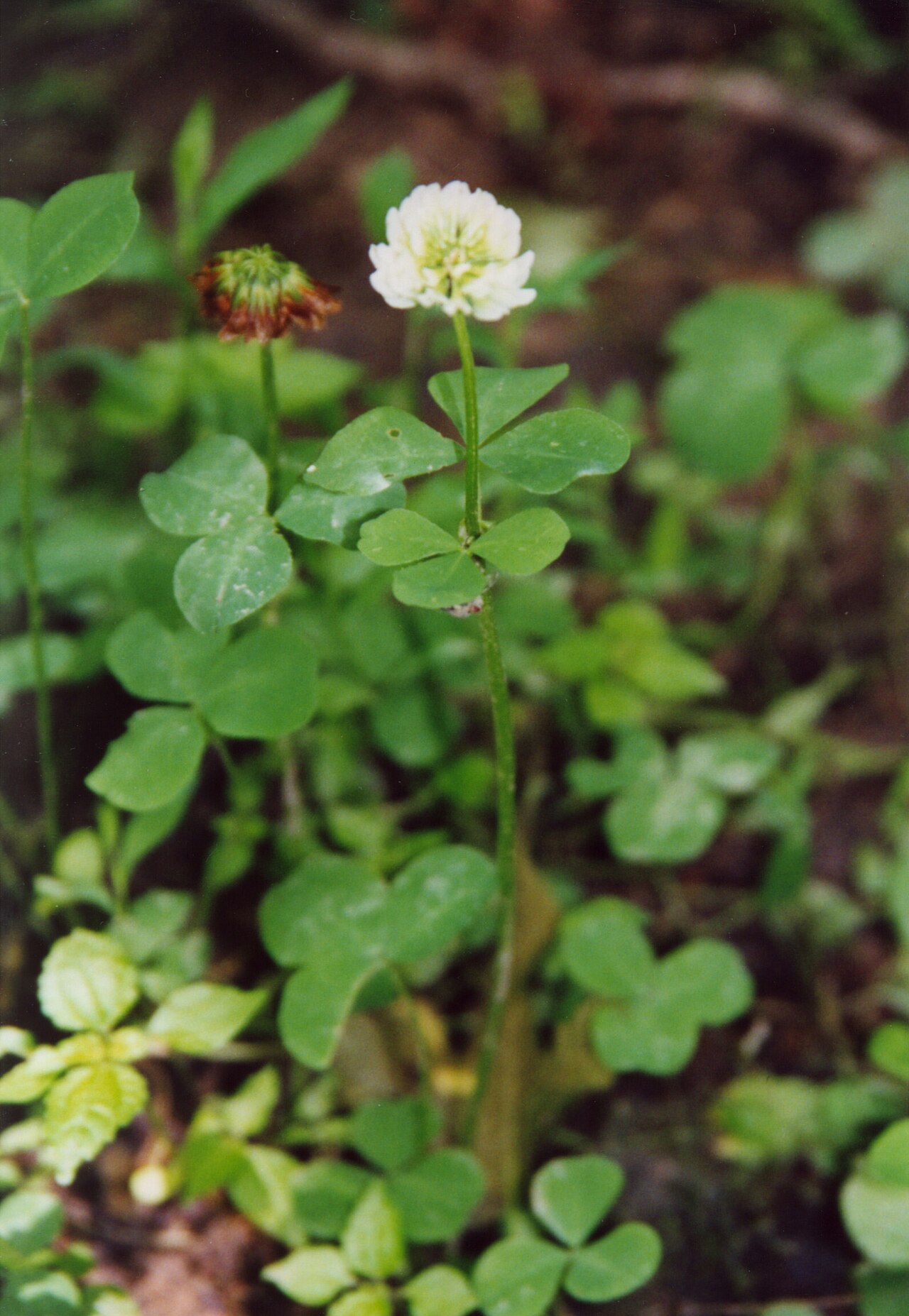
Trifolium stoloniferum, Running Buffalo Clover, is a native perennial clover of the Ohio Valley and the lower Midwest. It spreads by long, rooting runners and, from April to June, sends up short upright stems topped by round, creamy white flower heads about an inch across. Its name comes from both habits: the “running” stolons, and its long association with the bison herds that once moved through the open woodlands and grassy clearings of the region.
Running buffalo clover is also one of the best-known recovery stories in American plant conservation. By the mid-20th century it was thought to be extinct; it was rediscovered in West Virginia in 1983 and listed as a federally endangered species in 1987. After decades of surveys, habitat management and reintroductions, the U.S. Fish and Wildlife Service removed it from the federal endangered species list in 2021 on the basis of recovery. It remains rare and is still protected or tracked by several states.
This guide explains how to tell running buffalo clover from the common, introduced white clover, where it grows, the light disturbance it depends on, and how gardeners and land managers can help it. Never dig or collect it from the wild; where it is available at all, it comes from conservation propagation programs.
Identification
Running buffalo clover looks at first like the white clover of lawns (Trifolium repens), a European introduction. Two features separate them: the leaves on the flowering stem, and the shape of the leaflets.
Runners & Leaves
Plants spread by long stolons that root at the nodes. The leaves are three-parted, with broad, rounded to heart-shaped (obcordate) leaflets about ½ to 1½ inches long, finely toothed along the margins, smooth, and without the pale chevron often seen on white clover leaflets.
Flowering Stems
The key feature is the flowering stem. In running buffalo clover it is an upright stem, usually 4 to 8 inches tall (sometimes taller), that carries a pair of opposite leaves just below the flower head. White clover flower heads, by contrast, rise on leafless stalks straight from the runners.
Flowers
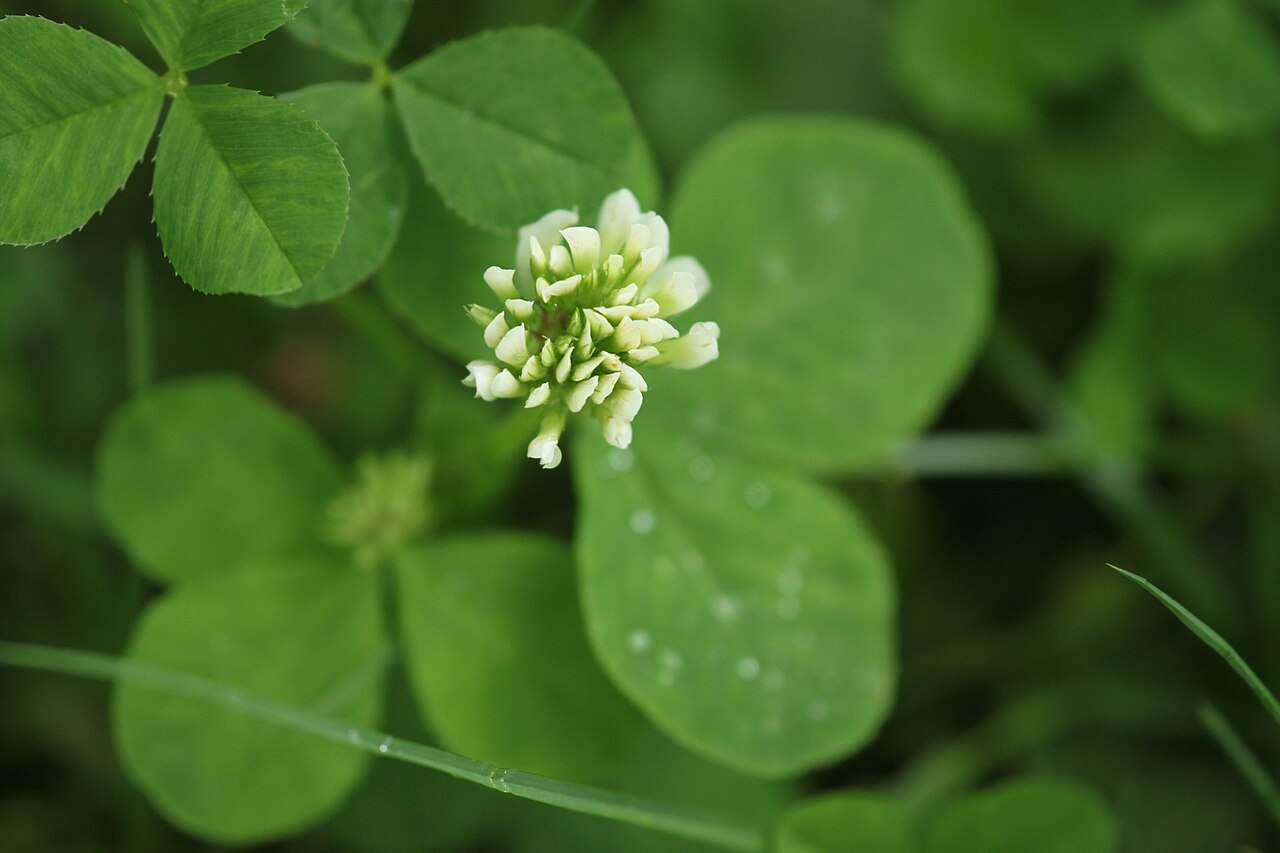
The round flower heads are about ¾ to 1¼ inches across, made of many small, pea-like flowers that are white to cream, sometimes tinged with pink or purple at the base. Bloom time is mainly mid-April to June. As the flowers age they turn brownish and bend downward.
Look-alikes
Besides white clover, the native buffalo clover (Trifolium reflexum) shares part of its range. It lacks runners, and its flower heads are larger and red to pink with white. Other native clovers on this site, such as Tomcat Clover, grow in the West.
Quick Facts
| Scientific Name | Trifolium stoloniferum |
| Family | Fabaceae (pea family) |
| Plant Type | Low perennial clover spreading by stolons |
| Mature Height | 4–8 in (flowering stems up to about 1 ft) |
| Mature Spread | 1–2 ft; runners form patches |
| Growth Rate | Moderate |
| Sun Exposure | Part shade to filtered sun |
| Water Needs | Medium; moist, well-drained soil |
| Soil Type | Moist, fertile loams, often over limestone |
| Soil pH | About 6.0–7.5 |
| Bloom Time | Mid-April–June |
| Flower Color | White to cream |
| Fall Color | None |
| Fruit | Small pod with 1–3 seeds |
| Deer Resistant | No; browsed by deer, rabbits and groundhogs |
| USDA Hardiness Zones | 5–7 |
Native Range
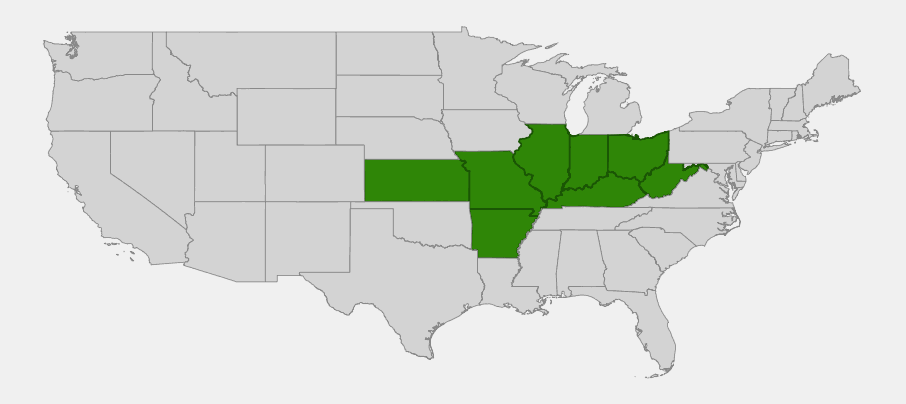
Running buffalo clover is native to the central United States. USDA PLANTS lists eight states in its historical range: Ohio, West Virginia, Kentucky, Indiana, Illinois, Missouri, Arkansas and Kansas. The populations known today are concentrated in West Virginia, Kentucky, Ohio, Indiana and Missouri; the old records farther west and south represent very few sites.
Before European settlement, it is thought to have grown in open woodlands, savannas and along the paths and wallows kept open by grazing bison and other large animals, which supplied the light shade, moderate disturbance and fertile soil it needs. As the bison disappeared and the land was cleared, plowed or grew up into dense forest, the clover vanished from most of its range. Introduced white clover and invasive plants also crowded it out.
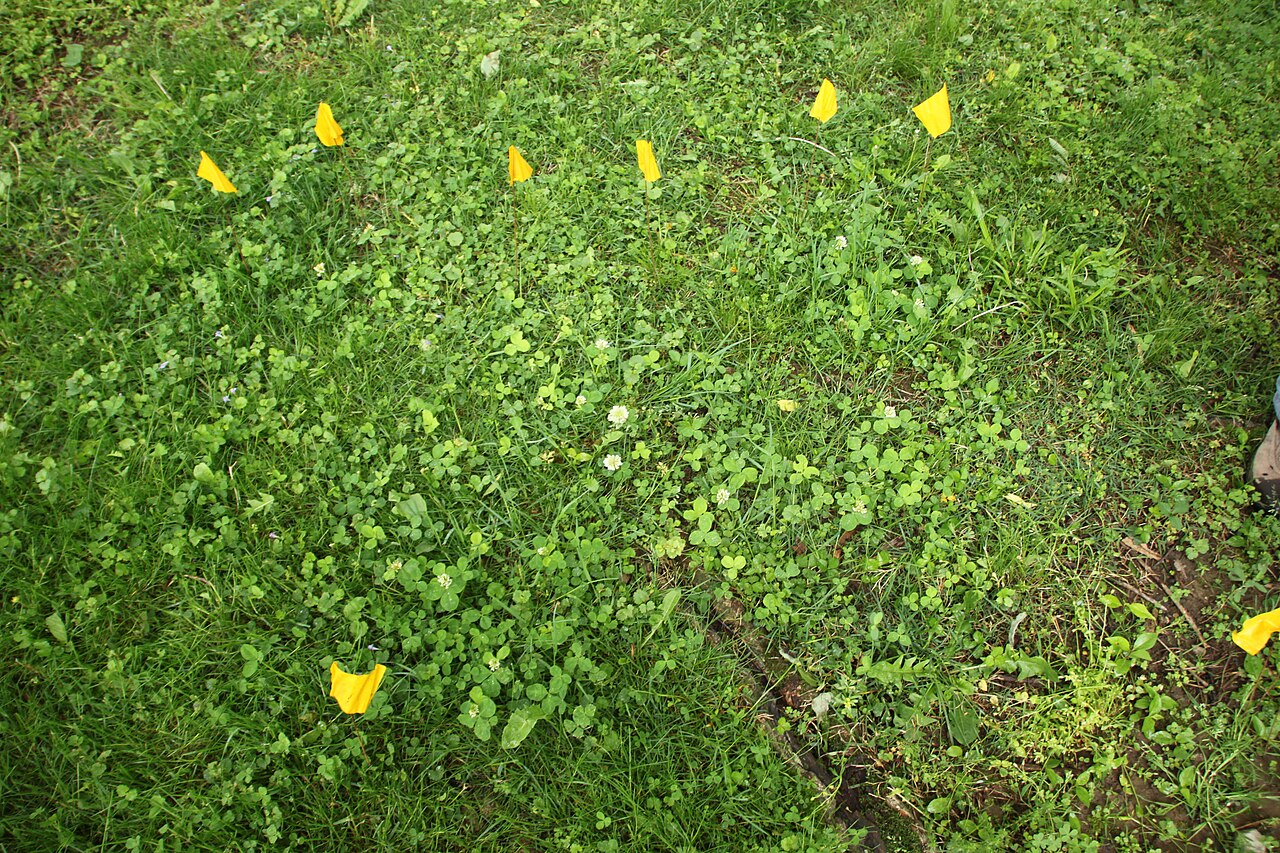
Today it grows in partially shaded, periodically disturbed places in moist, fertile soil: old logging roads and skid trails, mowed woodland edges, shaded stream terraces, lightly grazed woodland pastures, trailsides and cemeteries. It disappears from both deep shade and full, open sun, and from sites that are never disturbed.
📋 Regional plant lists featuring Running Buffalo Clover: Ohio & Indiana · Kentucky & Tennessee · Maryland, Virginia & West Virginia · Illinois, Iowa & Missouri · Nebraska, Kansas & Eastern Colorado · Arkansas, Louisiana, Eastern Oklahoma & Eastern Texas
Growing & Care Guide
Running buffalo clover is not sold by ordinary nurseries. Plants and seed are propagated by conservation programs, botanical gardens and agencies for reintroduction, and wild populations are protected in several states. Do not dig, transplant or collect seed from wild plants. If you own land where it grows, the best “care” is the right kind of management, and state natural heritage programs can advise.
Light
Part shade to filtered or dappled sun, such as the edge of a woodland or a partly open stand of trees. Deep shade weakens it, and full, open sun lets grasses and other clovers outcompete it.
Soil & Water
It needs moist, fertile, well-drained loam, often derived from limestone. It does not tolerate drought-prone, thin soils or waterlogged ground.
Disturbance
Unlike most rare plants, running buffalo clover depends on moderate, periodic disturbance: occasional mowing, light trampling, light grazing or soil disturbance along trails. These keep the canopy partly open and reduce competition. Too much disturbance kills it; too little lets the site grow over. Managers often mow around populations once or twice a year after seed set and remove invasive plants by hand.
Maintenance on Sites Where It Grows
Control invasive plants such as Japanese stiltgrass, garlic mustard and bush honeysuckle, and avoid herbicide drift near plants. Avoid planting or overseeding white clover nearby. Protect plants from heavy deer and rabbit browsing where it is severe.
Propagation
Seed has a hard coat and germinates best after scarification. Conservation growers also grow it from stolon cuttings. Plants have been reintroduced to protected sites in several states. Propagation for planting should be done only by or with permitted programs.
Landscape Uses
- Conservation and recovery projects: reintroduction to protected, managed woodland sites
- Woodland edge management: an indicator of well-managed, lightly disturbed open woods
- Education: a classic example of an endangered species that recovered
- Native pollinator habitat: spring flowers for bumblebees and other bees
- Botanical collections: grown by botanic gardens for conservation
Wildlife & Ecological Value
Running buffalo clover is a small plant with an outsized story, and like other native legumes it supports pollinators and enriches the soil it grows in.
For Pollinators
Bumblebees and other bees visit the flower heads for nectar and pollen in spring. Insect visits move pollen between plants and help seed set.
For Birds
Wild turkeys and other ground-foraging birds eat clover leaves and seeds, and the patches harbor insects eaten by songbirds.
For Mammals
Historically, bison likely grazed it and spread its seeds; it has been suggested that the seeds can pass through grazing animals and that this helped it spread. Today deer, rabbits and groundhogs browse it, and heavy browsing can harm small populations.
Ecosystem Role
As a legume, it hosts nitrogen-fixing Rhizobium bacteria in root nodules, adding nitrogen to woodland soils. Its dependence on bison-era disturbance makes it a living reminder of how large grazing animals once shaped eastern woodlands.
Cultural & Historical Uses
Running buffalo clover was described by botanists in the early 1800s from plants in the Ohio Valley. Early settlers and naturalists recorded it as common along bison traces and in the open woods of Kentucky and Ohio. After the bison were gone, records became fewer and fewer, and by the mid-1900s botanists believed it was extinct.
In 1983 a population was found in West Virginia, and more were soon discovered in Kentucky, Ohio, Indiana and Missouri. The U.S. Fish and Wildlife Service listed it as endangered on June 5, 1987. Recovery work combined new surveys, protection on public lands, managed mowing and light disturbance, invasive plant control, and reintroduction of propagated plants.
In August 2021 the Service removed running buffalo clover from the federal list of endangered and threatened plants, concluding that the threats had been reduced enough that it no longer met the definition of endangered or threatened. It is still rare, still depends on active management, and remains on several state rare-plant lists, so wild plants should be left undisturbed.
Frequently Asked Questions
Is running buffalo clover still endangered?
No longer federally. It was listed as endangered in 1987 and removed from the federal list in 2021 because it had recovered. It is still rare and is protected or tracked as rare in several states.
How is running buffalo clover different from white clover?
Running buffalo clover has upright flowering stems with a pair of opposite leaves just below the flower head. White clover, a European introduction, has flower heads on leafless stalks that rise directly from the runners.
Why is it called running buffalo clover?
“Running” refers to its spreading runners (stolons), and “buffalo” to its historical association with bison, whose grazing and trails created the lightly disturbed, partly shaded habitat it needs.
Where can I see running buffalo clover?
It grows on protected public lands in West Virginia, Kentucky, Ohio, Indiana and Missouri, often along old roads and trails in partly shaded woods. Look but don’t pick or dig.
Can I buy running buffalo clover for my garden?
It isn’t sold by ordinary nurseries. Plants and seed are produced by conservation programs for reintroduction. Never collect it from the wild.

Looking for a nursery that carries Running Buffalo Clover?
Browse our native plant nursery directory: Arkansas · Illinois, Indiana & Kansas · Kentucky & Missouri · Ohio · West Virginia

