
Booth’s Willow (Salix boothii)
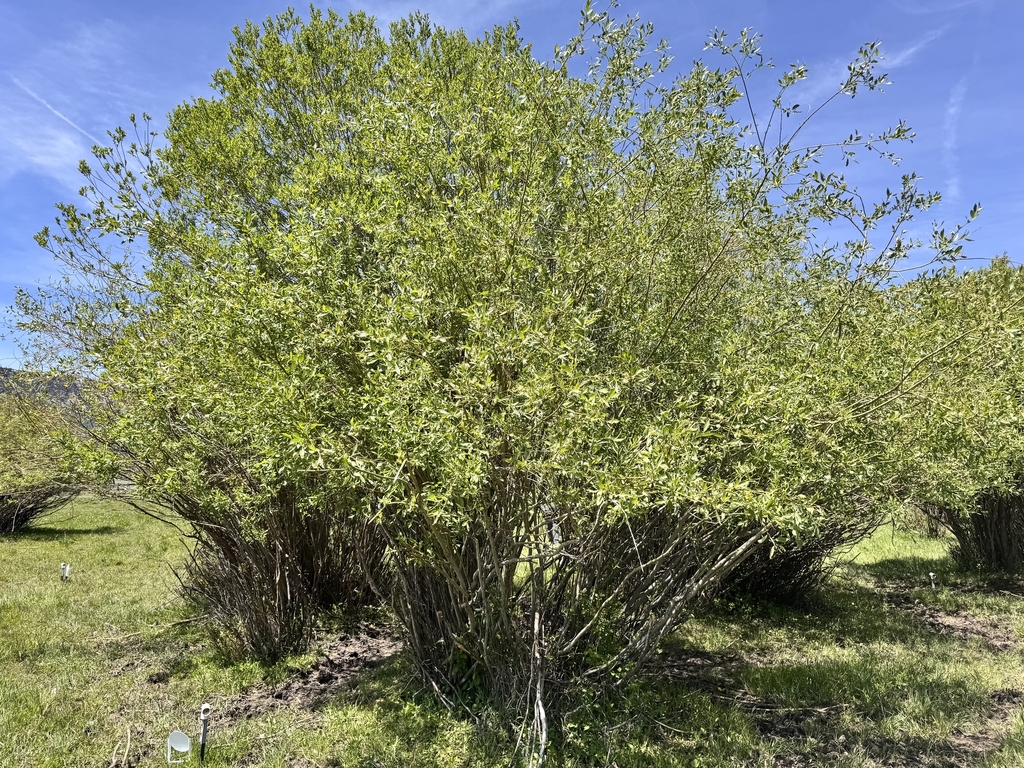
Salix boothii, Booth’s Willow, is a large, multi-stemmed shrub willow of mountain streams, wet meadows and fens in the western United States and southwestern Canada. It forms rounded clumps 5 to 15 feet tall and is one of the most common willows in the montane and subalpine riparian thickets of the Rocky Mountains, the Great Basin ranges, the Cascades and the Sierra Nevada. With Sandbar Willow, Geyer willow and planeleaf willow, it shapes many of the willow-lined streams that hikers see in the high country.
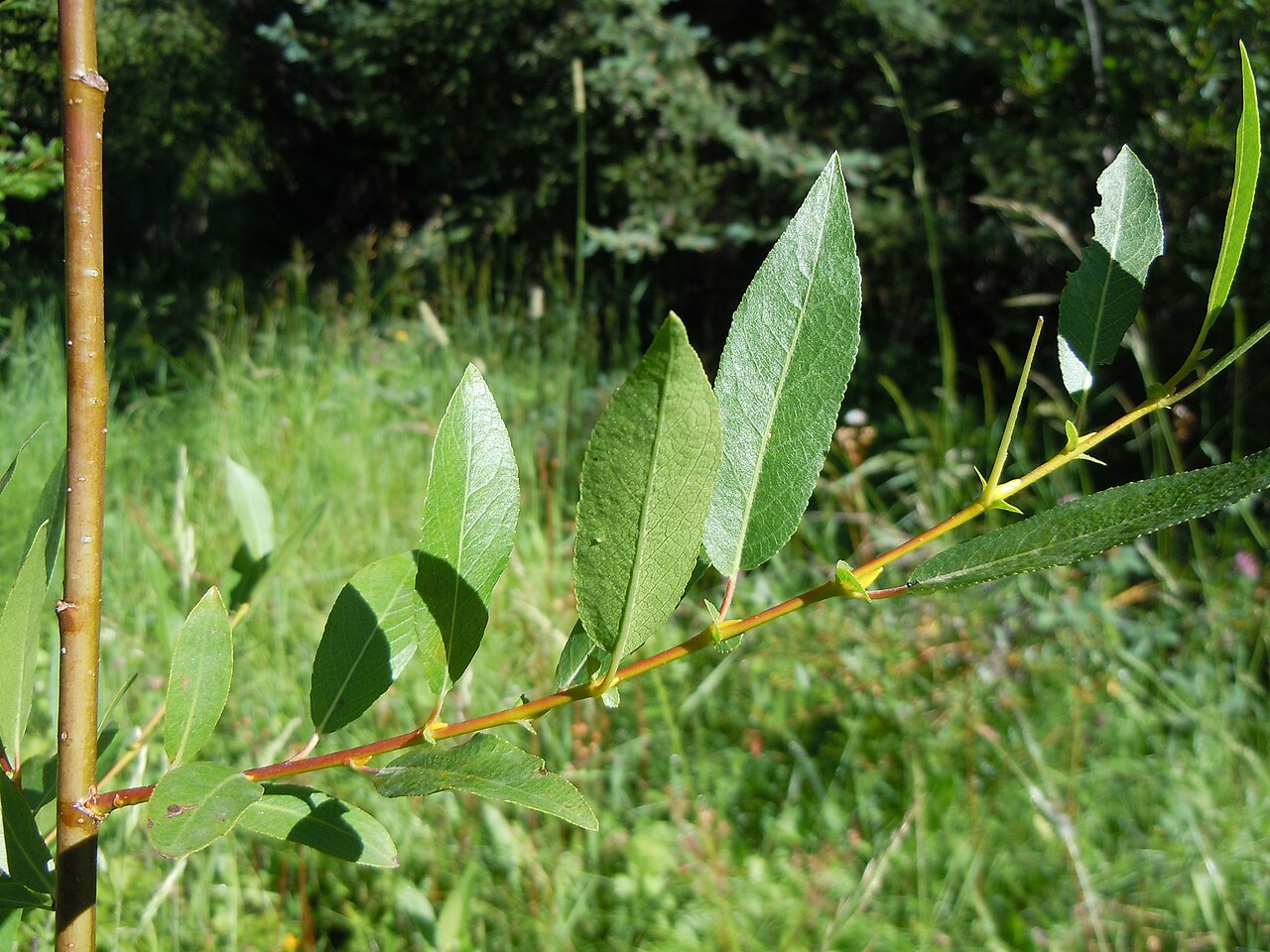
Booth’s willow is easy to overlook among other willows, but it has a few distinctive features: leaves that are about the same green on both sides (many willows are whitish beneath), smooth yellowish to reddish-brown twigs, and catkins that appear with the new leaves in late spring. It hybridizes with several other willows, so some plants are hard to identify with certainty.
As a riparian shrub, Booth’s willow is very valuable to wildlife. Moose, elk and beavers browse it heavily, and its thickets shelter many songbirds. It is also one of the most useful willows for restoring mountain streams, because it roots readily from dormant cuttings. This guide covers how to identify it, where it grows, how to plant it and its value to wildlife.
Identification
Willows are notoriously difficult to identify, and Booth’s willow is best identified using several features together, including leaves, twigs, catkins and habitat.
Growth Habit
Booth’s willow is a deciduous, multi-stemmed shrub, usually 5 to 15 feet tall (occasionally to about 20 feet), forming dense, rounded clumps. Stems spread from the base, and plants can form extensive thickets along streams and in wet meadows.
Twigs & Bark
The young twigs are usually smooth or slightly hairy and yellowish, yellow-brown or reddish-brown, becoming gray-brown with age. The buds are small and pressed against the twig, each covered by a single cap-like scale, as in all willows.
Leaves
The leaves are alternate, narrowly elliptic to oval or slightly wider above the middle, usually 1½ to 3½ inches long, with finely toothed or nearly smooth edges. Both surfaces are green and similar in color, smooth or with a few hairs. Many other mountain willows, such as Geyer willow and Drummond willow, have leaves that are distinctly whitish or silvery underneath. Small leafy stipules are often present at the base of the leaf stalks on vigorous shoots.
Catkins
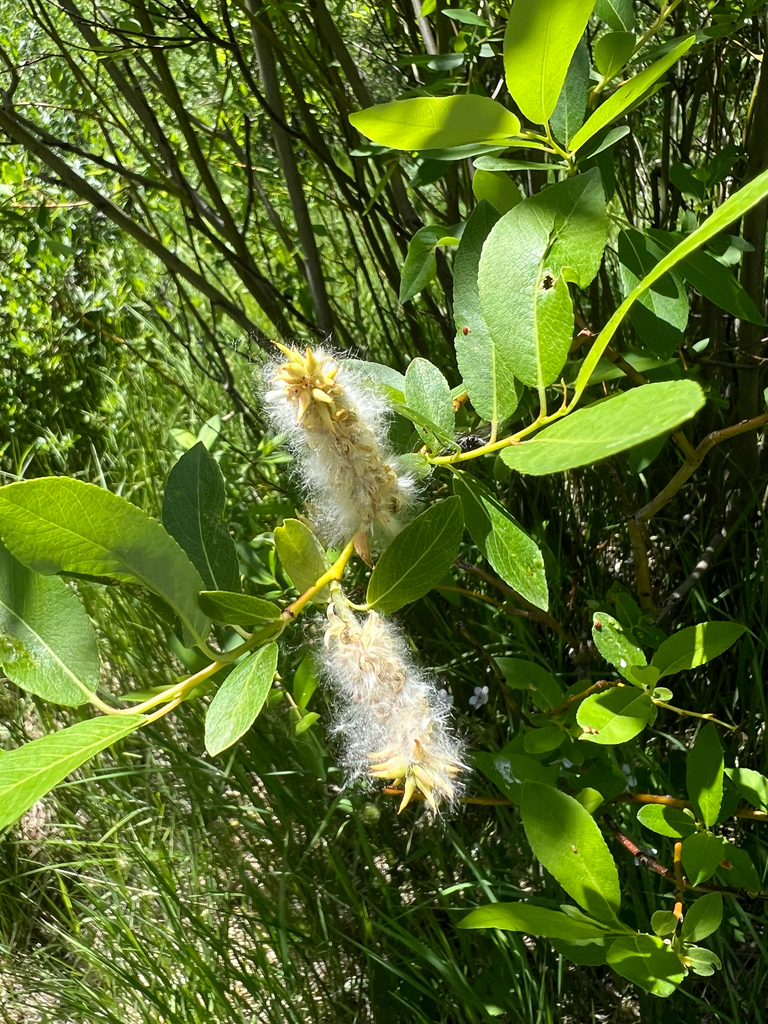
Like all willows, Booth’s willow has separate male and female plants. The catkins appear with the new leaves in late spring and early summer, usually May to July depending on elevation. Male catkins are yellow with pollen; female catkins are about 1 to 2 inches long, with smooth, pear-shaped capsules.
Seeds
In early summer the capsules split and release tiny seeds attached to tufts of cottony hairs, which drift on the wind and over water. Willow seeds live only a few days and must land on moist, bare soil, such as fresh sediment along streams, to germinate.
Quick Facts
| Scientific Name | Salix boothii Dorn |
| Family | Salicaceae (willow family) |
| Plant Type | Deciduous multi-stemmed shrub |
| Mature Height | 5–15 ft (occasionally to 20 ft) |
| Mature Spread | 5–12 ft; forms thickets |
| Growth Rate | Fast |
| Sun Exposure | Full sun to part shade |
| Water Needs | High; moist to wet soil |
| Soil Type | Moist to wet loam, silt, gravel or organic (fen) soils |
| Soil pH | About 6.0–8.0 |
| Bloom Time | May–July (catkins with the new leaves) |
| Flower Color | Yellowish (male) to greenish (female) catkins |
| Fall Color | Yellow |
| Fruit | Small capsules releasing cottony seeds |
| Deer Resistant | No; heavily browsed by moose, elk and deer |
| USDA Hardiness Zones | 3–7 |
Native Range
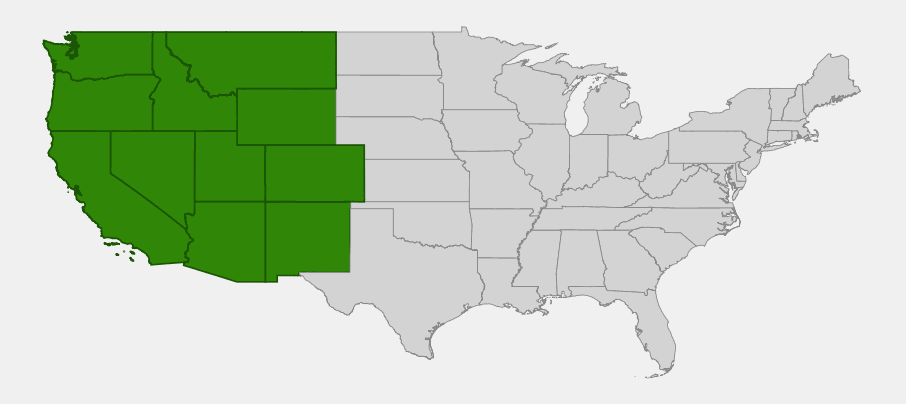
Booth’s willow grows in the mountains of western North America. USDA PLANTS lists it as native in Arizona, California, Colorado, Idaho, Montana, Nevada, New Mexico, Oregon, Utah, Washington and Wyoming, and in Alberta and British Columbia in Canada. It is most common in the central and northern Rocky Mountains, from Montana and Idaho south through Wyoming, Utah and Colorado, and in the mountains of eastern Oregon and Washington, the Sierra Nevada and the Great Basin ranges. It is less common at the southern edge of its range in Arizona and New Mexico. USDA also lists Alaska, but the Flora of North America does not include Alaska in its range, so it is not mapped here.
It grows mainly at middle to high elevations, roughly 4,000 to 11,000 feet, in the montane and subalpine zones. Typical habitats are streambanks, beaver ponds, wet meadows, seeps, fens, lake margins and the edges of springs. It often dominates or shares dominance in willow thickets with Geyer willow, planeleaf willow and Drummond willow, and it grows with Thinleaf Alder, Water Birch and Redosier Dogwood.
Booth’s willow communities depend on high water tables and seasonal flooding. They have declined in some areas because of heavy browsing by livestock, elk and moose, loss of beavers, stream channel erosion and lowered water tables. Restoring willows is a key goal of many western stream and wet meadow restoration projects.
📋 Regional plant lists featuring Booth’s Willow: Idaho, Eastern Oregon & Eastern Washington · Montana & Wyoming · Utah & Western Colorado · California & Nevada · Arizona & New Mexico
Growing & Care Guide
Booth’s willow is easy to grow in moist to wet soil in cold-winter climates. It is best suited to stream and pond banks, rain gardens, wet meadows and naturalized areas, where it can grow into a large, wildlife-rich thicket. In a small yard it can be kept in bounds by regular pruning.
Light
Plant in full sun for the densest growth. It tolerates partial shade but becomes more open and leggy in shade.
Soil & Water
It needs soil that stays moist through the growing season and tolerates periodic flooding and saturated soil. It grows in loam, silt, gravel and peaty soils. In drier sites, plant it where runoff collects, or water deeply and often during the first two summers. It is not drought-tolerant.
Planting Tips
Plant rooted nursery stock or dormant live stakes in early spring as soon as the soil thaws, or in late fall. Live stakes should be ½ to 1 inch thick and 2 to 3 feet long, cut from dormant stems of local plants, with most of the length pushed into moist soil. Protect young plants from browsing by deer, elk, moose and rabbits with fencing or cages until they are established. Keep willows at least 30 to 50 feet from sewer lines, septic fields and foundations, because their roots seek out water.
Pruning & Maintenance
Booth’s willow tolerates hard pruning. Cut a few of the oldest stems to the ground in late winter to keep the shrub vigorous and colorful, or coppice the whole plant every few years. Remove dead or broken stems after heavy snow. Willows can be affected by leaf rust, cankers and willow sawflies, but healthy plants in wet sites usually recover.
Propagation
Booth’s willow is very easy to propagate from dormant hardwood cuttings, which root readily in moist soil or water. This is the standard method for stream restoration. Seeds must be sown within a few days of release on wet, bare soil, so seed propagation is rarely used.
Landscape Uses
- Stream and riparian restoration: roots easily from live stakes and holds streambanks
- Wet meadows and pond edges: a large native shrub for constantly moist ground
- Wildlife habitat: browse and cover for moose, elk, beavers and songbirds
- Rain gardens and bioswales: tolerates periodic flooding in cold climates
- Living windbreaks and screens: fast-growing, dense thickets
Wildlife & Ecological Value
Mountain willow thickets are among the most productive wildlife habitats in the West, and Booth’s willow is often a major part of them.
For Pollinators
Its catkins provide early pollen and nectar for native bees, including bumblebee queens and mining bees, at a time when few other plants are flowering at high elevations. Willows are also larval host plants for many butterflies and moths, including the mourning cloak, Weidemeyer’s admiral, Lorquin’s admiral and the dreamy duskywing.
For Birds
Willow thickets are prime nesting and feeding habitat for songbirds such as the willow flycatcher, yellow warbler, Wilson’s warbler, Lincoln’s sparrow, MacGillivray’s warbler and song sparrow. Grouse eat the buds, and many birds feed on the insects that live on willow leaves.
For Mammals
Booth’s willow is important winter and summer browse for moose, elk, mule deer and snowshoe hares, and beavers eat the bark and use the stems to build dams and lodges. In Yellowstone and elsewhere, the health of these willows is closely tied to the numbers of elk and beavers.
Ecosystem Role
Willow roots stabilize streambanks, and the shrubs shade the water, keeping it cool for trout. Fallen leaves feed aquatic insects. By supplying building material and food for beavers, willows help create the beaver ponds that raise water tables and expand wetlands.
Cultural & Historical Uses
The species was named Salix boothii in the 1970s by the Wyoming botanist Robert Dorn, honoring the Montana botanist W. E. Booth. Before then, this willow was usually included in Salix myrtillifolia or Salix pseudocordata, names that apply to other species, and older floras and reports may use those names for Booth’s willow.
Native peoples of the West used willow stems widely for baskets, fish traps, shelters and drying racks, and the bark of many willows, which contains salicin (a natural relative of aspirin), was used to relieve pain and fever. Specific uses of Booth’s willow are not well documented separately from other mountain willows.
Today Booth’s willow is a mainstay of western riparian restoration. Land managers plant thousands of live stakes along degraded streams and wet meadows each year, often combined with beaver reintroduction and fencing to protect young willows from browsing.
Frequently Asked Questions
How can I identify Booth’s willow?
Look for a large, multi-stemmed shrub in a wet mountain site, with smooth yellowish to reddish twigs and leaves that are about the same green on both sides. Many similar mountain willows have leaves that are whitish or silvery underneath.
Where does Booth’s willow grow?
It grows along mountain streams, wet meadows, fens and beaver ponds from British Columbia and Alberta south through the Rocky Mountains, Great Basin, Cascades and Sierra Nevada to Arizona and New Mexico, mostly at 4,000 to 11,000 feet.
Can I grow Booth’s willow from cuttings?
Yes. It roots very easily from dormant hardwood cuttings or live stakes pushed into moist soil in early spring or late fall. Collect cuttings only where permitted, and preferably from local plants.
Is Booth’s willow good for wildlife?
Very. It is important browse for moose, elk, deer and beavers, nesting cover for many songbirds, early pollen for bees, and a larval host plant for butterflies.
How big does Booth’s willow get?
Usually 5 to 15 feet tall and about as wide, sometimes taller. It spreads into thickets in wet places, so allow plenty of room or prune it regularly.

Looking for a nursery that carries Booth’s Willow?
Browse our native plant nursery directory: Arizona · California · Colorado · Idaho · Montana · Nevada & New Mexico · Oregon · Utah · Washington · Wyoming

