
Slender Arrowgrass (Triglochin concinna)
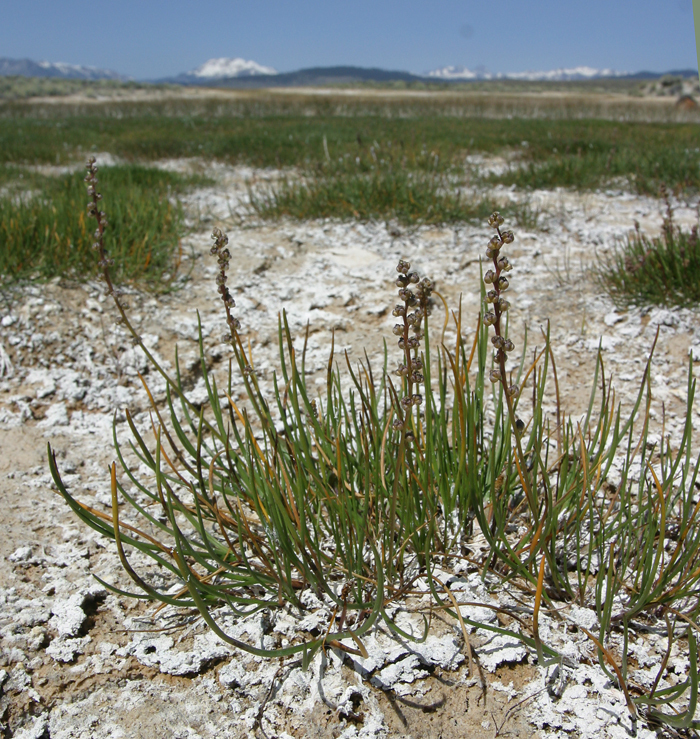
Triglochin concinna, known as Slender Arrowgrass or graceful arrowgrass, is a small, grass-like perennial of salt marshes and alkaline meadows in the western United States. It forms tufts of narrow, fleshy, half-round leaves, and from spring to fall it sends up slender spikes of tiny green flowers with feathery purple stigmas. It is easy to overlook among saltgrass and pickleweed, but it is a characteristic plant of two very different salty habitats: Pacific coast salt marshes and inland alkali flats.
Despite the name, arrowgrasses are not grasses. They belong to their own small family, the arrowgrass family (Juncaginaceae), related to the water-plantains and pondweeds. Slender arrowgrass is a smaller, finer relative of Common Arrowgrass (Triglochin maritima), which grows across much of North America.
Arrowgrasses come with an important warning for anyone with livestock. Their leaves contain cyanogenic compounds that can release hydrogen cyanide, and arrowgrass hay and pasture have poisoned cattle and sheep. This guide covers how to identify slender arrowgrass, where it grows, what role it plays in salt marshes and alkaline wetlands, and why it should not be grazed.
Identification
Slender arrowgrass looks like a small, fine-leaved rush or grass until it flowers. Look for fleshy, rounded leaves with a sheathing base, and a leafless spike of tiny, short-stalked flowers that ripen into small, ribbed, egg-shaped fruits.
Habit & Leaves
Plants grow from short rhizomes and form tufts or small mats. The leaves are all basal, very narrow (about 1 to 2 millimeters wide), fleshy and half-round to nearly round in cross-section, usually shorter than the flowering stalks. Their bases are wrapped in membranous sheaths, and old leaf bases often persist as fibers. Inland plants (var. debilis) are often especially slender and delicate.
Flowers
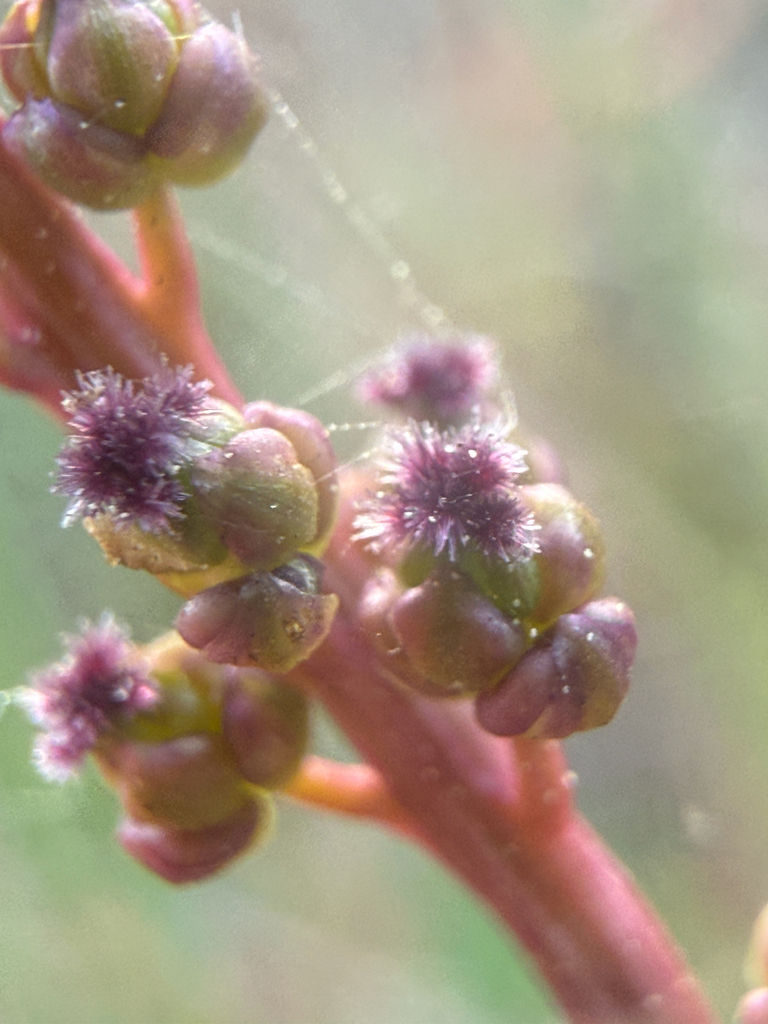
The flowering stalks are leafless, 4 to 18 inches tall, and often reddish near the top. They carry a narrow spike of many tiny flowers on very short stalks. Each flower has six small greenish tepals and six stamens, and a cluster of feathery, purple to reddish stigmas that stick out when the flower is receptive. The flowers are wind-pollinated.
Fruit
The fruits are small, egg-shaped to oblong, about ⅛ inch (3 to 4 millimeters) long, and made of six narrow sections (carpels) that separate at maturity. Ripe spikes turn tan to reddish brown. The fruits are smaller and the spikes and leaves more slender than those of common arrowgrass.
Look-alikes
Common Arrowgrass is larger and stouter, with longer, wider leaves, taller flowering stalks and larger fruits. Marsh arrowgrass (T. palustris) has club-shaped fruits made of three sections. Seaside plantain and some rushes can look similar when not in flower, but they lack the arrowgrass’s fleshy half-round leaves and spikes of tiny flowers with feathery stigmas.
Quick Facts
| Scientific Name | Triglochin concinna Burtt Davy (incl. var. debilis) |
| Family | Juncaginaceae (arrowgrass family) |
| Plant Type | Grass-like perennial herb from short rhizomes |
| Mature Height | 4–18 in in flower |
| Mature Spread | 3–8 in per tuft; forms small mats |
| Growth Rate | Slow to moderate |
| Sun Exposure | Full sun |
| Water Needs | High; saturated salt marsh or alkaline meadow soil |
| Soil Type | Saline or alkaline mud, silt, clay or sand |
| Soil pH | About 7.0–9.5 (alkaline to saline) |
| Bloom Time | March–November depending on location; mainly late spring to summer |
| Flower Color | Greenish with feathery purple stigmas |
| Fall Color | Tan to reddish-brown fruiting spikes |
| Fruit | Small six-parted fruit, about ⅛ in long |
| Deer Resistant | Not palatable; toxic to grazing animals |
| USDA Hardiness Zones | 5–10 |
Native Range
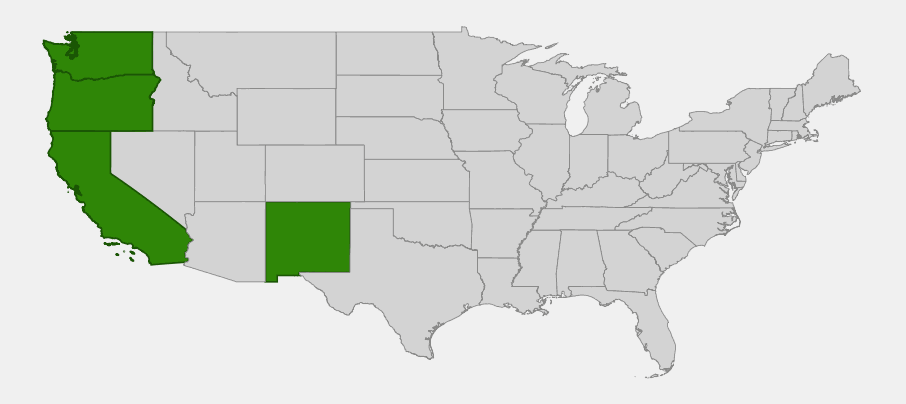
USDA PLANTS lists slender arrowgrass as native in California, Oregon, Washington and New Mexico. Beyond the United States it grows in Baja California, Mexico, and it is also native in western South America, in coastal and high-elevation salt marshes and wetlands of Chile and Argentina, a classic example of a plant with a split distribution between western North and South America.
Two varieties are recognized. Var. concinna grows in coastal salt marshes along the Pacific, from Washington’s Puget Sound and Olympic Peninsula south through Oregon and California to Baja California, typically in the upper marsh with pickleweed and saltgrass. Var. debilis is an inland form of alkaline meadows, alkali flats and the margins of saline lakes and springs, for example around Mono Lake and in the Owens Valley on the east side of the Sierra Nevada.
Its distribution is patchy because its habitats are. Coastal salt marshes in California and the Pacific Northwest have been greatly reduced by diking, filling and development, and inland alkaline wetlands have been affected by groundwater pumping and water diversions. In New Mexico it is known from a few scattered alkaline wetland sites.
📋 Regional plant lists featuring Slender Arrowgrass: California & Nevada · Western Oregon & Western Washington · Idaho, Eastern Oregon & Eastern Washington · Arizona & New Mexico
Growing & Care Guide
Slender arrowgrass is not a garden plant and is not sold by nurseries. It is used occasionally in salt marsh and alkaline wetland restoration, usually from locally collected seed. If it grows on your land, the main thing to know is that it is toxic to livestock.
Safety note: like other arrowgrasses, slender arrowgrass contains cyanogenic glycosides (such as triglochinin) that release hydrogen cyanide when the leaves are chewed or damaged. Cattle and sheep that eat arrowgrass in quantity, in pasture or in hay cut from wet meadows, can be poisoned and die quickly, especially when plants are stressed by drought or frost. Keep livestock out of stands of arrowgrass and keep it out of hay. It is not edible for people either.
Light
Full sun. It grows in open marshes and flats and does not tolerate shade from taller plants.
Soil & Water
It needs constantly wet, salty or alkaline soil: tidal salt marsh, the moist edges of alkali flats, or saline spring seeps. It tolerates salt and high pH that would kill most other plants.
Planting Tips
In restoration projects it is introduced by sowing locally collected seed or by planting small plugs into appropriate marsh elevations. Match the elevation and salinity of nearby natural stands, since it grows in a narrow zone of the marsh.
Pruning & Maintenance
No maintenance is needed in natural habitats. Restoration sites may need control of invasive plants such as perennial pepperweed, which crowds out low marsh plants.
Propagation
Grow from seed or by dividing rhizomatous clumps. Seeds are best collected from local populations so plants are adapted to local salinity and climate.
Landscape Uses
- Salt marsh restoration: in the upper marsh zone of Pacific coast tidal wetlands
- Alkaline wetland restoration: around saline springs, lakes and alkali meadows in the Great Basin
- Wetland education: an example of salt-tolerant, wind-pollinated wetland plants
- Not for gardens or pastures: toxic to livestock and not suited to ordinary landscapes
Wildlife & Ecological Value
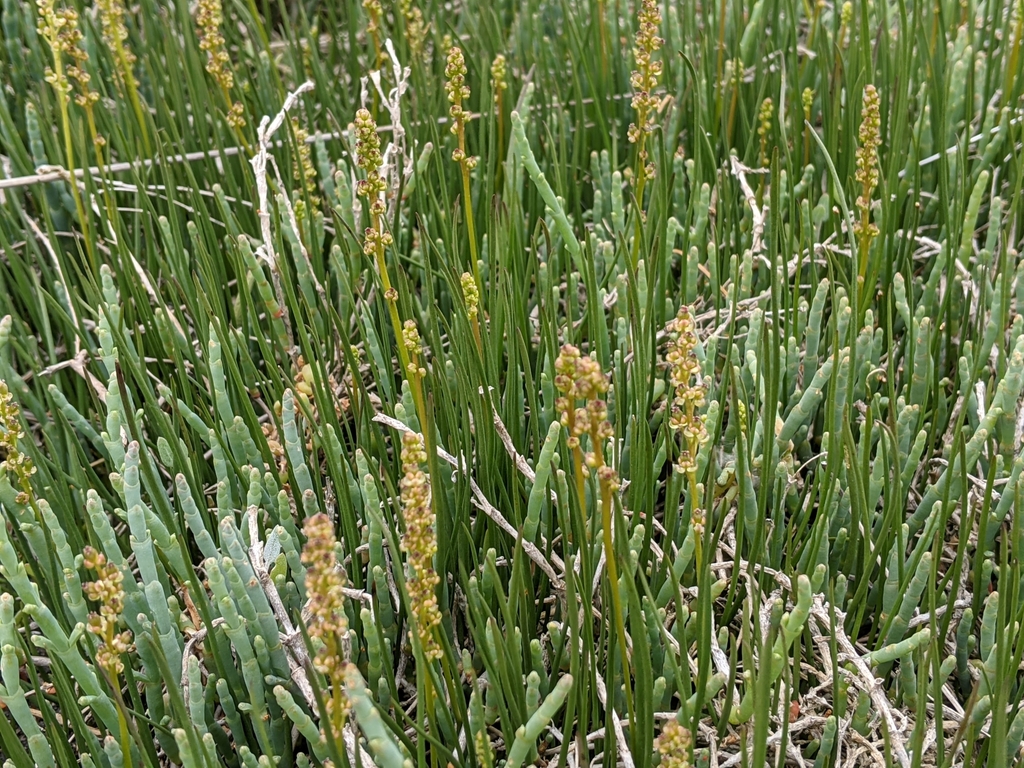
Slender arrowgrass is a modest plant, but it is part of the dense, salt-tolerant vegetation that makes salt marshes and alkali meadows productive habitat.
For Pollinators
The flowers are wind-pollinated and offer no nectar. Small insects that live among marsh plants may use the tufts for shelter.
For Birds
Ducks, geese and other marsh birds feed in the same salt marshes and alkaline wetlands, and some waterfowl eat arrowgrass seeds and young shoots. The marshes where it grows are feeding and nesting habitat for shorebirds, rails and marsh songbirds, including the endangered Ridgway’s rail and the salt marsh song sparrows of California.
For Mammals
Because of its cyanogenic compounds, it is generally avoided by grazing mammals. Small marsh mammals such as the salt marsh harvest mouse live among the pickleweed and other plants of the upper marsh where it grows.
Ecosystem Role
Its rhizomes and tufts help bind marsh sediment, and as part of the upper marsh plant community it contributes organic matter that supports marsh food webs. In inland alkaline meadows it is one of the few plants able to grow in the salty, high-pH soil, along with saltgrass and alkali rushes.
Cultural & Historical Uses
Joseph Burtt Davy described Triglochin concinna in 1895 from California material; concinna means “neat” or “elegant,” a reference to its graceful, slender form. The inland variety debilis (“weak” or “slender”) was first described as a form of Triglochin maritima and later placed under T. concinna.
Arrowgrasses are best known to farmers and ranchers as poisonous plants. Arrowgrass poisoning of cattle and sheep has long been recognized across western North America, particularly where wet alkaline meadows are cut for hay. Extension services in the West still warn livestock owners about arrowgrass in hay and pastures, mostly concerning the common and marsh arrowgrasses, which are far more abundant than slender arrowgrass.
Some Indigenous peoples of western North America ate the roasted or parched seeds of common arrowgrass, which lose their toxicity when heated, but there is little record of slender arrowgrass being used this way. Today its value is ecological: it is one of the native plants that help define healthy salt marsh and alkali meadow communities.
Frequently Asked Questions
Is arrowgrass poisonous?
Yes. Arrowgrasses, including slender arrowgrass, contain cyanogenic glycosides that release hydrogen cyanide when the leaves are chewed. Cattle and sheep that eat enough arrowgrass in pasture or hay can be fatally poisoned. People should not eat it either.
Is slender arrowgrass a grass?
No. Despite the name, arrowgrasses belong to the arrowgrass family (Juncaginaceae), not the grass family. Their fleshy, half-round leaves and spikes of tiny six-parted flowers set them apart from true grasses.
How is slender arrowgrass different from common arrowgrass?
Slender arrowgrass is smaller and finer in every way, with very narrow leaves, shorter flower stalks and smaller fruits about ⅛ inch long. Common arrowgrass is larger and much more widespread, growing across most of North America.
Where can I see slender arrowgrass?
Look in the upper zone of Pacific coast salt marshes, among pickleweed and saltgrass, for example around Morro Bay and San Francisco Bay, or on the alkaline flats and meadows around Mono Lake and other saline lakes east of the Sierra Nevada.
Can I grow slender arrowgrass?
It is not available from nurseries and is not suitable for gardens. It needs saline or alkaline wet soil, and it is toxic to livestock. Its main use is in salt marsh and alkaline wetland restoration using local seed.

Looking for a nursery that carries Slender Arrowgrass?
Browse our native plant nursery directory: California · New Mexico · Oregon · Washington

