
Pygmyflower Rockjasmine (Androsace septentrionalis)
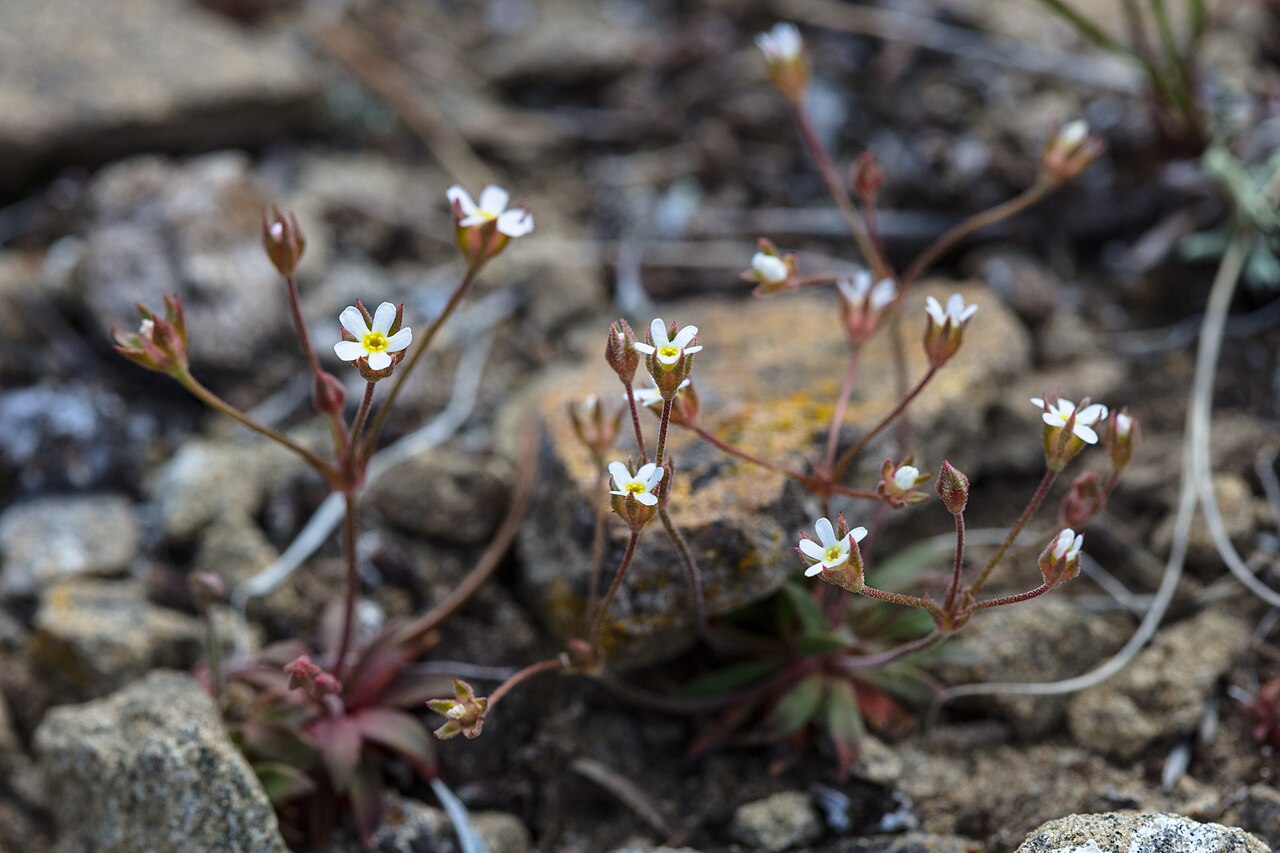
Androsace septentrionalis, known as Pygmyflower Rockjasmine (also pygmy-flower rock-jasmine or northern fairy candelabra), is a tiny annual wildflower of the primrose family that grows across the cold and mountainous parts of the Northern Hemisphere. In North America it ranges from Alaska and northern Canada south through the Rocky Mountains and Great Basin to Arizona, New Mexico and far West Texas.
It is easy to walk past. Each plant is a flat rosette of small, toothed leaves no bigger than a coin, from which rise one to many hair-thin, often reddish stalks a few inches tall. Each stalk ends in an umbrella-like spray of minute white flowers, each only about ⅛ inch across, on long, spreading flower stalks. The effect, when a patch is in bloom, is of a miniature fireworks display or candelabra, which is where the name “fairy candelabra” comes from.
Pygmyflower rockjasmine is not a garden plant in the usual sense and is not sold by nurseries, but it is a widespread and characteristic wildflower of sagebrush slopes, mountain meadows, open forests and alpine tundra. This guide explains how to identify it, where to find it, and what role it plays in western and northern plant communities.
Identification
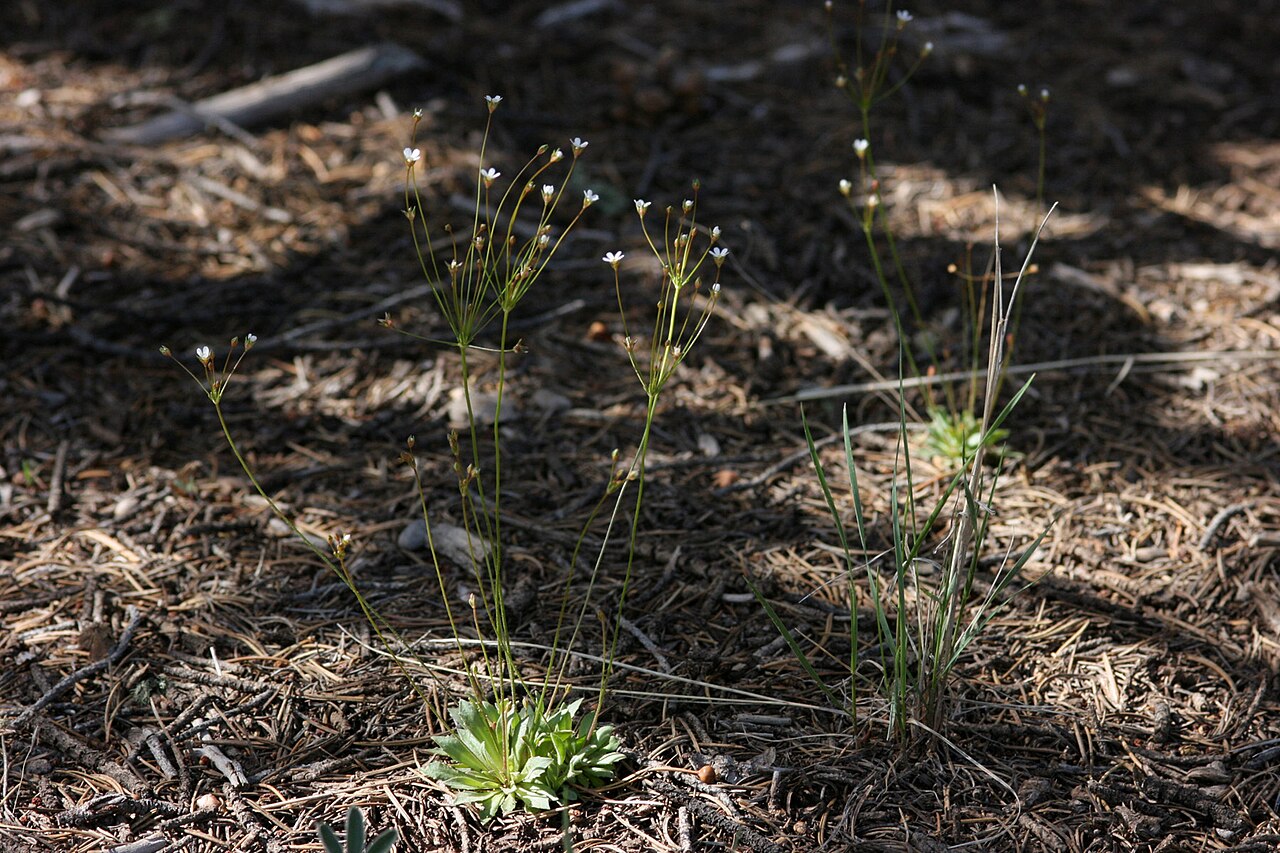
Pygmyflower rockjasmine is a small annual or short-lived biennial. Look for a single basal rosette, leafless flowering stalks topped by umbels of tiny white flowers on long, spreading pedicels, and narrow bracts at the base of each umbel.
Leaves
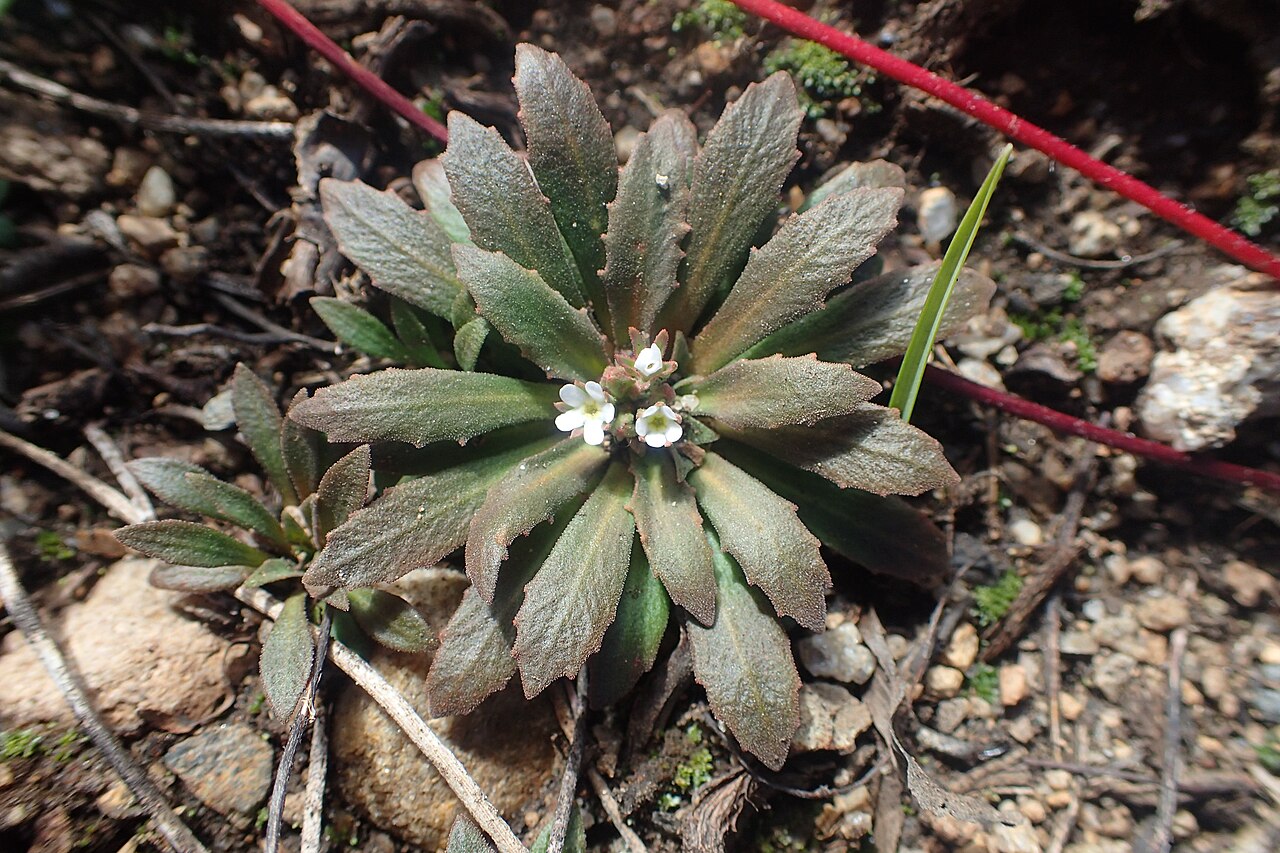
All the leaves are in a basal rosette ½ to 1½ inches across. They are lance-shaped to narrowly oblong, ⅜ to 1¼ inches long, usually with a few small teeth along the edges, and smooth or with fine, short hairs. The rosette often turns reddish in dry or exposed sites.
Flowers
One to many leafless stalks (scapes) rise 1 to 12 inches from the rosette, depending on the site; dwarf alpine plants may be barely an inch tall. Each scape carries an umbel of a few to 20 or more flowers on slender, unequal pedicels up to 2 inches long that spread like the spokes of an umbrella. The white (rarely pinkish) corolla is tiny, about ⅛ inch across, with five lobes and a narrow tube, and barely longer than the five-angled green calyx. Flowering is from late spring into summer, May to August depending on elevation.
Fruit
The fruit is a small, round capsule inside the persistent star-shaped calyx, which opens by five teeth to release many tiny seeds. As the fruits ripen, the stalks and calyces turn red to straw-colored, and dried plants can stand into fall.
Look-alikes
Western rockjasmine (Androsace occidentalis), the common species of the Great Plains and southern prairies, has untoothed leaves, broad, leafy bracts at the base of the umbel, and shorter flower stalks. Filiform rockjasmine (A. filiformis) has long-stalked, oval leaves and grows in wet meadows. Sweet-flower rockjasmine (A. chamaejasme) is a mat-forming, hairy perennial with larger white flowers with a yellow eye. Pygmyflower rockjasmine is the one with toothed, lance-shaped leaves, narrow bracts and very long, spreading pedicels.
Quick Facts
| Scientific Name | Androsace septentrionalis L. (several varieties) |
| Family | Primulaceae (primrose family) |
| Plant Type | Annual or short-lived biennial herb |
| Mature Height | 1–12 in in flower |
| Mature Spread | ½–2 in (rosette) |
| Growth Rate | Fast; completes its life cycle in one season |
| Sun Exposure | Full sun to light shade |
| Water Needs | Low to medium; moist in spring, dry later |
| Soil Type | Gravelly, sandy or rocky soil; also thin loam and disturbed ground |
| Soil pH | About 6.0–8.0 |
| Bloom Time | May–August, depending on elevation and latitude |
| Flower Color | White, rarely pinkish |
| Fall Color | Rosettes and dried stalks turn red to straw-colored |
| Fruit | Tiny round capsule with many seeds |
| Deer Resistant | Too small to matter to deer |
| USDA Hardiness Zones | 1–7 |
Native Range
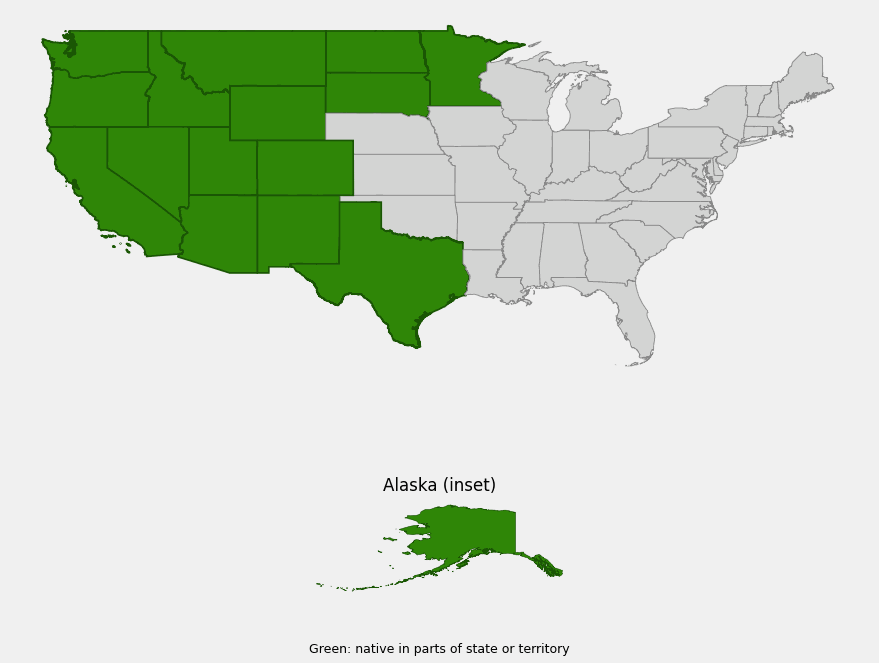
Pygmyflower rockjasmine is circumboreal, native across northern Europe, Asia and North America. In the United States, USDA PLANTS lists it in Alaska and in Arizona, California, Colorado, Idaho, Minnesota, Montana, New Mexico, Nevada, North Dakota, Oregon, South Dakota, Texas, Utah, Washington and Wyoming. In Canada it grows from the Yukon, Northwest Territories and Nunavut south through British Columbia and the Prairie Provinces, and east to Ontario, Quebec and Newfoundland.
In the lower 48 it is mostly a plant of the Rocky Mountains, the Great Basin ranges and the northern Great Plains. It is widespread in Colorado, Wyoming, Montana, Utah and Idaho, and in Arizona it is found in many mountain counties, from the San Francisco Peaks and White Mountains to the sky islands of the southeast. In California it grows in the high Sierra Nevada and the White Mountains of the east side. In Oregon and Washington it is a plant of the east side, recorded in the Wallowa and Blue Mountains region and the Okanogan, with a record from the North Cascades.
Its edges are outlying records. In Minnesota it is known only from the far northwest corner (Kittson, Marshall and Roseau counties), where prairies and aspen parkland reach into the state. In Texas it is known only from the Davis Mountains in Jeff Davis County, far West Texas, where it grows at the southern tip of its range on cool, high slopes. It does not grow in East Texas.
📋 Regional plant lists featuring Pygmyflower Rockjasmine: Alaska · Idaho, Eastern Oregon & Eastern Washington · Montana & Wyoming · Utah & Western Colorado · Arizona & New Mexico · California & Nevada · North Dakota, South Dakota & Western Minnesota · South & West Texas
Growing & Care Guide
Pygmyflower rockjasmine is an annual wildflower that is not available from nurseries, and with flowers this small it is mostly enjoyed in the wild. Rock garden and alpine plant enthusiasts occasionally grow it from seed, where it can self-sow in a gritty, sunny bed. Don’t dig wild plants; as an annual it would not survive the move anyway, and the next year’s plants depend on seed set in the wild.
Light
Full sun to light shade. In the wild it grows in open, sunny or lightly shaded places with little competition from taller plants.
Soil & Water
It needs gritty, well-drained soil that is moist in spring and can dry out in summer. In a rock garden, use a lean scree mix of gravel and a little loam. Rich, wet soil and competition from vigorous plants crowd it out.
Planting Tips
Sow seed on the surface of a gritty mix in fall, or cold-stratify it before spring sowing; the seed needs a cold period to germinate well. Plants germinate in early spring, flower within a couple of months and die after setting seed.
Pruning & Maintenance
None. Leave the plants in place until the capsules have opened so they can self-sow, and keep the area free of mulch and aggressive neighbors so seedlings can find bare ground.
Propagation
By seed only. If you collect seed, take it from plants on your own property or from a cultivated stock, and only a small fraction of what is available.
Landscape Uses
- Rock and alpine gardens: a self-sowing miniature for gritty, sunny scree beds
- Wildflower viewing: common along trails in western mountains and sagebrush country
- Restoration: part of the native groundcover on dry slopes and disturbed mountain soils
- Nature study: a good example of a tiny annual adapted to short mountain and northern summers
Wildlife & Ecological Value
Small as it is, pygmyflower rockjasmine is one of the early-season annuals that fill bare spaces among grasses, sagebrush and alpine cushion plants.
For Pollinators
The tiny flowers are visited by small flies, small native bees and other small insects. The flowers can also self-pollinate, which helps this annual set seed reliably in harsh, short-season places where pollinators may be scarce.
For Birds
Its tiny seeds may be eaten by ground-feeding birds such as sparrows, juncos and rosy-finches along with other small seeds, although it is not a major food plant.
For Mammals
Rodents and pikas may eat the seeds and foliage incidentally, but the plants are too small to be a significant food for larger grazers.
Ecosystem Role
As a fast-growing annual it quickly colonizes small patches of bare soil after disturbance such as frost heaving, gopher digging or erosion, helping to stabilize the surface until perennials return. It is a common member of the diverse wildflower flora of montane meadows, open forests and tundra.
Cultural & Historical Uses
Linnaeus named Androsace septentrionalis in 1753 from European plants; septentrionalis means “northern,” for its wide northern distribution. The genus name Androsace is an old Greek plant name. The common name “rockjasmine” refers to the many cushion-forming Old World Androsace species that grow on rocky alpine slopes and are prized by rock gardeners.
North American plants are variable, and botanists have named several varieties, including small, compact alpine forms often treated as var. or subsp. subumbellata and taller, more branched plants of lower elevations. Some of these differ in hairiness, leaf teeth and plant size. For identification in the field, the species as a whole is usually distinct enough.
Records of traditional uses of this tiny plant are scarce. Today pygmyflower rockjasmine is valued mainly as an indicator of native plant communities and as one of the small treasures of western and northern wildflower walks.
Frequently Asked Questions
Is pygmyflower rockjasmine native to the United States?
Yes. It is native across the cold and mountainous parts of the Northern Hemisphere, including Alaska, Canada and the western United States from the northern Great Plains to the Rocky Mountains, Great Basin and Sierra Nevada.
Does pygmyflower rockjasmine grow in Texas?
Only in far West Texas. The only Texas records are from the Davis Mountains in Jeff Davis County, an outlying, southern edge of its range. It does not grow in East Texas.
Is it an annual or a perennial?
It is an annual or sometimes a short-lived biennial. Plants grow from seed, flower and die, and the species persists by self-seeding.
How do I tell it from western rockjasmine?
Pygmyflower rockjasmine has toothed, lance-shaped leaves, narrow bracts under the umbel and very long, spreading flower stalks. Western rockjasmine has untoothed leaves, broad leafy bracts and shorter flower stalks.
Can I buy pygmyflower rockjasmine?
It is generally not sold by nurseries. Rock gardeners sometimes grow it from seed exchanges. Never dig wild plants; enjoy it where it grows.

Looking for a nursery that carries Pygmyflower Rockjasmine?
Browse our native plant nursery directory: Alaska & Arizona · California · Colorado · Idaho · Minnesota & Montana · Nevada, New Mexico & North Dakota · Oregon · South Dakota, Texas & Utah · Washington · Wyoming

