
Rocky Mountain Dwarf Sunflower (Helianthella uniflora)
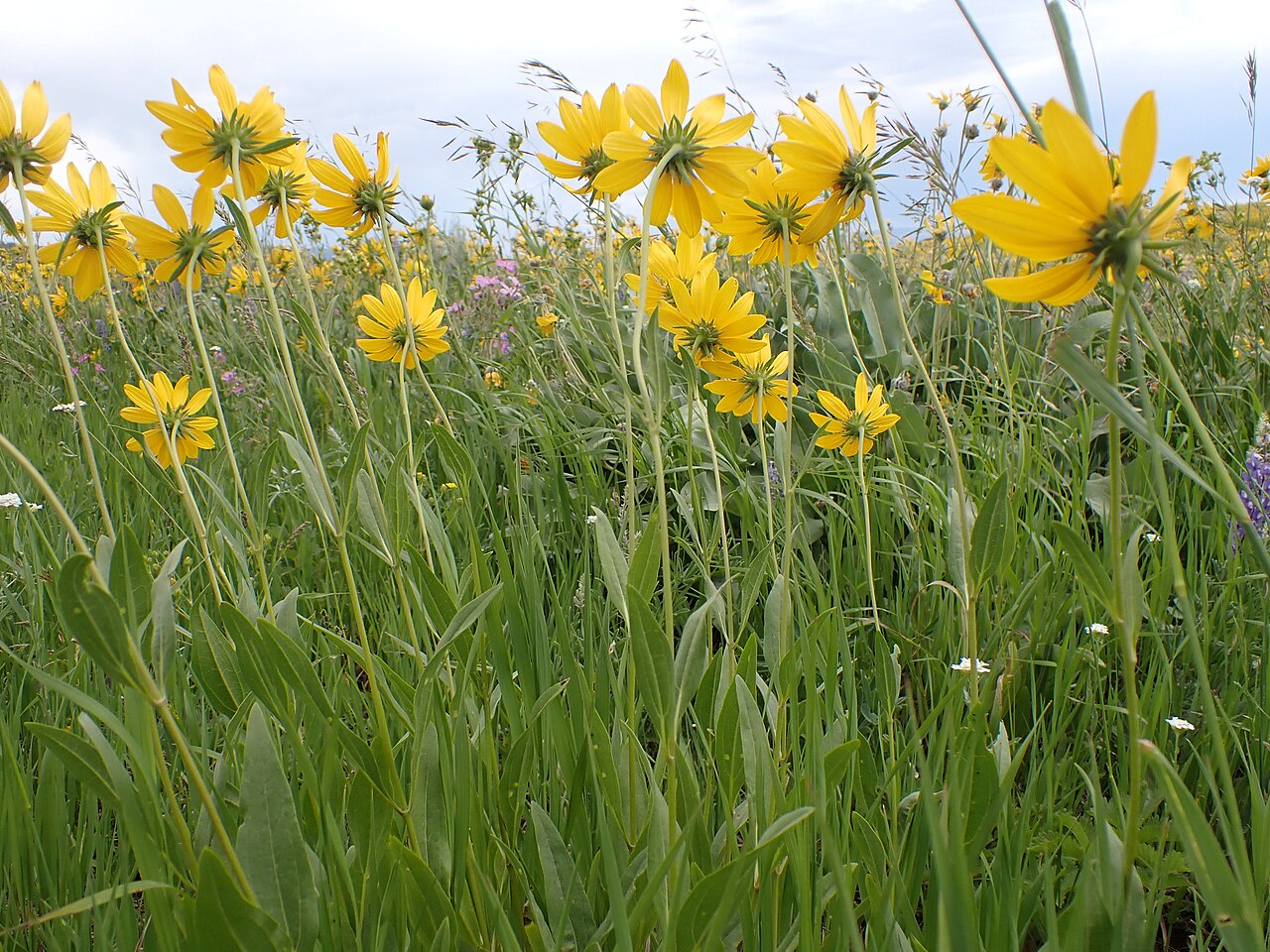
Helianthella uniflora, known as Rocky Mountain Dwarf Sunflower or oneflower helianthella, is a sturdy perennial wildflower of the interior West. In early summer it raises tall, leafy stems topped with bright yellow, sunflower-like heads, usually one per stem, and on good years it paints sagebrush slopes and mountain meadows yellow from the Great Basin to the northern Rockies.
It is a “little sunflower” (that is what Helianthella means): a close relative of true sunflowers (Helianthus), but a long-lived perennial from a deep taproot rather than an annual. Its heads look much like those of Arrowleaf Balsamroot and mule’s ears, which bloom in the same places, but its long, narrow, rough leaves grow all the way up the stem instead of in a basal clump.
This guide covers how to identify Rocky Mountain dwarf sunflower, where it grows, how to grow it in a dry western garden, and why it matters to bees, birds and grazing wildlife.
Identification
Look for clumps of unbranched, leafy stems 1 to 3 feet tall (occasionally to 4 feet), each topped by one, or sometimes two or three, yellow daisy-like heads 2 to 3 inches across, often all nodding slightly the same direction.
Leaves
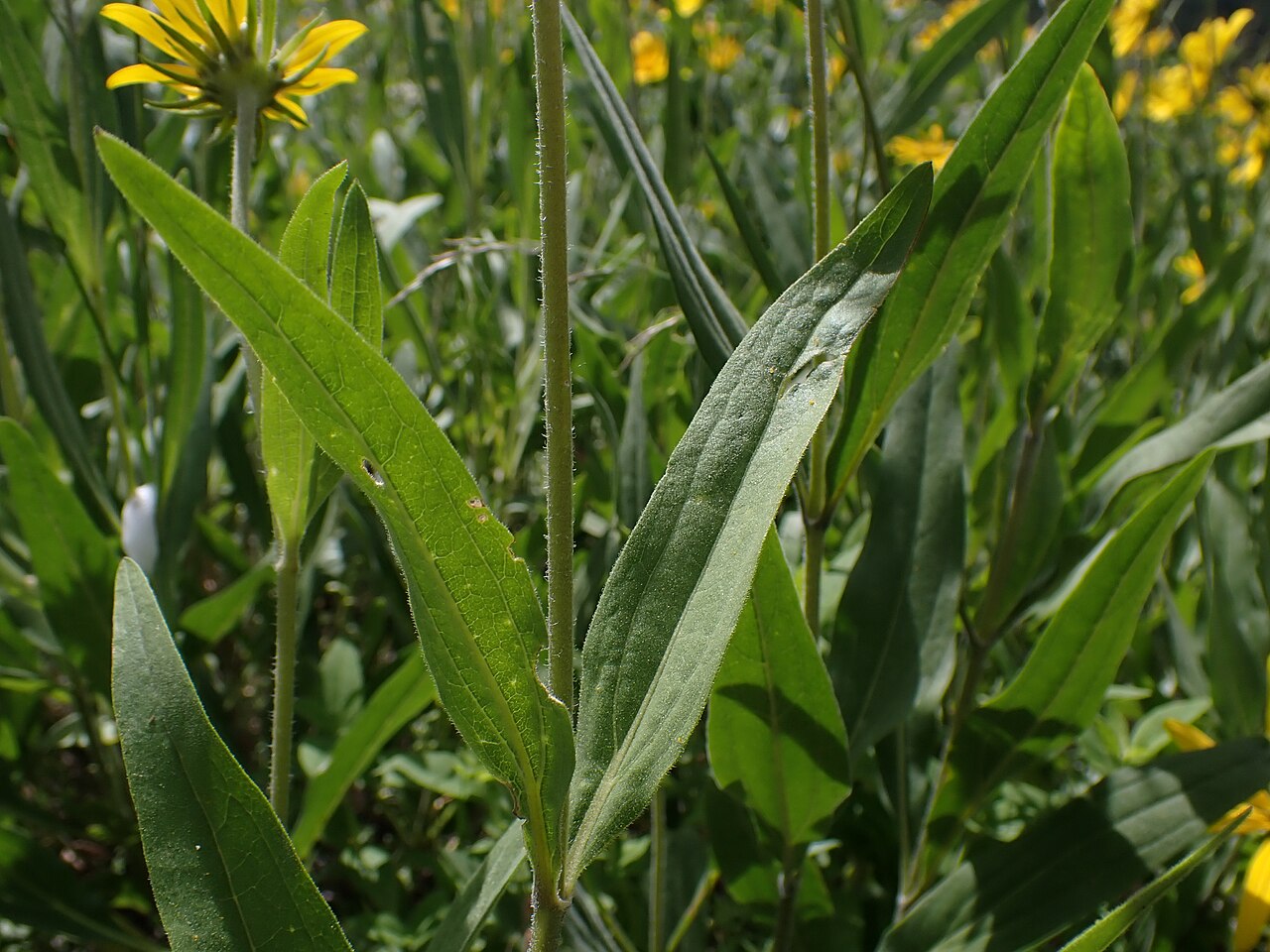
The leaves are long and narrow, lance-shaped to elliptic, mostly 3 to 8 inches long, with three prominent veins running lengthwise. They are rough, with short stiff hairs (like sandpaper), and are opposite on the lower stem, often becoming alternate higher up. Both basal leaves and stem leaves are present, so the plant looks leafy from top to bottom.
Flower Heads
Each head has a dozen or more bright yellow ray flowers around a yellow to brownish central disk. The heads sit on long, mostly leafless tips of the stems and are subtended by narrow, hairy green bracts. Plants bloom from May into August depending on elevation, mostly in June and July.
Seeds
The fruits (achenes) are strongly flattened, with thin wing-like edges and a pair of short awns at the top. This flattened, often winged achene is one of the features that separates Helianthella from true sunflowers, whose achenes are thicker and four-sided.
Varieties
Two varieties are usually recognized. Var. uniflora is the Rocky Mountain and Great Basin form; var. douglasii (Douglas’s helianthella) grows mainly in eastern Washington, eastern Oregon, Idaho and southern British Columbia and tends to have somewhat broader leaves.
Look-alikes
Arrowleaf balsamroot has large, silvery, arrowhead-shaped basal leaves and nearly leafless flower stems. Mule’s ears (Wyethia) have big, broad basal leaves. Aspen sunflower (Helianthella quinquenervis) has nodding heads and leaves with five veins, and it usually grows higher, in moister mountain meadows. California Helianthella replaces it west of the Sierra Nevada.
Quick Facts
| Scientific Name | Helianthella uniflora (Nutt.) Torr. & A. Gray |
| Family | Asteraceae (aster family) |
| Plant Type | Herbaceous perennial from a deep taproot |
| Mature Height | 1–3 ft (occasionally to 4 ft) |
| Mature Spread | 1–2 ft |
| Growth Rate | Slow to establish; long-lived |
| Sun Exposure | Full sun to light shade |
| Water Needs | Low to moderate; dry once established |
| Soil Type | Well-drained loam, gravel or rocky soil |
| Soil pH | About 6.0–8.0 |
| Bloom Time | May–August (mostly June–July) |
| Flower Color | Bright yellow |
| Fall Color | Foliage dries to tan |
| Fruit | Flattened, winged achenes |
| Deer Resistant | No; browsed by deer, elk and livestock |
| USDA Hardiness Zones | 3–7 |
Native Range
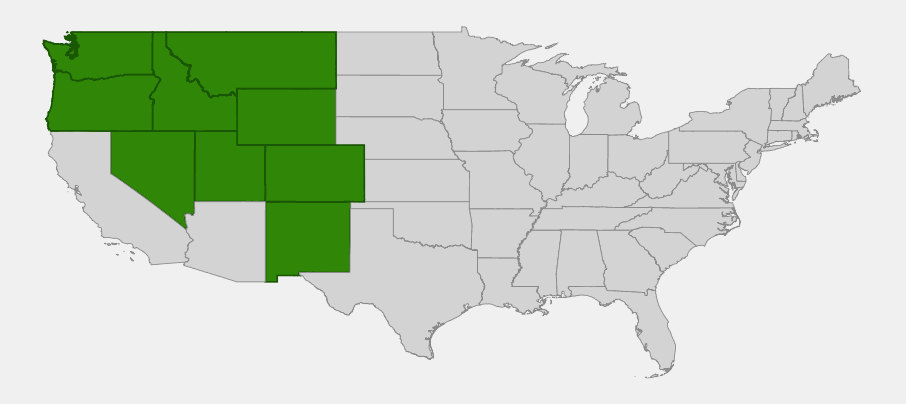
USDA PLANTS lists Rocky Mountain dwarf sunflower as native in Colorado, Idaho, Montana, Nevada, New Mexico, Oregon, Utah, Washington and Wyoming, and it also grows in southern British Columbia. Its heart is the interior West: the Great Basin, the Snake River Plain, the northern and middle Rockies and the Columbia Plateau.
In Washington and Oregon it is a plant of the east side of the Cascades, in sagebrush steppe, bunchgrass hills and open ponderosa pine woodland, with only a few records near the Cascade crest. In New Mexico it is known only from scattered records in the north, at the southern edge of its range.
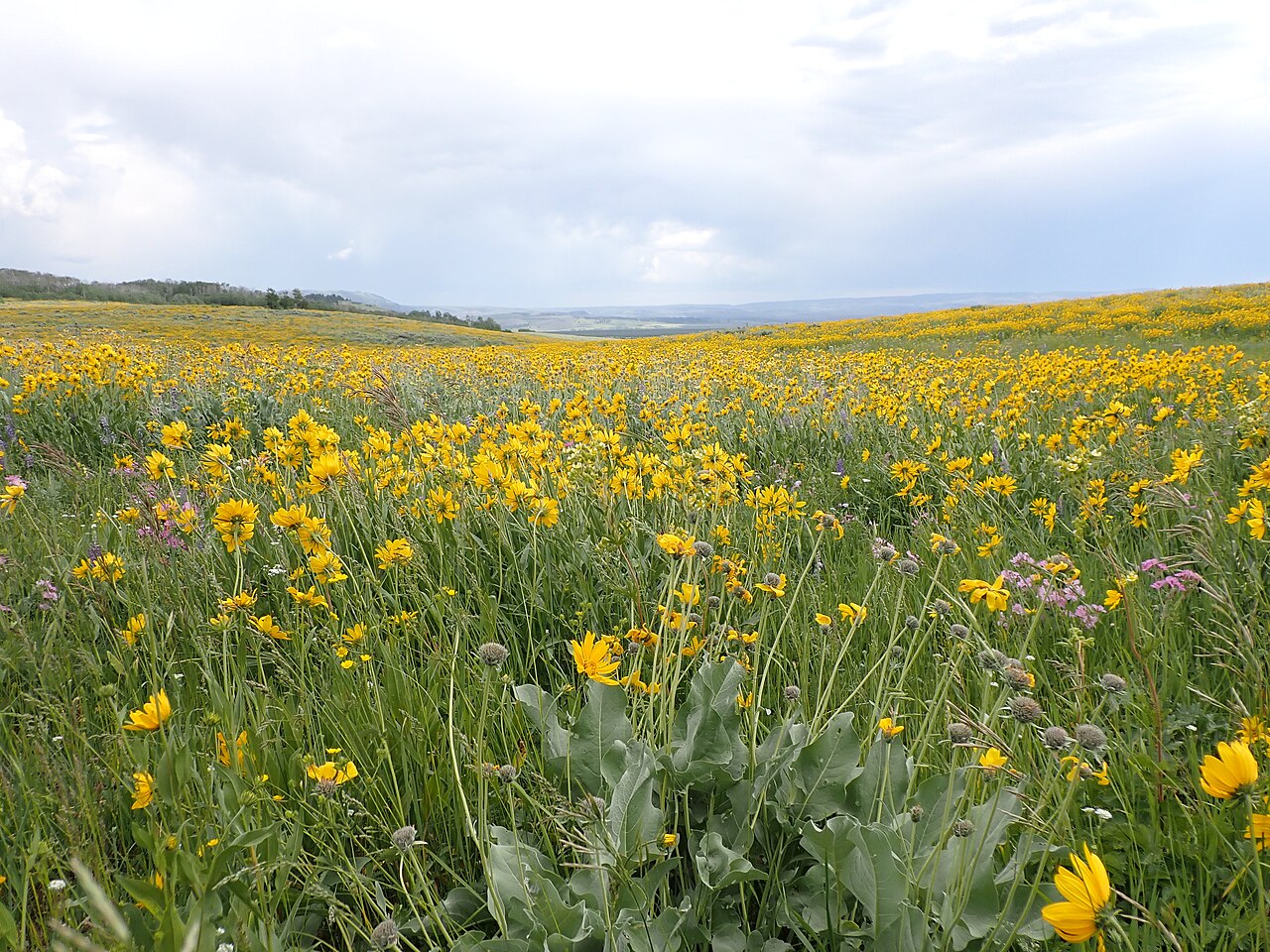
It grows across a wide span of elevations, from sagebrush foothills to subalpine meadows. It is often abundant: in parts of Montana, Idaho and Utah it is one of the dominant early summer wildflowers of mountain grasslands, aspen parklands and burned forest openings.
📋 Regional plant lists featuring Rocky Mountain Dwarf Sunflower: Idaho, Eastern Oregon & Eastern Washington · Montana & Wyoming · Utah & Western Colorado · California & Nevada · Western Oregon & Western Washington
Growing & Care Guide
Rocky Mountain dwarf sunflower is a tough, long-lived wildflower for dry western gardens, meadows and restoration plantings. It is grown mainly from seed by native seed companies and a few native plant nurseries in the Intermountain West. Be patient: like many taprooted wildflowers, it spends its first year or two building roots and may not bloom until its second or third season.
Light
Full sun is best. It tolerates the light, dappled shade of open aspen and ponderosa pine woodland, but blooms less in deeper shade.
Soil & Water
Give it well-drained soil: loam, gravelly or rocky soil all work, and heavy, poorly drained clay should be avoided. Water regularly the first season. Once established it relies on winter snow and spring rain and needs little or no summer watering in its native region. Overwatering in summer, especially in warm low-elevation gardens, can lead to root rot.
Planting Tips
Sow seed outdoors in fall so it gets the natural cold, moist winter stratification it needs, or cold-stratify it in the refrigerator for a couple of months before spring sowing. Plant it in groups or drifts in a meadow or sagebrush garden with bunchgrasses, balsamroot and lupines. Because of its deep taproot, plant seedlings young and avoid moving established plants.
Pruning & Maintenance
Leave the seed heads standing for birds, then cut the dried stems back in late fall or early spring. No fertilizer is needed. Protect young plants from deer and rabbits, which find the foliage palatable.
Propagation
Grow from seed, which is the reliable method. Seed is collected when the heads turn brown in mid to late summer. Division is rarely successful because of the taproot.
Landscape Uses
- Sagebrush and meadow gardens: in dry western gardens with bunchgrasses, balsamroot and lupines
- Pollinator gardens: an early summer source of nectar and pollen for native bees
- Restoration and revegetation: in sagebrush steppe, mountain grassland and post-fire seed mixes
- Naturalized plantings: for rural properties and larger landscapes where it can form drifts
Wildlife & Ecological Value
Where it grows in abundance, Rocky Mountain dwarf sunflower is one of the most important early summer wildflowers in its community, feeding a wide range of insects and wildlife.
For Pollinators
The heads attract many native bees, including bumble bees, sweat bees, leafcutter bees and mining bees, as well as butterflies, beetles and flies. Because it often blooms in great numbers, it supports large pollinator populations in mountain grasslands in June and July.
For Birds
Finches, sparrows and other seed-eating birds eat the seeds in late summer. Sage-grouse and other grouse use the sagebrush and mountain grassland habitats where it grows and eat the leaves and flower parts of many forbs like it.
For Mammals
Deer, elk and pronghorn browse the leaves and flower heads, and livestock find it palatable, so it can decline under heavy grazing. Chipmunks, ground squirrels and other rodents eat the seeds.
Ecosystem Role
Its deep taproot helps it survive drought and fire, and it often resprouts and blooms heavily after wildfires in sagebrush and forest openings. As a palatable, abundant forb, it is a useful indicator of healthy, lightly grazed rangeland.
Cultural & Historical Uses
Thomas Nuttall first described this plant from material collected on the 1830s Wyeth expedition across the northern Rockies, and John Torrey and Asa Gray later moved it into Helianthella. The name uniflora (“one-flowered”) refers to its habit of producing a single head on each stem.
Like balsamroot and mule’s ears, it is part of the yellow early summer wildflower show that draws hikers and photographers to the mountain meadows of Montana, Idaho, Wyoming and Utah. Range scientists have long valued it as a good forage forb for wildlife and livestock.
There is little recorded about specific traditional uses of oneflower helianthella, though Indigenous peoples of the interior West used many related plants of the sunflower tribe for food and medicine. Today it is increasingly included in native seed mixes for restoring sagebrush and mountain grassland habitats.
Frequently Asked Questions
Is Rocky Mountain dwarf sunflower a real sunflower?
It is a close relative, not a true sunflower. It belongs to Helianthella, a small genus whose name means “little sunflower.” It differs from true sunflowers (Helianthus) mainly in its flattened, often winged seeds.
How is it different from arrowleaf balsamroot?
Balsamroot has big, silvery, arrowhead-shaped leaves in a basal clump and nearly leafless flower stems. Rocky Mountain dwarf sunflower has long, narrow, rough, three-veined leaves all along its stems and usually one head per stem.
Does Rocky Mountain dwarf sunflower grow in western Washington or Oregon?
No, not in the lowlands. It is a plant of the dry interior, east of the Cascades, with only a few records near the Cascade crest. In western Oregon and Washington gardens, it would need very good drainage and dry summers.
Is it deer resistant?
No. Deer, elk and livestock all eat it, which is one reason it is valued as wildlife forage. Protect young garden plants.
How do I grow it from seed?
Sow seed outdoors in fall or give it about two months of cold, moist stratification before spring sowing. Grow it in full sun and well-drained soil, and expect blooms in the second or third year.

Looking for a nursery that carries Rocky Mountain Dwarf Sunflower?
Browse our native plant nursery directory: Colorado · Idaho · Montana · Nevada & New Mexico · Oregon · Utah · Washington · Wyoming

