
Alpine Wintergreen (Gaultheria humifusa)
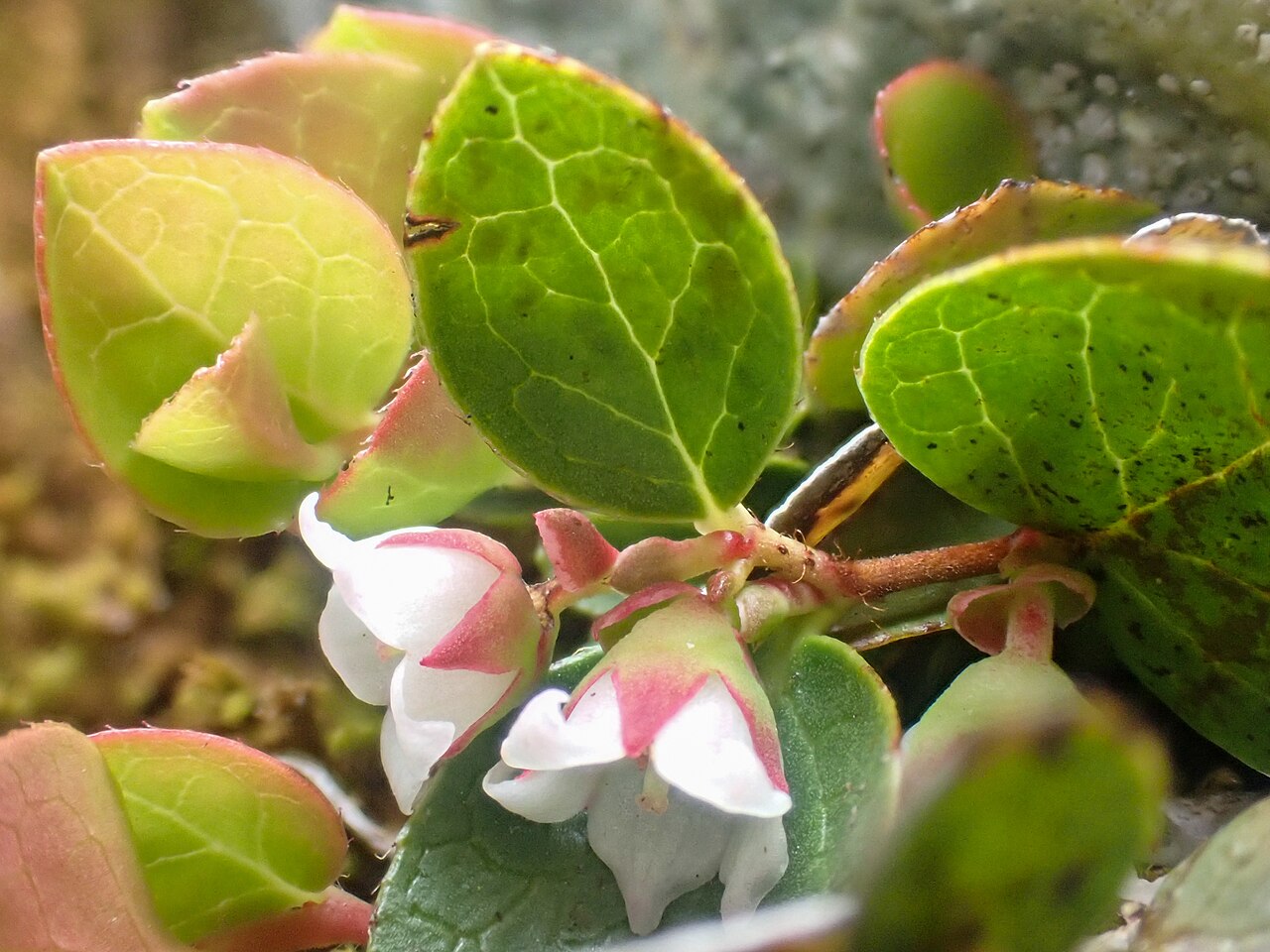
Gaultheria humifusa, Alpine Wintergreen (USDA: alpine spicywintergreen), is a tiny, mat-forming evergreen shrub of the high mountains of western North America. It grows in subalpine and alpine meadows, along streams and around late-melting snowbanks from British Columbia and Alberta south through the Cascades, Sierra Nevada and Rocky Mountains to New Mexico.
Rarely more than 1 to 3 inches tall, it creeps across moist ground and moss, forming small carpets of rounded, glossy leaves. In midsummer it bears single, nodding white to pink bell-shaped flowers, followed by bright scarlet, berry-like fruits. It is a smaller mountain cousin of the eastern Checkerberry and the Pacific coast’s Salal.
This guide covers how to identify alpine wintergreen, where it grows, and how it fits into high mountain plant communities. It is a challenging plant in lowland gardens and is seldom sold, so it is mostly a plant to admire on mountain hikes.
Identification
Alpine wintergreen is a prostrate, evergreen subshrub that forms small mats. Look for its very low habit, round leaves less than an inch long, single bell-shaped flowers in the leaf axils and smooth red fruits.
Stems & Leaves
The slender stems creep along the ground and root as they go, rising only 1 to 3 inches. The evergreen leaves are alternate, oval to nearly round, about ¼ to ¾ inch long, leathery and shiny green, with smooth or finely toothed edges. They are not hairy, or only slightly so.
Flowers
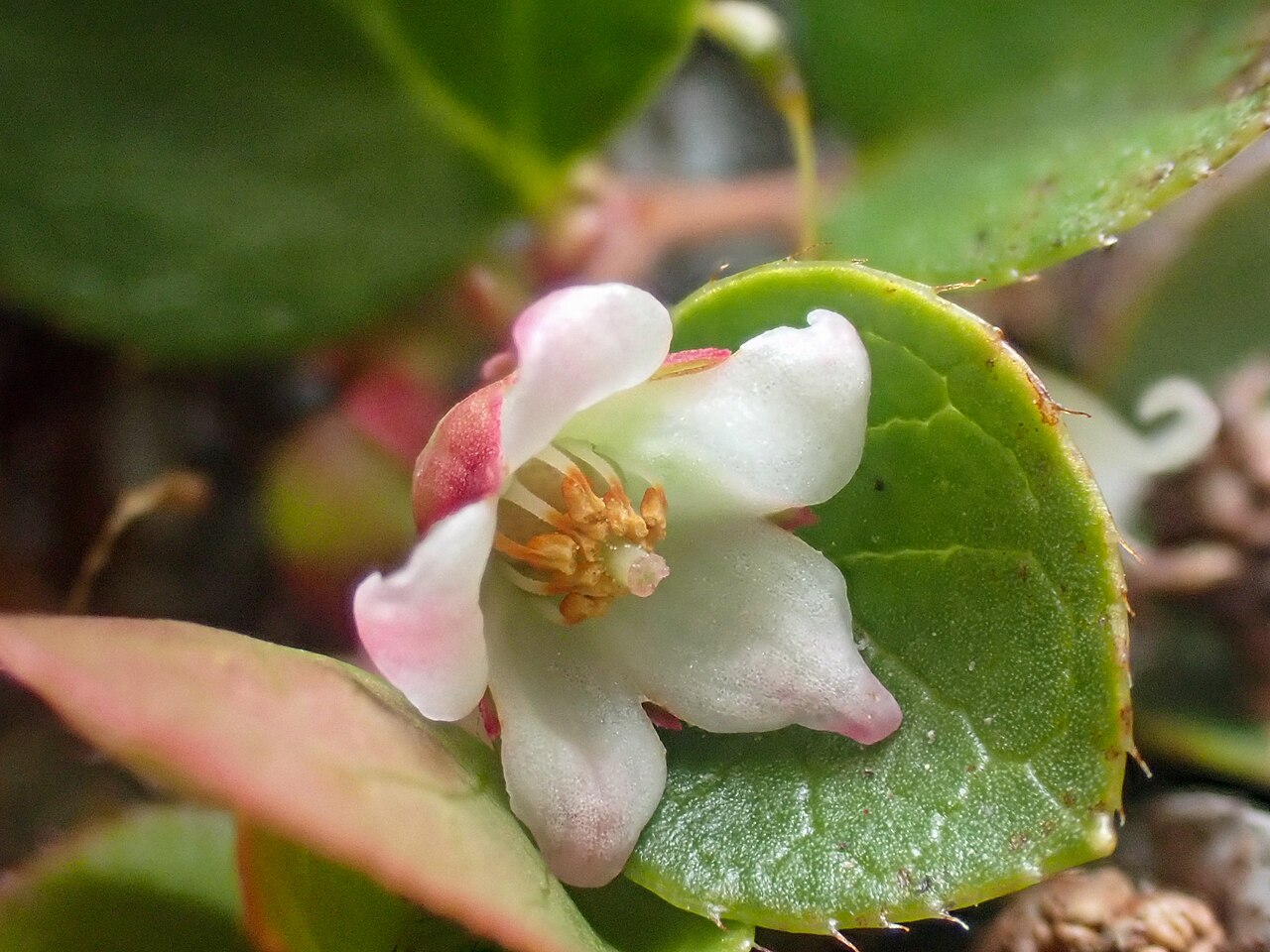
From July to August, soon after snowmelt, single flowers hang from the leaf axils on short stalks. They are bell-shaped, about ⅛ inch long, white to pink, with five short lobes. The calyx (the cup of sepals) is smooth, without hairs.
Fruit
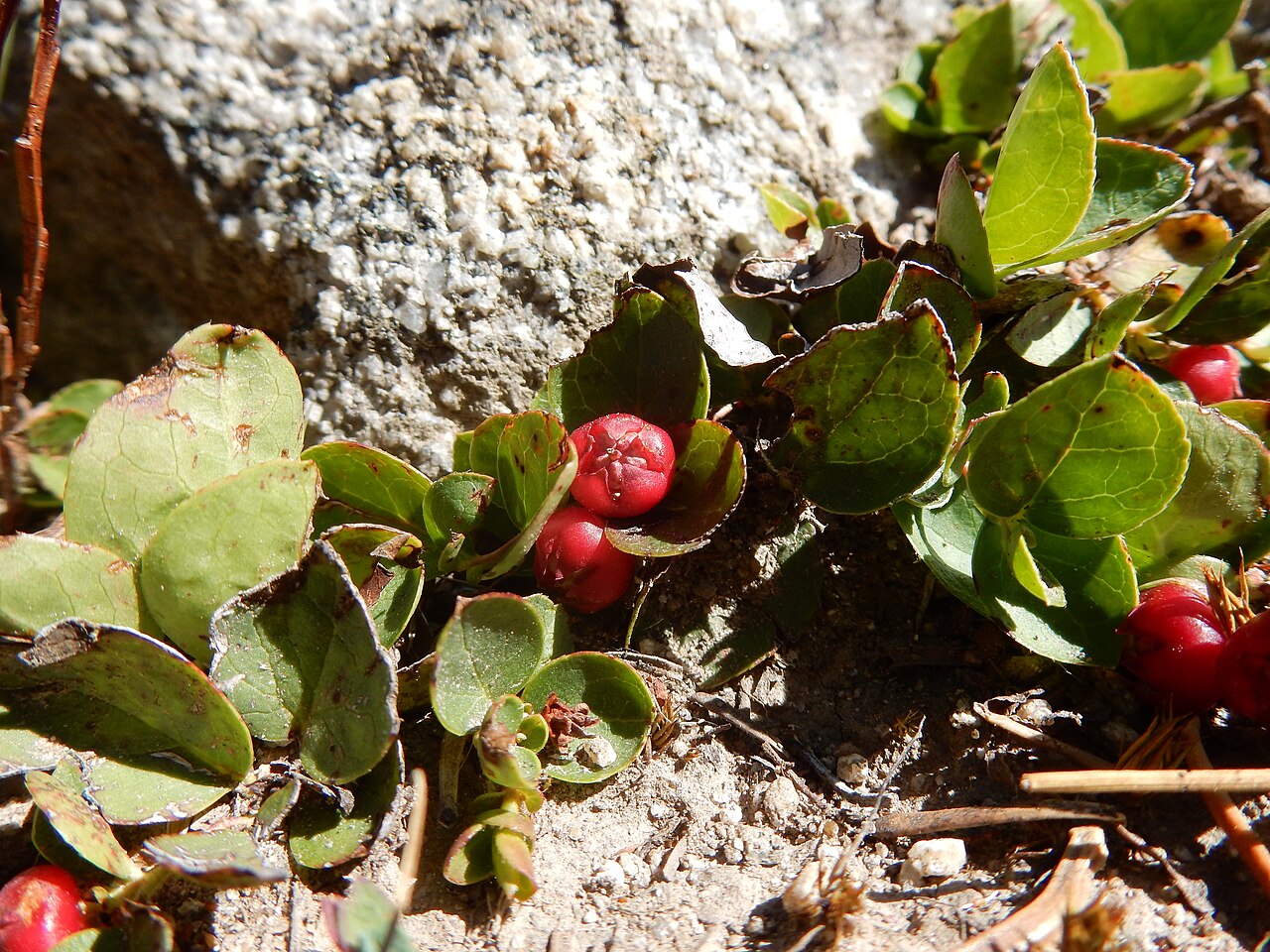
As in other wintergreens, the calyx swells and becomes fleshy around the true capsule, forming a bright red, berry-like fruit about ¼ inch across in late summer. The fruits are edible, with a mild, slightly sweet flavor, but they are small and few.
Look-alikes
Western teaberry (G. ovatifolia) is similar but has larger, more pointed leaves up to 1½ inches long and a calyx covered with reddish-brown hairs; it grows in mountain forests at lower elevations. Creeping Snowberry has tiny leaves with bristly hairs and white fruits. Kinnikinnick has paddle-shaped leaves and flowers in small clusters, not singly.
Quick Facts
| Scientific Name | Gaultheria humifusa (Graham) Rydb. |
| Family | Ericaceae (heath family) |
| Plant Type | Mat-forming evergreen dwarf shrub |
| Mature Height | 1–3 in |
| Mature Spread | 6–12 in (slowly spreading mats) |
| Growth Rate | Slow |
| Sun Exposure | Full sun to partial shade |
| Water Needs | Consistently moist; snowmelt-fed soils |
| Soil Type | Moist, humus-rich, gravelly or mossy soils |
| Soil pH | Acidic (about 4.5–6.0) |
| Bloom Time | July–August |
| Flower Color | White to pink |
| Fall Color | Evergreen; leaves may bronze in cold |
| Fruit | Bright red, berry-like fleshy calyx |
| Deer Resistant | Unknown; rarely browsed in alpine settings |
| USDA Hardiness Zones | 3–6 |
Native Range
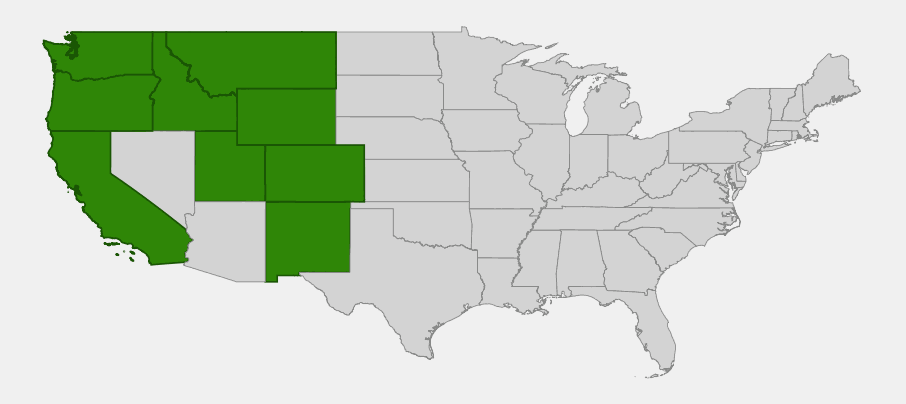
Alpine wintergreen is native to the mountains of western North America. USDA PLANTS lists it in California, Colorado, Idaho, Montana, New Mexico, Oregon, Utah, Washington and Wyoming. In Canada it grows in British Columbia and Alberta. Its range follows the major mountain chains: the Olympic Mountains, the Cascades, the Klamath Mountains and Sierra Nevada, and the Rocky Mountains from Alberta and Montana south to northern New Mexico.
It grows at subalpine and alpine elevations, typically from about 5,000 feet in the north to more than 11,000 feet in the southern Rockies and Sierra Nevada. Its habitats are moist: subalpine meadows, streambanks, seeps, the edges of snowbeds and wet, mossy openings in subalpine fir and Engelmann spruce forest.
In Oregon and Washington it grows in the Olympics and on both sides of the Cascade crest, and in eastern Oregon in the Blue and Wallowa Mountains. It is widespread but easily overlooked because it is so small and grows among other low heath-family shrubs.
📋 Regional plant lists featuring Alpine Wintergreen: Idaho, Eastern Oregon & Eastern Washington · Western Oregon & Western Washington · Montana & Wyoming · Utah & Western Colorado · California & Nevada
Growing & Care Guide
Alpine wintergreen is rarely available from nurseries and is difficult to grow outside of cool mountain climates, because it needs cold winters, steady moisture and cool summer roots. It is best enjoyed in the wild. Never dig plants from the wild; they rarely survive transplanting, and their slow-growing mats take many years to recover.
Light
In mountain climates, full sun to partial shade. At lower elevations, give it morning sun and afternoon shade to keep it cool.
Soil & Water
It needs acidic, humus-rich, gravelly soil that stays evenly moist but never waterlogged, like a snowmelt-fed meadow. It does not tolerate heat, drought or alkaline soil.
Planting Tips
Rock gardeners in cool climates sometimes grow it in a shaded trough or peat bed with other dwarf heaths. Set plants in a mix of peat or leaf mold, grit and acidic soil, and mulch with fine gravel or moss to keep roots cool.
Pruning & Maintenance
No pruning is needed. Water during dry spells and protect it from being overgrown by larger plants. A layer of snow in winter, or an evergreen bough mulch where snow is unreliable, protects it from drying winds.
Propagation
From seed sown in fall for natural cold stratification, from cuttings of new growth taken in summer, or by separating rooted pieces of the creeping stems from nursery stock. Like other heaths, it relies on root fungi (mycorrhizae), so seedlings grow best in soil that includes a little leaf litter from established heath-family plants.
Landscape Uses
- Alpine and rock gardens: in cool, moist, acidic beds in mountain climates
- Troughs: with other dwarf heaths and alpine plants
- Subalpine restoration: groundcover for moist meadow edges
- Wildflower viewing: summer bloom and red fruits along mountain trails
Wildlife & Ecological Value
Alpine wintergreen is a small part of the dense, low heath-family layer that covers moist ground in subalpine forests and meadows.
For Pollinators
Bumble bees and other small bees visit the nodding bell flowers for nectar and pollen during the short mountain summer.
For Birds
Grouse, ptarmigan and other ground birds eat the red fruits, and the evergreen leaves are available as winter food where they are not buried by snow.
For Mammals
Small mammals such as chipmunks, pikas and voles eat the fruits, and bears may eat them along with huckleberries.
Ecosystem Role
Its creeping mats help hold thin soils on moist mountain slopes and streambanks. Like other heaths, it forms partnerships with soil fungi that help it take up nutrients in poor, acidic soils.
Cultural & Historical Uses
The genus Gaultheria honors Jean-François Gaultier, an 18th-century physician and naturalist in Quebec. The species was first described as Vaccinium humifusum by Robert Graham in 1831, and Per Axel Rydberg moved it to Gaultheria in 1900. Humifusa means “spread over the ground.”
Several Gaultheria species, including the eastern checkerberry, contain methyl salicylate, the compound that gives wintergreen oil its flavor and scent, and the common name “spicywintergreen” refers to this family resemblance.
Mountain travelers have long nibbled the small red fruits, which some describe as tasting like a mix of apple and huckleberry, but they are rarely abundant enough to gather in quantity.
Frequently Asked Questions
Where does alpine wintergreen grow?
In moist subalpine and alpine habitats of western North America, from British Columbia and Alberta south through the Cascades, Sierra Nevada and Rocky Mountains to New Mexico, usually above about 5,000 feet.
Are alpine wintergreen berries edible?
Yes, the small red fruits are edible and mildly sweet, but they are small and scattered. Leave most of them for wildlife.
How tall does alpine wintergreen get?
Only 1 to 3 inches. It forms low, creeping mats of small, rounded evergreen leaves.
Can I grow alpine wintergreen in my garden?
Only in cool, moist mountain or maritime climates with acidic, humus-rich soil. It is seldom sold and difficult at low elevations. Never dig plants from the wild.
How is alpine wintergreen different from western teaberry?
Alpine wintergreen has smaller, rounder leaves and a smooth calyx, while western teaberry has larger, more pointed leaves and a calyx with reddish-brown hairs.

Looking for a nursery that carries Alpine Wintergreen?
Browse our native plant nursery directory: California · Colorado · Idaho · Montana · New Mexico · Oregon · Utah · Washington · Wyoming

