
Wood Millet (Milium effusum)
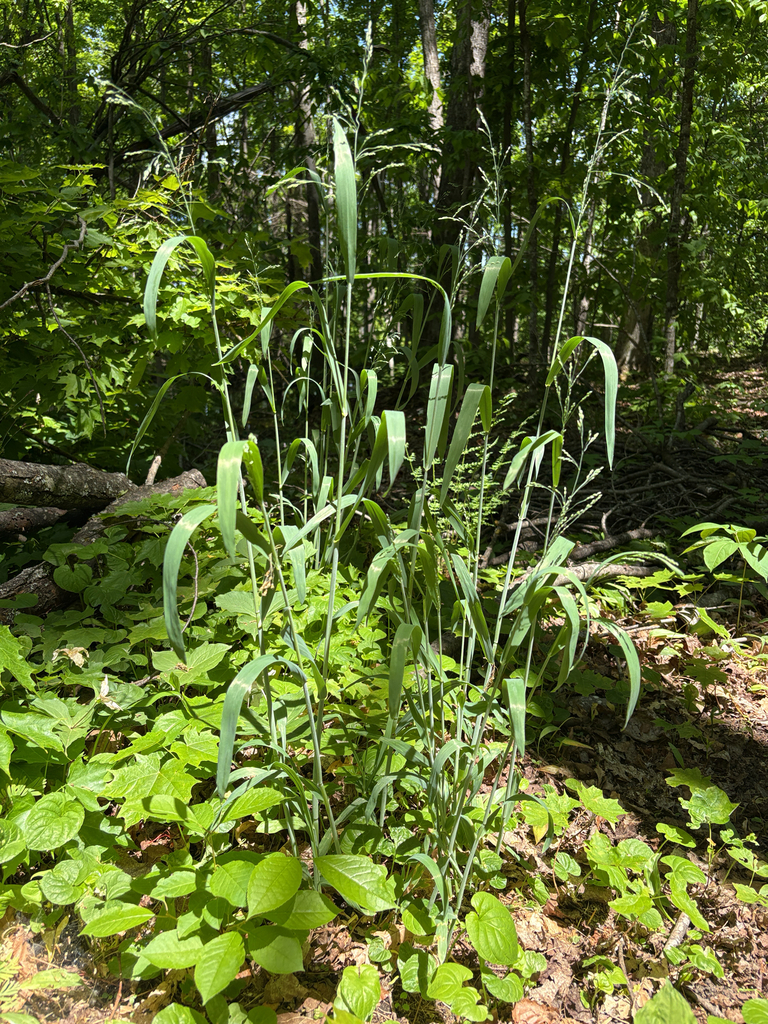
Milium effusum, Wood Millet (USDA: American milletgrass), is a graceful native cool-season grass of rich, moist hardwood forests across the northern United States and Canada. It also grows across Europe and northern Asia, making it one of the most widespread woodland grasses in the Northern Hemisphere.
In spring it forms loose clumps of broad, soft, bright green leaves, unusually wide for a grass. In late spring and early summer it sends up stems 2 to 5 feet tall topped with large, very open, airy panicles of tiny pale spikelets that seem to float in the forest shade.
Wood millet is one of the best native grasses for shady gardens in the North. This guide covers how to identify it, where it grows, how to use it in woodland plantings and its value to wildlife.
Identification
Wood millet is a medium to tall bunchgrass of shady forests. Its broad, flat leaves, long papery ligule and very open, spreading panicle of small, awnless spikelets set it apart from other forest grasses.
Leaves & Stems
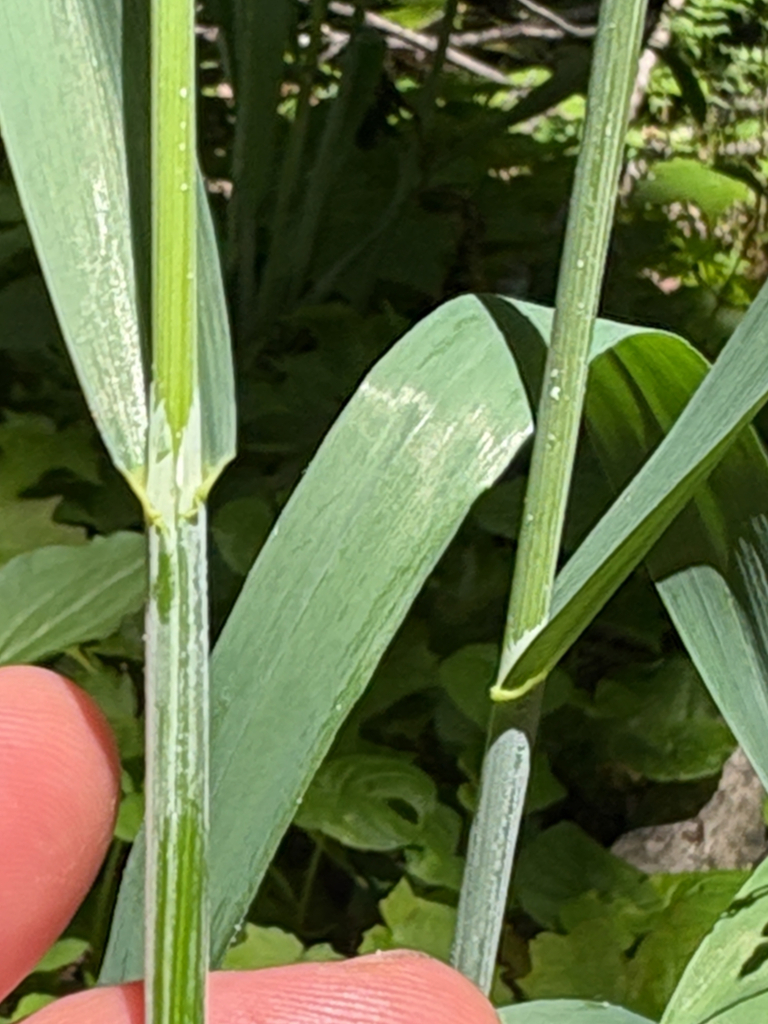
The leaves are flat, soft and bright green, 4 to 12 inches long and about ⅜ to ¾ inch wide. The blades often twist at the base so that the paler underside faces up. Where the blade meets the sheath there is a tall, thin, papery ligule, ⅛ to ⅜ inch long. The smooth stems grow 2 to 5 feet tall from loose clumps.
Flowers
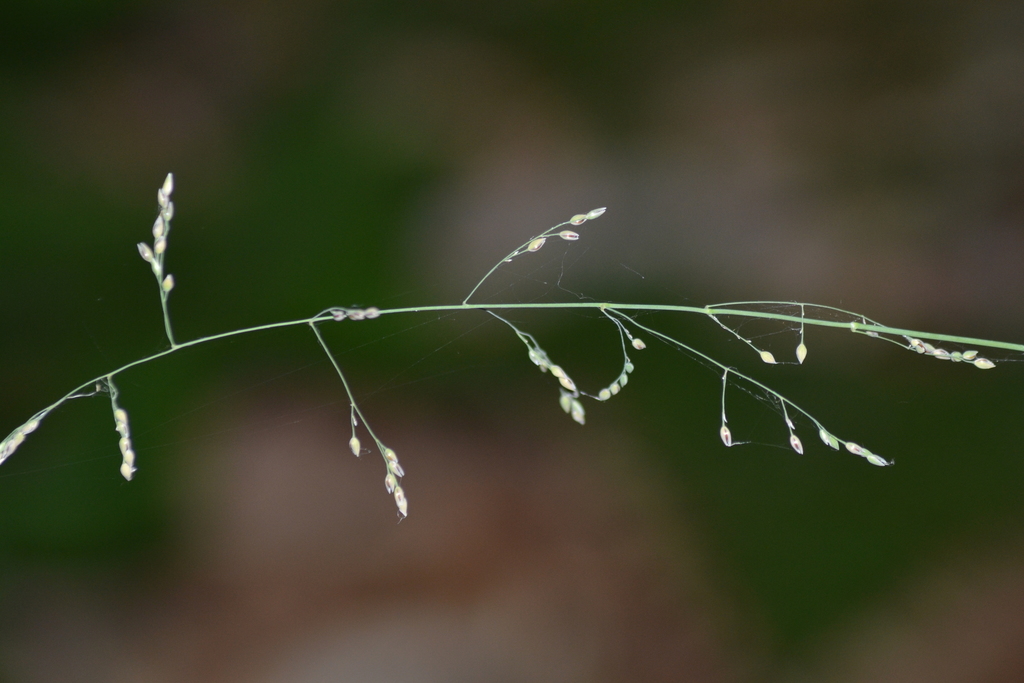
From May to July, each stem ends in a large, open panicle 4 to 12 inches long. Its long, thread-like branches spread out in whorls and often droop, carrying small spikelets mostly toward the tips. Each spikelet holds a single flower, is about ⅛ inch long, egg-shaped, smooth, pale green and has no awn.
Fruit
The seed is a small, hard, shiny grain enclosed in the smooth, hardened lemma and palea. It ripens in early to midsummer and drops soon after.
Look-alikes
Other woodland grasses with open panicles, such as nodding fescue (Festuca subverticillata), have narrower leaves and spikelets with several flowers. Stout Wood Reed has a denser, more compact panicle and blooms later, in late summer. Wood millet’s broad, often upside-down leaf blades and single-flowered, awnless spikelets are distinctive.
Quick Facts
| Scientific Name | Milium effusum L. |
| Family | Poaceae (grass family) |
| Plant Type | Cool-season perennial bunchgrass |
| Mature Height | 2–5 ft in flower; leaves 1–1.5 ft |
| Mature Spread | 1–2 ft |
| Growth Rate | Moderate |
| Sun Exposure | Partial to full shade |
| Water Needs | Moderate; evenly moist |
| Soil Type | Rich, humusy forest loam |
| Soil pH | Slightly acidic to neutral (about 5.5–7.5) |
| Bloom Time | May–July |
| Flower Color | Pale green spikelets in an airy panicle |
| Fall Color | Yellowish to tan |
| Fruit | Small, hard, shiny grain |
| Deer Resistant | Moderate |
| USDA Hardiness Zones | 3–7 |
Native Range
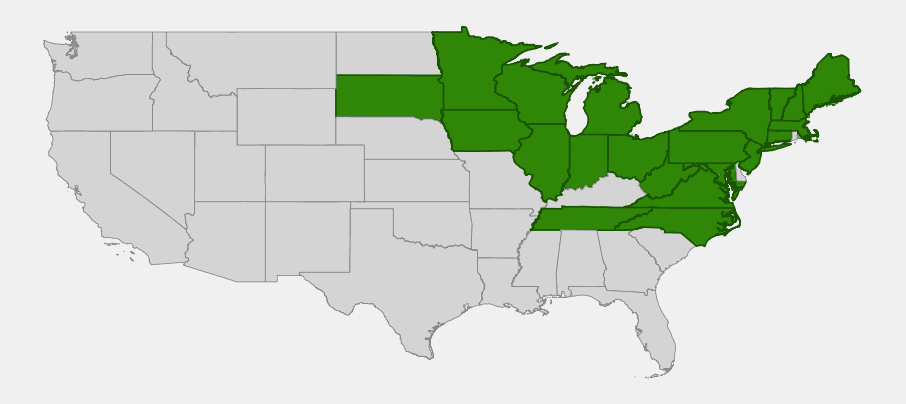
Wood millet is native to northern North America, Europe and Asia. In the United States, USDA PLANTS lists it in New England (Maine, New Hampshire, Vermont, Massachusetts and Connecticut), New York, New Jersey, Pennsylvania, Maryland, the Appalachians south to Virginia, West Virginia, North Carolina and Tennessee, and west through Ohio, Indiana, Illinois, Michigan, Wisconsin, Minnesota, Iowa and South Dakota. In Canada it grows from Saskatchewan and Manitoba east to Ontario, Quebec, the Maritimes, Newfoundland and Labrador.
It grows in rich, moist deciduous and mixed forests: northern hardwood forests of sugar maple, beech and yellow birch, hemlock-hardwood forests, wooded ravines, floodplain forests and shaded slopes. In the southern Appalachians it is a plant of cool, high-elevation forests, such as those in the Great Smoky Mountains.
It is common across the northern part of its range and becomes scattered or rare toward its southern and western edges, where it is restricted to cool mountain or north-facing forests.
📋 Regional plant lists featuring Wood Millet: Connecticut, Massachusetts & Rhode Island · New Hampshire, Maine & Vermont · New York, Pennsylvania & Northern New Jersey · Delaware, Southern New Jersey & Long Island · Maryland, Virginia & West Virginia · North & South Carolina · Kentucky & Tennessee · Ohio & Indiana · Illinois, Iowa & Missouri · Michigan, Wisconsin & Eastern Minnesota · North Dakota, South Dakota & Western Minnesota
Growing & Care Guide
Wood millet is an easy, adaptable native grass for shady gardens and woodland restorations in the Northeast, Great Lakes and Appalachians. Native plant nurseries in these regions sell plants and seed. Be aware that the popular golden form sold as “Bowles’ golden grass” (M. effusum ‘Aureum’) is a European selection, not a local native strain.
Light
Partial to full shade. It does best in dappled shade under deciduous trees and tolerates morning sun where soil stays moist.
Soil & Water
Plant it in rich, humusy, evenly moist soil, like a forest floor. Mulch with shredded leaves. It tolerates short dry spells once established but looks best with steady moisture.
Planting Tips
Plant in spring or early fall, about 12 to 18 inches apart. Combine it with spring ephemerals, ferns and sedges, which fill in as the grass grows through summer.
Pruning & Maintenance
Cut old foliage back in late winter or early spring before new growth starts. As a cool-season grass, it looks fresh in spring and early summer and may go partly dormant in hot, dry summers. It reseeds lightly in good conditions.
Propagation
From seed sown in fall or in spring after a short cold, moist stratification, or by dividing clumps in early spring or fall.
Landscape Uses
- Woodland gardens: soft, fine-textured cover under trees
- Shade borders: airy flowering stems among ferns and wildflowers
- Forest restoration: understory grass for rich northern woods
- Erosion control: on shaded slopes and ravines
Wildlife & Ecological Value
Wood millet is part of the herb layer of rich northern forests, which supports many small animals.
For Pollinators
Like other grasses it is wind-pollinated and does not attract pollinators for nectar. Several woodland butterflies, such as the northern pearly-eye, feed as caterpillars on broad-leaved forest grasses, and grasses like wood millet are part of that food supply.
For Birds
Ground-feeding birds such as juncos, sparrows and wild turkeys eat the seeds, which fall in early summer.
For Mammals
White-tailed deer graze the leaves in spring, and mice and chipmunks gather the seeds.
Ecosystem Role
Its dense clumps help hold soil on shaded slopes and in ravines, and its leaf litter adds to the rich humus of the forest floor.
Cultural & Historical Uses
Carl Linnaeus named Milium effusum in 1753. Milium is the ancient Latin name for millet, and effusum means “spread out” or “loose,” for its very open panicle. Some botanists recognize the North American plants as variety cisatlanticum, separate from European wood millet.
In Europe it is a familiar grass of old beech and oak woods, and English gardeners have grown the golden-leaved form, ‘Aureum’, called Bowles’ golden grass, since the early 20th century.
In North America it is valued by restoration ecologists as an indicator of rich, mature northern forests, where it grows alongside trilliums, wild ginger and spring beauty.
Frequently Asked Questions
Is wood millet native to North America?
Yes. It is native across northern North America, from Saskatchewan to Newfoundland and south in the United States to the Great Lakes, New England and the Appalachians, as well as in Europe and Asia.
Does wood millet grow in shade?
Yes. It is one of the best native grasses for partial to full shade in moist, rich soil.
How tall does wood millet get?
The leaves form clumps about a foot tall, and the flowering stems reach 2 to 5 feet.
Is golden wood millet native?
The golden form sold as Bowles’ golden grass (‘Aureum’) is a European selection. For native plantings, look for wood millet grown from North American seed.
When does wood millet bloom?
From May to July. It is a cool-season grass, so it grows and blooms early, then may rest during hot, dry summer weather.

Looking for a nursery that carries Wood Millet?
Browse our native plant nursery directory: Connecticut · Illinois, Indiana & Iowa · Maine, Maryland, Massachusetts, Michigan & Minnesota · New Hampshire, New Jersey, New York, North Carolina & Ohio · Pennsylvania, South Dakota, Tennessee, Vermont & Virginia · West Virginia & Wisconsin

