
Southern Highbush Blueberry (Vaccinium formosum)
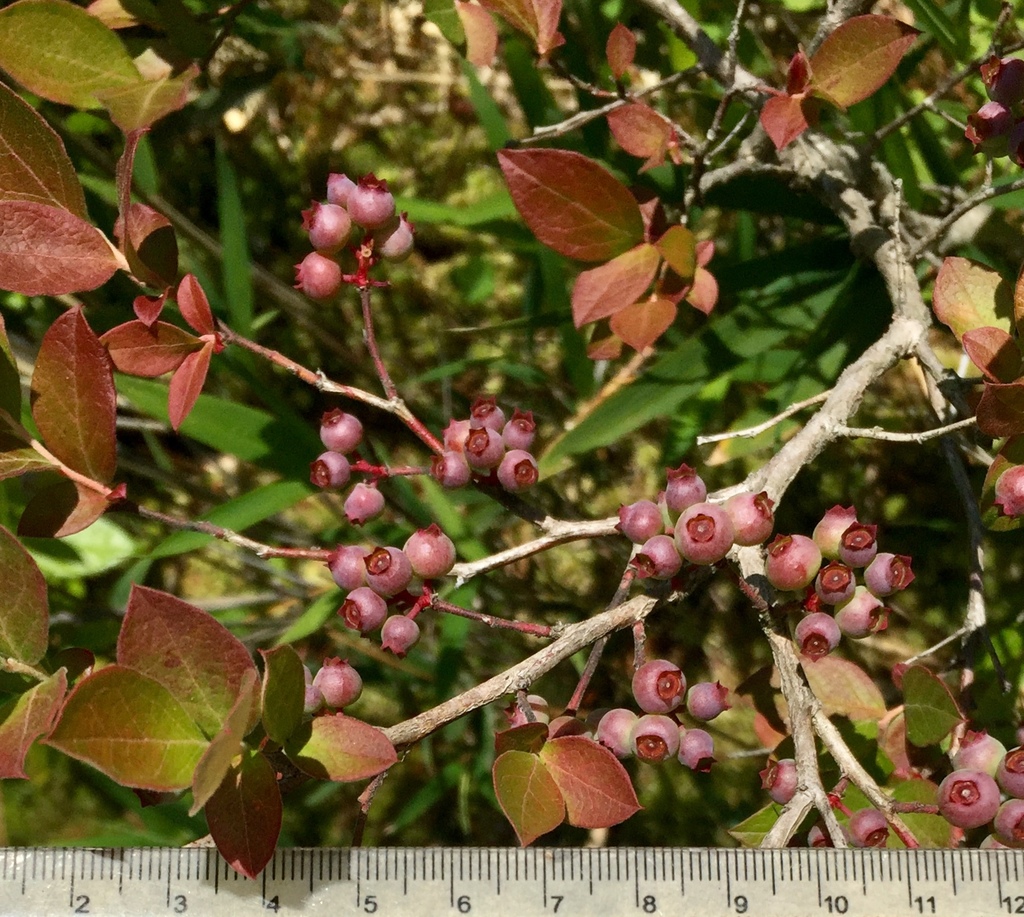
Vaccinium formosum, known as Southern Highbush Blueberry, southern blueberry or swamp highbush blueberry, is a wild blueberry native to the Atlantic and Gulf coastal plains from New Jersey to Florida and Alabama. It is a tall, deciduous shrub with clusters of white to pink, urn-shaped flowers in spring and sweet, edible blue berries in late spring and early summer.
It belongs to the highbush blueberry group, and many botanists include it within the common highbush blueberry, Vaccinium corymbosum. The USDA PLANTS database and some southeastern floras, however, treat it as a separate species of the southern coastal plain, growing in bogs, pocosins, swamp margins, pine flatwoods and sandy woods.
The name “southern highbush blueberry” is also used for a group of low-chill blueberry cultivars bred in Florida and the Southeast. Those garden varieties are hybrids, mainly of highbush blueberry with the native Darrow’s Blueberry, while Vaccinium formosum is the wild native shrub. This guide covers the wild species: how to identify it, where it grows, and how to grow it.
Identification
Southern highbush blueberry looks much like other highbush blueberries. Where it is recognized as a separate species, it is described as a coastal plain shrub with smooth, often bluish-green leaves and pink-tinged flowers.
Growth Habit
A multi-stemmed, deciduous shrub usually 5 to 12 feet tall, occasionally to about 15 feet, spreading slowly by short underground stems into loose thickets. Young twigs are green and speckled with small warts, turning reddish in winter.
Leaves
The leaves are alternate, elliptic to oval, about 1 to 3 inches long, with smooth or finely toothed edges. They are usually smooth on both surfaces and often bluish-green. New spring leaves may be tinged red, and in fall the foliage turns red, orange and purple.
Flowers & Fruit
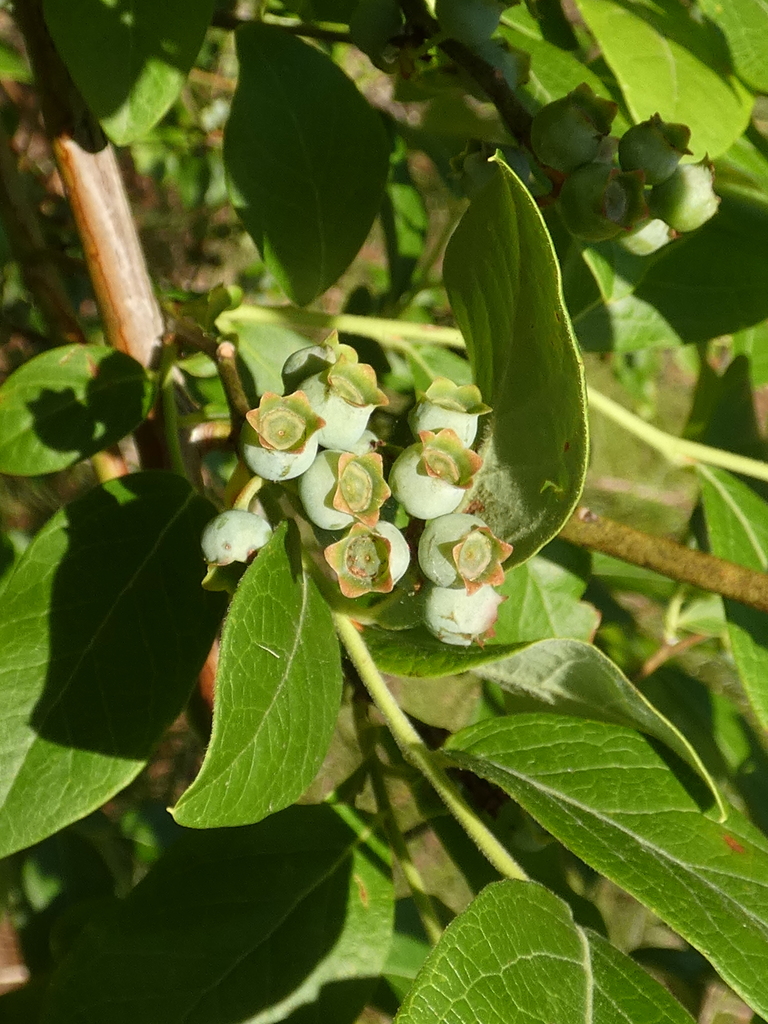
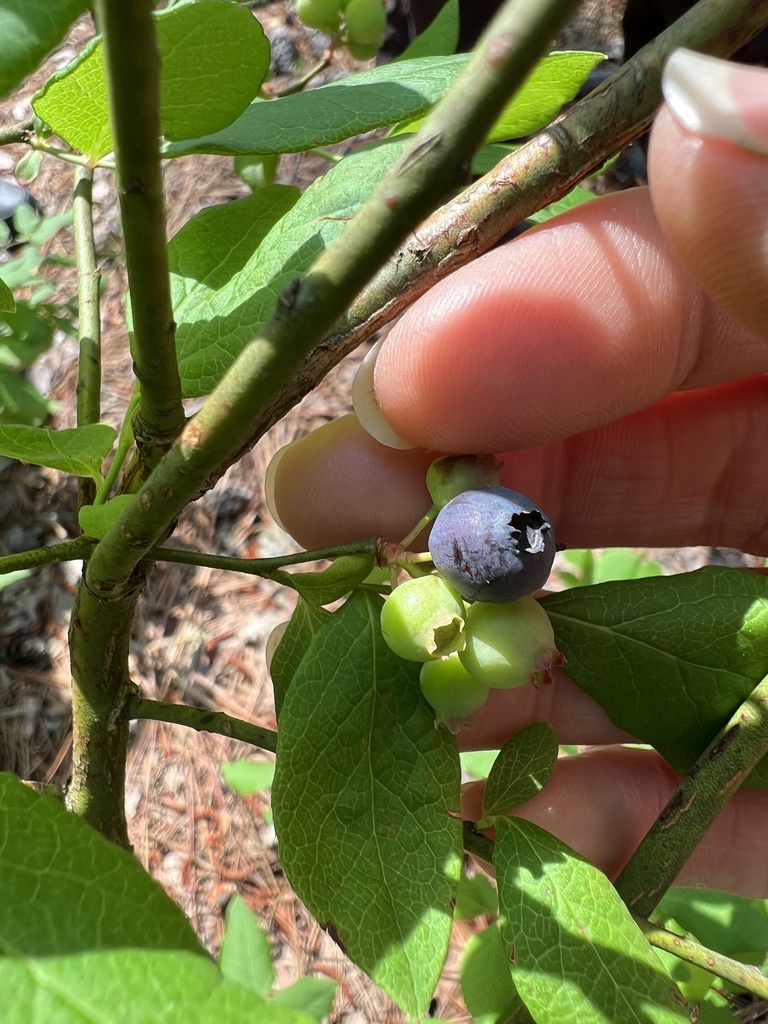
Flowers appear in early to mid spring in small clusters near the branch tips, often before or with the new leaves. Each is urn-shaped to cylindrical, about ⅓ inch long, white to pink, with five small lobes at the mouth. The berries are round, ¼ to ½ inch across, dark blue to blue-black with a whitish bloom, and sweet, ripening from about May to July.
Look-alikes
Highbush Blueberry (V. corymbosum) is widespread in the East and often has leaves that are hairy beneath; many authors include southern highbush blueberry within it. Rabbiteye Blueberry (V. virgatum) is a related southern species with berries that ripen later in summer. Elliott’s Blueberry (V. elliottii) has much smaller leaves and black berries without a bloom, and Darrow’s Blueberry is a low, evergreen shrub with tiny leaves.
Quick Facts
| Scientific Name | Vaccinium formosum (often included in V. corymbosum) |
| Family | Ericaceae (heath family) |
| Plant Type | Deciduous shrub |
| Mature Height | 5–12 ft (occasionally to 15 ft) |
| Mature Spread | 4–8 ft |
| Growth Rate | Moderate |
| Sun Exposure | Full sun to part shade |
| Water Needs | Medium to high; moist soil |
| Soil Type | Moist, sandy or peaty, rich in organic matter |
| Soil pH | Strongly acidic (about 4.5–5.5) |
| Bloom Time | March–May |
| Flower Color | White to pink |
| Fall Color | Red, orange and purple |
| Fruit | Edible dark blue berries with a pale bloom, May–July |
| Deer Resistant | Low; deer browse the twigs |
| USDA Hardiness Zones | 6–9 |
Native Range
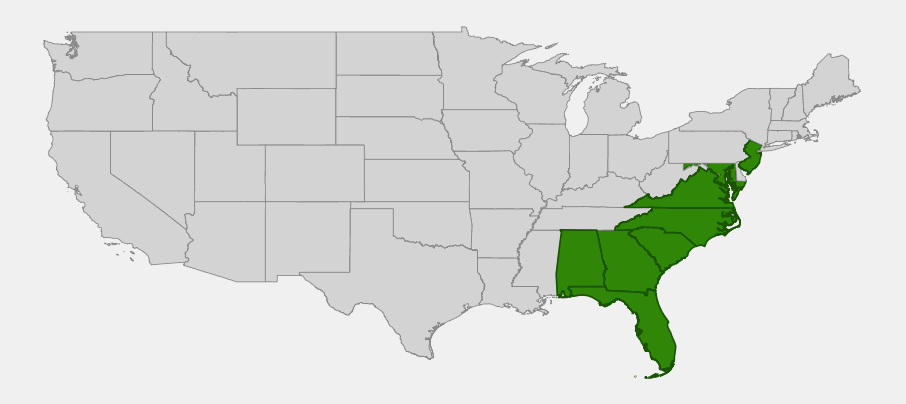
Southern highbush blueberry is a shrub of the Atlantic and Gulf coastal plains. The USDA PLANTS database records it in New Jersey, Maryland, Virginia, North Carolina, South Carolina, Georgia, Florida and Alabama, and some sources also report it from Delaware and New York.
It grows in open swamps, bogs, pocosins, bay heads, sandy margins of lakes, ponds and streams, wet pine flatwoods and pine barrens, and less often in drier upland woods and on ravine slopes. It is most common where the soil is acidic, sandy or peaty and stays moist for much of the year.
Because botanists disagree on whether it is a separate species, its exact range is uncertain. Many plants in the coastal plain that are labeled highbush blueberry in older floras would be called Vaccinium formosum by botanists who recognize it.
📋 Regional plant lists featuring Southern Highbush Blueberry: Alabama, Georgia & Mississippi · Delaware, Southern New Jersey & Long Island · North & South Florida · Maryland, Virginia & West Virginia · North & South Carolina · New York, Pennsylvania & Northern New Jersey
Growing & Care Guide
The wild species is seldom sold under the name Vaccinium formosum, but native plant nurseries in the Southeast often carry local highbush blueberry, and it grows like any highbush blueberry. It is an excellent edible native shrub for moist, acidic gardens in the coastal plain.
Light
Full sun gives the most flowers and fruit. It tolerates part shade, such as the edge of pine woods, but fruits less in shade.
Soil & Water
Blueberries need acidic soil, ideally pH 4.5 to 5.5, rich in organic matter and moist but not constantly flooded. Sandy soil amended with peat-free compost or pine bark works well. Water during dry spells, especially in the first two years, and mulch with pine straw or wood chips to keep roots cool and moist.
Planting Tips
Plant in fall or late winter. Space shrubs 4 to 6 feet apart, or closer for a hedge. Plant two or more blueberries that bloom at the same time for better cross-pollination and larger crops. Avoid alkaline soils and sites near concrete foundations, where the pH is often too high.
Pruning & Maintenance
Prune in late winter. Once shrubs are about five years old, remove a few of the oldest, least productive canes at the base each year to encourage strong new growth. Fertilize lightly, if at all, with a fertilizer made for acid-loving plants.
Propagation
Grow it from softwood cuttings taken in late spring, from hardwood cuttings in winter, or from suckers dug from the edge of a clump. Seed from cleaned, ripe berries can be sown in fall on a peat-based mix, but seedlings are slow and variable.
Landscape Uses
- Edible landscapes: sweet wild blueberries in early summer
- Rain gardens and wet edges: moist, acidic soils along ponds and ditches
- Wildlife and pollinator gardens: spring flowers for bees, berries for birds
- Informal hedges and screens: multi-stemmed shrubs with red fall color
Wildlife & Ecological Value
Wild blueberries are among the most valuable native shrubs for wildlife in the southeastern coastal plain.
For Pollinators
The urn-shaped flowers are pollinated mainly by bees that can buzz pollen from the flowers, including bumblebees and the southeastern blueberry bee (Habropoda laboriosa), a specialist of southern blueberries. Blueberries also host caterpillars of many moths and butterflies, such as the striped hairstreak and the brown elfin.
For Birds
Many birds eat the berries, including catbirds, mockingbirds, thrushes, bluebirds, wild turkeys and quail. The dense shrubs give nesting and escape cover.
For Mammals
Black bears, foxes, raccoons, opossums and small mammals eat the fruit, and white-tailed deer and rabbits browse the twigs and leaves.
Ecosystem Role
It is a common shrub layer plant in bogs, pocosins and wet pine flatwoods. Like many coastal plain shrubs, it resprouts from underground stems after fire, which helps it persist in fire-maintained pine ecosystems.
Cultural & Historical Uses
The species name formosum means “beautiful”. It was named by the English botanical artist Henry Andrews in his Botanist’s Repository, a series of plates of garden plants published around 1800. For much of the 20th century it was lumped into a broad highbush blueberry, and botanists still debate how best to divide the highbush complex, which includes plants with different chromosome numbers and many intermediates.
Wild highbush blueberries were the starting point for the commercial blueberry industry, which began in New Jersey in the early 1900s with the work of Frederick Coville and Elizabeth White. Later breeders in Florida crossed highbush blueberries with Darrow’s blueberry to create the low-chill “southern highbush” cultivars that now grow in mild-winter regions.
Native peoples of the Southeast gathered wild blueberries for fresh eating and drying, and wild blueberry picking in pine flatwoods and bogs remains a summer tradition in the coastal plain.
Frequently Asked Questions
Is Vaccinium formosum the same as the southern highbush blueberry cultivars?
No. Garden “southern highbush” blueberries are hybrid cultivars bred for mild winters, mainly from highbush blueberry and Darrow’s blueberry. Vaccinium formosum is a wild native shrub of the southeastern coastal plain that shares the common name.
Is it a separate species from highbush blueberry?
Botanists disagree. The USDA PLANTS database and some southeastern floras recognize Vaccinium formosum, while others include it in Vaccinium corymbosum. In the garden, it grows and fruits like other highbush blueberries.
Are the berries edible?
Yes. The berries are sweet and can be eaten fresh, baked or made into jam, just like cultivated blueberries, although they are usually smaller.
What soil does it need?
Moist, acidic soil with a pH of about 4.5 to 5.5 and plenty of organic matter. It will not thrive in alkaline or heavy clay soils.
Where does it grow wild?
On the Atlantic and Gulf coastal plains from New Jersey south to Florida and west to Alabama, in bogs, pocosins, swamp edges, pine flatwoods and sandy lake and stream margins.

Looking for a nursery that carries Southern Highbush Blueberry?
Browse our native plant nursery directory: Alabama · Florida & Georgia · Maryland · New Jersey & North Carolina · South Carolina & Virginia

