
Cyperus Sedge (Carex pseudocyperus)
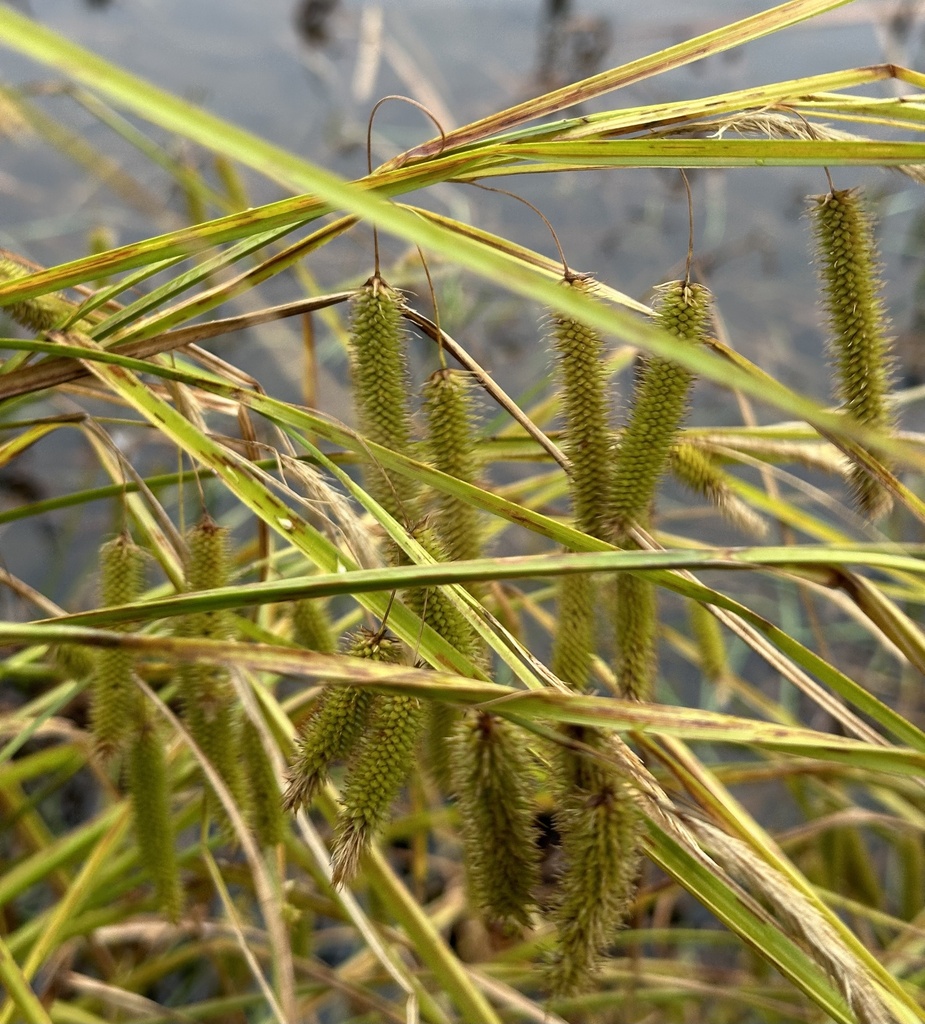
Carex pseudocyperus, the Cyperus Sedge (also called cypress-like sedge or hop sedge), is a large, clump-forming wetland sedge with bright yellow-green leaves and drooping, bottlebrush-like spikes that hang on slender stalks. It grows in marshes, swamps, fens, beaver ponds and the muddy margins of lakes and streams.
It has a very wide range across the Northern Hemisphere. In North America it grows from Alberta and Saskatchewan east to Newfoundland and Nova Scotia, and south through the Great Lakes states and New England to Pennsylvania, New Jersey, Ohio and Indiana. It is also native across Europe, temperate Asia and North Africa.
Its hanging, cylindrical spikes are among the showiest of any sedge, which makes it a fine plant for pond edges and rain gardens. This guide covers how to identify it, where it grows, how to grow it and its value to wildlife.
Identification
Cyperus sedge is a tall, tufted sedge with sharply three-angled stems, long bright green leaves, one slender male spike at the top and three to five drooping, bristly female spikes on long stalks.
Stems & Leaves
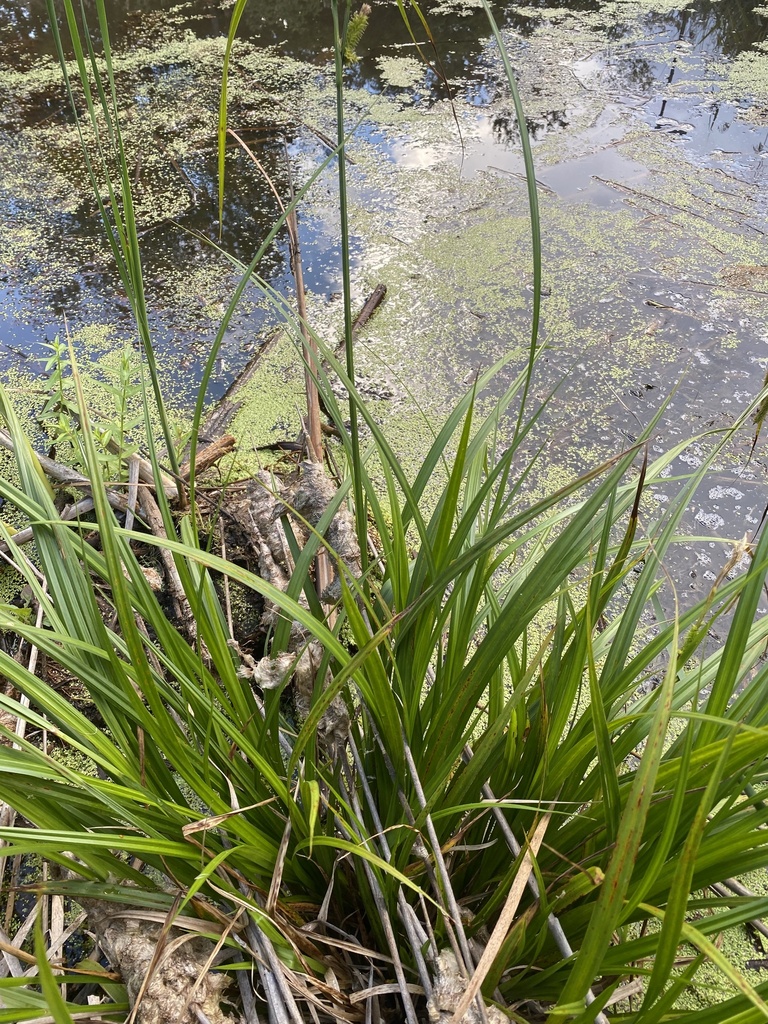
It forms dense clumps 1½ to 3 feet tall from short rhizomes. The stems are sharply triangular and rough on the angles. The flat, bright yellow-green leaves are 5 to 12 mm wide and often longer than the stems, with a reddish-brown tinge at the base.
Flowers
In late spring and early summer, each stem carries a single narrow male (pollen) spike at the tip and three to five cylindrical female spikes, each 1 to 3 inches long, that hang or nod on slender stalks from leaflike bracts. Like all sedges it is wind-pollinated and has no petals.
Fruit
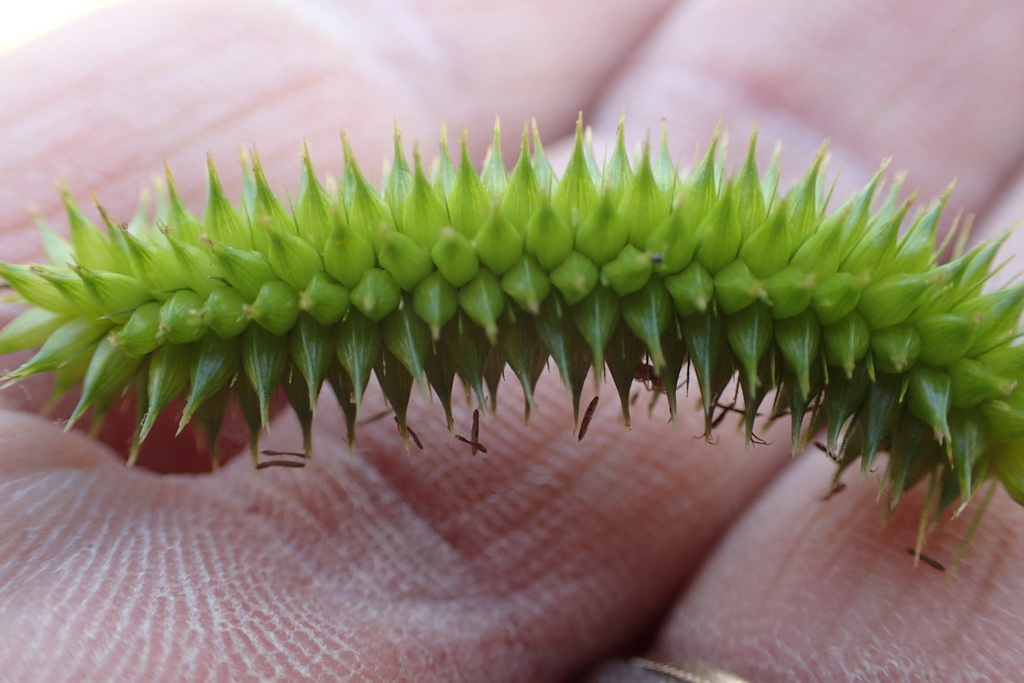
The female spikes are densely packed with small green perigynia (the sacs around each seed), about 4 to 6 mm long, strongly ribbed and narrowed into a beak with two short, straight teeth. They spread and point downward as they ripen in midsummer, turning tan by late summer.
Look-alikes
It is very similar to bristly sedge (C. comosa), which shares its habitat. Bristly sedge has perigynium beaks with longer, outcurved teeth (about 1.5 to 2.5 mm), giving its spikes a shaggier look, while cyperus sedge has short, straight teeth under 1 mm. Bottlebrush sedge (C. hystericina) has more upright spikes, and hop sedge has much larger, inflated perigynia.
Quick Facts
| Scientific Name | Carex pseudocyperus L. |
| Family | Cyperaceae (sedge family) |
| Plant Type | Clump-forming perennial wetland sedge |
| Mature Height | 1½–3 ft |
| Mature Spread | 1–2 ft |
| Growth Rate | Moderate |
| Sun Exposure | Full sun to partial shade |
| Water Needs | High; wet soil or shallow water |
| Soil Type | Mucky, peaty or silty wet soil |
| Soil pH | About 5.5–7.5 |
| Bloom Time | May–July |
| Flower Color | Green (wind-pollinated spikes) |
| Fall Color | Yellow to tan |
| Fruit | Drooping spikes of beaked perigynia, ripe July–September |
| Deer Resistant | Yes; rarely browsed |
| USDA Hardiness Zones | 3–7 |
Native Range
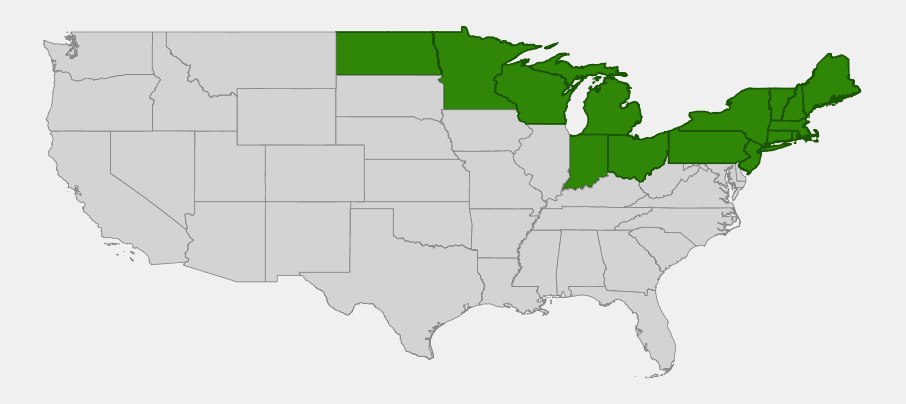
Cyperus sedge is a circumboreal species of temperate wetlands. In Canada it grows from Alberta, Saskatchewan and Manitoba east through Ontario and Quebec to the Maritime provinces and Newfoundland. In the United States, USDA PLANTS lists it in North Dakota, Minnesota, Wisconsin, Michigan, Indiana, Ohio, Pennsylvania, New York, New Jersey and all six New England states. A USDA record from Texas is far outside the known range and is not listed by Flora of North America, so it is left off the map.
It is most common around the Great Lakes, in northern New England and in southern Canada, and becomes local and scarce toward the southern edge of its range, where several states track it as rare.
It grows in shallow water and on saturated, mucky or peaty soil in marshes, swamps, fens, wet thickets, beaver meadows, floating mats and the margins of lakes, ponds and slow streams, usually at low elevations.
📋 Regional plant lists featuring Cyperus Sedge: New York, Pennsylvania & Northern New Jersey · Delaware, Southern New Jersey & Long Island · Ohio & Indiana · Michigan, Wisconsin & Eastern Minnesota · Connecticut, Massachusetts & Rhode Island · New Hampshire, Maine & Vermont · North Dakota, South Dakota & Western Minnesota
Growing & Care Guide
Cyperus sedge is sold by some native plant and water-garden nurseries, especially in Europe and the Great Lakes region. It is an easy, handsome sedge for wet places, where its drooping spikes add texture from early summer into fall.
Light
Full sun to partial shade. It flowers and fruits best with at least half a day of sun.
Soil & Water
Constantly moist to wet soil, or shallow water up to about 4 inches deep at a pond margin. It thrives in mucky or peaty soil and will not tolerate drying out.
Planting Tips
Plant container plants in spring, 18 to 24 inches apart, along a pond edge, in a rain garden low spot, a bog garden or a wetland restoration. It can also be grown in a submerged pot in a water garden.
Pruning & Maintenance
Cut back old leaves in late winter or early spring before new growth starts. It is long-lived and not invasive, and it spreads only slowly as the clumps enlarge.
Propagation
Divide clumps in spring. Seed can be sown on the surface of wet soil after a period of cold, moist stratification; keep it constantly moist and in light until germination.
Landscape Uses
- Pond and lake margins: bold clumps with drooping spikes
- Rain gardens and bog gardens: for constantly wet spots
- Wetland restoration: native sedge for marshes and swamps
- Shoreline stabilization: dense roots hold mucky soil
Wildlife & Ecological Value
Like most wetland sedges, cyperus sedge provides seeds, cover and shoreline structure for wildlife.
For Pollinators
It is wind-pollinated and offers no nectar, but sedges are larval host plants for several skipper butterflies and many moths, and dense clumps shelter beneficial insects.
For Birds
Ducks, rails, sparrows and other wetland birds eat the seeds, and the clumps give cover and nest sites for marsh birds.
For Mammals
Muskrats and beavers may eat the leaves and rhizomes, and small mammals shelter in the clumps.
Ecosystem Role
Its dense root mats bind mucky shorelines and floating peat mats, and its tussocks create small, raised spots where other wetland plants can root.
Cultural & Historical Uses
Carl Linnaeus named Carex pseudocyperus in 1753. The name means “false Cyperus,” because its drooping spikes resemble those of some flatsedges.
In Europe it is a popular ornamental for pond margins and has long been grown in water gardens.
Bristly sedge (C. comosa) was once treated as a North American variety of cyperus sedge, and the two are still often confused in the field.
Frequently Asked Questions
How do I recognize cyperus sedge?
Look for a large, clumping sedge with triangular stems, bright green leaves and three to five cylindrical, bristly female spikes that hang on slender stalks.
How is it different from bristly sedge?
Bristly sedge (Carex comosa) has longer, outcurved teeth on the perigynium beaks, while cyperus sedge has short, straight teeth less than 1 mm long.
Where does cyperus sedge grow?
In marshes, swamps, fens and pond margins from Alberta to Newfoundland and south through the Great Lakes states and New England to Pennsylvania, New Jersey, Ohio and Indiana.
Can I grow it in a water garden?
Yes. It grows well in wet soil or a few inches of water in full sun to partial shade, and it is not invasive.
Is cyperus sedge good for wildlife?
Yes. Wetland birds eat the seeds, and the clumps provide cover and shoreline habitat.

Looking for a nursery that carries Cyperus Sedge?
Browse our native plant nursery directory: Connecticut · Indiana · Maine, Massachusetts, Michigan & Minnesota · New Hampshire, New Jersey, New York, North Dakota & Ohio · Pennsylvania, Rhode Island & Vermont · Wisconsin

