
Porter’s Sunflower (Helianthus porteri)
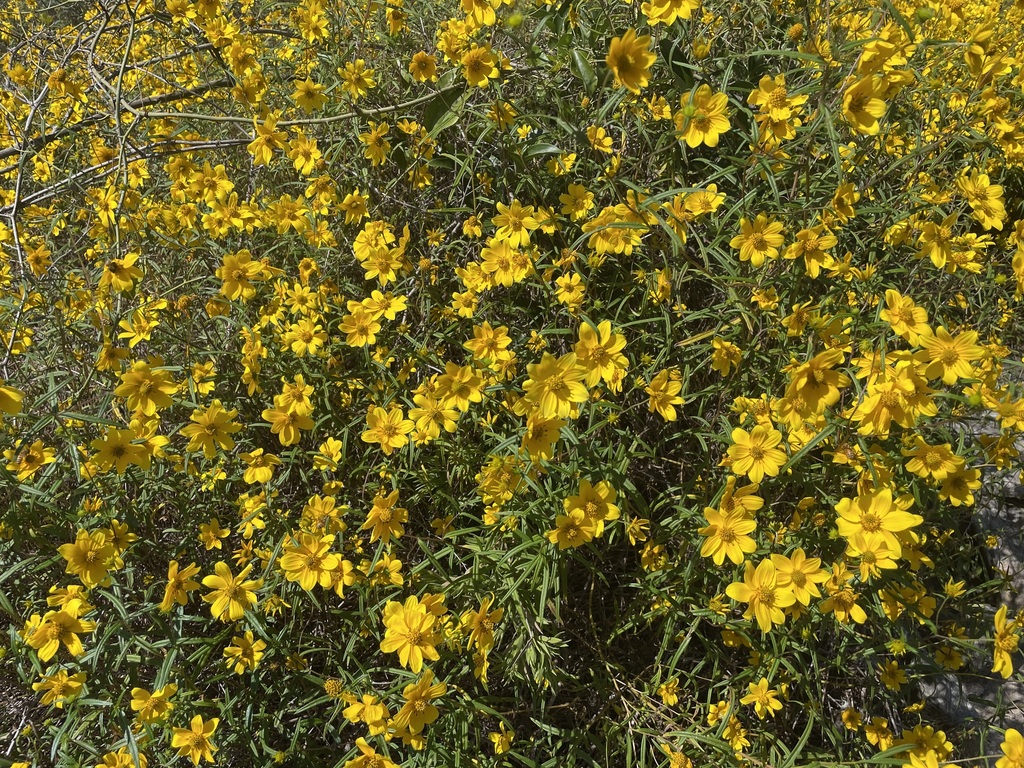
Helianthus porteri, known as Porter’s Sunflower, Stone Mountain daisy, and historically the “Confederate daisy,” is an annual sunflower that grows almost entirely on granite outcrops in the Piedmont of Georgia, Alabama and South Carolina. In late summer and early fall it turns the thin soils around these bare rock domes and flatrocks gold with thousands of small, bright yellow flower heads, each about 1 to 1½ inches across.
It has had several scientific names. Asa Gray first described it in 1849 as Rudbeckia porteri, and for most of the 20th century it was known as Viguiera porteri; it has also been placed in Heliomeris. In 1998 it was moved to Helianthus, the true sunflowers, and it is now a close wild relative of the common sunflower. Its well-known bloom at Stone Mountain gave its name to the park’s long-running Yellow Daisy Festival.
NatureServe ranks it as globally vulnerable (G3), with about 40 occurrences. Most are in Georgia; it is rarer in Alabama and may no longer survive in South Carolina. This guide covers identification, its specialized granite outcrop habitat, and how to grow it from seed in a sunny, dry garden.
Identification
Porter’s sunflower is a slender, branching annual. On a granite outcrop in September, its masses of small, eight-rayed yellow heads are unmistakable.
Leaves & Growth Habit
An upright annual, usually 1 to 3 feet tall, with slender stems that branch freely in the upper half. The leaves are mostly opposite, narrow (linear to lance-shaped), 1 to 3 inches long, with smooth edges and a rough, sandpapery surface. Plants growing in very thin soil may be only a few inches tall with a single head, while those in deeper pockets become bushy and many-flowered.
Flowers
Each plant usually produces five or more flower heads, often many more, on long, slender stalks. A head has 7 or 8 yellow ray florets around a small dome of 30 or more yellow disk florets, and is about 1 to 1½ inches across. Bloom runs from late August into October, with the peak in September.
Fruit & Seeds
The fruits are small, dark achenes (technically cypselae) without the bristly pappus that many sunflower relatives have. They fall close to the parent plant and may be carried short distances by water running off the rock, so populations tend to stay in place year after year.
Look-alikes
Many yellow composites bloom in fall in the Southeast, but few grow on bare granite. Showy Goldeneye of the western U.S., a former relative in Heliomeris, looks similar but grows far away in the Rocky Mountains and Southwest. Perennial southeastern sunflowers such as Swamp Sunflower are larger plants of moist ground. Tickseeds (Coreopsis) have rays with toothed tips, and goldenrods have tiny heads in dense clusters.
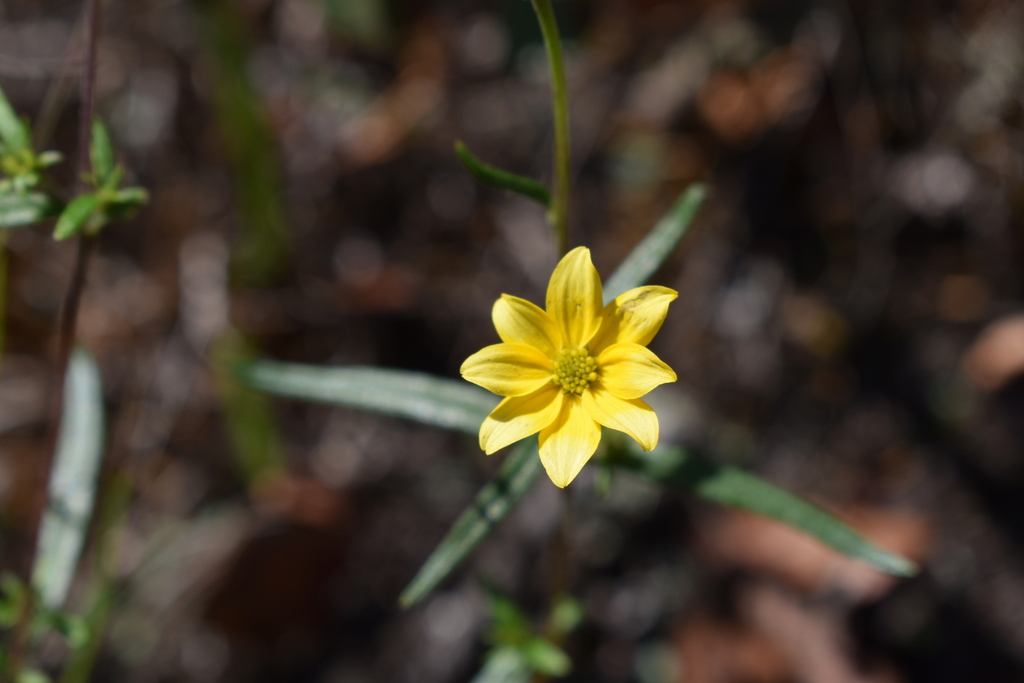
Quick Facts
| Scientific Name | Helianthus porteri (A. Gray) Pruski; syn. Viguiera porteri, Heliomeris porteri, Rudbeckia porteri |
| Family | Asteraceae (aster family) |
| Plant Type | Annual wildflower |
| Mature Height | 1–3 ft (often shorter in thin soil) |
| Mature Spread | 6–18 in |
| Growth Rate | Fast (completes its life cycle in one season) |
| Sun Exposure | Full sun |
| Water Needs | Low; dry, shallow soils |
| Soil Type | Thin sandy or gravelly soil over granite or sandstone |
| Soil pH | Acidic (about 3.6–6.9 in Alabama sites) |
| Bloom Time | Late August–October (peak in September) |
| Flower Color | Bright yellow |
| Fall Color | Not significant; dies after setting seed |
| Fruit | Small dark achenes without a pappus |
| Deer Resistant | Not documented |
| USDA Hardiness Zones | Annual; grows in about zones 7–8 within its range |
Native Range
Porter’s sunflower is a Southeastern endemic. USDA PLANTS lists it in Alabama, Georgia, South Carolina and North Carolina, but NatureServe and the Flora of the Southeastern United States treat it as native only in Alabama, Georgia and South Carolina. In Georgia it is known from about 22 counties on the granite outcrops of the Piedmont, including Stone Mountain, Arabia Mountain and Panola Mountain near Atlanta. In Alabama it grows in a handful of counties in the Piedmont and the Valley and Ridge. The only recent South Carolina population, in Spartanburg County, may have been lost when an airport was expanded in the 1990s.
The North Carolina populations, near Rocky Face Mountain in Alexander County and in Wake County, grew from soil blocks moved there in 1959 for an ecological experiment, and are considered introduced. There they have spread on granite outcrops. A population found in Macon County, North Carolina, in 2024 may be native, and botanists are still evaluating it. We have left North Carolina off the range map for now.
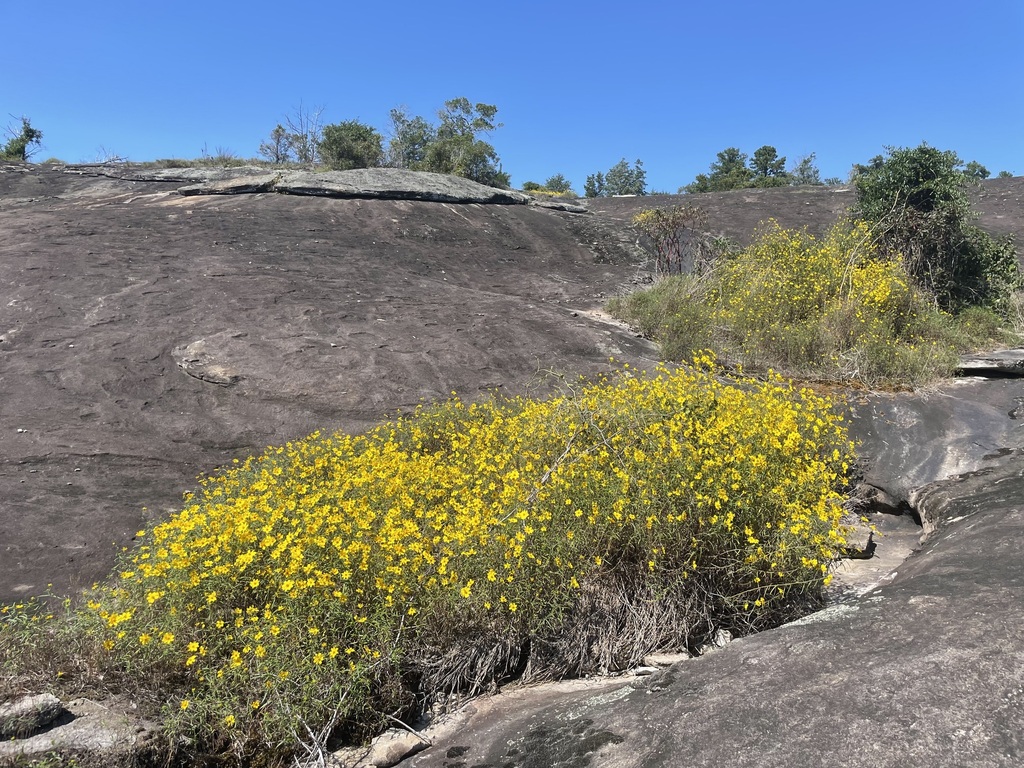
Its habitat is the thin, sandy soil on and around granite domes and flatrocks, sometimes sandstone outcrops, and occasionally roadsides near them. These “soil islands” bake in summer and are often saturated after storms, conditions few plants tolerate. Outcrop communities are threatened by quarrying, off-road vehicles, development, trash dumping and trampling, and dry years can sharply reduce reproduction.
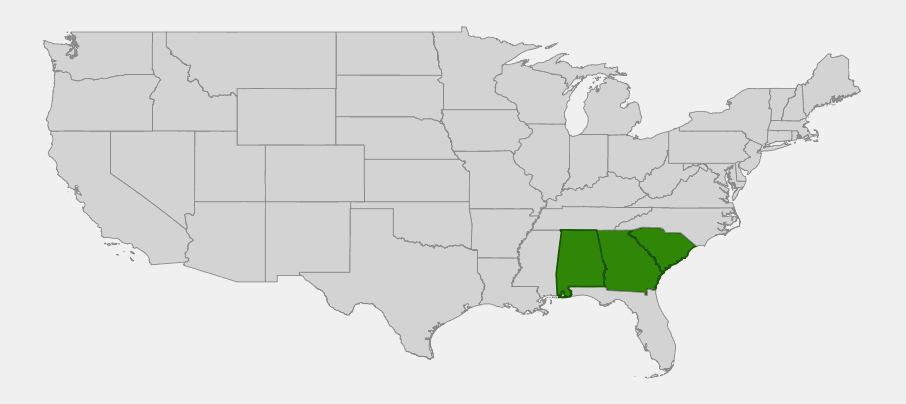
📋 Regional plant lists featuring Porter’s Sunflower: Alabama, Georgia & Mississippi · North & South Carolina
Growing & Care Guide
Porter’s sunflower is easy to grow from seed in a sunny, dry spot, and it reseeds itself where conditions suit it. Seed is sometimes offered by native plant nurseries and seed exchanges in Georgia. Do not collect seed or plants from protected parks or rare populations; outcrop sites such as Stone Mountain and Arabia Mountain are protected, and Alabama ranks the species as imperiled.
Light
Full sun. On outcrops it grows in completely open, unshaded conditions, and in shade it becomes weak and flowers poorly.
Soil & Water
It thrives in thin, sandy or gravelly, low-fertility soil that dries out quickly. In a garden, a gravel bed, rock garden, or a shallow layer of sandy soil over rock or a green roof best mimics its habitat. It needs no watering once established, and rich, moist soil encourages competing weeds.
Planting Tips
Sow seed in fall or late winter on the surface of bare, sandy soil and press it in lightly. In nature it germinates in late March, grows through the summer and blooms in September. Avoid mulch, which smothers the seedlings.
Pruning & Maintenance
No pruning is needed. Leave the plants standing after bloom so they can drop seed for next year’s plants, then remove the dead stems in winter. Keep vigorous perennials and grasses from crowding the patch.
Propagation
It is grown only from seed. Collect ripe seed heads in October from garden plants, store the seed dry and cool, and sow it in fall or late winter.
Landscape Uses
- Rock and gravel gardens: a burst of fall color in thin, dry soils where little else grows
- Green roofs and dry meadows: a self-sowing annual for shallow, sunny sites in the Southeast
- Pollinator gardens: late-season nectar and pollen for bees and butterflies
- Wildflower viewing: Stone Mountain, Arabia Mountain and Panola Mountain in Georgia in September
Wildlife & Ecological Value
Porter’s sunflower is one of the main late-season flowers of Southeastern granite outcrops, when most other outcrop plants have finished blooming.
For Pollinators
Its abundant yellow heads are visited by many native bees, including specialist and generalist bees that collect sunflower pollen, along with butterflies, skippers, beetles and flies. Blooming in September, it fills a gap when few other flowers on the rock are in bloom.
For Birds
Goldfinches, sparrows and other small seed-eating birds feed on the ripe seeds in fall.
For Mammals
Small mammals may eat the seeds. It is not an important food for larger mammals.
Ecosystem Role
It is a characteristic member of the specialized plant community of Piedmont granite outcrops, which includes several federally listed species. Researchers have used it to study how plants adapt to drought and poor soils, and a 2013 study found that its populations hold high genetic diversity, which is good news for its long-term conservation.
Cultural & Historical Uses
Asa Gray named the plant Rudbeckia porteri in 1849, in honor of Thomas Conrad Porter, a Pennsylvania minister and botanist who collected it in Georgia in 1846. It was later moved to Viguiera and, in 1998, to Helianthus by the botanist John F. Pruski.
The name “Confederate daisy” comes from Stone Mountain, which bears a large carving honoring Confederate leaders, and has nothing to do with the plant itself, which was named before the Civil War. Today it is more often called Porter’s sunflower or the Stone Mountain daisy, and it is the namesake of Stone Mountain Park’s Yellow Daisy Festival, held each September.
For naturalists in the Atlanta area, the yellow bloom on the granite domes is a sign that fall has arrived. Parks such as Arabia Mountain and Panola Mountain protect some of the best outcrop habitats, where the sunflower grows with other rare rock-outcrop plants.
Frequently Asked Questions
Why is it called the Confederate daisy?
The name comes from Stone Mountain in Georgia, site of a large Confederate memorial carving, where the flower blooms abundantly. The plant was named for botanist Thomas C. Porter in 1849, before the Civil War, and is more often called Porter’s sunflower or Stone Mountain daisy.
Is Porter’s sunflower a daisy?
No. It is a true sunflower (Helianthus) in the aster family. “Daisy” is a loose common name for many yellow or white composite flowers.
Is it an annual?
Yes. It germinates in spring, blooms in late summer and fall, sets seed and dies. Populations persist by reseeding each year.
Where can I see it?
On granite outcrops in the Georgia Piedmont, such as Stone Mountain, Arabia Mountain and Panola Mountain, mainly in September, and at a few outcrop sites in Alabama.
Can I grow it in my garden?
Yes, from seed, in full sun and thin, sandy or gravelly soil that stays dry. It reseeds itself. Buy seed from a native plant source; do not collect from parks or rare populations.

Looking for a nursery that carries Porter’s Sunflower?
Browse our native plant nursery directory: Alabama · Georgia · South Carolina

